Basic Gun Safety Rules: Muzzle, Trigger, Target, Storage, and Range Safety
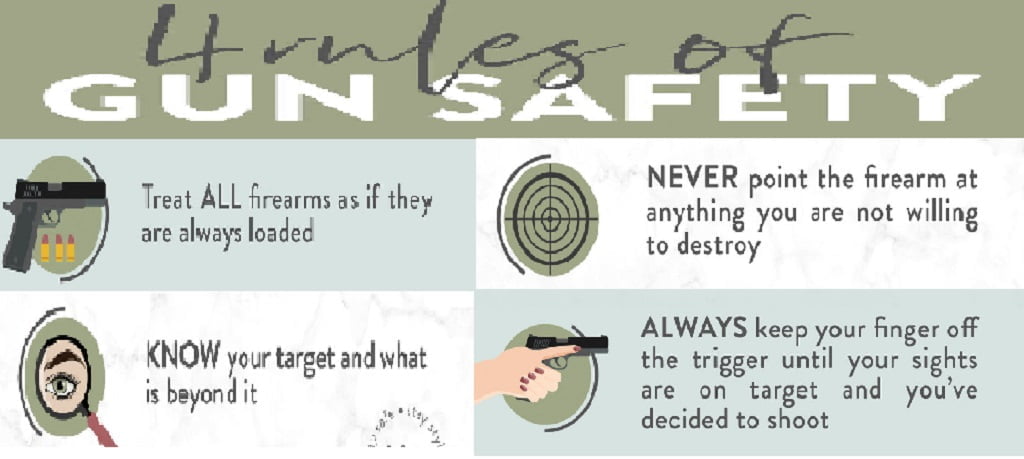
Gun safety starts before anyone fires a shot. Treat every firearm with the same care every time: control the muzzle, keep your finger off the trigger, know the target and what is beyond it, and store firearms so unauthorized people cannot access them. These rules apply at home, at the range, in the field, and during cleaning or transport.
Table of contents
Quick Answer
The basic gun safety rules are: treat every firearm as loaded, keep the muzzle pointed in a safe direction, keep your finger off the trigger until ready to shoot, and know your target plus what is beyond it. Add secure storage, eye and ear protection, and formal training whenever possible.
- Muzzle: always controlled, never casual.
- Trigger: finger off until sights are on target and you have decided to fire.
- Target: identify the target, foreground, background, and backstop.
- Storage: lock firearms and ammunition so children or unauthorized people cannot access them.
The Core Gun Safety Rules
Different organizations word firearm safety rules slightly differently, but the core idea is the same: create overlapping habits so one mistake does not become a tragedy. Do not treat a mechanical safety, an empty chamber, or another person’s word as a substitute for your own safe handling.
Rule 1: Treat Every Firearm as Loaded
When you pick up, receive, clean, store, or transport a firearm, check its condition yourself. Open the action, remove the magazine if it has one, inspect the chamber, and keep the muzzle in a safe direction while doing it.
Rule 2: Keep the Muzzle Pointed in a Safe Direction
A safe direction is one where an unplanned discharge would not injure a person or damage something you cannot risk. It changes with location, flooring, walls, vehicles, terrain, and the people around you.
Rule 3: Keep Your Finger Off the Trigger
Keep your finger straight and outside the trigger guard until the firearm is pointed at the target and you have decided to shoot. Do not put your finger on the trigger while loading, unloading, moving, talking, or adjusting gear.
Rule 4: Know Your Target and Beyond
Identify the target clearly, then check what is in front of it, around it, and behind it. Bullets and shot can miss, pass through, skip, or travel farther than expected. If you cannot confirm a safe background, do not shoot.
What a Safe Direction Means
“Safe direction” is not always straight down or straight up. Indoors, floors and walls may not stop a bullet. Outdoors, hard ground, rocks, water, and metal can create ricochet risk. At a range, the safe direction is usually toward the backstop and inside the firing lane.
Ask Before Handling
- Where would the muzzle point if I slipped?
- Who could enter the area unexpectedly?
- What is behind the wall, target, or backstop?
- Is the firearm pointed at something I am willing and legally allowed to shoot?
- Can I unload or case it before moving?
Loading, Unloading, and Checking Condition
Most careless mistakes happen during normal handling, not dramatic moments. Slow down when loading, unloading, casing, cleaning, or passing a firearm to someone else. Use the same routine every time.
Basic Condition Check
- Point in a safe direction.
- Remove the magazine or ammunition source.
- Open the action.
- Check the chamber and magazine area visually and physically when appropriate.
- Keep the action open when setting the firearm down at a range or during instruction.
Range Safety and Protective Gear
At a range, follow the range officer and posted rules. Wear eye and ear protection, keep firearms pointed downrange, and stop immediately if anyone calls cease fire. Indoor ranges also deserve attention to ventilation, hygiene, and lead exposure habits.
Range Habits
- Keep firearms unloaded and actions open until the range is hot and you are ready.
- Do not handle firearms while people are downrange.
- Wash hands after shooting, especially before eating or drinking.
- Use targets and ammunition allowed by that range.
- Ask for help if you have a malfunction you do not understand.
For hearing and eye protection details, read our guide on shooting ear and eye protection.
Home Storage and Unauthorized Access
Safe storage is part of gun safety. Store firearms so children, visitors, thieves, or unauthorized adults cannot access them. Laws vary by state and situation, so check your local requirements and choose a storage method that actually fits your home.
Storage Options to Consider
- Gun safe or locking cabinet.
- Lock box for quicker secure access where legal and appropriate.
- Cable lock or chamber lock as an added layer.
- Ammunition stored securely according to your household risk and local law.
- Clear family rules that children should not touch firearms and should tell an adult if they find one.
Field and Transport Safety
Hunting and field use add movement, weather, uneven ground, vehicles, fences, boats, and partners. Unload before climbing, crossing obstacles, entering a vehicle, or handing a firearm to someone else. In a group, agree on safe zones of fire before the hunt starts.
Field Checks
- Keep the muzzle away from people, dogs, vehicles, and roads.
- Unload before crossing fences, ditches, slippery ground, or water.
- Know where partners are before swinging on game.
- Do not shoot at sound, movement, brush, or an unidentified target.
- Use blaze orange or other visibility gear where required or useful.
Beginner Training Habits
Beginners should learn from a qualified instructor, range officer, hunter education course, or experienced mentor who follows safety rules consistently. Do not rush speed, holster work, moving drills, or hunting shots before basic handling is automatic.
A Safer Learning Order
- Learn safe handling and how the firearm works.
- Practice loading, unloading, and checking condition with supervision.
- Learn sight picture, trigger control, and follow-through slowly.
- Use live fire only where legal and properly supervised.
- Stop when fatigue or frustration affects safety.
Mistakes to Avoid
- Assuming an unloaded firearm is safe to point casually.
- Relying on the mechanical safety instead of muzzle and trigger discipline.
- Letting people handle firearms without checking their knowledge first.
- Cleaning a firearm with ammunition on the same table.
- Leaving a firearm unsecured because you plan to put it away later.
- Mixing alcohol, drugs, fatigue, anger, or distraction with firearm handling.
FAQ
What are the four basic gun safety rules?
Treat every firearm as loaded, keep the muzzle pointed in a safe direction, keep your finger off the trigger until ready to shoot, and know your target plus what is beyond it.
Is a firearm safe if the safety is on?
No mechanical safety replaces safe handling. Keep the muzzle controlled and your finger off the trigger even when the safety is engaged.
Should ammunition be kept away while cleaning a firearm?
Yes. Remove ammunition from the cleaning area, check the firearm condition, and keep the muzzle in a safe direction throughout cleaning.
How should firearms be stored at home?
Use secure storage that prevents unauthorized access, such as a safe, lock box, locking cabinet, or lock device suited to your household and local law.
What should a beginner do before going to a range?
Learn the firearm’s basic operation, review range rules, bring eye and ear protection, use the correct ammunition, and ask a qualified person for help before handling anything unfamiliar.
Sources
- NSSF Firearm Safety Rules – core firearm handling rules.
- NSSF Safety Resources – firearm safety education resources.
- Project ChildSafe Safety – secure storage and family safety education.
- CDC/NIOSH Indoor Firing Range Lead and Noise Guidance – indoor range exposure background.
Related reading: gun storage laws guide.
Related Firearm Safety and Maintenance Guides
- AR-15 parts diagram
- brass catcher benefits
- changing a rifle stock overview
- cleaning your rifle barrel
- gun barrel cleaning tips
- clean and maintain a firearm safely
- handgun accuracy practice
- low-light shooting safety
Related Shooting and Firearm Guides
- 243 vs 308 comparison
- competition shooting supplies
- how to stop jerking the trigger
- Ruger EC9s buyer checks
- Taurus G2C buyer checks
More Firearm Safety and Buyer Guides
- AR-15 parts diagram and component overview
- How not to introduce kids to guns
- Shooting range trip checklist
- Shooting with your non-dominant hand
- SIG 2011 buyer checklist
- Skeet shooting tips for beginners
- History of guns in America
- Types of bullets explained
- Unconventional firearm designs explained
- Underbarrel flashlight safety and fit guide
- What is a misfire and how to prevent it
- Where to oil a Glock safely