5 Best Shooting Bags for Stable Rifle Support

If you want the best shooting bags for rifle support, start with verified front-and-rear rest bags, a rear-only squeeze bag, or a compact prefilled barricade bag. For most range benches, the Caldwell DeadShot front-and-rear set is the safest first pick because it gives you both support points in one purchase.
Reader note: this page was rebuilt from a stale 10-product list after several old ASINs were found to point at pistol/range carry bags instead of real shooting rest bags. We are only listing products that had exact shooting-rest ASIN evidence in the project source pack. That means this is a verified 5-product roundup now, not a forced top 10.
Table of Contents
- Quick picks
- Comparison table
- Caldwell DeadShot Front and Rear Shooting Rest
- Caldwell Universal Rear Shooting Bag
- Buffalo Creek Supplies All Weather Front and Rear Shooting Rest Bags
- TWOD Outdoor Front and Rear Shooting Rest Bags
- OneTigris Pre-Filled Shooting Bag
- Shooting bag buying guide
- FAQ
- Final verdict
Quick Picks
Best overall range-bench set: Caldwell DeadShot Front and Rear Shooting Rest.
Best rear-only support: Caldwell Universal Rear Shooting Bag.
Best unfilled front/rear set: Buffalo Creek Supplies All Weather Front and Rear Shooting Rest Bags.
Best budget unfilled set: TWOD Outdoor Front and Rear Shooting Rest Bags.
Best compact prefilled bag: OneTigris Pre-Filled Shooting Bag.
Comparison Table
Product Best for Fill style Buy
Caldwell DeadShot Front and Rear Shooting Rest Best verified front-and-rear set for most range benches Filled options Amazon
Caldwell Universal Rear Shooting Bag Best rear-only bag for pairing with an existing front rest Filled options Amazon
Buffalo Creek Supplies All Weather Front and Rear Shooting Rest Bags Best unfilled front-and-rear set for buyers who want to control fill weight Unfilled / buyer-filled Amazon
TWOD Outdoor Front and Rear Shooting Rest Bags Best budget unfilled front-and-rear option Unfilled / buyer-filled Amazon
OneTigris Pre-Filled Shooting Bag Best lightweight prefilled barricade-style support bag Prefilled Amazon
At-a-glance decision grid
If the table above still leaves you undecided, match your primary use case to the bag type rather than to the brand. This is how most experienced range shooters actually choose:
| Your situation | Bag type to buy | Picks that fit |
|---|---|---|
| First shooting rest, mostly bench work | Filled front + rear set | Caldwell DeadShot |
| Already own a tripod or mechanical front rest | Rear squeeze bag only | Caldwell Universal Rear |
| Flying or driving far to a match, want low ship weight | Unfilled front + rear set | Buffalo Creek, TWOD |
| Occasional sight-in, tight budget | Budget unfilled set | TWOD Outdoor |
| Barricades, truck hoods, fence posts, field positions | Single prefilled support bag | OneTigris Pre-Filled |
| Prone practice on hard ground | Rear bag + a jacket or pack up front | Caldwell Universal Rear |
A common mistake is buying a heavy bench set when 80 percent of your shooting happens off a barricade or a truck bed. Be honest about where you actually shoot, not where you plan to shoot someday.
1. Caldwell DeadShot Front and Rear Shooting Rest
Best verified front-and-rear set for most range benches. Front and rear support setup, so it works better as a complete bench-rest starter kit than a rear-only bag.
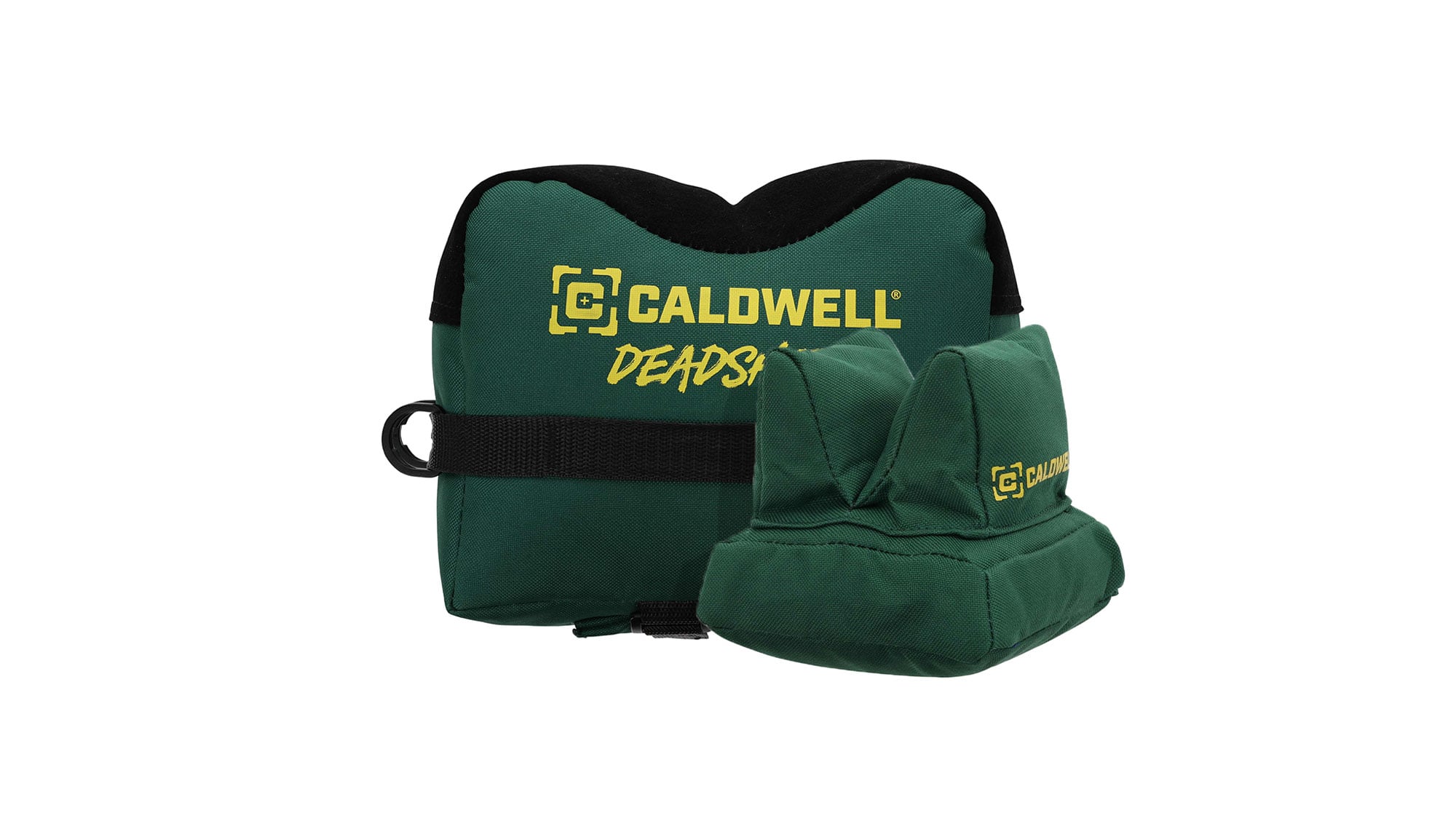
The DeadShot combo pairs a V-notch front bag with a matching rear bag, so both ends of the rifle sit on the same fill firmness.
The verified Amazon listing was checked as a filled combo-style DeadShot shooting rest, not a pistol carry bag.
Good fit for readers who want a simple, stable setup for range practice without choosing separate front and rear bags.
The Caldwell source lists a water-resistant fabric bag design and a quick-connect transport feature. For source-backed details, compare the Amazon listing with the brand/source page before buying.
Pros
- Complete front and rear setup
- Easy first shooting-rest choice
- Portable compared with heavy bench rests
Cons
- Less adjustable than a mechanical rest
- Still requires proper bench setup and safe muzzle discipline
Skip if: Skip it if you already own a dedicated front rest and only need a rear squeeze bag.
How it performs in practice
The DeadShot combo shines during load development and zeroing sessions where you want the rifle to return to roughly the same spot between shots. Set the front bag so the fore-end contacts flat stock material — not the barrel, and not a bipod leg pinched sideways — then use your support hand to squeeze the rear bag for the last inch of elevation. Once the crosshair settles without muscle input, you are ready to break the shot.
Two practical notes from bench use. First, the bags will feel firmer straight out of the box and will break in slightly after a few sessions as the fill settles; do not judge firmness on day one. Second, sporter stocks with narrow, rounded fore-ends tip more easily in a wide front bag than flat-bottom target stocks do — if your rifle rocks, rotate the front bag so the V-notch grips higher on the fore-end sides. Pair it with a stable rifle scope matched to your firearm and your group sizes will tell you far more about the ammo than about your hold.
2. Caldwell Universal Rear Shooting Bag
Best rear-only bag for pairing with an existing front rest. Rear-only support is useful when your front rest is already solved but the rifle stock still needs steady elevation control.
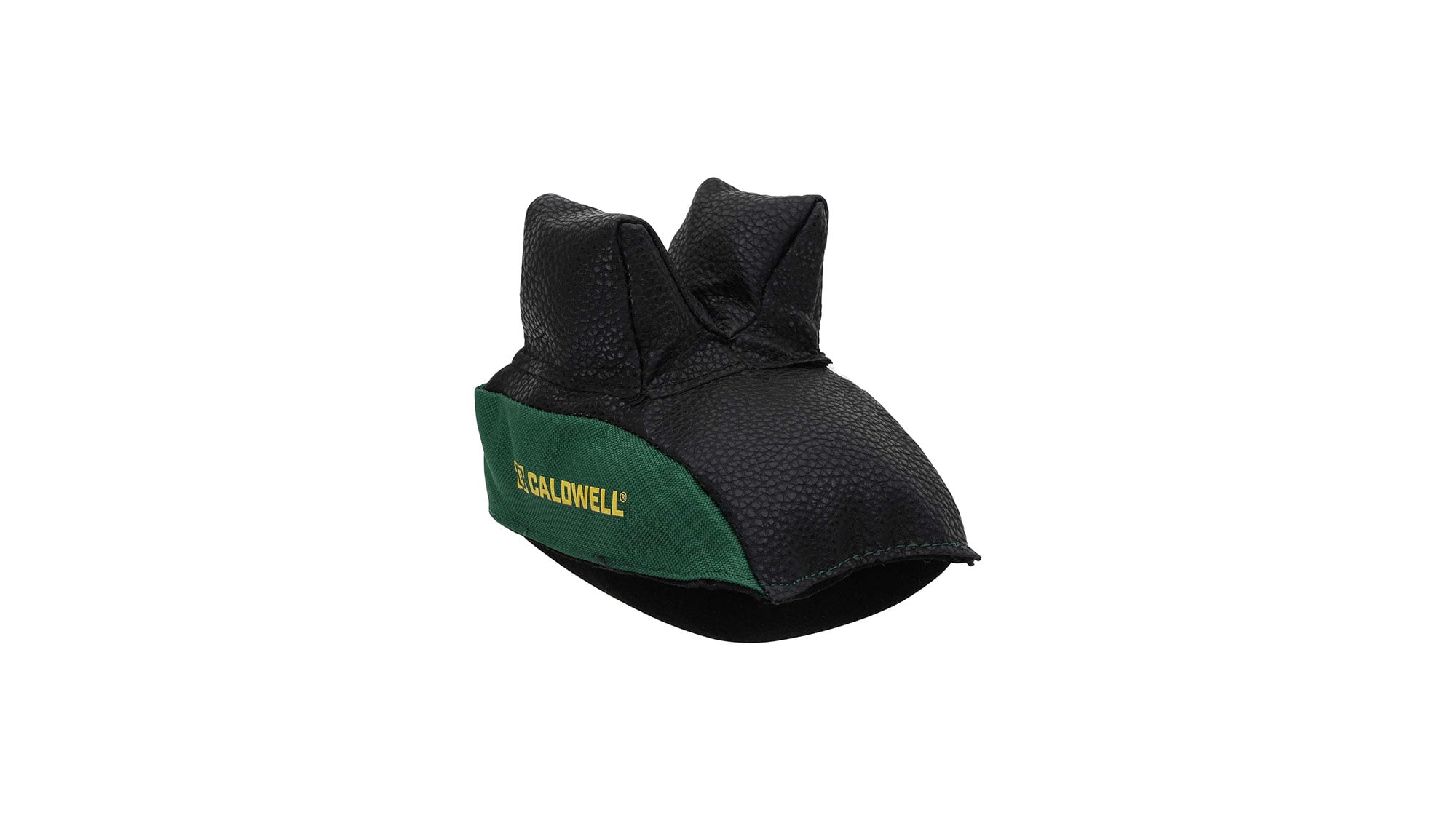
The eared rear bag cradles the toe of the stock so small squeezes move point of aim in fine increments.
The verified Amazon listing matched the Caldwell Universal Rear Shooting Bag family instead of the wrong range-bag ASINs found earlier.
The Caldwell source describes filled rear-bag variants and multiple size options, so buyers should match the height to their front rest.
Best for bench work where you want finer stock support without buying another full front/rear combo. For source-backed details, compare the Amazon listing with the brand/source page before buying.
Pros
- Good upgrade for an existing front rest
- Multiple filled size options
- Compact enough for a range bag
Cons
- Not useful by itself as a front support
- Height choice matters
Skip if: Skip it if you need a complete front-and-rear kit in one purchase.
Matching rear-bag height to your front support
Height mismatch is the single most common complaint with rear bags, and it is entirely avoidable. Measure the height of your front support at its lowest usable setting, then choose a rear bag that puts the stock toe within roughly an inch of level with the fore-end. If the rear bag is too short, the muzzle points at the sky and you fight the rifle down for every shot; too tall, and the rifle noses into the bench. A cheap fix for a bag that is slightly short is a thin closed-cell foam pad under it — a fix that costs nothing and is easy to remove.
The other adjustment worth practising is the squeeze itself. Grip the ears of the bag with your support hand and compress gently to raise the reticle, relax to lower it. Done well, this gives finer elevation control than most mechanical rests and transfers directly to field work off a pack. If you are still building your bench routine, our starter checklist for range days covers the rest of the kit that belongs on the table.
3. Buffalo Creek Supplies All Weather Front and Rear Shooting Rest Bags
Best unfilled front-and-rear set for buyers who want to control fill weight. This slot is for buyers who prefer an unfilled bag set, because fill choice changes weight, firmness, and how easily the bags travel.
The verified Amazon pass confirmed the Buffalo Creek ASIN as a front-and-rear shooting-rest set, not a soft pistol range bag.
A front/rear unfilled set is useful when you want a stable bench setup but do not want to carry a heavy prefilled bag from the start.
Use sand, rice, polymer beads, or another safe fill only if it matches the bag maker’s recommendations and your range use. For source-backed details, compare the Amazon listing with the brand/source page before buying.
Pros
- Front and rear set
- Fill weight can be tuned
- Better for buyers who want a lighter item before filling
Cons
- Not ready to use until filled
- Fill material affects stability
Skip if: Skip it if you want a bag that is ready to use immediately.
Filling it properly the first time
Take the extra fifteen minutes to fill these bags correctly, because a badly filled bag is worse than no bag. Use dry, sifted play sand or a heavy polymer bead if you want less weight, fill in stages, and pack each stage down by dropping the bag flat on a hard surface a few times. Stop at roughly 85 to 90 percent full on the rear bag so the ears still compress; the front bag can go firmer, close to full, because you want it to hold shape under load. Damp sand is the classic error — it clumps, then it hardens, and the bag never settles the same way twice.
Weigh the finished set once and write the number down. Knowing that your loaded pair runs, say, eighteen pounds tells you instantly whether it belongs in the truck or in the pack, and it saves you repacking at the trailhead when you are already sorting the essentials for a hunting trip.
4. TWOD Outdoor Front and Rear Shooting Rest Bags
Best budget unfilled front-and-rear option. This is the budget-friendly front-and-rear set in the verified lineup, useful for readers who want basic support without a premium price tier.
The verified Amazon pass matched the ASIN to TWOD Outdoor shooting rest bags with front and rear support, not a carry case.
Because it is unfilled, the main buying decision is whether you are comfortable choosing and adding your own fill material.
It makes the most sense for occasional range use, sight-in sessions, and readers who want a low-cost support set before upgrading. For source-backed details, compare the Amazon listing with the Amazon listing before buying.
Pros
- Budget-friendly verified option
- Front and rear support
- Unfilled design keeps shipping/carry weight down before setup
Cons
- Needs fill before use
- Not as refined as premium precision bags
Skip if: Skip it if you want a heavier prefilled rest or a premium barricade bag.
What you give up at this price
Budget bags cut cost in predictable places: lighter-weight fabric, simpler stitching at the seams and ear tips, and less consistent panel shaping. In practice that means the bag holds a zeroed position fine for a sight-in session, but it will deform faster under a heavy rifle and the stitching deserves an inspection every few outings. Reinforcing the base seam with a hand needle and heavy thread before the first fill is a five-minute job that adds seasons of life.
The honest trade-off is repeatability, not stability. A well-filled budget set will steady a rifle just as much as a premium one for a 100-yard zero — it just will not return the stock to the exact same spot shot after shot the way a firm, precisely shaped bag does. If you are chasing small groups with a flat-shooting varmint cartridge or a heavier .30-cal, that difference eventually shows up on paper.
5. OneTigris Pre-Filled Shooting Bag
Best lightweight prefilled barricade-style support bag. This is the most field-style pick in the verified lineup because it is a single prefilled support bag rather than a classic front/rear bench set.
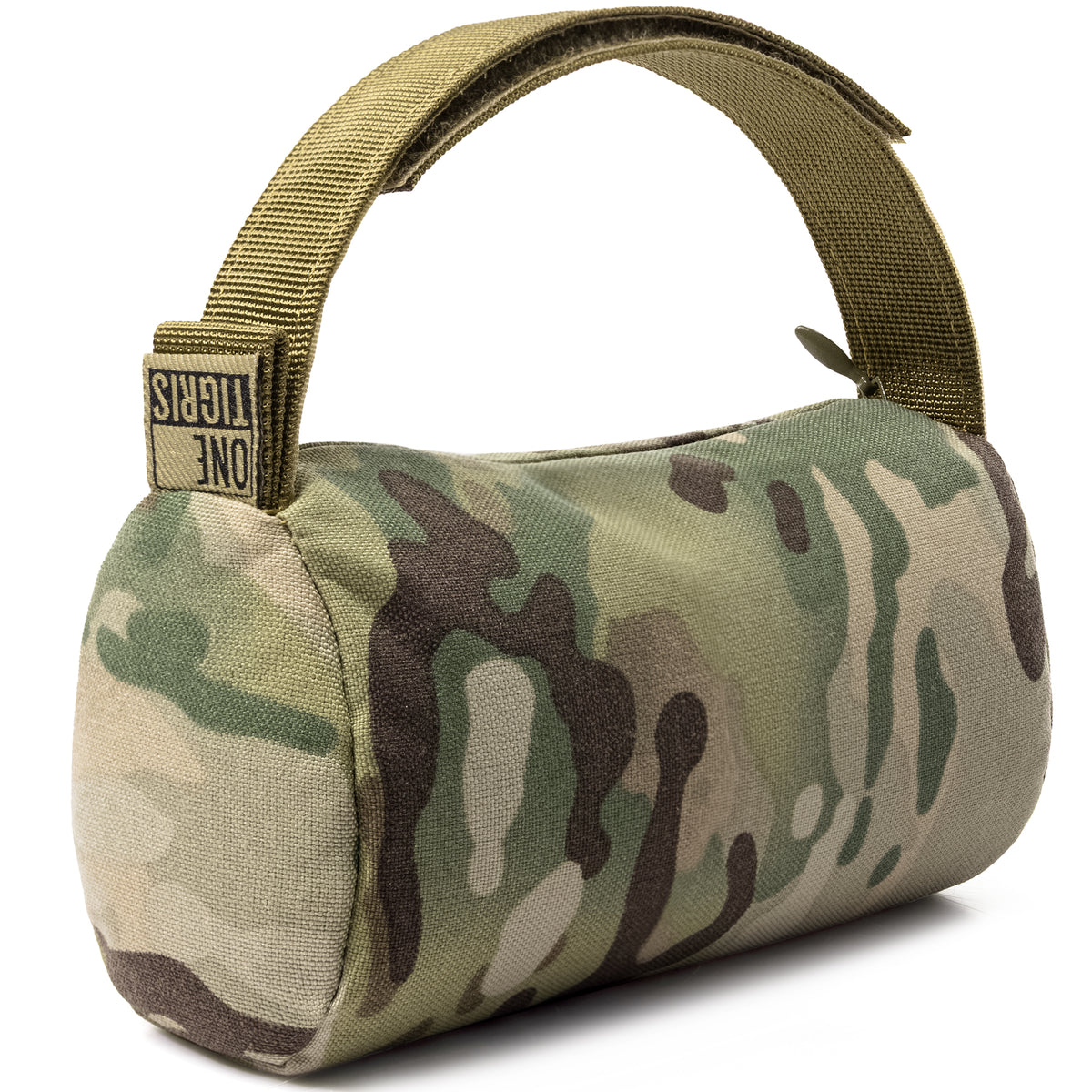
A compact prefilled bag like this drops onto a barricade, tailgate, or fence rail and conforms under the fore-end.
The verified Amazon pass matched the ASIN to a OneTigris prefilled shooting bag for barricade, vehicle, field, and range support.
It is useful when the shooting position changes often and a compact support bag is easier to manage than a larger bench-rest set.
Choose it for portability and flexible support, not if your main goal is a heavy fixed bench setup. For source-backed details, compare the Amazon listing with the brand/source page before buying.
Pros
- Prefilled and ready to use
- Works for barricade or improvised support
- More portable than heavy bench-rest bags
Cons
- Single bag, not a full front/rear set
- Less ideal for a fixed bench-only setup
Skip if: Skip it if you mainly shoot from a bench and want separate front and rear support.
Field techniques that make a single bag work
One bag can do the job of two if you use it correctly. Off a barricade, set the bag on the edge and load into it — press forward with your body so the bag compresses slightly and the rifle stops floating. Off a truck hood or a fence rail, place the bag so the fore-end sits in the depression it forms rather than on the bag's high point. Kneeling behind a post, wedge the bag between the post and the rifle so the bag absorbs the hard contact.
Where a single bag struggles is elevation control, because you no longer have ears to squeeze at the rear. The workaround most field shooters use is a fist or a rolled glove under the toe of the stock, or simply dropping the rear bipod-free stock onto their support forearm. It is worth drilling this at the range so it is automatic in the field, alongside the positions you rely on when there is no bench. Adjustable shooting sticks such as a trigger-stick style tripod also pair well with this bag when the terrain will not give you a flat surface.
Shooting Bag Buying Guide
A shooting bag is not just a soft cushion. It changes how steady the rifle sits, how repeatable your position feels, and how easy it is to adjust elevation without muscling the gun. A front bag supports the fore-end. A rear bag supports the stock. A barricade bag is more flexible when you shoot from a post, rail, window, vehicle edge, or uneven field position.
For a classic bench setup, most buyers should start with a front-and-rear set. It is easier to learn because both ends of the rifle have support. If you already own a front rest, a rear squeeze bag may be the smarter upgrade. If you move between positions, a compact prefilled bag can be more useful than a heavy bench-only rest.
Filled vs unfilled bags
Filled bags are convenient because they arrive ready to use. Unfilled bags give you control over firmness and travel weight, but they also add one more setup step. If the bag is unfilled, check the maker’s recommendations before choosing sand, rice, polymer beads, or another fill material. A bag that is too soft may wobble; a bag that is too firm may not settle around the stock well.
Fill materials compared
| Fill | Approx. density | Best use | Watch out for |
|---|---|---|---|
| Sifted play sand | Heaviest | Bench bags that stay put | Must be bone dry; can seep through loose weaves |
| Polymer/plastic beads | Light to medium | Bags you carry in a pack | Can feel "squishy" under heavy rifles |
| Crushed walnut or corncob media | Medium | Good all-round compromise | Can compact and settle over time |
| Rice or dried beans | Light | Temporary or budget fill | Attracts pests, absorbs moisture, degrades |
| Steel shot or lead shot | Very heavy | Dedicated bench rear bags | Heavy to carry; lead requires careful handling |
Rice and beans work in a pinch, but treat them as a stopgap. They pick up humidity, they can attract insects in a garage or truck box, and they break down into powder after enough recoil cycles. If you want light weight for a pack bag, buy proper polymer fill rather than improvising with food products.
Material and grip
Look for durable outer fabric, non-marring contact surfaces, and enough texture to keep the rifle from sliding. Water-resistant fabric is useful for outdoor benches, but do not treat it as waterproof storage. Dry the bag after wet range use so the fill and fabric stay in better shape.
In fabric terms, most quality bags use a heavy Cordura-style nylon (500D or 1000D) on the wear surfaces and a suede, leather, or brushed-nylon contact panel where the stock rides. Suede grips beautifully on a wood or laminate stock but polishes smooth over time; slick synthetic panels let the rifle slide back into position between shots, which is what benchrest shooters usually want. Neither is objectively better — decide whether you want the rifle to grip or to track.
One detail buyers overlook: seam construction and ear stitching. Bags fail at the corners and at the tips of the rear ears, so bar-tacked or double-stitched ears are worth paying for. Check the fill port too — a wide, well-sewn zipper or hook-and-loop closure makes topping up fill far easier than a narrow slit that only takes a funnel.
Weight, packability, and how you get to the firing line
Weight is the spec people ignore until they carry the bags. A filled front-and-rear bench set commonly lands somewhere between 10 and 25 pounds depending on fill, which is fine for a car-to-bench walk and miserable on a mile hike. A single prefilled barricade bag typically runs a couple of pounds and disappears into a daypack.
Practical rule: keep one heavy filled set that lives in the vehicle for bench and load-development days, and one light bag that lives in your pack for field work. Trying to make one bag do both usually means it is too heavy to carry and too small to steady the rifle properly. Hunters watching every ounce should read our notes on trimming pack weight without losing capability before committing to a heavy rest.
Bags vs bipods vs tripods vs mechanical rests
These tools overlap, and the right answer usually involves two of them rather than one:
- Bags alone — cheapest, quietest, most forgiving on uneven surfaces, no attachment to the rifle, but no fixed height.
- Bipod plus rear bag — the standard prone and field combination; the bipod sets the front height, the bag fine-tunes elevation.
- Tripod or shooting sticks — best when the ground will not let you go prone; add a small bag on the head for a softer, more repeatable contact surface.
- Mechanical front rest plus rear bag — the most repeatable option for accuracy testing, and the heaviest and most expensive.
A common mistake is buying a bipod and expecting it to solve stability by itself. The rear of the rifle still needs support, and a rear squeeze bag is usually the cheapest accuracy upgrade you can add to a rifle that already has a bipod.
Matching the bag to the rifle and cartridge
Stock geometry matters more than most product pages admit. Flat-bottom target and chassis stocks sit beautifully in a wide, firm front bag. Sporter-weight hunting stocks with rounded, tapering fore-ends want a narrower V-notch that grips the sides. Heavy-recoiling magnums benefit from a firmer, heavier fill that resists being shoved backwards, while a .22 rimfire will happily sit on almost anything — worth remembering if you are working through the differences between rimfire and centerfire ignition as you build out your range setup.
Whatever the rifle, the rule that never changes is that nothing should touch the barrel. Barrel contact with a bag changes barrel harmonics and will open groups or shift point of impact between positions. Support the fore-end only, and keep an inch of daylight under the barrel.
Care, storage, and when to replace a bag
Shooting bags last years with almost no maintenance, but a few habits help:
- Brush off grit before it works into the seams; grit is what saws stitching apart.
- Let a wet bag air-dry fully, standing up, before it goes back in a case. Sealed damp bags mildew and the fill clumps.
- Spot-clean with mild soap and water. Skip solvents and bore cleaner, which attack synthetic contact panels.
- Top up fill when the bag no longer holds its shape under the rifle — settling is normal after the first season.
- Replace when seams split, ears will not hold shape, or fill has hardened into a solid lump that no longer conforms.
Safety and range setup
A shooting bag can help steady the firearm, but it does not replace safe handling. Keep the muzzle pointed in a safe direction, follow range commands, and check the firearm’s manual before using any rest that changes stock, fore-end, or barrel contact. For general firearm safety principles, review the NSSF firearm safety rules.
Two range-specific points are worth adding. If you are shooting on public land or a US Forest Service or BLM range, check the managing agency's rules before you set up, since designated shooting areas and target restrictions vary by district — the U.S. Forest Service publishes current guidance by national forest. And whenever you are shooting from a bench for extended sessions, wear both eye and hearing protection; the National Institute for Occupational Safety and Health treats impulse noise from firearms as a genuine hearing-loss hazard, and bench sessions stack up a lot of rounds in a short time.
Setting Up Your Bags at the Bench: Step by Step
- Clear the bench and confirm the firearm is unloaded before you position anything.
- Place the front bag so the rifle's fore-end — never the barrel — will rest on flat stock material, roughly under the front of the magazine well or a few inches behind the fore-end tip.
- Set the rear bag so the toe of the stock sits between the ears with the reticle landing just above your intended point of aim before you squeeze.
- Check natural point of aim. Settle in, close your eyes, breathe, open them. If the reticle has drifted off target, move the bags or your body — do not muscle the rifle back.
- Load into the front bag with light, consistent forward shoulder pressure. Consistency matters more than how much pressure you use.
- Fine-tune elevation by squeezing or relaxing the rear bag, not by lifting the rifle.
- Fire, then note where the rifle recoiled to. A well-set bag lets the rifle track straight back and return close to zero. If it hops sideways, something is off-centre.
- Reset identically for every shot. Repeatability is what turns a bag into an accuracy tool rather than a cushion.
If your groups still wander after doing all of this, the bags are probably not the problem. Check scope mounting torque, ring alignment, and parallax setting first — and if you are still deciding on optics, our comparison of precision-style versus field-style optics explains which features actually help off a bag.
Common Mistakes That Ruin Bag Stability
- Letting the barrel touch the bag. The most frequent cause of unexplained vertical stringing.
- Filling a rear bag rock-hard. If you cannot compress the ears, you have lost your elevation adjustment.
- Using damp sand. It sets, cracks, and never conforms to the stock again.
- Mismatched front and rear heights. You end up fighting the rifle instead of aiming it.
- Inconsistent shoulder pressure. Some shots loaded hard into the bag, some free-recoiling, equals a scattered group.
- Resting a bipod's feet on a slick bag. The legs skate; put the bipod on the bench and the bag under the rear instead.
- Grabbing the fore-end with your support hand while it is on the bag, which reintroduces the exact wobble the bag was meant to remove.
Building a Complete Stable Shooting Setup
A bag is one link in a chain. Stability also depends on the bench being solid, the seat height letting you get behind the rifle without craning, the optic having enough eye relief that you are not creeping forward, and your body being square rather than twisted. Fix the cheap things first: a wobbly folding stool undoes a hundred dollars of premium bags.
For confirming your hits without walking downrange every group, a magnified observation optic saves a huge amount of time — our rundown of long-range observation optics covers what to look for. Outdoors, glare off the bench and target frames is a real problem, and decent polarised glare-cutting eyewear makes reading mirage and target detail noticeably easier during long sessions.
FAQ
Are shooting bags better than a mechanical rest?
For many range users, shooting bags are lighter, cheaper, and easier to carry than a full mechanical rest. A mechanical rest may be better for fixed bench testing, but bags are usually more flexible for normal practice and field-style support.
Do I need both a front and rear shooting bag?
If you shoot from a bench, a front-and-rear setup is usually easier to manage than one bag alone. The front bag supports the fore-end, while the rear bag helps fine-tune stock height and stability.
Should I buy filled or unfilled shooting bags?
Buy filled bags if you want quick setup. Buy unfilled bags if you want to choose your own fill weight and firmness. For travel, unfilled bags are easier to pack before you add material.
Can I use a shooting bag for hunting?
Some compact bags work well for field support, but a large bench-rest set may be too bulky. For hunting, prioritize a bag that is light, quiet, and easy to position without slowing you down.
Frequently Asked Questions
How much fill does an unfilled front-and-rear set need?
It varies by bag volume, but a typical bench-sized front-and-rear set takes somewhere in the range of a single 50-pound bag of play sand with plenty left over. Buy more than you think you need — topping up a bag later is easy, and leftover sand costs very little. Fill in stages, pack each stage down, and stop the rear bag short of completely full so the ears still squeeze.
Can a shooting bag damage my rifle's stock or finish?
Good bags use non-marring contact panels, so normal use is fine. Problems come from grit trapped in the fabric acting like sandpaper against a polished stock, and from leaving a wet bag pressed against a blued action. Brush the bag off before use and wipe the rifle down afterwards, and you will not see marks.
Will a shooting bag actually make my groups smaller?
It removes wobble that you cannot remove with muscle alone, so for most shooters the answer is yes — often dramatically at first. What a bag does not do is fix a loose scope mount, poor trigger control, or ammunition that is not up to the job. Treat it as a diagnostic tool: with the rifle properly supported, the groups you shoot are telling you about the rifle and ammo rather than about your hold.
Should I use a bag under a bipod?
Not directly under the bipod feet, which will skate on slick fabric. The standard combination is bipod at the front, bag at the rear. If you must add height at the front, put a firm, flat bag under the bipod's feet on a rough surface, or better, use a taller bipod or a tripod head.
Can I fly with shooting bags?
Unfilled bags are the easy answer — they pack flat in checked luggage and weigh almost nothing, then you buy sand at the destination. Filled bags are heavy and eat baggage allowance fast. Airlines and TSA screen for the firearm and ammunition specifically, but a large sealed bag of dense material may still prompt a hand inspection, so pack it where an agent can reach it easily.
Is a barricade bag worth it if I already own bench bags?
If you shoot anywhere other than a bench — off tailgates, fence rails, tree trunks, window ledges, or across broken ground — yes. Bench bags do not conform to irregular surfaces and are too heavy to carry far. A compact prefilled bag is the piece that bridges the gap between range practice and real field positions, which is where most hunters lose the accuracy they had at the bench.
Do shooting bags work for shotguns or handguns?
For patterning a shotgun from a bench, a front-and-rear set works well and takes some sting out of recoil. For handguns, a rear bag or small barricade bag makes a reasonable rest for accuracy testing, though most shooters find a dedicated pistol rest easier. Never let any bag interfere with the slide, cylinder gap, or the path of ejecting brass.
How long should a shooting bag last?
With basic care, many years — bags routinely outlast the rifles they were bought for. Replace them when seams open, ears no longer hold shape, or the fill has compacted into a hard, unyielding lump. Unfilled bags with worn contact panels can sometimes be repurposed as rough field bags rather than binned.
What else should I buy alongside a shooting bag?
A stable rest, quality hearing and eye protection, a target stand you can move, and a way to see your hits without walking downrange. Beyond that, spend on the optic and the mount before you spend on more bags — support and glass together determine what your rifle can actually do. If you hunt varied country, our guidance on adapting to different hunting terrain helps you decide which support gear is worth carrying where.
Final Verdict
The safest pick for most readers is the Caldwell DeadShot Front and Rear Shooting Rest because it gives you a complete bench support setup without forcing you to match separate bags. If you already have a front rest, choose the Caldwell Universal Rear Shooting Bag. If you want a portable field-style support bag, the OneTigris Pre-Filled Shooting Bag is the more flexible choice.
We will expand this page beyond five picks only when more products pass exact ASIN and product-type verification. That protects readers from wrong-product links and keeps the recommendations useful.
Ready to shrink your groups this weekend? Grab the Caldwell DeadShot front-and-rear set on Amazon for a complete bench setup in one box — or pick up the OneTigris prefilled bag if your shots happen off barricades and truck hoods rather than a bench.