Competition Shooting Gear Checklist: Safety, Rules, and Match Essentials
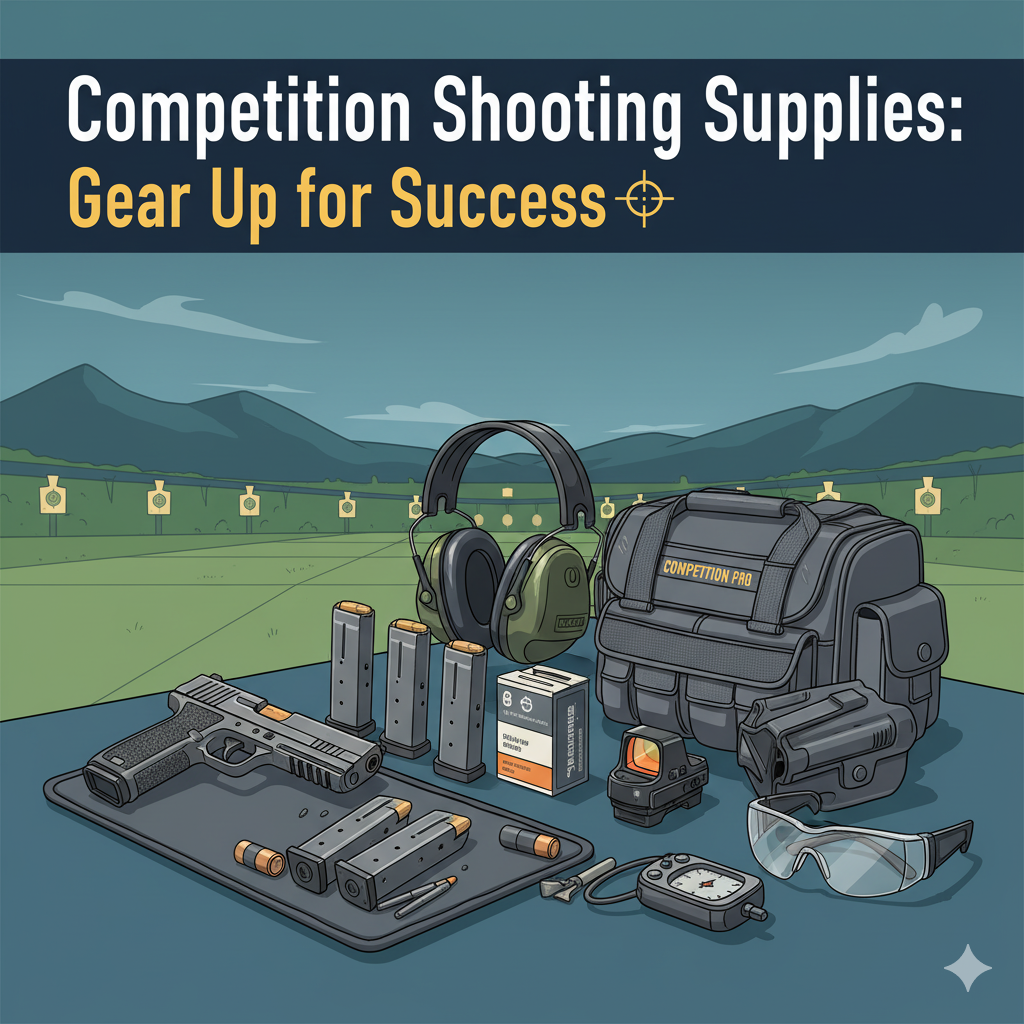
A competition shooting gear checklist should start with safety gear, the current match rulebook, division-legal firearm setup, reliable magazines or loaders, ammunition that meets the match rules, range tools, and a plan for lead and noise hygiene. The right kit depends on the discipline, so check your match rules before buying extra gear.
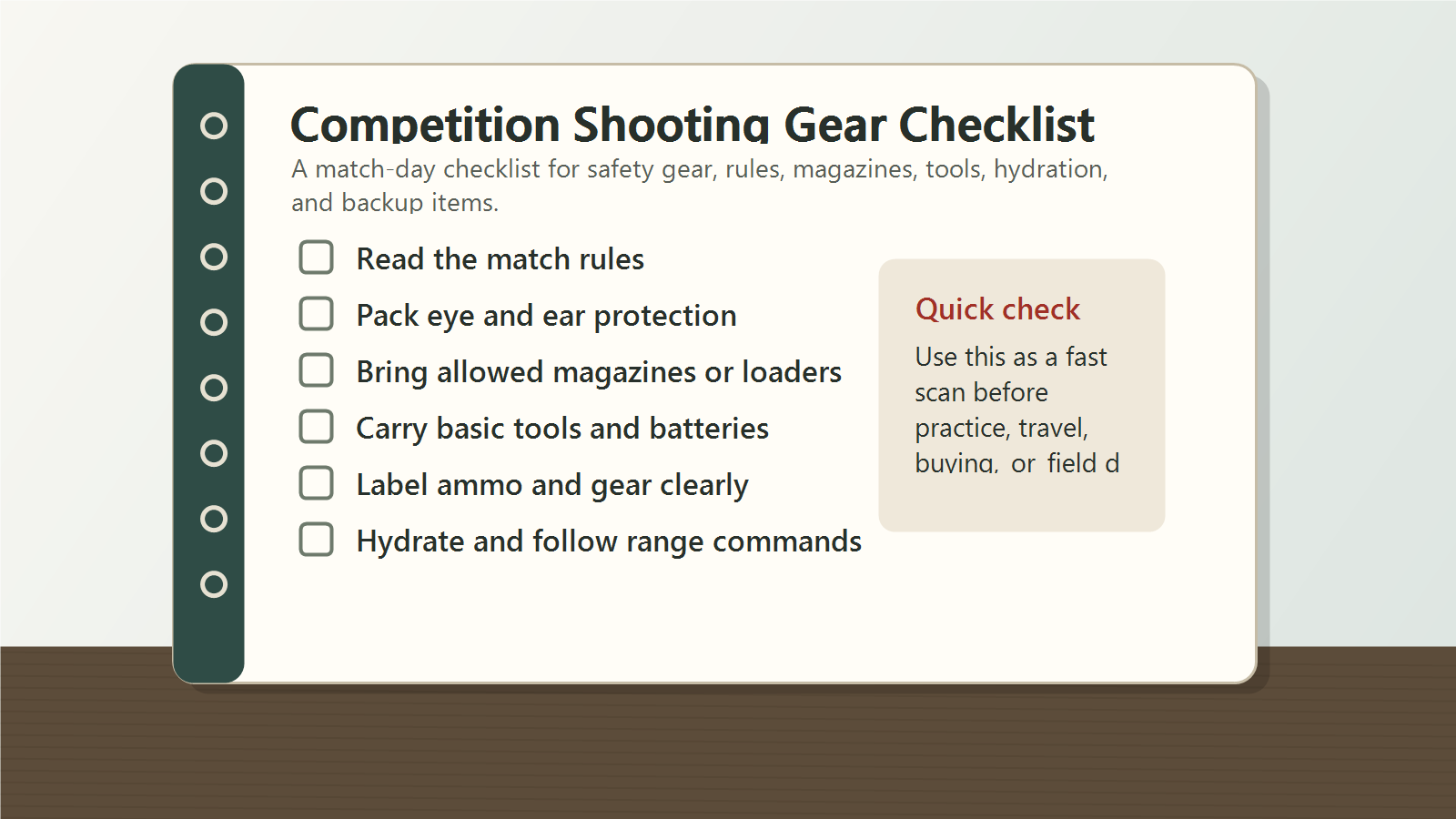
This guide is written for new and returning shooters who want a practical match-day checklist without guessing what is allowed. Use it as a planning tool, then confirm every firearm, holster, optic, magazine, and ammunition choice with your match director or the current rulebook for your event.
Table of Contents
- Quick Answer: What Gear Do You Need for Competition Shooting?
- Check the Rulebook Before Buying Gear
- Start With Firearm Safety Gear
- Match Firearm, Division, and Holster Rules
- Plan Ammunition Without Guessing
- Bring Magazines, Loaders, and Stage Gear
- Add Range Bag Tools and Maintenance Supplies
- Protect Against Lead and Noise Exposure
- Prepare for Dry Fire Safely
- Build Discipline-Specific Checklists
- Match-Day Checklist
- FAQ
- Final Takeaway
Quick Answer: What Gear Do You Need for Competition Shooting?
Most competitors need eye protection, ear protection, a case or bag, a match-legal firearm, enough magazines or loaders, ammunition that matches the event rules, a safe holster or sling if required, chamber flags where required, basic tools, water, snacks, and a printed or saved copy of the match rules.
Safety gear comes first
Eye and ear protection should be packed before the firearm. The NSSF firearm safety rules also remind shooters to keep the muzzle pointed in a safe direction, keep the firearm unloaded when not in use, and use the correct ammunition.
Rules decide the rest of the list
A pistol match, rimfire steel match, service rifle match, and multigun match can require different gear. The safest buying order is simple: choose the event, read the current rulebook, ask the match director what beginners normally bring, then buy only what your division allows.
Check the Rulebook Before Buying Gear
Competition gear is not just about comfort. Division rules can affect firearm setup, optics, holster position, magazine capacity, belt gear, ammunition, and scoring. If you buy before checking the rules, you can end up with equipment that is useful at the range but not right for the match you entered.
USPSA matches
The official USPSA rules page publishes current rules for handgun, rifle, shotgun, and multigun competition. Before choosing a holster, magazine pouch, optic, or magazine length, check the rulebook for your division and match type.
IDPA matches
The IDPA rulebooks explain how equipment, concealment garments, divisions, and match procedures work. A beginner should review those rules before assuming that a holster, mag carrier, or optic setup fits the intended division.
CMP and rifle events
For service rifle, pistol, rimfire sporter, and related events, the CMP competition rulebooks are the place to confirm firearm classes, equipment rules, sling use, sights, and match procedures.
Local club rules
Local matches can add range-specific rules for chamber flags, cold ranges, cart use, safety areas, steel target distance, movement, and ammunition restrictions. Save the event page on your phone and arrive early enough to ask questions before gear comes out of the case.
Start With Firearm Safety Gear
Competition shooting can be fast, but gear choices should slow down around safety. A good checklist separates required safety gear from optional comfort items so nothing important gets buried under accessories.
Eye protection
Use shooting glasses that fit your face and stay in place when you move. Clear, yellow, smoke, or polarized lenses may each help in different light, but the main job is protection from brass, fragments, and debris.
Ear protection
Many shooters use electronic earmuffs so they can hear range commands while reducing loud impulse noise. Indoor ranges, covered firing lines, and rifles with brakes can be especially loud, so some shooters double up with plugs and muffs.
Chamber flags and empty-chamber indicators
Some events require chamber flags when firearms are not on the firing line. Keep a few extras in your bag. They are small, easy to lose, and useful when a match staff member asks for visible empty-chamber confirmation.
Safe transport case
Use a case that protects the firearm and keeps it controlled while moving between the vehicle, check-in area, and firing line. Follow federal, state, local, and range transport rules, and check the ATF firearms information page when federal compliance questions come up.
Match Firearm, Division, and Holster Rules
Your firearm does not need to be fancy to be useful at a first match. It needs to be safe, reliable, familiar, and allowed in the division you plan to shoot. A plain setup that runs well is better than a complicated setup you have not verified.
Confirm the firearm division
Check whether your firearm fits the intended class before match day. Pay attention to optic rules, compensator rules, magazine limits, barrel length, stock or brace rules, trigger restrictions, and any equipment measurements listed by the sanctioning body.
Use a secure holster when the event requires one
For pistol matches, holster safety matters more than speed. The holster should cover the trigger guard, retain the firearm during movement, and match the placement rules for the event. Do not assume a concealment, duty, or competition holster is automatically accepted.
Check optic and sight rules
Optics can move a firearm into a different division. If you are comparing sight options, our guide on how to choose an optical sight can help you think through use case, but the match rulebook still decides what is allowed.
Test reliability before the match
A competition day is not the best time to test a new magazine, new optic mount, new holster, or new ammunition lot. If possible, check function at the range before match day and keep notes on any stoppages or equipment changes.
Plan Ammunition Without Guessing
Ammunition planning should be conservative and rule-aware. Bring enough for the match plus a margin for make-up shots, reshoots, sight checks where allowed, and minor mistakes. Do not use this article as load data; use current manufacturer and published manual information for any reloading work.
Match the cartridge to the firearm
Use only ammunition that matches the exact marking on the firearm and is appropriate for the event. The NSSF safety guidance specifically includes using correct ammunition, and that point matters even more when a shooter is packing multiple guns or calibers.
Check ammunition restrictions
Some ranges restrict steel-core, steel-jacketed, tracer, armor-piercing, magnum, or birdshot size choices depending on targets and backstops. Read the match page and range rules before you pack.
Pack more than the stage count
If the match lists a minimum round count, bring extra. Beginners should have enough margin for misses, make-up shots, chronograph or equipment checks if used, and a possible reshoot. The exact amount depends on the discipline and number of stages.
Bring Magazines, Loaders, and Stage Gear
Stage gear keeps the match moving. The goal is not to carry every accessory you own. The goal is to carry what the event needs, keep it organized, and avoid slowing down the squad.
Magazines and loaders
Bring enough magazines or loaders for the match format. For pistol matches, magazine count can affect reload planning. For rimfire and rifle matches, pre-loading can help you stay ready when your squad is called.
Magazine pouches and belts
Magazine pouches should hold gear securely while moving. Check division rules for placement, angle, retention, and belt setup. A comfortable belt is helpful, but rule compliance comes first.
Sling and support gear
Some rifle events use slings, mats, coats, or rests. Others do not. Confirm the event format before packing support gear, especially for CMP-style events and local precision rifle matches.
Add Range Bag Tools and Maintenance Supplies
A small tool kit can save a match when a screw loosens or a sight needs a simple adjustment. Keep tools organized and avoid working on firearms away from the range’s approved safe area or firing line procedure.
Basic tools
Useful range bag tools include the correct hex keys or bits for your optic and mounts, a small screwdriver set, a torque tool if your setup needs one, lens cloth, spare batteries, a marker, tape, and a notebook.
Cleaning and stoppage supplies
Pack a bore-safe cleaning rod or cable, a chamber brush where appropriate, patches, and a small amount of lubricant. If a squib or bore obstruction is suspected, stop immediately and follow range officer instructions.
Admin items
Bring match registration details, membership cards where required, a pen, cash for local fees if needed, water, snacks, sunscreen, rain gear, and a chair if the match day is long.
Protect Against Lead and Noise Exposure
Competition shooters often focus on gear speed, but long-term range hygiene matters. Lead dust, primer residue, and high noise levels can become repeated exposures for active shooters, especially at indoor or covered ranges.
Indoor range hygiene
The NIOSH indoor firing range alert discusses lead and noise hazards at indoor firing ranges. Practical habits include washing hands after shooting, keeping food and drinks away from the firing area, and changing or cleaning contaminated clothing and gear as appropriate.
Hearing protection habits
Do not remove hearing protection while firing is active. If electronic muffs make range commands easier to hear, check batteries before the match and pack spares.
Clean gear after the match
After the match, wipe down high-contact items, wash hands, and store firearms and ammunition securely. Keep range bags away from children’s play areas and food prep spaces.
Prepare for Dry Fire Safely
Dry fire can help a competitor learn safe handling, sight picture, reloads, and movement patterns, but it requires strict separation from live ammunition. Treat dry practice as a safety routine, not casual handling.
Separate ammunition
Remove live ammunition from the room before dry practice. Check the firearm, magazines, and practice area more than once. Use a safe direction and a backstop that would be safe if a mistake happened.
Use dummy rounds carefully
Dummy rounds and snap caps can help with reload practice, but they should look clearly different from live ammunition. Store them separately and inspect them before each session.
Practice match commands
New competitors should learn common commands before match day. The exact wording can vary by discipline, so review the rulebook and listen carefully during the safety briefing.
Build Discipline-Specific Checklists
A single range bag list is useful, but competition shooters should keep separate checklists for each discipline. That prevents you from packing shotgun gear for a pistol match or forgetting chamber flags for a rifle event.
Pistol competition checklist
For pistol matches, confirm firearm division, holster rules, magazine limits, belt setup, eye and ear protection, chamber flag rules where used, ammunition count, safe-area procedure, and reload plan.
Rifle competition checklist
For rifle events, confirm sling rules, optic rules, magazine limits, chamber flag requirements, zero distance, support gear, mat or coat rules, ammunition restrictions, and target distance expectations.
Shotgun competition checklist
For shotgun matches, check shell type, shot size, slug or buckshot requirements, carrier rules, choke choice, safety flag rules, and range restrictions on ammunition type.
Multigun checklist
Multigun needs extra planning because pistol, rifle, and shotgun gear may all appear in one match. Confirm staging rules, abandonment procedure, muzzle direction rules, and how firearms must be made safe between stages.
Match-Day Checklist
Use this list the night before the match, then check it again before leaving home. Keep the final list short enough that you will actually use it.
- Current rulebook or event page saved.
- Firearm case, eye protection, and ear protection packed.
- Correct firearm, magazines, loaders, sling, holster, or belt gear packed.
- Ammunition verified against firearm, match rules, and range restrictions.
- Chamber flags or empty-chamber indicators packed if required.
- Tools, batteries, lubricant, cleaning cable, and lens cloth packed.
- Water, snacks, weather gear, sunscreen, and first-aid basics packed.
- Registration, ID, membership cards, and payment method ready.
- Live ammunition separated from any dry-fire practice area.
- Arrival time planned so you can attend the safety briefing.
FAQ
What should I bring to my first shooting match?
Bring eye protection, ear protection, a safe firearm that fits the match rules, enough ammunition, magazines or loaders, a case, water, snacks, and the current event rules. Ask the match director before buying specialized gear.
Do I need expensive gear to start competition shooting?
No. Many beginners can start with reliable, rule-legal gear they already own. Safety, reliability, rule compliance, and practice matter more than buying extra equipment too early.
How much ammunition should I bring?
Check the match minimum round count and bring extra for make-up shots, reshoots, and mistakes. The right amount depends on discipline, stage count, and match format.
Can I use any holster for a pistol match?
No. Holster rules vary by discipline and division. Check the current rulebook for trigger coverage, retention, belt placement, holster type, and allowed position before match day.
Should I clean my firearm during a match?
Usually, only simple maintenance is needed unless the firearm has a problem. Follow range procedures, use approved safe areas, and stop immediately if you suspect an obstruction or unsafe condition.
Final Takeaway
The best competition shooting supplies are the ones that keep you safe, fit the rules, and help you finish the match without confusion. Start with the rulebook, safety gear, reliable equipment, and a short checklist. Add specialized gear only after you know the discipline and division you want to shoot.
Related reading: backcountry gear selection guide and day hunting packing checklist.
Related reading: competition AR-15 setup.