Best Spotting Scope
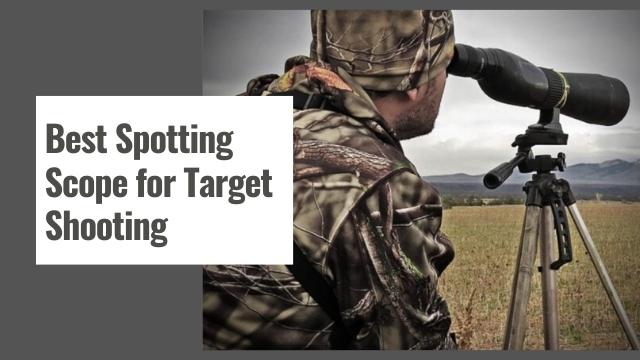
Discover the best spotting scope for target shooting, equipped with essential optics for improved observation and vertical imaging of distant objects. This versatile tool is ideal for activities such as bird watching, landscape viewing, backcountry hunting, and wildlife observation.
Table of contents
Our Top Picks – The 10 Best Spotting Scope
Reviews of the Best Spotting Scope for Target Shooting
- Celestron 52250 80mm Ultima Zoom Spotting Scope
- Gosky 20-60x 80 Porro Prism Scope
- Vortex Razor HD Spotting Scope
- Celestron 52304 Regal M2 65ED Scope
- KONUS 7122 20x-60x100mm Spotting Scope
- Redfield Rampage 20-60x80mm Angled Spotting Scope
- Bushnell Trophy Xtreme Spotting Scope
- Redfield Rampage 20-60x60mm Straight Scope
- Nikon Prostaff 5 Proscope 82mm Angled Body Scope
- BARSKA 15-40×50 Colorado Spotting Scope
Product verification note: We have paused the older Amazon product links on this spotting-scope guide while the current product lineup, ASINs, availability, official specs, and approved image route are rechecked. Use the guide below for range-observation buying criteria until the product recommendations are rebuilt.
As the hunters or target shooters need more magnification than a pair of binoculars, so a spotting scope is a fantastic investment for them, which brings images closer to the eyes. So, you should prefer a spotting scope when you’re going to do target shooting or big game hunting.
Finding the Best Spotting Scope for Target Shooting among a lot of models available on the market can be difficult for you. They look the same, and you will face difficulties in figuring out which one is suitable according to your needs.
You need to take a test in which one is perfect under a variety of conditions, such as heatwaves and mirage and adds more magnification to the distant targets, what you need is a way to view your target from remote positions.
Our Top Picks – The 10 Best Spotting Scope
Comparison table paused pending current ASIN and product verification.
Spec Comparison at a Glance
While pricing and availability are being re-verified, the optical specifications below are stable across model generations and are the numbers that actually decide whether a scope suits your shooting distance. Use this as a shortlist filter before you go looking at current stock.
| # | Model | Magnification | Objective | Body Style | Best Suited For |
|---|---|---|---|---|---|
| 1 | Celestron Ultima 80 | 20–60x | 80mm | 45° angled | All-round range use out to 500+ yards |
| 2 | Gosky 20-60×80 Porro | 20–60x | 80mm | Angled | Budget digiscoping and casual observation |
| 3 | Vortex Razor HD | 20–60x | 85mm | Straight or angled | Serious long-range and low-light work |
| 4 | Celestron Regal M2 65ED | 16–48x | 65mm | Angled | Backpack hunting, ED-glass clarity per ounce |
| 5 | KONUS 7122 | 20–60x | 100mm | Angled | Static bench use where light gathering rules |
| 6 | Redfield Rampage 80 | 20–60x | 80mm | Angled | Value-priced 300–600 yard target spotting |
| 7 | Bushnell Trophy Xtreme | 20–60x | 65mm | Angled | Mid-range hunting and general glassing |
| 8 | Redfield Rampage 60 | 20–60x | 60mm | Straight | Compact travel and 100–300 yard ranges |
| 9 | Nikon Prostaff 5 82mm | 20–60x | 82mm | Angled or straight | Bright, high-contrast images in variable light |
| 10 | BARSKA Colorado | 15–40x | 50mm | Straight | Short-range plinking and casual use |
A quick way to read this table: the objective diameter tells you how much light the scope collects (and therefore how usable the top of the zoom range will be), while the body style tells you how comfortably you will sit behind it. In practice, a shooter who spends most of their time on a 100- to 300-yard bench is better served by a sharp 60–65mm scope than by a soft 80mm one, because glass quality — not raw aperture — is what reveals a .224 bullet hole in paper.
Reviews of the Best Spotting Scope for Target Shooting
Every spotting scope is designed to be used with a tripod and is less portable than a pair of binoculars. It offers the best magnification range and clarity for spotting animals from long distances. It is instead a remarkable piece of technology.
There are several spotting scopes available for you if you are an outdoor enthusiast looking for target shooting, which is capable of delivering you a bright image, and clear, and crisp image view at the time of such activities.
Here we have picked the best target shooting spotting scope, which will meet your requirements. Remember, there are some essential features like navigation, clarity, ease, and price range, which you have to think about before picking the one for fulfilling your demands.
1. Celestron 52250 80mm Ultima Zoom Spotting Scope
The Celestron Ultima is an anti-reflective multi-coated optic. It is one of the best spotting scopes for target shooting available on the market. If you need high-quality optical views, you can try this scope of 80mm achromatic objective lens.
It also provides a 20-60x magnification range during long-range target shooting. This premium spotting scope delivers 77% brighter views than a typical 60mm scope. The eyepiece zoom works smoothly to sharp focus on your target with a high resolution of the clear image.
You can set the eyepiece of this rifle scope at an exactly 45-degree angle. So, you can adjust your eye and body position in a comfortable zone to shoot your target.
Besides, it comes with a sleek, fully waterproof design, including a padded soft carrying case with zippers on both ends. So, you can keep the scope protected even while mounted on a tripod without eliminating the casing.
Again, the 18-inch-long, 3.6-pound weight gear doesn’t take too much space in your bag and easy to carry when you are out of the home. In any rainy situation or a drizzly atmospheric condition, this long range spotting scope is ready for continuous target shooting.
https://www.youtube.com/watch?v=d7YkSoFPZBc
Pros
Waterproof, fog proof and rugged
Durable build quality
Multi-coated high quality optics
Well-matched with a variety of tripods
Smooth zooming function with flexible use
Cons
- Image quality might be poor beyond the 25x magnification
Product link paused pending source verification.
2. Gosky 20-60x 80 Porro Prism Scope
The Porro Prism from Gosky is one of the high quality spotting scopes. It comes with plenty of attractive features such as a 20-60x magnification eyepiece, a fully multi-coated 80mm objective lens, a quality prism, and a dynamic focusing system.
These things allow the users to zoom in on a distant target easily. You can also have brighter views through this spotting scope. This gear also comes with an excellent digiscoping cell phone adapter.
A user can easily capture accurate images and videos of distant objects by merely placing the camera on the smartphone. When it comes to protection, a durable magnalium framework and shock-absorbing rubber armor make this scope protected from any harmful things.
Besides that, the scope receives excellent protection of 100% fog-proof and waterproof construction, which allows you to use the scope in any harsh weather.
It also includes a metal tablet tripod, which will provide stable support for the scope to get the best viewing experience. After all, you’ll have a carrying case, cleaning cloth and handy straps, eyepiece, and lens protection cover with this.
Pros
100% waterproof and fog proof
Durable
Easy to use
Well-build structure
Reasonable price
Cons
- It comes with a cheap and poor quality tripod
Product link paused pending source verification.
3. Vortex Razor HD Spotting Scope
The Vortex Razor HD spotting scope sets a new standard in high-end optical technology. It comes with a magnesium alloy frame so that you can feel it lightweight while carrying, making handling a little bit easier.
It also features a grey textured armored body with a dark green color around the entire prism. This consists of a triple-apochromatic 85-mm lens, which provides minimal color aberration with maximum clarity.
It also delivers the performance of an HD-glass scope with a 20-60x smoothly adjustable zoom eyepiece. Most importantly, the scope has an excellent camera adapter for fitting multiple cameras.
Besides that, this lightweight rifle scope has the lens of AmorTek coating that protects against dirt, scratches, and corrosion. You can also have durable lens caps and a built-in lens hood that minimize lens flare.
You’ll find the primary sighting tube attached to the lens mount. this best spotting scope for long range shooting has both straight and angled versions to fill the requirements of different users. The angled eyepiece is usually perfect for wide range shooting.
These scopes are wholly sealed with argon to prevent internal fogging and water intrusion. They also have removable shoulder straps with two carrying handles. You will be able to mount the tripod without removing the case.
Pros
Prevents damage
Simple to use
Scratch proof
Provides you crisp and vivid images
Multi-coating technology
Cons
- The tripod can be quite heavy
Product link paused pending source verification.
4. Celestron 52304 Regal M2 65ED Scope
The Regal M2 65ED from Celestron is one of the best value spotting scopes for target shooting, which delivers higher-end offerings, promising reliable construction and superior optical capabilities.
The magnesium alloy body of this scope is built with fully multi-coated optics. It consists of several layers of materials that are known to reduce the amount of light distortion. It usually occurs when the light passes through the lens.
Its objective lens are made of ED glass (extra-low dispersion glass) that offers accurate color reproduction, resolution, and contrast. It also allows you to see long-distance views of up to several hundred yards.
For that, you needn’t compromise the sharpness and clarity of the views. Besides that, it comes with an excellent eye relief of 20mm. It also features the 16-48x, 1.25-inch zoom eyepiece that you can adjust with a simple turn or two to accommodate the user’s unique situation.
It can provide as accurate and comfortable magnification as possible. Again, this scope allows you to attach it to a tripod in a variety of positions. It also enables you to choose the way that perfectly matches your viewing experience.
You can have a padded view-through case, an eyepiece cover, an objective lens cover, a T-mount adapter, and a cleaning cloth with this shooting tool.
https://www.youtube.com/watch?v=8cVBJSmN5CA
Pros
Flexible tripod mounting system
Interchangeable eyepiece option
Dual focus system
Digiscope adaptable
Essential optics included
Cons
- There are some questions quality control issues from the users
Product link paused pending source verification.
5. KONUS 7122 20x-60x100mm Spotting Scope
The KONUS is a powerful spotting scope with 100mm larger objective lens provides high image quality. This scope is a layer of multi-coating, which comes with the facility of digiscoping when you are interested in target shooting.
It comes with an adapter for setting the camera or smartphone to see the target. Besides, a durable metal body structure with rubber armor and a bonnie constructionist is shock-absorbing for long-term use and ensures the durability of your shooting activities.
You will also have wide-ranging 20-60x magnification that offers various target settings. Shield optics waterproof and nitrogen purged housing fit for all-weather situations.
Again, the quick swivel screw offers the moving facility for field beach or window-mounted use. It is also an adjustable tripod optic that gives the opportunity for firm and steady positioning and viewing.
With this affordable spotting scope, you will have a carrying case, which will protect everything when not in use. It will even be helpful for easy transportation from one place to another.
Pros
Obvious glass
Minimal chromatic aberration
Perfect size
Affordable price
Oversized objective lens
Cons
- Tripod is not included
Product link paused pending source verification.
6. Redfield Rampage 20-60x80mm Angled Spotting Scope
The Redfield Rampage Angled Spotting Scope is made of high-quality material with an 80mm objective lens with magnification range from 20x to 60x. When you look through the scope, you’ll find a bright and clear image, even during low light conditions.
The retractable lens shade also keeps glare to a minimum state in bright sunlight. With being said, this spotting scope has an eye relief from 16.6mm to 19.3mm and a close focus distance of 14.3 feet.
It also comes with BaK-4 durable prism glass that offers fantastic clarity and image resolution. Keep in mind that this angled scope is a rugged, polycarbonate, and housing shock resistant
Plus, this is built with fully multi-coated optics with a nicely knurled focus knob. It allows you to get a firm grip on it even when you’re hands are sweaty or you’re wearing gloves. After all, if you’re looking for one of the best target shooting spotting scopes, this one could be a suitable option for you.
Pros
Fantastic image quality
Waterproof and fog-proof structure
Captures bright image during the low light condition
Anti-glare device
Easy to use and control
Cons
- Included tripod is made of plastic and a little bit shaky
Product link paused pending source verification.
7. Bushnell Trophy Xtreme Spotting Scope
Another fantastic option on this list is the Bushnell Trophy Xtreme, which is also one of the best target shooting spotting scopes. It comes with a higher magnification with a 65mm objective lens so that you can see brighter images in low light conditions.
It also features fully multi-coated lenses with BaK-d glass, which are sealed with an O-ring and a high quality optics chamber with nitrogen-purged. Also, this spotting scope is waterproof to protect the Porro prism design.
It also offers an adjustable magnitude of 20x to 60x so that you can have a wide variety of options to aim your targets. The actual field of view is another significant aspect of this scope, offering 110-feet at 1,000-yards when you’re using 20x magnification.
You can also see 55-feet at 1,000-yards if you use it at 60x magnification. Alongside the magnification, It can benefit you by providing excellent resolution, contrast, and color reproduction.
The housing of this scope is also a very durable and strong rubber casing, only designed to be mounted onto a tripod. The included tripod might be flimsy, so we recommend you consider purchasing a separate tripod.
Pros
Superb clear image quality
Offers a crisp image and bright viewing
Fog proof and waterproof design
Excellent eye relief
Lifetime warranty by Bushnell
Cons
- The included tripod might be flimsy
Product link paused pending source verification.
8. Redfield Rampage 20-60x60mm Straight Scope
Redfield has already earned recognition and popularity around the world in the field of high-quality shooting gear. The Redfield Rampage Straight Eyepiece Spotting Scope is one of them for target shooting with extreme magnification from 20x to 60x.
This rugged spotting scope comes with the same material as polycarbonate and bulletproof glass. For an extra layer of protection, the high-quality optic features fully multi-coated O-ring sealed lenses with BaK-4 prisms and a nitrogen-charged optics chamber.
Hence, the scope has excellent light-gathering capabilities. You can zoom the view easily with the front knob for having unique images with plenty of brightness and contrast.
In bright sunlight, the retractable lens of this scope makes glare away so that you can use it without feeling any hassle. The 60mm objective lens also allows you to focus on objects as close as 19.8 feet away.
This scope also has a wide field of view that provides you 114 feet of view from 1,000 yards at 20x magnification. You’ll also have 51 feet of view from 1,000 yards at 60x magnification.
After all, you will have a soft storage case with a strap, eyepiece, and objective lens cover to keep your gear secure when it is not in use. If you pick this affordable spotting scope for your upcoming shooting adventures, this optic may be a suitable option for you.
Pros
Waterproof and fog proof body
Captures bright and crisp images
Excellent field of view
Delivers exclusive image resolution and clarity
Functions well in any weather condition
Cons
- The included tripod might be a little bit shaky
Product link paused pending source verification.
9. Nikon Prostaff 5 Proscope 82mm Angled Body Scope
Nikon is a well-known brand for its high-quality camera lenses throughout the world. Nowadays, it’s producing several spotting scopes for different types of users.
The Nikon Prostaff 5 is one of them, which has next-generation technology, delivering high magnification capabilities for the truly passionate person.
It comes with multi-coated lenses that improve chromatic aberration reduction to provide bright high contrast images in most lighting conditions. It delivers razor-sharp images with a magnification of 20-60x. It’s also available in both 45-degree angled and straight body versions.
Besides that, this compact spotting scope is a construction of rubber armor around with excellent fog proof and waterproof durability. It can be used together with a digital camera bracket available as an optional accessory. The built-in sunshade eliminates glare when using it in bright daylight.
Pros
Greater magnification power
Multi-coated optics
Light material and compact size
Waterproof and fog proof
Provides extreme brightness
Cons
- It might be fragile and sensitive to shocks
Product link paused pending source verification.
10. BARSKA 15-40×50 Colorado Spotting Scope
The BARSKA Colorado is a Porro prism spotting scope, which features a straight eyepiece for target shooting.
This spotting scope provides you with a 50mm objective lens and adjustable zoom from 15x to 40x magnification with excellent resolution, clarity, and crispness, although the image falls a bit fuzzy at maximum magnification.
With its fully coated lens, it does a decent job of gathering light. The focus ring of this scope works very well, with just enough stiffness to prevent accidentally bumping your image. Also, this scope is covered with rubberized armor, which does a lot of protection from bumps and scuffles.
After all, the scope is extremely durable, with shock-absorbing rubber coating and O-ring sealed lenses for waterproofing. It is also nitrogen-filled so that it won’t fog up on you. It comes with a table tripod and a carrying case.
Pros
Fully coated optic
Shock-absorbing rubber armor
Excellent field of view
Wider zooming system
Easy to use
Cons
Might not be suitable for long-range use
Doesn’t include lens covers
Product link paused pending source verification.
What to Consider When Choosing a Spotting Scope for Target Shooting?
When choosing the target shooting spotting scope, it becomes necessary to know the cause and effect of a performance. Let’s take a closer look at the features you’ll want to keep in mind while selecting your next spotting scope.
Design
Spotting scopes are available in 2 different forms. One is straight, and another one is angled.
With the straight scope, you can stare straight through the lens at the target. This eyepiece will make it easier to see objects in front of you and enable faster Target acquisition. Hence, these straight scopes are mostly suitable for downward angles.
On the other hand, angle spotting scopes are the optimum choice for seeing stuff above your eye line. Since it has mirrors in it, the light from the object is coming into your eye at a 45-degree angle. Because of the eyepiece’s natural angle, these angled scopes are more comfortable and better to use for uphill aiming.
One practical detail that catalogue specs never mention: an angled scope lets a group of shooters of different heights share the same tripod without re-levelling it, because you simply lean over the eyepiece rather than raising or lowering the whole head. That makes angled bodies the default choice at a club bench or on a squad line. Straight bodies win when you glass from inside a vehicle, from a prone position, or when you are tracking a moving animal and need the barrel-sighting instinct of pointing the tube where you are already looking. If most of your shooting happens from awkward field postures, it is worth matching the scope to the positions you actually shoot from rather than to the bench you rarely use.
Yardage
Many atmospheric conditions affect the quality of images captured by a shooting spotting scope. These atmospheric conditions change throughout the day, and there is no way out of this situation.
Heatwaves and mirage can render useless even the best target shooting spotting scopes. Increasing the magnification or distance from the target cannot solve these problems. As a result, different scopes will be required for different yardages.
On the other hand, many scopes are wrongly blamed on their surroundings because of their poor performance. Therefore, it’s important to consider various yardages before deciding on a scope.
Yards Magnification Objective lens Diameter
100 16-48x, 14-45x, 18-36x, and 10-30x 50mm
200 16-48x, 14-45x, 18-36x, and 10-30x 60mm
300 20-60x or 20-80x 65mm
500 20-60x or 20-80x 85mm
1000 20-60x or 20-80x Over 85mm
That guidance is easier to use in table form, and it is worth adding the target size you can realistically expect to resolve at each distance:
| Distance | Practical magnification | Objective | What you can realistically see |
|---|---|---|---|
| 100 yd | 20–36x | 50–60mm | .22 and larger bullet holes on clean paper |
| 200 yd | 25–45x | 60–65mm | .30 cal holes; smaller calibres need good glass |
| 300 yd | 30–50x | 65mm | Holes only with ED/HD glass and still air |
| 500 yd | 30–60x | 80–85mm | Splash, steel impacts, and target markers |
| 1000 yd | 40–60x | 85mm+ | Impact splash, mirage, and scoring discs |
A hard truth worth stating plainly: past about 300 yards, spotting individual holes in paper is far more a function of glass quality, air stability and target contrast than of magnification. On a hot afternoon it is common to dial back from 60x to 30x and instantly see more, because the lower power cuts through the boiling air. Buy the aperture and glass for the distance, then treat the top of the zoom range as a bonus rather than a working setting.
Glass Quality
It is the most significant aspect than the magnification. A spotting scope will provide better results and color rendition if it features high-quality glass. The larger the power range, the more superior the performance of high-end glass over low-end glass.
Besides, it is also the most important factor to consider in terms of long-range optical performance. A spotting scope with high-quality glass will allow you to see the bullet holes from a long way away. Therefore, we recommend using completely multi-coated ED glass to get the best performance.
It also helps to know what the marketing words actually mean. "Coated" means at least one surface has a single anti-reflective layer; "fully multi-coated" means every air-to-glass surface carries multiple layers, and that is the minimum you should accept. ED (extra-low dispersion) and HD glass reduce chromatic aberration — the purple or green fringing you see along a black bullseye against white paper — which is exactly the artefact that hides bullet holes. Prism material matters too: BaK-4 prisms produce a round, evenly illuminated exit pupil, while cheaper BK-7 prisms clip the edges and leave grey, squared-off corners. Hold a scope at arm's length and look at the bright circle in the eyepiece; if it is a clean circle, you are looking at decent prisms.
Eye Relief
When it comes to optical quality devices, eye comfort is a must-have. Eye relief can significantly impact any scope’s usability. Distance between your eye and the last lens of the scope is known as eye relief.
The greater the numerical value, the further away you can stand from the scope while still being able to see the crystal clear image. Gun-mounted scopes have a more important eye relief than tripod-mounted ones. However, a target shooter’s minimum eye-relief requirement is 18mm.
If you wear glasses, treat 18mm as the floor and look for a twist-up or fold-down eyecup so you can sit the lens of your spectacles at the correct distance without blacking out the edges of the image. Shooters with astigmatism in particular should keep their glasses on behind a spotting scope — a scope's dioptre adjustment corrects for simple long- or short-sightedness, not for astigmatism, which is the same reason eyesight quirks change how sighting systems behave on a rifle. Set the dioptre once, with the zoom at its lowest power and the scope focused on a distant hard edge, then leave it alone.
Waterproof
No one can predict the weather, but we’ll be shooting targets through a spotting scope anytime. Ensure that your scope is either waterproof or not. If you go for shooting in a wet area with a lot of rain and moisture, waterproofing will be a good option.
There is a meaningful difference between "water resistant" and a genuinely sealed optic. Look for O-ring sealing plus dry-gas purging — nitrogen on most mid-priced scopes, argon on premium models, since argon molecules are larger and leak out more slowly over the years. That purge is what stops internal fogging when you carry a cold scope out of a truck into humid air, and no amount of external wiping will fix a scope that fogs on the inside. If you regularly glass in genuinely foul conditions, a sealed body plus a stay-on case is the combination that keeps you spotting when everyone else has packed up; the same discipline applies to glassing through a downpour in the field.
Objective Lens Diameter and Exit Pupil
The objective is the front lens, and its diameter in millimetres sets the ceiling on how much light the scope can gather. Divide the objective by the magnification and you get the exit pupil — the width of the beam of light leaving the eyepiece. An 80mm scope at 20x gives a 4mm exit pupil, which is comfortable and bright; the same scope at 60x gives just 1.33mm, which is dim, twitchy, and unforgiving of any head movement.
This single calculation explains most disappointment with cheap high-power scopes. A 50mm scope at 40x delivers a 1.25mm exit pupil, which is why the image "falls apart" at the top end. As a rule of thumb, keep the exit pupil above 1.5mm in good light and above 2mm at dawn and dusk, and choose the objective size that lets you do that at your usual distance.
Focus System: Single Knob vs Dual Speed
Budget scopes use a single collar or knob for focusing. Better scopes use a dual-speed arrangement: a coarse knob to get roughly on target and a fine knob for the last, critical fraction of a turn. At 50x and 600 yards, the depth of focus is razor thin, and a fine focus is the difference between a crisp hole and a fuzzy smudge.
Also check the focus travel by feel. A good knob is smooth with slight resistance and no backlash — if it flops loosely or requires a shove to start moving, the image will jump every time you touch it. Helical (collar-style) focus, common on European-style scopes, is fast but harder to fine-tune with gloves on.
Field of View and Close Focus
Field of view is quoted in feet at 1,000 yards, and it shrinks as you zoom. A wide field at the bottom of the zoom range makes it far easier to find your target in the first place — a common mistake is to leave the scope at maximum power, then spend a minute hunting for a target that would have appeared instantly at 20x. Always acquire wide, then zoom in.
Close focus is the shortest distance at which the scope will come to a sharp focus, typically between 14 and 30 feet. It rarely matters on a rifle range, but it becomes important if you also use the scope for birding or for reading targets on a 25-yard pistol bay.
Weight, Packability and Tripod Load
An 85mm scope with a stay-on case and a tripod capable of holding it steady is a serious lump of kit — frequently 8 to 12 pounds all-in once you include the head. That is fine for a bench, and punishing on a mountain. For backcountry work, a 60–65mm ED scope on a carbon tripod usually delivers more useful glassing time simply because you actually carry it, which is the same trade-off behind shaving grams off your load elsewhere in your kit.
Warranty and Aftersales Support
Optics get dropped, and a spotting scope's eyepiece and focus mechanism are the parts that fail. Several US brands still offer unlimited, transferable, no-receipt-required warranties — Vortex Optics is the best-known example, and Bushnell, Leupold and Celestron all run their own long-term service programmes. Before you buy, check whether repairs are handled domestically or shipped overseas, because a three-week turnaround in season is a different proposition to a three-month one.
Straight vs Angled Spotting Scope: A Direct Comparison
| Factor | Straight body | Angled body |
|---|---|---|
| Target acquisition | Faster and more intuitive | Slower until you build the habit |
| Shared use | Requires height adjustment per user | Easy to share, no re-levelling |
| Glassing uphill | Uncomfortable, neck strain | Very comfortable |
| Glassing downhill / from a ridge | Comfortable | Awkward, needs a high tripod position |
| Prone or vehicle use | Excellent | Poor from prone, fine from a window mount |
| Tripod height required | Roughly eye level | Can sit lower, shorter tripod works |
| Weather exposure | Objective and eyepiece both shielded | Eyepiece faces upward and collects rain and dust |
| Digiscoping | Simple, camera sits in line | Slightly more fiddly to balance |
If you can only own one, the angled body is the more versatile pick for a shooter who mostly works from a bench or a seated glassing position. Buy straight if you spend real time prone behind a rifle or scanning from a truck.
Tripods, Heads and Mounts: The Half of the Setup Most People Skip
It is worth saying bluntly: the bundled tripods that come with sub-$300 spotting scopes are almost always the weakest link, and several of the reviews above flag exactly that. A wobbly tripod destroys resolution far more effectively than mediocre glass, because at 40x every tiny vibration is magnified 40 times as well.
- Load rating: aim for a tripod rated at roughly three times the weight of your scope. A 4-pound scope wants a tripod rated for 12 pounds or more, not 5.
- Head type: a fluid video head with a long pan handle gives smooth, controllable movement and is the standard choice for spotting. Ball heads are lighter but fiddly to fine-position at high magnification.
- Legs: aluminium is cheaper and dampens vibration well; carbon fibre costs more and saves roughly a third of the weight. Twist locks shed grit better than flip locks in dusty conditions.
- Centre column: raise it as little as possible. An extended centre column is the single biggest source of wobble in an otherwise decent tripod.
- Field alternatives: for hunting where a full tripod is too slow or heavy, a height-adjustable shooting rest with an optics adapter gives you a usable, quickly deployed platform from sitting or kneeling.
One field trick that costs nothing: hang your pack or a water bottle from the tripod's centre hook. The added mass damps vibration noticeably in wind, and it is the fastest way to sharpen the image without spending money.
How to Set Up and Use a Spotting Scope at the Range
A spotting scope rewards a repeatable setup routine. Work through these steps once and you will spend your range time reading targets rather than fighting the equipment.
- Level and lock the tripod first. Spread the legs fully, keep the centre column down, and make sure the feet are on firm ground rather than loose gravel or a shooting mat.
- Position the scope beside your firing position, not in front of it. It should be reachable without breaking your body position behind the rifle — most shooters set the eyepiece just behind and slightly to the support side of the stock.
- Set the dioptre. Zoom to minimum power, focus on a distant, high-contrast edge, then adjust the eyepiece dioptre until the image is sharp for your eye. Do this once per shooter, not once per session.
- Acquire wide, then zoom. Find the target frame at the lowest power, centre it, then increase magnification and refine focus.
- Refocus every time you change power. Most zoom spotting scopes are not parfocal; the image will soften as you zoom if you do not touch the focus knob.
- Shade the objective. Extend the sunshade, or drape a cloth over the tube on hot days, to cut glare and slow the heat build-up that causes internal shimmer.
- Read the target between shots, not during. Set your eye to the scope only after the rifle has settled, so you are not disturbing your position on the trigger.
Newer shooters often find the spotting scope is the piece of kit that finally makes practice productive, because you stop walking downrange every five rounds. If you are still assembling the rest of your gear, our rundown of what belongs in a first-timer's range bag pairs naturally with this guide.
Reading Mirage, Wind and Light Through the Scope
A spotting scope is not only a hole-counter — it is a wind-reading instrument, and for many long-range shooters that is its most valuable job. Mirage is the visible shimmer caused by light bending as it passes through air layers of different temperature, the same atmospheric refraction that NOAA describes in its weather and optics resources. Learning to read it takes practice, but the method is simple.
- Focus the scope roughly two-thirds of the way to the target, not on the target itself. The mirage becomes visible as flowing waves rather than a blurred bullseye.
- Boiling mirage that rises straight up means little or no crosswind.
- Waves running left to right, or right to left, show wind direction; the flatter and faster the waves, the stronger the wind.
- When mirage flattens out to almost horizontal, expect a significant hold — and expect your point of aim to appear displaced, since heavy mirage can shift the apparent position of the target.
Two practical cautions from the line. First, mirage can make a target look higher than it is, so groups shot in heavy mirage often print low when conditions calm. Second, mirage often comes off the ground in front of your own bench, not from downrange — moving the scope a few feet, or raising the tripod, sometimes clears it entirely.
Light matters just as much. Flat overcast light gives the best contrast for reading holes in paper; harsh midday sun washes them out. Early morning and late evening sessions favour large objectives, and once the light genuinely goes, no conventional glass will help — that is where a thermal monocular takes over for legal after-dark observation.
Digiscoping: Recording What You See
Digiscoping means shooting photos or video through the spotting scope's eyepiece, either with a smartphone adapter or a camera attached via a T-mount. It has genuinely useful applications: documenting a group for a load-development log, sharing a call on target scoring, or photographing game for identification at a distance.
A few things make the difference between usable footage and a shaky mess:
- Use the lowest magnification that frames the subject. Digiscoping amplifies every flaw, and 60x video is almost always unwatchable.
- Centre the phone's lens over the eyepiece precisely, then lock the clamp. Even a millimetre off-axis produces heavy vignetting.
- Turn off digital zoom and let the scope do the work; digital zoom simply crops and softens.
- Use a timer or remote shutter so you are not touching the rig at the moment of capture.
- Expect vignetting at low power — the black circle around the frame is normal and shrinks as you zoom slightly in.
If your scope has a removable eyepiece and a T-mount thread, a mirrorless camera body will give dramatically better results than a phone, at the cost of setup time and weight.
Spotting Scope Choices for Hunters vs Target Shooters
The two use cases pull specifications in different directions, and buying the wrong end of that spectrum is the most common expensive mistake.
| Priority | Target shooter | Hunter |
|---|---|---|
| Top magnification | High — resolving holes in paper | Moderate — judging antlers, coat, and movement |
| Objective size | Large is fine, weight rarely matters | Smaller and lighter usually wins |
| Body style | Angled for bench comfort | Depends on terrain; straight for prone and vehicles |
| Low-light performance | Rarely critical | Often decisive at dawn and dusk |
| Tripod | Heavy and rock-solid | Light, fast to deploy |
| Ruggedness | Moderate | High — it will be knocked and rained on |
For hunters, the scope earns its keep in judging animals before a stalk rather than in counting hits. Getting a good look at body size, antler mass and behaviour from a mile away saves miles of walking, which is exactly why glassing discipline matters as much as gear across different types of country. It is also the tool that settles arguments about species and maturity at distance — useful if you hunt where two similar deer species overlap on the same ground.
A spotting scope is equally valuable outside the season. Sitting on a ridge and watching feeding patterns, entry trails and bedding areas from a distance is far less intrusive than walking the ground, and it pairs well with the observations gathered while checking sign after the season closes.
Common Mistakes to Avoid
- Running maximum magnification by default. The top of the zoom range is a specification, not a working setting. Most useful spotting happens between 20x and 40x.
- Pairing a good scope with a bad tripod. If your budget is tight, a 65mm scope on a solid tripod beats an 85mm scope on a wobbly one every single time.
- Ignoring the dioptre. A scope that "was never sharp" is very often just set for someone else's eye.
- Buying purely on objective size. Aperture without glass quality gives you a bigger, brighter, blurry image.
- Touching the scope while looking through it. Fine-position with the pan handle, then let go before you put your eye to the eyepiece.
- Wiping the objective with a shirt tail. Grit plus fabric equals permanent scratches in the coatings.
- Leaving it in a hot vehicle. Repeated heat cycling stresses seals and can eventually compromise the gas purge.
Care, Cleaning and Storage
Spotting scope lenses are coated, and those coatings are softer than the glass beneath them. Clean as little as possible and as gently as possible.
- Blow first. Use a blower bulb or canned air held upright to remove loose grit before anything touches the lens.
- Brush second. A soft lens brush lifts the particles the blower missed.
- Wipe last. Use a proper lens cloth or a lens tissue with a drop of optical cleaning fluid, working in a spiral from the centre outward. Never scrub, and never apply fluid directly to the lens.
- Dry the body, not the glass. After a wet session, wipe the armour and leave the scope uncapped in a warm, dry room until all external moisture is gone, then cap it.
- Store with caps on and in the case, stored horizontally or eyepiece-up, out of direct sunlight — a scope left pointing at the sun can concentrate enough heat to damage internal components.
Manufacturers publish their own care instructions and accessory compatibility lists; Celestron's official site is a good example of a maker that documents eyepiece, T-adapter and tripod-thread specifications for each model, which is worth checking before you buy accessories.
Ready to get more out of every range session? Match the scope you choose here with a stable tripod and a solid position behind the rifle, and you will diagnose your groups in minutes instead of guessing for a whole afternoon — start by dialling in the optic on your rifle so both sets of glass work together.
FAQs
What Is the Ideal Magnification for 1000 Yards?
The higher the magnification, the better the view. For 1000-yard targets, a magnification of 20x to 60x is ideal.
What Is the Highest Distance You Can See Through a 20 60×60 Spotting Scope?
You can look up to 100 yards through a 20 60X60 spotting scope.
What Is the Ideal Range for a Spotting Scope?
Spotting scopes with big objective lenses, high magnification, and expensive optics aren’t needed beyond 100 yards. Bullet holes can be seen at 100 yards with magnifications ranging from 18-36x, and even a 50mm objective lens with superb clarity can show 22 bullet holes.
Are Spotting Scopes Worth It?
Yes, they are worthy for long-distance shooting while hunting huge wildlife in the West or open places.
Can Binoculars Be Used as a Spotting Scope?
You cannot use binoculars as a spotting scope. These offer a wider magnification range, while binoculars are gentle for eye fatigue. If you need to see every small detail, a spotting scope will be best for you.
What Is the Highest Distance You Can See With a 20×50 Spotting Scope?
The 20x50mm scope supports a 45-foot close focusing distance. Any distance less than 45 feet will seem blurred.
What Is the Ideal Magnification for 300 Yards?
For 300 yards, you will need 20-60x or 20-80x magnification with a 65mm objective lens.
Is It Possible to Utilize a Spotting Scope Without a Tripod?
Not at all. As spotting scopes have high magnifications, you must stabilize them to avoid image shakiness. Although you can use some smaller versions without a tripod, we still recommend using one.
Straight or Angled — Which Is Better for a Beginner?
For a first scope used mainly on a bench or from a seated glassing position, angled is the easier choice: it is more comfortable for long sessions, it can share a tripod between shooters of different heights, and it works with a shorter, lighter tripod. Choose straight only if you know you will be spotting from prone, from a vehicle window, or while tracking moving game.
Why Does My Image Get Blurry at High Magnification?
Three usual causes, in order of likelihood. First, atmospheric conditions — heat shimmer and mirage set a hard ceiling on usable magnification, and dialling back to 30x often shows you more. Second, the exit pupil has shrunk too small for the light available; divide objective size by magnification and if the result is under about 1.5mm, expect a dim, unstable image. Third, the scope simply is not parfocal, so you need to refocus after every zoom change.
How Much Should I Spend on a Spotting Scope?
Rather than quoting figures that date quickly, think in tiers. Entry-level scopes give you a usable image out to roughly 200 yards in good light. Mid-tier scopes with ED glass and dual-speed focus are the sweet spot for most target shooters and hunters, holding sharpness to 400–600 yards. Premium apochromatic scopes justify their cost only if you regularly work past 600 yards, glass in poor light, or digiscope seriously. Whatever the tier, budget separately for a proper tripod — a rough guide is to allocate at least a third of your total optics spend to support.
Do I Still Need a Spotting Scope If I Have a Target Camera?
They solve different problems. Electronic target cameras are excellent for confirming hits on paper at a fixed known target, but they need power, a signal, and downrange placement that many ranges do not allow. A spotting scope needs none of that, works on steel, game, wind reading and mirage, and never runs out of battery. Most experienced long-range shooters end up using both.
Can I Use a Spotting Scope for Bird Watching and Wildlife Too?
Yes, and it is one of the best arguments for buying better glass than your shooting alone demands. For wildlife, prioritise a wide field of view at the low end of the zoom, a close-focus distance under about 20 feet, and colour-accurate ED glass. A 20–60×65 or 20–60×80 ED scope on a fluid head handles range work, birding and general observation equally well.
How Do I Keep the Eyepiece From Fogging in Cold Weather?
Internal fogging is a seal or purge failure and needs a warranty repair. External fogging on the eyepiece is caused by your own breath and body heat. Keep the scope outside rather than cycling it between a warm cabin and cold air, breathe to the side rather than over the eyepiece, use the eyecup fully extended to create an air gap, and carry a dedicated lens cloth in an inside pocket so it stays dry.
Does the Scope Need to Be Level?
The scope itself does not, but the tripod head should be. A level head means the image does not drift diagonally when you pan, which matters a great deal when you are scanning a hillside or following a shooter's impacts across a bank of targets. Many fluid heads include a bubble level for exactly this reason.
Final Thoughts
Getting a new spotting scope can become a rather daunting job. Following our guide, determine what you need the most from a scope. We have made a sensitive selection of the best spotting scopes for target shooting. We also believe that those spotters will be the best for you.
However, we find that the first thing you have to look into is the budget spotting scopes, and it makes sense. Hopefully, you will be able to choose the best one, which will be suitable for you.
If you take one thing away, make it this: decide your realistic maximum distance first, buy the best glass you can afford at the objective size that distance demands, and put a third of your budget into a tripod that will not move. Do that, and even a mid-priced scope will out-perform a premium body sitting on a wobbly aluminium stand — and you will spend your time reading targets and wind instead of blaming the optics.