Wild Boar Hunting Dogs: Roles, Safety, and Laws
Wild Boar Hunting Dogs: Roles, Safety, and Laws
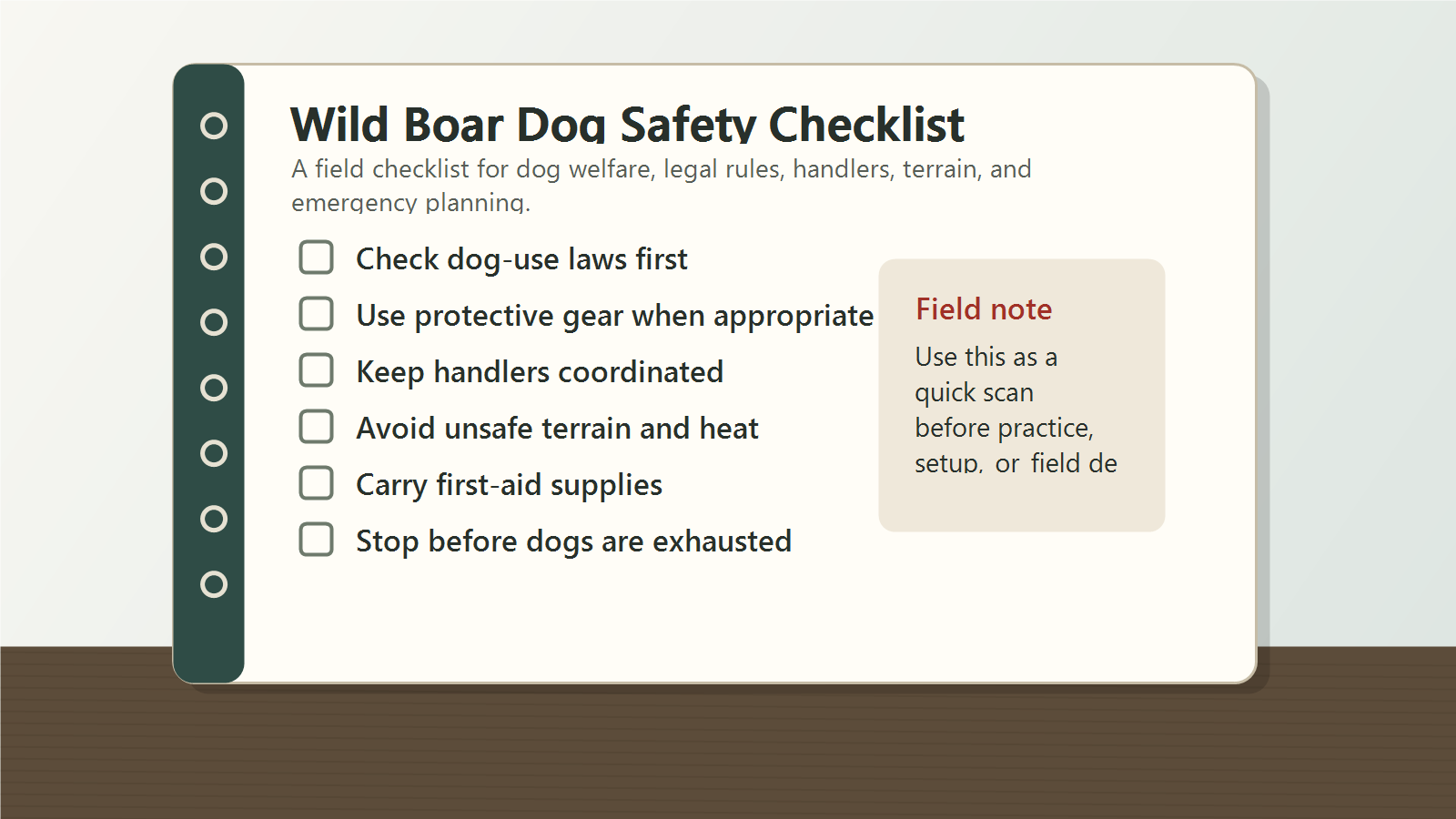
Dogs are sometimes used around wild boar or feral swine because the animals are alert, strong, and hard to manage at close range. That does not make the work casual. It means every step needs clear rules, careful handling, and a hard limit on risk to the dog, the handler, and everyone else on the ground. Feral swine are an invasive species in the United States, and USDA APHIS notes that they damage crops, property, habitat, and public health. Any dog work around them needs to be built around lawful control, not spectacle.
This article focuses on what the dogs actually do, where the law can change the answer, and how to keep the dog from paying the price for bad planning. It is not a beginner guide and it is not a pitch for gear or a style of hunting. It is a practical field note for people who already understand that a running, cornered, or wounded hog is a serious hazard.
Table of contents
Roles dogs can fill
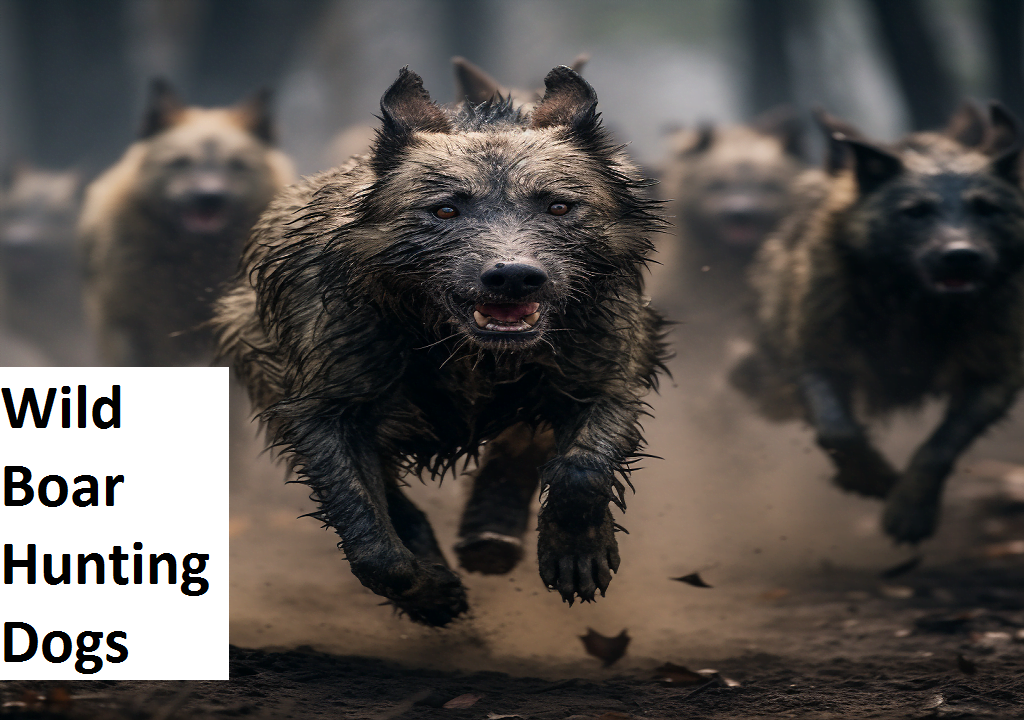
Dogs used around wild boar are usually doing one of three jobs: locating scent, pressing a hog to hold position, or staying close enough to support a safe end to the encounter. The dog is not there to improvise. A good team assigns a job before the first cast, then keeps the dog inside that lane.
Locating scent
Scent work is the least risky part of the job and often the most useful. A dog that can find sign, move with purpose, and give a steady read on fresh scent helps the handler avoid wandering into thick cover without information. That matters because wild hogs do not always stand in the open, and a wrong push can scatter a group or put a dog on the wrong side of a charge line.
Holding pressure without chaos
Some dogs are used to keep an animal contained long enough for a handler to arrive. That is a narrow task. The goal is not combat. The goal is controlled pressure that buys time while reducing the chance that the dog gets caught under tusk or feet. If the dog starts overcommitting, losing recall, or working through obvious fatigue, the job is already slipping.
Supporting a legal harvest or removal
In places where hunting with dogs is lawful, dogs may support a harvest or removal effort. In places where that is restricted, the same dog work can become illegal fast. For that reason, the handler should think first about the law and only second about the dog. A capable dog in the wrong jurisdiction is still part of an unlawful act.
Legal frame before the dog leaves the truck
Wild boar and feral swine rules are not uniform. The same conduct can be lawful on private land, restricted on public land, and forbidden in a city or county ordinance zone. That is why the first question is not which dog to use. It is where you are, who controls the land, and what the local wildlife and firearms rules say.
Private land is not a blank check
On private property, permission from the landowner may open the door to feral swine removal, but that permission does not erase other laws. Firearm rules, trespass rules, animal cruelty rules, local discharge limits, and transport limits can all still apply. If the plan includes dogs, the handler should make sure the landowner knows that the work may involve tracking, holding, and a fast finish under pressure.
Public land brings extra limits
Public land usually means more structure, more seasonal rules, and more attention to licensing or hunter education. In Texas, TPWD materials make clear that feral hog rules on public land differ from private-land removal, and that local regulations still matter. A dog team that ignores those lines is not being resourceful. It is gambling with citations and with safety.
Do not blur hunting and baiting
A responsible article should not turn this into baiting, dog fighting, or staged animal conflict. Those frames are not useful and they are not clean. Good work with dogs depends on lawful methods, clear stop commands, and an exit plan if the hog is too large, the cover is too tight, or the dog is becoming overexposed.
Dog welfare in the field
Working dogs do not need romance. They need limits. Heat, terrain, hydration, and recovery time matter just as much as scenting ability. The dog that stays sound for the season is usually the dog that was not run past the point of common sense.
Heat load is the first brake
Dogs cool themselves differently than people, and hot weather can turn a routine outing into a medical problem. VCA notes common heatstroke warning signs such as heavy panting, weakness, drooling, vomiting, and collapse. If a dog is showing those signs, the outing is over. Shade, water, and rapid cooling come first, and veterinary care should follow if the dog does not recover quickly.
Hydration and rest are not optional
Dogs need water before the work starts, during pauses, and again after the run. Short rest windows matter, especially when the dog has been moving through brush or rough ground. Do not wait until the dog looks dry-mouthed and slow. By then the body is already asking for help. The handler should plan for water access the same way they plan for access routes and dog retrieval.
Match the dog to the conditions
Not every dog should work every day. Older dogs, overweight dogs, dogs with prior respiratory problems, and dogs in poor coat condition may be poor candidates for hard work in heat. The same caution applies after illness, surgery, or a long layoff. A dog can be eager and still not be ready.
Protective gear and handling concepts
Protective gear is not a promise of safety. It is a buffer. A vest, collar, or leg protection can reduce cuts and abrasions, but it does not cancel tusks, impact, or exhaustion. Gear should support handling, not create confidence that outruns reality.
Fit matters more than labels
Anything worn by a working dog has to fit cleanly, stay in place, and avoid rubbing at speed. Poorly fitted gear can snag brush, shift under load, or chafe the dog before the actual encounter even begins. Before a dog works, the handler should check the chest, shoulders, neck, and underside for pressure points and movement.
Visibility helps the team read the dog
Bright panels, reflective trim, or other high-visibility cues can help the handler and nearby partners read the dog in cover or low light. The point is simple: know where the dog is, know whether it is standing, moving, or pinned, and avoid accidental crossfire or rushed movement into a bad angle.
Handling tools should reduce confusion
Leads, long lines, kennels, and simple release routines matter more than flashy equipment. A dog that bolts out of a truck without a cue is harder to protect. A dog that can be loaded, briefed, and released on command is easier to keep alive. Handling discipline is a safety system, not a style preference.
Field setup and team discipline
The best dog work happens when the team already knows the plan. Who tracks, who stays back, who carries first aid, and who calls the dog back if things turn ugly should be settled before anyone is in the brush. Wild boar do not reward improvisation.
Keep the lane clear
Everyone involved should know where the dog may move and where people are supposed to stay out. Shot lanes, escape lanes, and dog retrieval paths should not overlap if that can be avoided. A clear lane reduces the chance that a tired dog runs toward the wrong sound or the wrong person.
Use a stop point
Every dog operation needs a point where the team stops the chase. That point might be a weather limit, a time limit, a heat threshold, or a sign that the dog has lost its normal movement. If a team cannot name that point in advance, they are likely to push too far in the field.
Do not turn the dog into a test
Bad habits often start as one more push, one more cast, one more minute. That logic is dangerous. A boar can injure a dog in a second. A handler can also create the injury by asking for too much in bad footing, bad light, or bad heat. The safest team is the one that can walk away while the dog is still in one piece.
Disease risk and carcass handling
Wild swine are not only a physical hazard. They can also carry disease. USDA APHIS treats feral swine as a destructive invasive species, and CDC warns hunters that brucellosis exposure is a real concern when people handle infected animals or tissues. That means the work does not end at the shot or the recovery. It continues through handling, cleaning, and disposal.
Gloves and eye protection are sensible
When the work includes field dressing or contact with blood and tissue, use gloves and think about eye protection if splash or abrasion is possible. Cuts, scrapes, and mucous membranes are entry points. The fact that a task feels routine does not make the biological risk disappear.
Do not feed raw carcass material to dogs
Raw carcass feeding is a bad idea around wild hogs. It can expose dogs to pathogens and it can also train a dog to treat carcass handling as food work, which is not the same as controlled field work. Cooked, vetted food belongs in the feeding plan. Wild carcass scraps do not.
Clean equipment after contact
Any lead, collar, boot, crate, vehicle surface, or knife sheath that touches blood or tissue should be cleaned and dried as soon as the team can do it properly. That is part biosecurity and part dog welfare. A clean reset lowers the odds of spreading contaminants to the next dog, the next site, or the kennel at home.
Veterinary care before and after a hunt
A dog that works wild boar should have a veterinary baseline. That does not mean a special clinic ritual. It means the dog is current on core care, has a known history, and gets looked over like a working animal rather than a hobby prop.
Pre-work checks save trouble later
Before a trip, check paws, shoulders, ears, eyes, hydration, appetite, and any old scars or lameness. A small limp in the yard can become a real problem after brush, mud, and sudden turning. If the dog is already off, the trip should be postponed or the dog left behind.
After-work checks should be deliberate
After the field, look for punctures, swelling, heat in a limb, cuts under the collar, and signs of exhaustion. A dog that seems fine while adrenaline is high can crash later. Documenting the day, even in simple notes, helps the handler notice patterns such as repeated shoulder rubs, recurring pads splits, or slow recovery in warm weather.
Emergency care should be fast
If a dog is bitten, gored, collapsed from heat, or showing abnormal breathing, the plan is veterinary care, not toughing it out. Heat injury can worsen quickly, and punctures can hide deeper damage under fur. A calm transport to a clinic is the right move when the situation is beyond a basic field wipe and bandage.
Choosing dogs with restraint
The best dog is not always the boldest dog. It is the one with enough drive to work, enough sense to listen, and enough body condition to come home sound. Selection should be about judgment, recovery, and trainability as much as nose or speed.
Temperament should be steady
Dogs that are frantic, uncontrollable, or hard to settle in ordinary situations tend to be harder to protect around hogs. A steady dog can hold pressure, take direction, and disengage. That kind of self-control is valuable because the field is already loud enough without a dog adding panic to it.
Age and wear matter
Younger dogs may not have the judgment to stay out of trouble. Older dogs may have the judgment but not the joints. The right answer depends on the individual animal, not a breed stereotype. A sound dog with good recall is more useful than a famous breed name with poor body condition.
Retirement is part of the bargain
If a dog has taken too many hits, lost speed, or started to hesitate in ways that suggest pain, retirement should not be treated as failure. It is part of stewardship. A working dog earns a clean exit when the body says the job is too much.
Training limits and red lines
Training around boar should build control, not aggression. The dog should learn to move on cue, stop on cue, and return on cue. The handler should know how to read the dog well enough to stop before frustration turns into recklessness.
Recall and stop commands come first
A dog that cannot be called off a scent cloud or brought back from a bad angle is not ready for this work. Reliable recall and a hard stop cue are the center of safe handling. If those are still shaky, more ground work is needed before any boar contact.
Exposure should be staged
It is better to introduce scent, then distance, then controlled pressure than to throw a young dog into a live, high-stress situation. A staged approach lets the handler see how the dog thinks under stress. It also keeps a bad lesson from becoming a permanent wound.
Know when not to deploy
There are times when the right call is to leave the dogs kenneled. That includes extreme heat, poor footing, high brush density with poor visibility, uncertain legality, nearby livestock, or a team that is tired and distracted. Restraint is not hesitation. It is respect for the animal and the law.
What a responsible standard looks like
Responsible work with wild boar dogs is plain in its priorities. It keeps the law in front, keeps the dog hydrated and rested, uses gear as a buffer rather than a fantasy, treats disease as part of the job, and ends the day before the dog runs past its limits. It also avoids talk that turns dogs into tools for cruelty or shows the hog as some kind of theater piece. The real work is quieter than that.
USDA APHIS makes the case that feral swine are invasive and damaging. CDC makes the brucellosis risk clear for hunters and anyone handling animal tissue. VCA’s heatstroke guidance reinforces the point that dogs can go from working to unstable fast in warm conditions. Put those together and the standard becomes simple: if the dog is part of the plan, then the dog’s safety is part of the plan too.
Source anchors
USDA APHIS feral swine
TPWD wild pigs
Texas Parks and Wildlife Department: Wild Pigs
CDC brucellosis risk for hunters
CDC: Brucellosis Risk for Hunters