Wild Turkey Sounds Guide
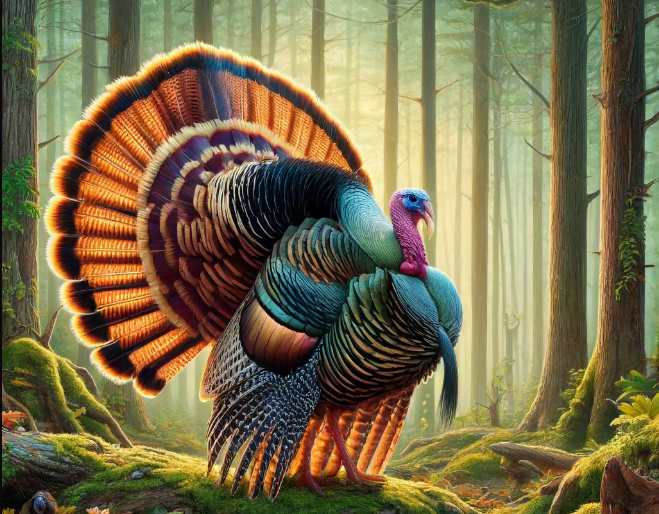
Wild turkeys communicate with a set of distinct sounds, and the main ones a hunter learns are the yelp, cluck, purr, cutt, putt, tree call, and the gobble. Each sound carries meaning: the yelp is the basic locating and contentment call, the cluck and purr signal calm and feeding, the cutt is loud and excited, the putt is an alarm, and the gobble is the male’s announcement and challenge. Knowing what each sound means, and when a real turkey would make it, is the foundation of effective and ethical calling. This guide explains the core vocalizations, how hunters use them, and the ethics and rules that should shape every setup.
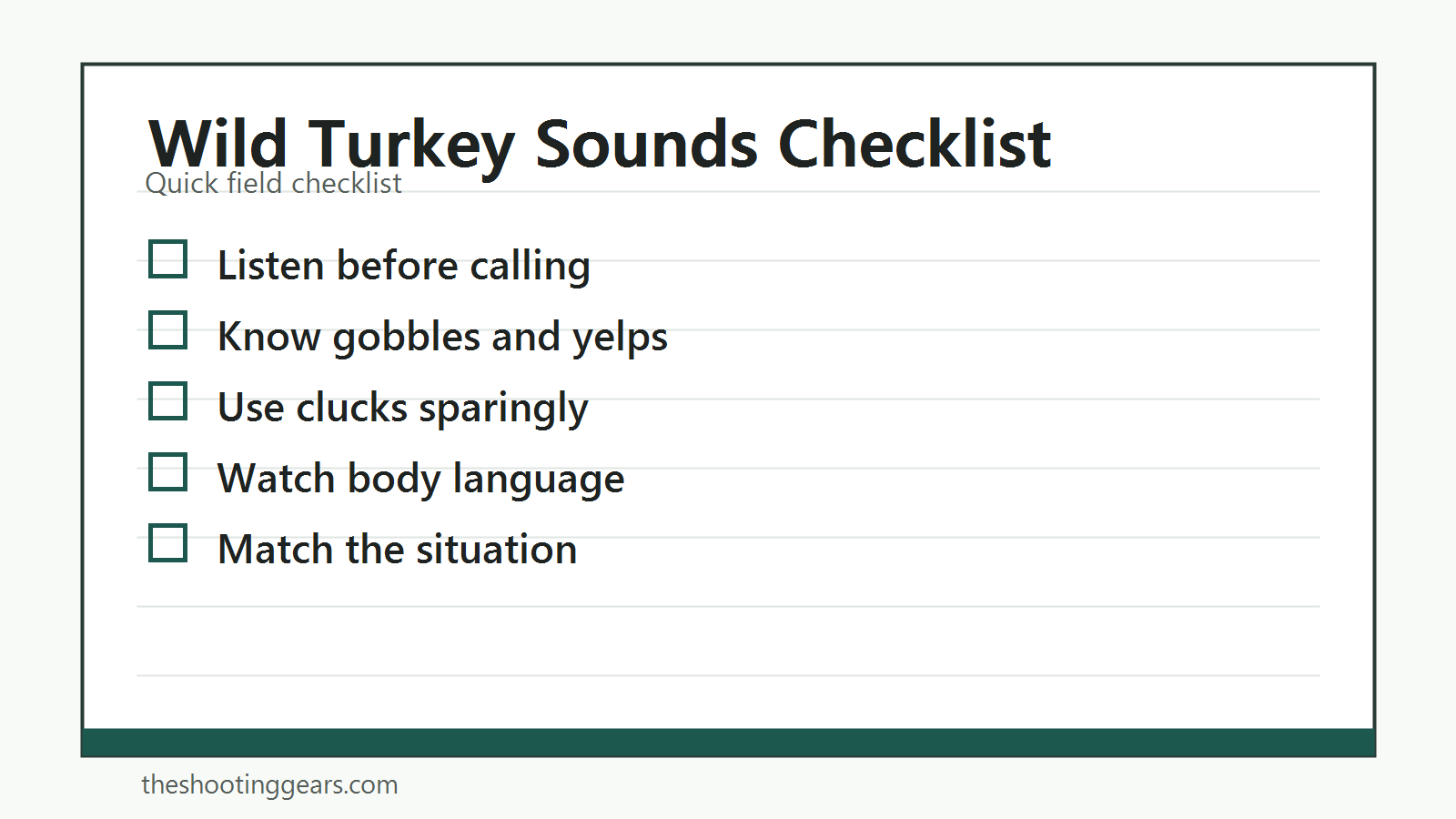
Table of contents
The core wild turkey sounds
Wild turkeys use a vocabulary of calls that signal location, mood, alarm, and dominance. Learning the core sounds, and what each one communicates, lets you read live birds and respond the way a real turkey would.
- Yelp: the most common call, a series of notes used to locate other birds and signal contentment.
- Cluck: one or a few short notes that say a turkey is calm and present.
- Purr: a soft, rolling sound made by content, feeding birds.
- Cutt: loud, sharp, irregular clucks that signal excitement.
- Putt: a sharp single or double note that usually means alarm.
- Tree call: soft early-morning sounds made by birds still on the roost.
- Gobble: the loud, rolling call of a male announcing his presence.
- Kee-kee: the whistling call of young birds, useful in the fall.
Hen sounds in detail
Most spring turkey calling imitates a hen to draw in a gobbler, so the hen sounds are the ones hunters practice most. Each communicates a different message and works best in a specific situation.
The yelp
The plain yelp is the workhorse call. A hen yelps to locate and gather other birds, and a gobbler may answer to advertise his location. Hunters use the yelp to start a conversation and gauge how a tom responds. Pace and rhythm matter more than volume; a clean, natural cadence is more convincing than a loud, ragged one.
The cluck and purr
Clucks and purrs are the quiet, close-range sounds of a calm, feeding bird. Once a gobbler is approaching, soft clucking and purring can reassure him and coax those last few yards without the risk that loud calling will make him hang up. These are confidence sounds, so use them softly and sparingly.
The cutt
Cutting is loud, fast, and excited, used to grab attention or imitate a fired-up hen. It can pull a distant or hung-up tom, but it can also sound aggressive, so many hunters reserve cutting for specific moments rather than overusing it.
The putt
The putt is usually an alarm sound. A turkey that putts has likely seen or heard something it does not trust, and the sound can scatter nearby birds. Hunters generally avoid making it, and a sharp putt from a live bird is a signal to hold still and reassess.
Gobbler sounds in detail
Gobblers make distinctive sounds tied to dominance and breeding, and the gobble is the one most people recognize. Understanding these helps you locate birds and time your setup.
The gobble
The gobble is the male’s loud, rolling announcement, used to proclaim territory and attract hens, especially in spring. Hunters listen for gobbles at dawn to locate roosted birds, and some use a locator call to provoke a shock gobble that gives away a tom’s position without imitating a turkey. Imitating a gobble yourself carries added safety risk, discussed below, and many hunters avoid it.
Tree calls and roosting sounds
Early in the morning, roosted birds make soft tree yelps and clucks before flying down. Light tree calling can let a tom know a hen is nearby without committing to loud calling before legal shooting time. Keep these sounds quiet and brief to match a bird that is still waking up.
Calling context and timing
Good calling is about reading the bird and matching real turkey behavior, not running through every sound you know. The same call can help or hurt depending on timing.
Start subtle and let the turkey’s responses guide your volume and frequency. If a tom is fired up and closing, call less and let him come. If he hangs up, a change in cadence, a soft cluck and purr, or going quiet can be more effective than calling louder. Match the season, too: spring calling centers on hen sounds to draw gobblers, while fall hunting often uses the kee-kee and assembly yelps to regroup scattered flocks. There is no script that works every time, and patient woodsmanship usually beats aggressive calling. Different calling devices, box calls, slate or pot calls, and diaphragm calls, each produce these sounds with their own learning curve, so pick one and practice the cadence until it sounds natural.
Turkey hunting ethics and safety
Turkey hunting ethics and safety are tied directly to sound, because hunters sit camouflaged, call to attract birds, and may be near other hunters doing the same. This makes positive target identification essential.
- Positively identify a legal bird, and never shoot at sound or movement alone.
- Be cautious with gobble imitations, since another hunter may move toward the sound.
- Set up with your back against a tree wide enough to cover you, with a clear view of approaching birds.
- Do not stalk a gobbling turkey; the sound you hear may be another hunter calling.
- Wear or carry blaze orange when moving, and follow the firearm or archery safety rules at all times. The four firearm safety rules from the National Shooting Sports Foundation apply fully to turkey hunting.
Ethical hunters also accept that calling does not guarantee a bird. Turkeys are wary, and pressured or call-shy gobblers may not respond at all. Patience, good setups, and respect for the animal and other hunters matter more than any single call.
State rules and where to learn more
Turkey seasons, legal hunting hours, bag limits, legal methods, and rules on calls and decoys vary by state and sometimes by season, so confirm the current rules with your state wildlife agency before you hunt. This article is general guidance, not legal advice.
Some states regulate electronic calls, set spring and fall season structures differently, or restrict certain methods, so look up the specifics where you hunt. To hear accurate recordings of each turkey sound and study calling in more depth, the National Wild Turkey Federation is a trusted reference. You can find your state agency through the U.S. Fish and Wildlife Service, and complete any required hunter education through Hunter-Ed or the International Hunter Education Association.
Frequently asked questions
What is the most important turkey call to learn?
The plain yelp is the most useful call to learn first, because it is the basic locating and contentment sound and works in many situations. Add the cluck and purr for close birds once your yelp sounds natural.
What does it mean when a turkey putts?
A putt is usually an alarm sound, meaning the turkey has seen or heard something it does not trust. If you hear a live bird putt, stay still, because it often signals that nearby birds are about to leave.
Should I imitate a gobble while hunting?
Many hunters avoid imitating a gobble because it can draw other hunters toward the sound, which is a safety risk. A locator call that prompts a tom to shock-gobble is often a safer way to pinpoint a bird.
Does calling guarantee I will get a turkey?
No. Turkeys are wary, and pressured or call-shy birds may ignore calling entirely. Good setups, patience, reading the bird, and woodsmanship matter as much as the calls themselves.
Final takeaway
Learn the core turkey sounds, the yelp, cluck, purr, cutt, putt, tree call, and gobble, and focus on what each one means and when a real bird would use it. Start subtle, read the gobbler’s response, and let patience and clean cadence do the work rather than constant loud calling. Always identify your target positively, mind the safety risks of imitating a gobble, and confirm your season, hours, and legal methods with your state wildlife agency. Use the National Wild Turkey Federation for accurate sound references as you practice.