Pointer Hunting Dogs: Field Traits, Training, and Care
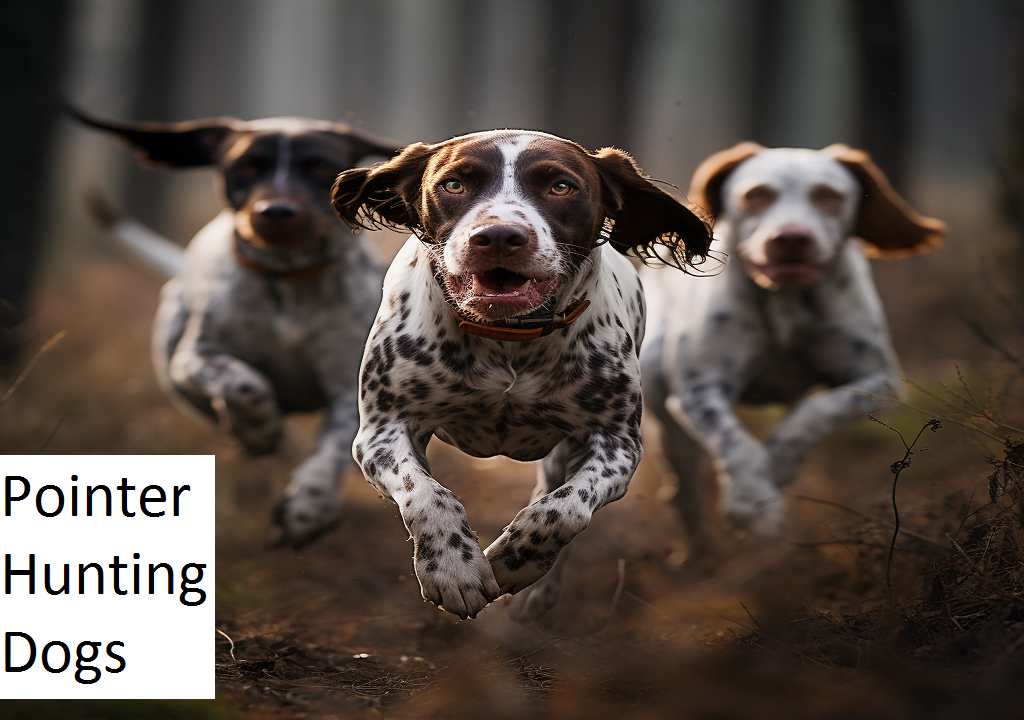
Pointer hunting dogs are bird dogs bred and trained to locate game birds, stop on scent, and show the hunter where birds are holding. A good pointer is not just fast or stylish; it is healthy, steady, trained safely, matched to the terrain, and handled within current hunting rules.
This guide explains how pointer dogs work, what new handlers should know, and how to think about training, field safety, dog welfare, and legal hunting responsibilities. It is not a replacement for a qualified trainer, veterinarian, or current state wildlife regulations.
Table of Contents
Quick Answer: What Makes Pointer Hunting Dogs Useful?
Pointer hunting dogs help bird hunters by using scent to find birds and then holding a pointing posture so the hunter can approach carefully. Their value comes from nose, stamina, training, steadiness, teamwork, and safe handling. A pointer should be treated as a working partner, not a tool that can be pushed without limits.
Best use
Pointers are most commonly used for upland birds such as quail, pheasant, grouse, chukar, woodcock, and similar game where legal seasons and habitat allow.
Main responsibility
The handler is responsible for training, control, safety, hydration, conditioning, veterinary care, and legal hunting decisions. A talented dog still needs a prepared human.
What a Pointer Does
A pointer searches cover, catches bird scent, and stops instead of flushing immediately. That pause gives the hunter time to read the dog, move into position, and decide whether the situation is safe and legal.
Search pattern
Many pointing dogs quarter through cover, working across the wind to find scent. Range depends on breed, training, cover, terrain, and handler preference. Bigger range is not automatically better if control is poor.
Pointing behavior
When scent is strong, the dog may freeze, raise a paw, turn its head, or lock its body toward the bird. The exact style varies by dog. The handler should learn that dog’s signals instead of expecting every point to look the same.
Flush and shot decision
A point does not mean the hunter must shoot. The hunter still needs to identify the bird, confirm season and bag limits, check the background, know where the dog is, and decide whether the shot is safe.
Pointer Breeds
The AKC Pointer breed profile describes the Pointer as an athletic sporting breed with strong field roots. Other pointing breeds include German shorthaired pointers, German wirehaired pointers, English setters, Gordon setters, Brittanys, Vizslas, Weimaraners, and several versatile hunting breeds.
English Pointer
The English Pointer is known for speed, range, and classic pointing style. It can be a strong choice for open country and experienced handlers who can provide exercise and structure.
German Shorthaired Pointer
German shorthaired pointers are versatile, athletic dogs often used for upland birds and other field work. They need training, exercise, and a handler who can channel their energy safely.
Brittany and setters
Brittanys and setters can be excellent pointing dogs with different styles, sizes, and coat needs. Choose by temperament, terrain, climate, and household fit, not only by reputation.
Before choosing a dog, be honest about the home as well as the hunt. A high-drive field dog may need daily exercise, yard control, crate training, travel time, and regular work outside the hunting season. A dog that fits the family schedule is more likely to be trained well and cared for consistently.
Training Basics
Training should build control, confidence, and safety. Good bird-dog training is gradual: obedience, recall, exposure to cover, scent work, steadiness, and controlled bird contacts. Rushing gunfire, birds, or pressure can create problems.
Recall first
A reliable recall is one of the most important safety commands. A dog that will not come back can cross roads, chase wildlife, bother other hunters, or get lost.
Bird exposure
Bird exposure should be controlled and positive. A trainer or experienced handler can help introduce birds in a way that builds drive without encouraging unsafe chasing.
Keep sessions short enough that the dog ends with confidence. Young dogs learn from repetition, but too much pressure, too many corrections, or uncontrolled birds can make training confusing.
Gunfire introduction
Gunfire should be introduced carefully and gradually. If a dog shows fear, stop and get qualified help. Forcing gunfire can make a dog unsafe or unwilling to hunt.
Field Safety
Bird hunting safety includes the dog, the handler, other hunters, and the background. The NSSF firearm safety rules stress muzzle control and knowing the target and what is beyond it. With dogs in the field, that rule is constant.
Know the dog location
Do not shoot unless you know where the dog and other hunters are. A low bird, crossing bird, or bird flying toward a dog should be passed.
Use safe zones of fire
When hunting with partners, agree on zones of fire before birds flush. Keep muzzles controlled and avoid swinging through people, dogs, roads, houses, or livestock.
Use visible gear
Blaze orange for hunters and a visible collar or vest for the dog can help in cover. Follow state clothing rules and choose gear that does not overheat or restrict the dog.
Dog Welfare
A pointer needs conditioning, water, nutrition, rest, paw care, parasite prevention, and veterinary support. The dog is doing hard physical work in cover that may include heat, cold, thorns, ice, water, snakes, ticks, and fences.
Hydration and heat
Carry water and watch for heat stress. Heavy panting, weakness, confusion, vomiting, or collapse are emergency signs. Stop early in warm conditions and seek veterinary help when needed.
Paws and coat
Check paws for cuts, ice balls, thorns, and worn pads. Burrs and mats can hide skin irritation. Coat length and weather resistance matter by breed and terrain.
Conditioning
Do not take an unconditioned dog on a hard all-day hunt. Build fitness gradually before the season and adjust the day to the dog’s condition.
A simple pre-season plan can include short walks, controlled off-leash work where legal, recall practice, light cover exposure, and rest days. Increase time and terrain slowly. Watch the dog, not the calendar; sore pads, lagging pace, heavy panting, or reluctance to load up are signs to back off.
Terrain and Weather
Pointer dogs work differently in open prairie, pine woods, brushy grouse cover, pheasant fields, desert edges, or wet lowlands. The dog, handler, and gear should match the terrain.
Open country
In open country, a wider-ranging dog may be useful if the handler can track and control it. GPS collars can help, but they do not replace recall and field awareness.
Thick cover
In thick cover, shorter range and close communication may be safer. Bells, beepers, or GPS can help locate a dog on point where legal and appropriate.
Cold and wet conditions
Cold water, ice, and wind can chill a dog quickly. Bring towels, a warm vehicle plan, and stop the hunt if the dog is shivering or losing energy.
Rules and Etiquette
Before hunting with a dog, check current state wildlife rules for seasons, species, bag limits, dog use, public land restrictions, training seasons, released birds, and required licenses. Rules can vary by species and property.
Also check whether electronic collars, bells, beepers, GPS units, or released birds have special rules where you train or hunt. Public areas may handle dog training differently from active hunting days, and some lands close sections for nesting, habitat work, or other users.
Training seasons
Some areas restrict when dogs can be trained on wild birds or public land. Check training-season rules before running a dog outside hunting season.
Other hunters
Keep dogs under control around other hunters, hikers, livestock, and landowners. A dog that runs into another setup can create safety and access problems.
Landowner respect
Ask permission, close gates, avoid livestock, and control dogs near homes and roads. Good dog handling protects future access.
Basic Gear
Gear should support safety and dog care, not replace training. Start with simple, reliable items and learn how to use them before the hunt.
Collar and identification
Use a collar with identification and consider a tracking collar where legal. A microchip is also worth discussing with a veterinarian.
Water and first aid
Carry water, a bowl, tweezers, bandage material, vet wrap, and your veterinarian’s contact information. Know where the nearest emergency veterinarian is when traveling.
After the hunt, check the dog again before the drive home. Small cuts, grass seeds, ticks, sore pads, and eye irritation are easier to handle early than after they become bigger problems.
At home, clean water, food, rest, and another body check help the dog recover. If the dog is limping, coughing, vomiting, unusually quiet, or showing eye trouble, call a veterinarian instead of waiting for the next hunt.
Protective vest
A vest may help with visibility or brush protection, but it can add heat. Choose by weather, cover, and dog comfort.
Common Pointer Dog Mistakes
Skipping obedience
A dog with bird drive but no recall can be hard to hunt safely. Obedience is not separate from field work; it is the base.
Pushing a tired dog
A tired dog is more likely to overheat, get hurt, miss commands, or make poor decisions. End the hunt before exhaustion sets in.
Treating breed as training
A good breed does not replace training. Genetics help, but field manners, recall, steadiness, and safety come from consistent work.
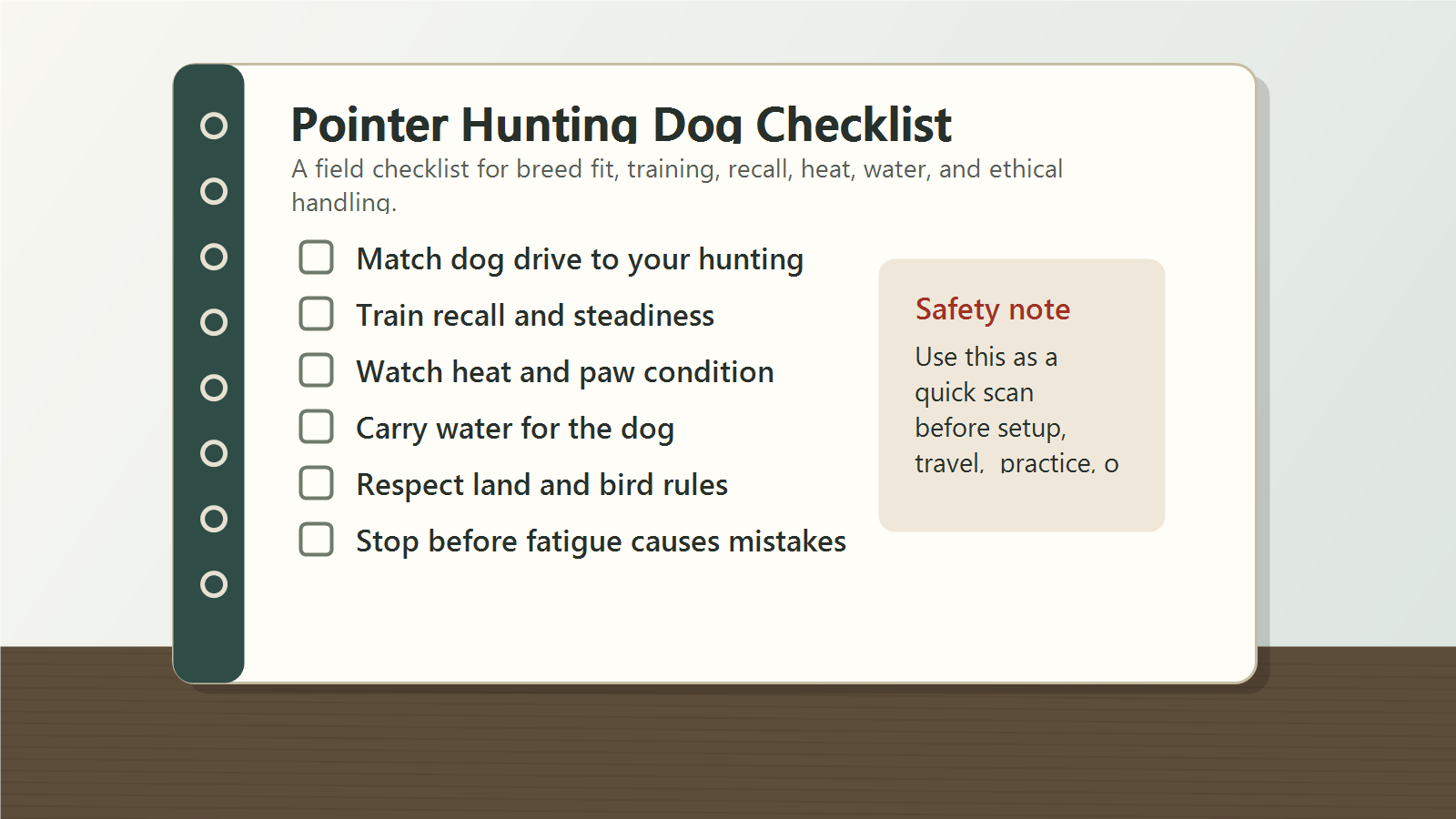
Pointer Hunting Dog Checklist
- Current bird seasons, bag limits, dog-use rules, and public-land rules checked
- Dog is conditioned for the terrain and weather
- Recall, basic obedience, and field control are reliable
- Gunfire introduction was handled gradually and safely
- Water, first aid, identification, and emergency vet plan are packed
- Handler knows where the dog is before any shot
- Zones of fire are agreed on with partners
- Dog is checked for heat stress, paw injuries, ticks, and burrs during and after the hunt
FAQ
What does a pointer hunting dog do?
A pointer uses scent to locate birds and then holds a pointing posture so the hunter can approach safely and decide whether a legal shot is available.
Are pointer dogs good for beginners?
They can be, but they need exercise, training, control, and bird exposure. A beginner should work with a trainer, club, or experienced handler when possible.
How should I compare pointer breeds?
Compare breeds by terrain, climate, game birds, household fit, training time, and health needs. Reputation alone is not enough.
Do pointer dogs need GPS collars?
GPS collars can help in open or thick country, but they do not replace recall, supervision, and legal field control.
Use technology as a backup, not a substitute for handling. A screen can show where a dog is, but it cannot teach the dog to return, ignore unsafe distractions, or work calmly around people and livestock.
How do I keep a pointer dog safe in hot weather?
Hunt cooler hours, carry water, shorten sessions, watch for heat stress, and stop early. Seek veterinary care for serious heat signs.
Final Takeaway
Pointer hunting dogs can be excellent upland partners when they are trained, conditioned, and handled responsibly. Choose the right breed for the terrain, build obedience before field pressure, protect the dog’s health, check current hunting rules, and never let excitement override firearm safety or dog welfare.
Good handling keeps the dog, hunter, and access safer.
Plan before the season.