Youth Compound Bow Guide: Fit, Draw Weight, Safety, and First Setup
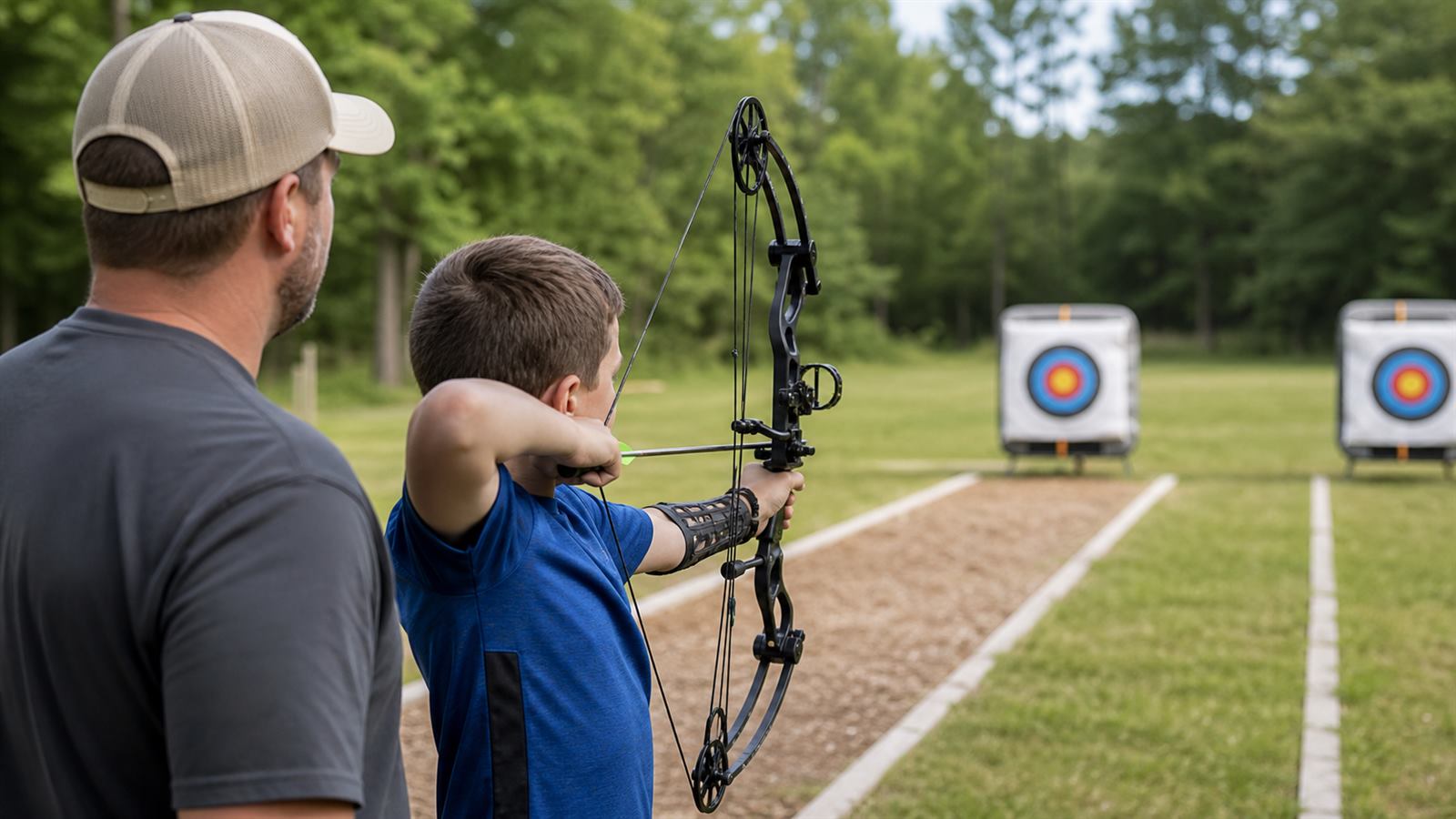
A youth compound bow should fit the young archer before it fits a shopping list. The right first setup is light enough to hold steady, adjustable enough to grow with the shooter, and simple enough for a parent, coach, or pro shop to tune safely.
This guide explains how to think about fit, draw weight, draw length, accessories, and range habits before buying or setting up a youth compound bow. It is written for parents and beginners who want a safer, calmer first archery experience. Parents comparing lessons first can also read our archery classes for kids guide.
Table of Contents
Quick Answer
For most young beginners, the best youth compound bow is the one they can draw smoothly, hold without shaking, and shoot under adult supervision without rushing. Avoid choosing a bow only because it has high speed, heavy limbs, or a hunting-style look. Fit, coaching, and repeatable form matter more at the beginning.
- Choose an adjustable bow so draw weight and draw length can be changed as the archer grows.
- Start with a comfortable draw weight, not the highest number the bow can reach.
- Have draw length checked by a qualified coach, range staff member, or archery shop.
- Use matched arrows, a safe target, arm protection, and clear range rules.
- Keep practice short enough that form stays relaxed and repeatable.
What Makes a Youth Compound Bow Different?
A youth compound bow is built around smaller bodies, shorter draw lengths, lighter holding weight, and beginner-friendly adjustment. It still uses cams, cables, limbs, and a release cycle like an adult compound bow, but the setup should be easier to manage. For a plain-language background on the bow style itself, see the compound bow overview.
The main difference is not just size. A youth bow should let a new archer learn stance, grip, anchor, aiming, and follow-through without fighting the equipment. If the bow is too heavy, too long, or too hard to draw, the archer often compensates with poor form.
For families new to the sport, the Archery Trade Association’s Archery 101 resource is a useful starting point for understanding basic archery formats and equipment paths.
Fit Comes Before Speed
The most common mistake is buying a youth bow with too much growth room. A bow that might fit in two years can still be a poor first bow today. The young archer should be able to stand upright, raise the bow without leaning back, draw without sky-pointing, and settle into an anchor point without strain.
Watch the shooter from the side. If the bow arm collapses, the drawing shoulder rises, or the string reaches too far behind the face, the setup likely needs adjustment. Those problems are easier to fix early than after the archer builds habits around an oversized bow.
Draw Weight for Young Archers
Draw weight is the force needed to pull the bow. A young archer should be able to draw the bow smoothly several times in a row while keeping safe muzzle-style awareness for the arrow direction. If the archer has to jerk the string, point the bow upward, or twist the body to get through the draw cycle, the draw weight is too heavy for practice.
Many youth compound bows can be adjusted over a wide range, but the listed maximum should not become the starting point. Begin where the archer can shoot with control, then increase slowly only when form, strength, and confidence support it.
Draw Length and Anchor Point
Draw length affects comfort, alignment, peep sight position, release feel, and arrow selection. Too short can crowd the archer. Too long can pull the front shoulder open and make the anchor point inconsistent.
A simple measurement can give a starting estimate, but the final setting should be confirmed with the bow in hand. The goal is a natural anchor, a relaxed bow arm, and a string position that does not force the head forward. If a peep sight, release aid, or D-loop is used, those parts should be set after draw length is close.
First Setup Checklist
Before the first practice session, walk through the full setup instead of handing the bow over and hoping it feels right. A few quiet checks can prevent frustration and make the first range day much better.
- Confirm draw weight is comfortable for repeated shots.
- Confirm draw length with the archer at full draw and relaxed posture.
- Use arrows matched to the bow setup and arrow rest.
- Check that the arrow rest, nock point, D-loop, and peep sight are secure.
- Use an arm guard if the string path is close to the forearm.
- Use a proper target and clear backstop for the practice distance.
- Set a simple rule: no arrow is nocked until the range is clear.
If possible, have the setup checked by an archery shop or certified coach. A bow that looks close on paper may still need small tuning changes before it feels predictable.
Safety and Supervision
Youth archery should be supervised every time. Even a light bow can send an arrow far beyond the intended target if range rules are loose. Keep the shooting line clear, keep arrows pointed downrange, and stop immediately if anyone moves forward of the line.
The National Archery in the Schools Program safety page is worth reviewing because it shows how structured programs handle range control, equipment handling, and student safety. Families practicing at home should use the same mindset: one line, one direction, clear commands, and no casual shooting around people, pets, roads, or buildings.
Do not dry fire a compound bow. Releasing the string without an arrow can damage the bow and may injure the shooter or bystanders. If a dry fire happens, stop using the bow until it is inspected.
When to Upgrade
Upgrade only when the current bow limits progress. Signs include the archer outgrowing the draw length range, needing a steadier platform for longer practice, wanting a better sight or rest, or preparing for a specific program or hunting path with qualified adult guidance.
Do not upgrade just because the archer can pull more weight once. Better arrows, coaching, target time, and a clean tune often help more than a heavier bow. The best upgrade is the one that keeps the archer enjoying the sport while improving form.
FAQ
What is a good first youth compound bow?
A good first youth compound bow is adjustable, light enough to hold steady, and comfortable at a low starting draw weight. It should be set up for the archer’s current size, not only for future growth.
Should a child start with a compound bow or recurve bow?
Either can work. A recurve can teach simple form with fewer parts, while a compound can feel steadier because of let-off and accessories. The better choice is the one supported by local coaching, safe range access, and proper fit.
How do I know if draw weight is too heavy?
It is too heavy if the archer points the bow upward to draw, shakes badly, leans backward, rushes the shot, or cannot repeat several controlled draws. Lower the weight and build form first.
Can a youth compound bow be used for hunting?
Only if the archer, bow, arrows, broadheads, and local rules all meet the requirement for the intended game. Hunting setups need adult guidance, legal checks, and ethical range limits. A beginner practice bow should not be treated as hunting-ready by default.
Do youth bows need professional setup?
Professional setup is strongly recommended. A shop or qualified coach can check draw length, draw weight, arrow fit, rest alignment, peep height, and basic safety before the young archer builds habits around the bow.
What should parents avoid when buying a youth bow?
Avoid buying too much draw weight, guessing draw length, using random arrows, skipping supervision, or treating speed as the main goal. Comfort, safe handling, and repeatable form matter more for a first bow.
Related reading: youth archery gear guide and bow sight setup guide.