Best Hunting Backpacks for 2025 a Complete Buyers Guide
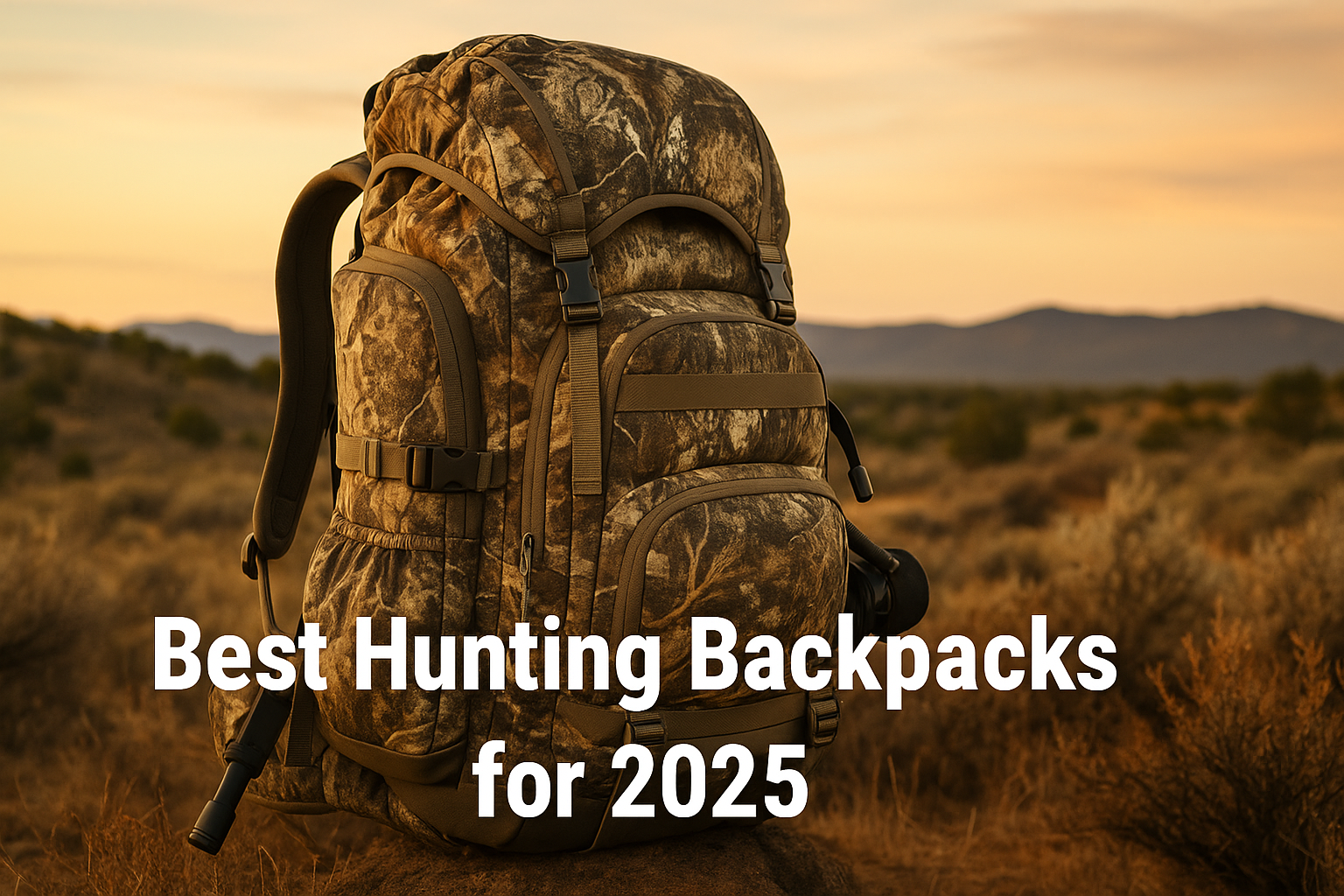
The best hunting backpack carries your gear quietly, keeps water within reach, and still has the structure to help haul meat out if the hunt goes right. A gym bag with camo printed on it is not the same thing as a real hunting pack. Hunting packs need quiet fabric, a way to carry a rifle or bow hands free, room to grow from a short sit to a multi-day trip, and, on the bigger models, a frame built to carry real weight.
This guide covers the full range hunters actually need for the 2025 season: light daypacks for a few hours in a stand, hydration-focused packs for covering ground on a spot-and-stalk hunt, mid-size internal frame packs for one or two day backcountry trips, and external frame packs built for a full pack-out. We checked current listings, in-stock status, and verified buyer reviews on every pack below so you can compare real capacity, weight, and features side by side before deciding which style matches how you actually hunt.
Table of contents
Quick Picks Table
| Pack | Best For | Capacity | Check Price |
|---|---|---|---|
| Badlands Superday | Rifle-or-bow carry with hydration on all-day sits | Day pack | Check Price on Amazon |
| ALPS OutdoorZ Ranger Pack | Lightest, cheapest daypack for short sits | 23L | Check Price on Amazon |
| ALPS OutdoorZ Dark Timber | Best value hydration-ready all-day pack | 37L | Check Price on Amazon |
| Eberlestock Brute Scout Day Pack | Hydration-focused spot-and-stalk pack | 1,800 cu in | Check Price on Amazon |
| Eberlestock Brute 3500 | 1 to 2 day backcountry hunts | 3,500 cu in | Check Price on Amazon |
| Badlands 2200 | Proven, heavily reviewed built-in meat hauler | Frame pack | Check Price on Amazon |
| MOXULE Pro 3600 Frame Backpack | Largest pack-out and multi-day capacity | 3,600 cu in + 2,500 cu in shelf | Check Price on Amazon |
How We Chose
We started from Amazon’s current hunting backpack listings and narrowed the field to packs that cover the full range hunters actually need, from a light stand-hunting daypack to a frame pack built for a real pack-out. Instead of picking several similar day packs, we chose packs that each do one job especially well: hydration on the move, weapon carry, meat hauling, or multi-day capacity.
For each pack we confirmed current price, in-stock status, and Prime availability directly on the product page, read through verified buyer reviews for reports on comfort, durability, and noise in the field, and cross-checked capacity claims against the manufacturer’s stated cubic inches or liters so the sizes on this list are directly comparable. Where a listing was too new to have a real review history yet, we said so directly in the pros and cons below instead of treating a spec sheet claim as a proven result.
The Leave No Trace Seven Principles are a good general reminder that planning ahead and packing out what you carry in matters on any backcountry trip, which is exactly the kind of load management a hunting pack needs to support once meat or camp gear gets added to the mix.
The 7 Best Hunting Backpacks for 2025
1. Badlands Superday
Best for: Hunters who want one pack that carries either a rifle or a bow securely and still has room for a hydration reservoir on long, all-day sits.
Key specs (from Amazon product listing): 3 lb pack weight, dimensions 12 x 16 x 25 inches, KXO-50 abrasion-resistant fabric, molded memory foam suspension with a reverse-tightening waist belt, detachable rifle/bow boot with batwing straps, integrated hip-belt pistol holster, hip-belt pouches, bedroll straps, fits a 3L hydration reservoir, Bino Connect compatible.
Pros
- Detachable boot and batwing straps carry a rifle or a bow hands free without a separate accessory
- Memory foam harness breaks in and gets more comfortable the more you use it
- Fits a 3L hydration reservoir, more than most day packs in this guide
- Backed by Badlands’ lifetime warranty
Cons
- Heaviest and priciest daypack on this list, more pack than a short stand sit needs
- Built-in pistol holster strap runs snug on larger double-stack handguns per buyer feedback
- Hand-wash-only care instructions
Skip this if: You only need a light, no-frills pack for short sits close to the truck, the ALPS Ranger Pack below covers that at a fraction of the weight and cost.
2. ALPS OutdoorZ Ranger Pack
Best for: Hunters who want the lightest, cheapest daypack for short sits and don’t need a dedicated weapon carry system.
Key specs (from Amazon product listing): 23L / 1,450 cubic inch capacity, 1 lb 5 oz weight, brushed polyester quiet fabric, padded shoulder straps and webbing carry handle, bartacked webbing attachment points, dimensions 16.5 x 11.5 x 7 inches.
Pros
- Among the lightest empty packs in this guide at just over a pound
- Brushed fabric stays quiet moving through brush, a point verified buyers repeatedly mention
- Bartacked webbing adds extra lashing points for a jacket or a stand without paying for a bigger pack
- Entry-level price makes it an easy backup or loaner pack
Cons
- No dedicated rifle or bow carry system, you would need to improvise with the webbing
- No listed hydration port or sleeve
- Capacity runs small once you add cold-weather layers and food
Skip this if: You need a built-in weapon carry system or hydration routing, the Dark Timber pack below adds both for a modest jump in size.
3. ALPS OutdoorZ Dark Timber Camo Hunting Pack
Best for: Hunters who want the best balance of capacity, hydration compatibility, and price in an all-day pack.
Key specs (from Amazon product listing): 37L / 2,285 cubic inch capacity, padded waist belt and shoulder straps, adjustable sternum strap, hydration-compatible main compartment, side compression and lashing straps, dual mesh water bottle pockets.
Pros
- 2,285 cubic inches is enough room for a full day’s layers, food, and gear without feeling bulky
- Hydration-ready design accepts a reservoir most 23L day packs cannot fit
- Compression straps let you cinch the load down when it is not full, which cuts down on noise
- Close to 900 reviews back up the fabric quality and comfort claims
Cons
- No dedicated bow or rifle boot, just lashing points
- Zippers are not weatherproof, a few buyers recommend zipper wax to keep them quiet
- Not built for meat hauling or multi-day loads
Skip this if: You need real load-hauling capacity for meat or camp gear, look at the frame packs further down this list instead.
4. Eberlestock Brute Scout Day Pack
Best for: Spot-and-stalk hunters who move fast on ridgelines and need a hydration-first pack with real frame support.
Key specs (from Amazon product listing): 1,800 cubic inch capacity, internal frame sheet with an integrated aluminum stay, breathable air-mesh shoulder harness, hydration hanger, top zipper pocket, stretch front pocket, front and side compression straps, deep stretch water bottle pockets with bungee retention.
Pros
- Aluminum stay gives real structure for a day pack, so heavier loads do not sag or pull at your shoulders
- Air-mesh harness is built specifically to cut sweat on high-output, early-season hunts
- Compression straps double as a tripod, bow, or shed-antler carry system
- Hydration hanger keeps a reservoir stable inside a streamlined profile
Cons
- New listing with a thin review history, so long-term durability feedback is still limited
- No dedicated rifle or bow boot, gear rides on the compression straps instead
- Premium price for an 1,800 cubic inch capacity
Skip this if: You want a pack with years of buyer reviews behind it, the Dark Timber or Ranger Pack above have far longer track records.
5. Eberlestock Brute 3500 Hunting Pack
Best for: One to two day western hunts where you need real load-hauling capacity without stepping up to a full expedition frame.
Key specs (from Amazon product listing): 3,500 cubic inch capacity, also offered in 4,500 and 6,500 cubic inch sizes, internal frame with adaptive aluminum support, Cradle Hip Belt with a silicone lumbar grip and rear stabilizers, micro-adjustable Contour Shoulder Harness, top and front-zip access to the main compartment, integrated load shelf for meat and heavy loads.
Pros
- Cradle Hip Belt with rear stabilizers keeps a loaded pack from swaying on uneven terrain
- Integrated load shelf carries meat or camp gear without a separate frame accessory
- Unlimited torso adjustment on the shoulder harness gets a precise fit across body types
- Dual top and front-zip access means you are not digging from the top to find gear at the bottom
Cons
- Highest price of any pack on this list
- Very new listing with no buyer reviews yet at the time of writing
- 3,500 cubic inches is tight for anything past a two day trip, the 4,500ci or 6,500ci version suits longer hunts better
Skip this if: Your hunts are single-day trips close to the truck, this is more pack and more cost than a day hunt needs.
6. Badlands 2200
Best for: Hunters who want a proven, heavily reviewed meat hauler with a built-in shelf for the walk out.
Key specs (from Amazon product listing): Magnesium-alloy frame stays rated twice as strong as T6 aluminum at a lighter weight, molded memory foam suspension with a reverse-tightening waist belt, Silent Strength quiet fabric, detachable rifle/bow boot with batwing straps, built-in meat shelf, hip-belt pistol holster, fits a 2L hydration reservoir, Bino Connect compatible, unconditional lifetime warranty.
Pros
- Built-in meat shelf deploys quickly instead of requiring a separate frame or accessory purchase
- Close to 430 reviews at a 4.8-star average, the most heavily reviewed pack-out pack in this guide
- Magnesium-alloy frame stays are lighter than comparable aluminum without losing strength
- Lifetime warranty covers the pack no matter who originally bought it
Cons
- Among the higher prices in this guide
- Buyers report mixed sizing between the medium and large frame options, so check the size chart before ordering
- Hip-belt pistol holster runs snug for larger handguns, similar to other packs in the Badlands lineup
Skip this if: You never plan to pack out meat and just need a day pack, the Dark Timber or Superday above will save you weight and cost.
7. MOXULE Pro 3600 Camo Frame Backpack
Best for: Multi-day backcountry hunters who need the largest hauling capacity in this guide and want a frame that converts into a standalone day pack.
Key specs (from Amazon product listing): 3,600 cubic inch frame pack capacity plus an adjustable meat shelf that adds roughly 2,500 more cubic inches between the frame and bag, rated to support about 150 lbs, aluminum frame with air suspension, frame weight 3.3 lb and total system weight 6.82 lb, detachable top hat converts to a small day pack, 3-layer brush tricot polyester with a water repellent finish, YKK zippers, Duraflex buckles, included rain cover.
Pros
- Largest combined hauling capacity of any pack in this guide once the meat shelf is expanded
- Modular frame detaches and pairs with separate 40L, 60L, and 80L bags for different trip lengths
- Detachable top hat gives you a functional day pack option without carrying the full frame
- Close to 30 reviews at 4.8 stars, with several buyers specifically praising the fit for taller torsos
Cons
- Total system weight of nearly 7 lbs is the heaviest pack in this guide before you add gear
- Not a widely established legacy brand compared to Badlands or Eberlestock
- A few buyers note the hip belt runs on the rigid side out of the box
Skip this if: You only hunt single-day trips, this frame and shelf combination is built for pack-outs and multi-day loads you do not need for a quick stand sit.
Buying Guide
Matching Capacity to Trip Length
A short treestand sit only needs a few layers, calls, tags, a knife, water, and snacks, which is exactly what a 20L to 25L day pack like the ALPS Ranger Pack is built for. An all-day hunt or a fast-moving spot-and-stalk pushes you toward the 35L to 40L range, or a hydration-focused pack like the Brute Scout that trades bulk for speed. A one to two day backcountry hunt calls for an internal frame pack in the 3,000 to 4,500 cubic inch range with a load shelf, and a full multi-day pack-out needs a dedicated external frame system like the MOXULE Pro 3600.
| Hunt type | Better pack style | Why |
|---|---|---|
| Short treestand hunt | Light daypack, 20 to 25L | Enough room without extra bulk or noise in the stand |
| All-day hunt | Daypack with layers and food space, 35 to 40L | Better organization for a long day away from the truck |
| Spot-and-stalk | Hydration-focused pack with a frame sheet | Keeps you moving fast while staying supported |
| 1 to 2 day backcountry hunt | Mid-size internal frame pack with a load shelf | Balances capacity with weight for a short trip |
| Multi-day pack-out | External frame pack with an expandable meat shelf | Rated to carry real weight over long distances |
Do not default to the largest pack you can find. Extra space becomes extra weight and extra noise once you are moving through brush. Buy enough room for your real gear list and leave a little space for changing layers or an unexpected overnight.
Internal vs External Frame
Internal frame packs, like the Eberlestock Brute Scout and Brute 3500 on this list, build the frame sheet or stay directly into the bag. They ride closer to your body, stay quieter moving through timber, and work well for day hunts and shorter backcountry trips where you are not consistently hauling heavy meat loads.
External frame packs, like the MOXULE Pro 3600, use a rigid frame with a separate bag or shelf attached to it. The frame creates a stable platform between your back and the load, which matters once you strap on quarters or a heavy camp kit. The tradeoff is added weight and bulk when the pack is empty, so an external frame system is worth the extra pound or two only if you are actually planning to haul serious weight.
Load-Hauling for Pack-Out
If there is any chance you will need to carry meat, prioritize a pack with a real load shelf and a frame rated for the weight, not just a bigger main compartment. The Badlands 2200 and the MOXULE Pro 3600 both build a dedicated meat shelf between the frame and the bag, which keeps the load tight to your back and off your shoulders. A soft-sided day pack without frame support will sag and pull backward under serious weight, which speeds up fatigue exactly when you can least afford it.
Check the manufacturer’s stated weight rating before you count on a pack for a real pack-out. A frame built for 100 to 150 lbs, like the packs in this guide’s meat hauler category, gives you a real margin over a typical quarter-and-gear load.
Hydration Compatibility
Most packs in this guide either include a hydration sleeve or a hanger, or are explicitly marketed as hydration-compatible, but routing and capacity vary. The Brute Scout and Dark Timber both route a reservoir through the main compartment, while the Badlands packs are sized for a specific 2L or 3L reservoir. Check the listed capacity before buying a bladder so it actually fits the sleeve rather than bulging the main compartment.
On a fast-moving spot-and-stalk hunt, hydration access matters as much as capacity. A hose that routes through the shoulder strap keeps your hands free and lets you drink without stopping to dig through the pack, which is worth prioritizing over a slightly bigger main compartment if you cover a lot of ground.
Fit, Weather Protection, and Quiet Carry
Pack fit matters as much as capacity. A hip belt should carry most of the load while the shoulder straps control the pack’s position, and a sternum strap adds stability on uneven ground. Heavy loads should sit close to your back rather than pulling you backward, which is where frame-supported packs like the Brute 3500 and the MOXULE Pro 3600 pull ahead of soft-sided day packs.
For general load and body-position awareness, the CDC/NIOSH ergonomics resources are a useful reference. In hunting terms, poor load balance makes long walks harder and speeds up fatigue, which matters even more once you are carrying meat out over rough terrain.
Quiet carry comes down to fabric and hardware. Brushed or treated fabrics, covered zippers, and solid buckles all cut down on noise moving through brush. Several packs in this guide, including the ALPS Ranger Pack and Dark Timber, have verified buyer reviews specifically calling out low noise in the field, which is worth checking before you buy if you hunt close to game.
Frequently Asked Questions
Q: What size hunting backpack do I need?
A: For most day hunts, 20L to 40L covers layers, food, and gear comfortably. One to two day backcountry trips call for a mid-size internal frame pack around 3,000 to 4,500 cubic inches, and multi-day or meat-hauling trips call for a larger external frame pack with an expandable shelf.
Q: What is the difference between an internal frame and an external frame hunting pack?
A: An internal frame pack builds the frame sheet or stay directly into the bag, so it rides close to your body and stays quieter. An external frame pack uses a rigid, separate frame that a bag or meat shelf attaches to, which handles heavier loads more comfortably but adds weight and bulk when empty.
Q: How much weight can a hunting backpack frame carry?
A: It depends on the pack. Day packs without a frame are built for a single day’s gear, usually under 20 to 30 lbs. Dedicated frame packs with a meat shelf, like the ones in this guide’s pack-out category, are commonly rated to support 100 to 150 lbs.
Q: Do I need a hydration bladder-compatible pack?
A: If you cover significant ground on a spot-and-stalk hunt or spend a full day away from the truck, a hydration-compatible pack with a routed hose saves you from stopping to dig out a water bottle. For a short walk to a nearby stand, it matters less.
Q: Can I use the same backpack for day hunts and multi-day backcountry trips?
A: Some modular systems, like the MOXULE Pro 3600, let a frame pair with different sized bags or convert to a smaller day pack. Otherwise, a single pack sized for backcountry trips is usually more bulk and weight than you need for a quick day hunt, so many hunters keep a dedicated daypack and a separate frame pack for longer trips.
Q: How do I keep a hunting backpack quiet in the field?
A: Choose a pack with brushed or treated quiet fabric, secure loose straps and buckles before you head out, separate hard items inside pockets so they do not click together, and practice opening pockets quietly before you rely on the pack in the field.
Q: What is the difference between a day pack and a meat hauler frame pack?
A: A day pack, typically 20L to 40L, is built for a single day’s gear and rides directly on your shoulders and hips. A meat hauler frame pack uses a rigid or semi-rigid frame and a dedicated load shelf to carry much heavier loads, including packed-out meat, closer to your back so the weight does not pull you backward.
Q: Should I buy a pack based on cubic inches or liters?
A: Either works as long as you compare packs using the same unit. Most hunting-specific brands list cubic inches while general outdoor brands list liters. As a rough conversion, 1,000 cubic inches is about 16.4 liters, which is useful when comparing packs across brands.
Final Recommendation
Choose a hunting backpack by the way you actually hunt, not by the biggest capacity number on the page. Short stand sits and tight budgets are well served by the ALPS OutdoorZ Ranger Pack, while an all-day hunt with a rifle or bow in tow points toward the Badlands Superday or the ALPS Dark Timber. Hunters covering ground on a spot-and-stalk hunt should look at the hydration-focused Eberlestock Brute Scout, and a one to two day backcountry trip is a good match for the Eberlestock Brute 3500. When the goal is a real pack-out, the Badlands 2200 brings a proven track record and the MOXULE Pro 3600 brings the largest combined capacity in this guide. Whichever size you land on, prioritize a pack that carries your weapon securely, stays quiet in the brush, and keeps you comfortable from sunup until you are walking out with your tag filled.