Fundamental Hunting Gear Items: Safety, Navigation, Clothing, Tools, and Checklist
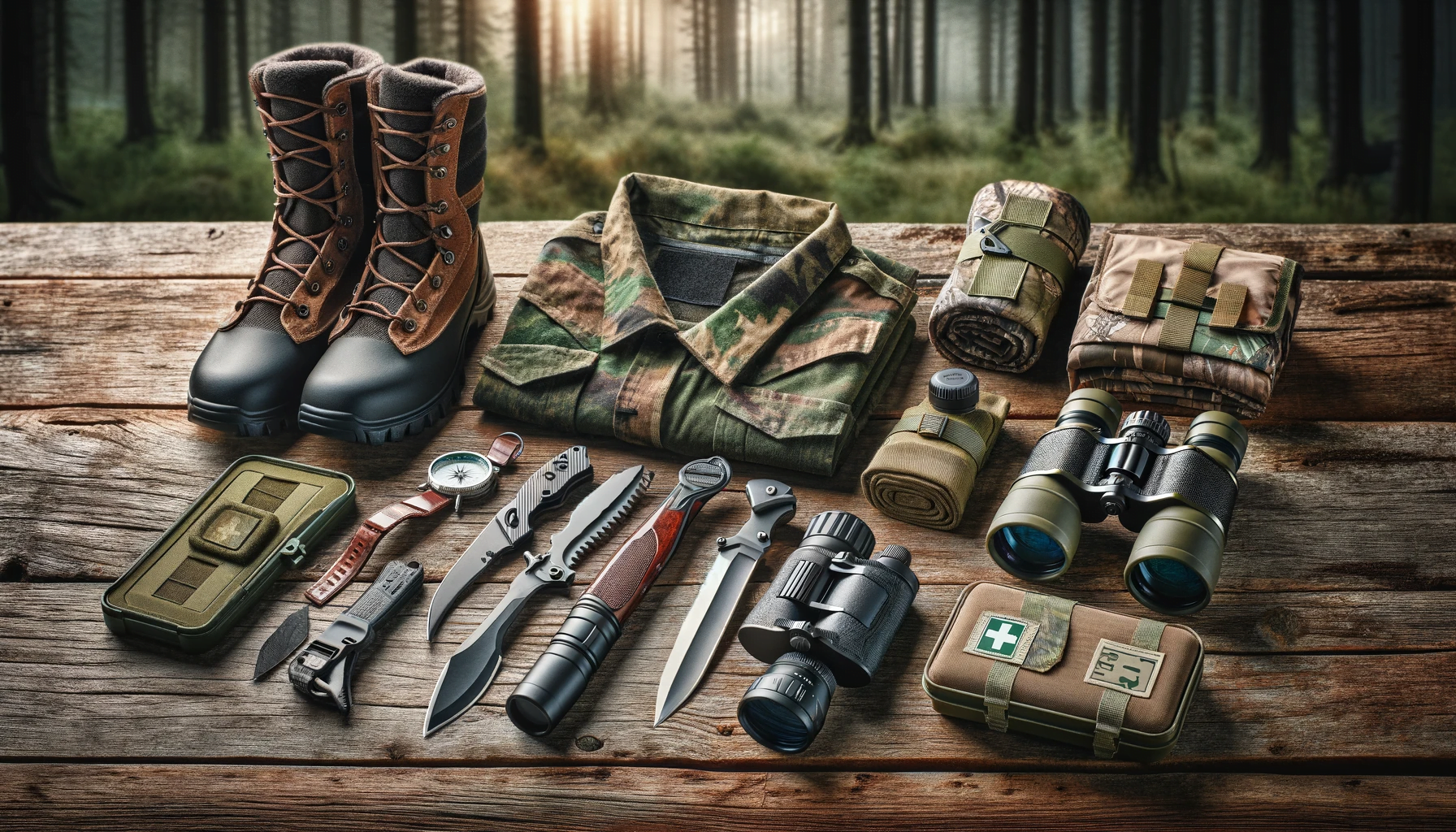
Fundamental hunting gear should cover safety, navigation, weather protection, visibility, first aid, food, water, legal requirements, and the specific tools needed for your hunting method. The best checklist is not the longest one. It is the one that matches the season, terrain, species, trip length, and distance from help.
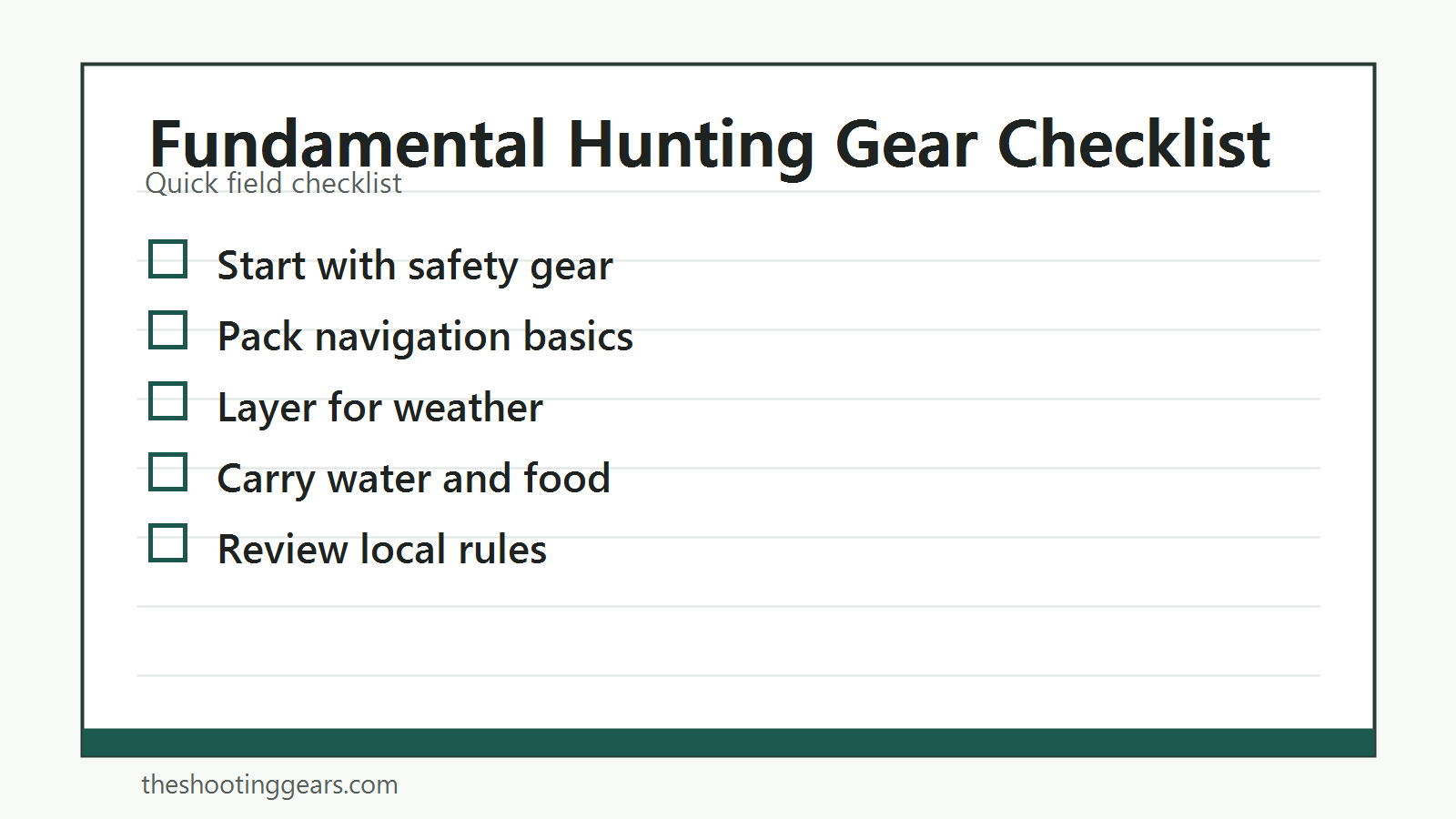
For a short day hunt, the essentials may fit in a small pack. For a cold-weather, public-land, or backcountry hunt, the same categories become more serious. Start with safety and survival first, then add hunting-specific items.
Table of contents
Quick Answer
The most important hunting gear items are navigation, first aid, water, food, weather layers, headlamp, fire starter, emergency shelter, knife, legal documents, communication, blaze orange where required, and the gear specific to your weapon and species. Use the outdoor Ten Essentials idea as a safety foundation, then adapt it for hunting.
Do not build your pack around convenience items before safety items. A forgotten snack is annoying. A forgotten headlamp, compass, rain layer, water, or license can become a real problem.
Safety And Emergency Gear
Safety gear should be packed before calls, scents, camera gear, or comfort extras. At minimum, carry a compact first aid kit, emergency whistle, headlamp, backup light or batteries, fire starter, emergency blanket or shelter, and a way to call or signal for help.
For firearm hunts, safe handling matters more than any pack item. Know your target and what is beyond it, control muzzle direction, keep your finger off the trigger until ready, and follow all local hunter education rules. For a dedicated signaling guide, see our article on ways to signal for help in the wilderness.
Navigation And Communication
Map And Compass
A phone app or GPS is useful, but batteries fail and screens break. Carry a compass and know the basic terrain before leaving the truck. A paper map or downloaded offline map is especially important on large public land.
Phone, Radio, Or Beacon
Cell service can be weak in hunting areas. Depending on the trip, a satellite messenger, PLB, or radio may be worth carrying. Tell someone where you are going and when you expect to return.
Clothing And Weather Protection
Clothing should match weather, movement level, and legal visibility rules. A good system starts with a moisture-managing base layer, insulation suited to the temperature, and a wind or rain layer when conditions demand it. Cotton can become uncomfortable and risky when wet and cold.
Blaze orange or other safety colors may be required by law depending on state, season, and method of take. Check regulations before packing. Camouflage is useful in some situations, but safety visibility and weather protection come first.
Footwear And Foot Care
Boots should match distance, terrain, insulation needs, and expected moisture. A stand hunter in cold weather needs a different boot than a mobile hunter covering miles. Socks matter too. Pack a spare pair if wet feet are likely.
Foot problems can end a hunt early. Break boots in before the season, carry blister care, and avoid changing to untested footwear on opening day. For cold trips, connect this with our cold-weather hunting boots guide.
Optics And Observation
Binoculars, a rangefinder, or a spotting scope can help you identify animals, judge distance, and avoid unnecessary movement. The right optic depends on terrain. Dense woods may need compact binoculars. Open country may justify stronger glass or a tripod-supported optic.
Optics do not replace legal and ethical judgment. Identify the animal, confirm a safe background, and know your realistic range. If you are comparing optic roles, our monocular vs spotting scope guide explains the difference clearly.
Knife, Multi-Tool, And Repair Items
A sharp knife is useful for field care, rope, food, and small camp tasks. A multi-tool, tape, cordage, zip ties, and a small repair kit can solve problems that otherwise end the day. Keep cutting tools safely stored and easy to reach.
For bows, pack a few small bow-specific items such as a release backup, Allen keys, serving material, or spare nocks where appropriate. For firearms, pack only legal and safe maintenance items needed for the day, not a full workbench.
Food, Water, And Fire
Carry more water than you expect to need or carry a safe purification method. Pack food that is quiet, simple, and usable when cold. For longer or colder hunts, extra calories matter because your body burns energy staying warm and moving through difficult terrain.
A lighter, waterproof matches, or fire starter can matter in an emergency, but check fire restrictions. In dry or windy areas, fire may be unsafe or illegal. Emergency warmth does not have to mean a fire; an emergency blanket, extra layer, and shelter plan can be safer.
Licenses, Tags, And Legal Items
Legal items are part of the gear list. Carry your license, tags, required stamps, hunter education proof if needed, land access permission, and current regulations. Know season dates, shooting hours, legal weapons, blaze-orange rules, and tagging requirements before the hunt begins.
Do not rely on memory from last year. Regulations change. Screenshots, printed backups, and offline files can help if phone service disappears.
Simple Day-Hunt Checklist
- License, tags, regulations, and permission details.
- Map, compass, GPS or phone with offline map.
- Headlamp, backup light, and spare power.
- First aid kit, whistle, emergency blanket, and fire starter.
- Water, snacks, and extra food for delays.
- Weather-appropriate layers, rain shell, gloves, and hat.
- Boots, spare socks, and blister care.
- Knife, multi-tool, tape, cordage, and small repair items.
- Binoculars or rangefinder where useful.
- Game bags, gloves, and field-care items if harvesting is possible.
Common Packing Mistakes
Packing Too Much
A heavy pack can make you noisy, tired, and less mobile. Carry what fits the hunt, not every item you own.
Forgetting Weather Changes
Weather can shift quickly. A small rain layer or warm layer can protect the entire day.
Depending Only On A Phone
Phones are helpful, but they are not enough by themselves. Carry backup navigation and light.
Using Untested Gear
New boots, packs, optics, and rain gear should be tested before the hunt. Opening morning is a poor time to discover something fails or does not fit.
FAQ
What is the most important hunting gear item?
There is no single item for every hunt, but navigation, light, first aid, water, weather protection, legal documents, and safe equipment handling are always near the top.
Do I need a compass if I have GPS?
Yes. GPS and phone maps are useful, but batteries and electronics can fail. A compass and basic map awareness are important backups.
Are binoculars necessary for every hunt?
No, but they are useful for many hunts. They help you observe without unnecessary movement and can improve identification and decision-making.
How should I build my first hunting gear list?
Start with safety and legal requirements, then add weather gear, navigation, food, water, and species-specific tools. Review the list after each hunt and remove what you did not need.
Final Takeaway
Fundamental hunting gear is about preparedness, not clutter. Build your pack around safety, navigation, weather, legal compliance, food, water, and the exact hunt you are doing. Once those basics are covered, add comfort and hunting-specific tools only when they serve a real purpose.