5 Best Hunting Gaiters
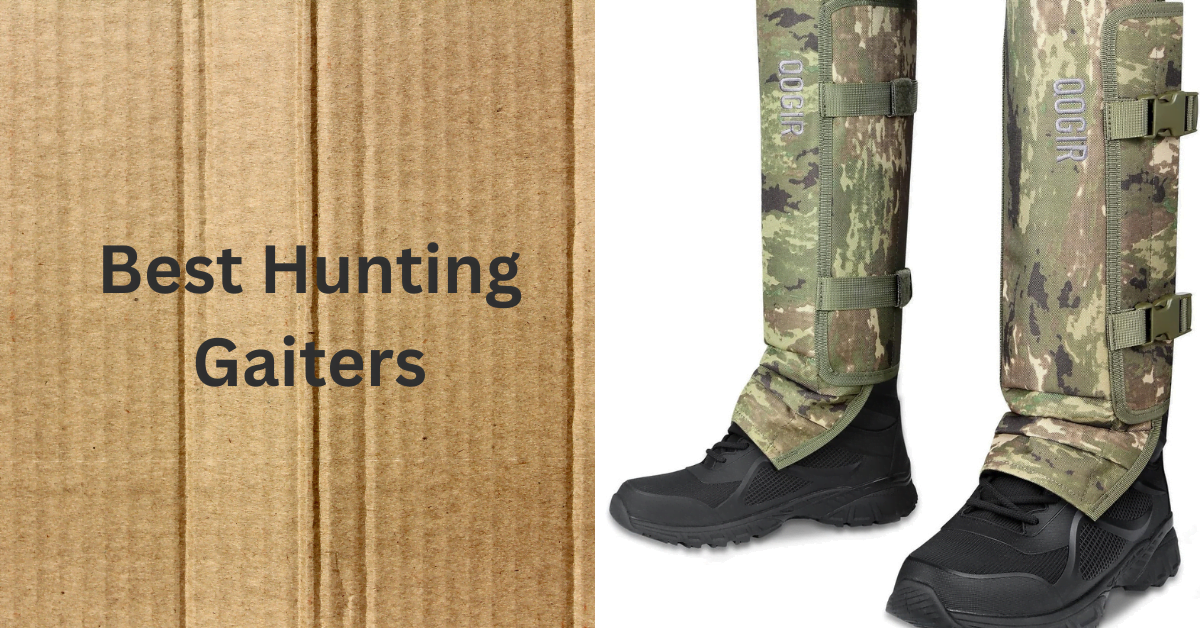
Hunting gaiters keep snow, mud, thorns, and ticks out of your boots and off your lower legs during a long day in the field. The right pair matters more than most hunters expect: a loose, noisy, or poorly sealed gaiter can soak your socks by mid-morning or scrape against brush loud enough to spook game at close range.
Below are five hunting gaiters worth comparing, chosen for how they cover different needs: an all-around waterproof pick, a durable trail and brush option, a rugged camo pair built for rough desert and mountain country, a dedicated snake-resistant model, and a premium Gore-Tex pair for deep snow and cold conditions. Each entry includes the specs pulled from its Amazon listing, honest pros and cons, and a note on who should skip it.
Table of Contents
Quick Picks Table
| Product | Best For | Key Feature | Check Price |
|---|---|---|---|
| Kenetrek Hunting Gaiter | All-around waterproof protection | Stormblocker waterproof membrane, Hypalon rubber straps | Check Price on Amazon |
| Outdoor Research Rocky Mountain High Gaiters II | Trail and brush durability | Reinforced boot lace hooks, abrasion-resistant fabric | Check Price on Amazon |
| King’s Camo XKG Leg Gaiter | Rugged desert and mountain terrain | 4-way stretch tri-laminate, reinforced boot buckle | Check Price on Amazon |
| SPIKA Strike Snake Gaiters | Snake-prone hunting country | PU-bonded canvas tested against fang penetration | Check Price on Amazon |
| Outdoor Research Crocodile Classic Gaiters | Deep snow and cold-weather hunts | GORE-TEX 3-layer fabric, 1000D Cordura foot panel | Check Price on Amazon |
How We Chose
We compared listed materials, closure types, waterproofing claims, and verified buyer reviews on Amazon for gaiters marketed specifically toward hunters rather than general hikers. We looked for models with enough review volume to judge real-world fit and durability, and we favored listings that specify boot compatibility, strap hardware, and fabric construction instead of vague marketing language.
None of these picks were physically tested by our team. Specs and quoted claims below come directly from each product’s Amazon listing and manufacturer description, and we recommend confirming current stock, sizing charts, and color options before you order, since hunting gear inventory changes often.
1. Kenetrek Hunting Gaiter
Best for: Hunters who want one gaiter that handles deep snow, wet brush, and long days without constant readjustment.
Key specs (from Amazon listing): Stormblocker waterproof and breathable membrane, Hypalon rubber underfoot straps, front-opening design with hook and loop closure, adjustable top cinch cord, camo tricot micro-fleece exterior, sized by men’s boot size (Medium 5-8, Large 9-12, X-Large 13-15).
Pros
- Genuinely waterproof membrane, confirmed across many reviews from hunters who crossed creeks and stood in deep snow
- Hypalon straps resist ice buildup better than plain nylon cording
- Front-opening design makes it fast to put on and take off over pac boots
- Quiet fleece exterior on camo colorways moves well through brush
Cons
- Solid Loden and black colorways run noisier than the camo fleece version
- Some buyers report the top calf opening runs loose on narrower legs
- Velcro closure strength has been inconsistent across a small number of reviews
Skip this if: You hunt almost entirely in dry, warm terrain where a lighter ankle gaiter would be cooler and less bulky.
2. Outdoor Research Rocky Mountain High Gaiters II
Best for: Hunters who spend most of their time on trail and in moderate brush rather than deep snow, and want a gaiter built for durability over multiple seasons.
Key specs (from Amazon listing): Water-resistant, breathable, abrasion-resistant fabric, durable Hypalon instep straps, reinforced boot lace hooks, self-fastening front closure, available in sizes small through X-large.
Pros
- Reinforced lace hooks and Hypalon straps hold up well against scree, rocks, and brush
- Updated fit works with a wider range of boot profiles than the earlier version
- Backed by Outdoor Research’s reputation for durable trail gear
Cons
- Water-resistant rather than fully waterproof, so it is not the top choice for standing water or deep snow
- A few reviewers found the boot area bulkier than expected
- One reported the front hook failing after light use, so check the closure on arrival
Skip this if: You need full waterproof protection for marsh hunting or deep snow; look at the Kenetrek or Outdoor Research Crocodile picks instead.
3. King’s Camo XKG Leg Gaiter
Best for: Backcountry and western hunters covering rough, thorny, or rocky ground where the gaiter needs to survive repeated abuse.
Key specs (from Amazon listing): 3-layer, 4-way stretch tri-laminate polyester construction, reinforced lower leg panel, Velcro front closure, reinforced boot buckle, double-riveted boot lace hook, available in Medium-Large and Large-X-Large sizing.
Pros
- Reviewers report strong durability on multi-day backcountry and spot-and-stalk hunts in rugged terrain
- 4-way stretch fabric moves with the leg better than stiffer nylon shells
- Reinforced buckle and lace hook hold up to repeated on/off cycles in the field
Cons
- Runs warm in hot weather according to several reviewers
- Sizing has been reported as generous, so check the brand’s size chart before ordering
- Only two size bands are offered, which may not suit unusually small or large calves
Skip this if: You hunt mostly in cold, wet climates where a dedicated waterproof membrane matters more than abrasion resistance.
4. SPIKA Strike Snake Gaiters
Best for: Turkey, upland, and shed hunters working through cactus, thorns, and terrain where venomous snakes are a real concern.
Key specs (from Amazon listing): Reinforced PU-bonded canvas with a 4-way closure system, listed by the brand as tested against simulated snake strikes up to 12mm fang length, adjustable gaiter wires, Duraflex buckle, shoe lace hooks, available in sizes small through X-large.
Pros
- Purpose-built for snake resistance rather than a general hiking gaiter with a snake claim added on
- Lightweight for a snake gaiter at roughly one pound per pair
- Reviewers report solid performance against cactus and thorns in addition to snake protection
Cons
- Costs more than most snake gaiter competitors on Amazon
- Only covers the lower leg, so it is not a substitute for snake boots on serious rattlesnake terrain
- Orientation of the gaiter wire loop matters; wearing it backward can cause the strap to slip according to one detailed review
Skip this if: Snake exposure is not a real concern where you hunt; a general waterproof gaiter like the Kenetrek will serve you better for less money.
5. Outdoor Research Crocodile Classic Gaiters
Best for: Late-season and mountain hunters who need serious waterproof protection in deep snow, slush, or freezing rain.
Key specs (from Amazon listing): Bluesign-approved GORE-TEX 3-layer fabric, 1000D Cordura woven foot panel, 2-inch double-stitched hook-and-loop front closure with a buckle top hem, triple bar-tacked BioThane instep strap, reinforced boot lace hooks, sizes small through XX-large.
Pros
- Full GORE-TEX construction gives genuinely waterproof and windproof performance rather than just water resistance
- Cordura foot panel resists abrasion from rocks, ice, and crampons
- Reviewers consistently report strong performance in deep snow conditions
Cons
- The most expensive pick in this lineup
- Built more for mountaineering-style boots than lightweight hunting boots, so fit over a low-profile hunting boot can feel bulky
- The underfoot strap can wear down with heavy use according to at least one detailed review
Skip this if: You hunt mostly in dry, mild conditions where the added waterproofing and cost are not worth carrying.
Buying Guide: How to Choose Hunting Gaiters
Gaiters look simple, but the details in fabric, attachment style, height, and fit determine whether you notice them all day or forget you have them on.
Neoprene, Nylon Shell, and Cordura: What the Fabric Actually Does
Most hunting gaiters use one of a few fabric approaches. A laminated waterproof membrane, like a Stormblocker or GORE-TEX shell, blocks water while staying breathable, which matters on long hikes where sweat buildup is as much a problem as outside moisture. A 1000D Cordura or similar heavy nylon weave at the foot and lower leg resists abrasion from rocks, crampons, and repeated brush contact. Snake-resistant gaiters use a different approach entirely, relying on dense PU-bonded canvas or layered puncture-resistant panels rather than a waterproof laminate, since the priority shifts from moisture control to penetration resistance.
Fleece or tricot exteriors, often used on camo colorways, tend to move more quietly through brush than stiff nylon shells. If you hunt close-range game like turkey or bedded deer, test a gaiter’s fabric noise before relying on it in a stalking situation.
Boot Hook vs Strap-Style Instep Attachments
Every gaiter needs something to keep the bottom edge from riding up, and there are two common approaches. A boot lace hook clips onto your boot laces and holds the front of the gaiter down; it is simple and works well with lace-up hunting boots but does little for slip-on or pac-style boots. An underfoot strap runs beneath the arch of your boot and pulls the gaiter down from below; it works on almost any boot style, including rubber pac boots, but the strap itself is a wear item that can fray or snap with heavy use, so check whether the strap is a replaceable component before buying.
Several gaiters in this guide combine both a lace hook and an underfoot strap, which adds redundancy if one attachment point fails mid-hunt.
Gaiter Height and Coverage
Height determines how much protection you get and how hot the gaiter feels. Ankle and low gaiters cover the boot top and lower ankle, which is enough for dry trails and light debris but offers little protection from deep snow, wet brush, or snake strikes to the calf. Mid-height and tall gaiters extend well up the calf or to just below the knee, which is what you want for marsh hunting, deep snow, thick brush, or snake country, at the tradeoff of more warmth and bulk.
Match height to your actual terrain rather than buying the tallest option by default. A hunter working dry, open ground in early season rarely needs the same coverage as someone post-holing through snow in December.
Getting the Sizing Right
Most hunting gaiter brands size by boot size or by a small/medium/large calf measurement rather than standard clothing sizes, and the two systems do not always agree. Measure your calf circumference and check it against the brand’s specific size chart rather than assuming your usual size will carry over between brands. Also account for what you will actually wear underneath: a gaiter sized for a lightweight hiking boot may not close comfortably over an insulated pac boot or bulky late-season pants.
Reviewers across multiple products in this guide note that sizing runs generous on some brands and snug on others, so when in doubt, try the gaiter on with the actual boots and pants you plan to hunt in before heading into the field.
FAQ
Q: Do hunting gaiters actually stop snake bites?
A: A dedicated snake gaiter like the SPIKA Strike, built with dense PU-bonded canvas and tested against simulated strikes, offers real puncture resistance on the covered area. Standard hiking or waterproof gaiters are not designed or tested for this and should not be relied on for snake protection.
Q: What is the difference between hunting gaiters and general hiking gaiters?
A: Hunting gaiters more often use quiet fleece or tricot exteriors, camo colorways, and reinforced hardware built for repeated brush contact, while general hiking gaiters tend to prioritize light weight and packability. There is overlap, and several picks in this guide, like the Outdoor Research models, are marketed for both hiking and hunting use.
Q: Should I buy GORE-TEX gaiters or a nylon shell?
A: GORE-TEX, like the Outdoor Research Crocodile Classic, gives the strongest waterproof and breathable performance and is worth the added cost for deep snow or wet, cold hunts. A nylon or tri-laminate shell like the King’s Camo XKG is lighter, often more abrasion-resistant, and better suited to dry or moderate conditions where full waterproofing is not the priority.
Q: How do I know what size gaiter to order?
A: Measure your calf circumference and check it against the specific brand’s size chart, since sizing is not standardized across brands. Also try the gaiter on with the actual boots and pants you plan to hunt in, since bulky pac boots or insulated late-season pants can change what size fits.
Q: Can gaiters replace dedicated snake boots?
A: No. Even a snake-resistant gaiter like the SPIKA Strike only covers the lower leg and boot area, while snake boots protect a larger portion of the leg with a different construction. In serious rattlesnake terrain, treat a snake gaiter as an added layer of protection, not a full replacement for snake boots or basic trail awareness.
Q: How long do hunting gaiters typically last?
A: It depends heavily on terrain and care, but reviewers across the picks in this guide commonly report multiple hunting seasons of use before straps, hooks, or closures need replacing. Rinsing off mud and grit after each hunt and storing gaiters dry will extend the life of both the fabric and the hardware.
Final Recommendation
For most hunters, the Kenetrek Hunting Gaiter is the strongest all-around choice: a proven waterproof membrane, durable Hypalon straps, and a quiet fleece exterior on the camo colorway cover the widest range of hunting conditions. If your hunts lean toward one specific challenge, the picks above narrow it down further: the Outdoor Research Rocky Mountain High Gaiters II for general trail durability, the King’s Camo XKG for rough backcountry terrain, the SPIKA Strike for snake-prone ground, and the Outdoor Research Crocodile Classic for the deepest snow and coldest conditions.
Whichever pair you choose, confirm your calf measurement against that brand’s size chart, and try the gaiters on with the boots and pants you actually hunt in before your first trip into the field.