How to Clean Your Rifle Scope Without Damaging the Lens

To clean a rifle scope without damaging the lens, remove loose dust first, use only optics-safe tools, apply lens cleaner to the cloth instead of directly to the glass, and wipe gently from the center outward. Most scratches happen when grit is rubbed across the coating, not because the lens was too dirty to save.
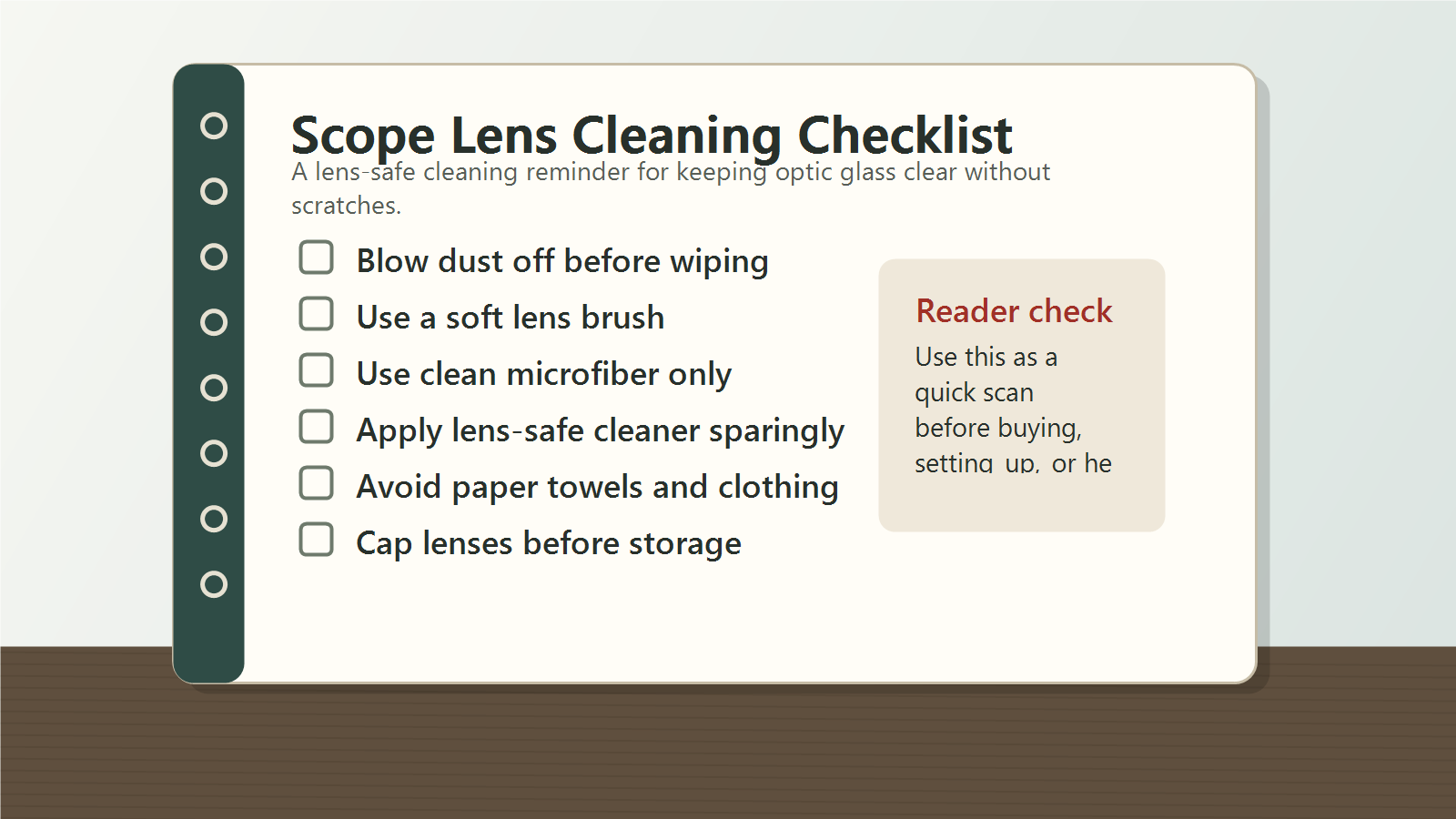
Table of contents
A rifle scope does not need to look showroom-clean after every hunt. It needs to be clear, dry, and free of particles that can scratch the lens or block your view. The safest routine is simple: protect the optic in the field, clean only when needed, and avoid shortcuts like shirt sleeves, paper towels, household glass cleaner, and aggressive rubbing.
Quick Answer: The Safe Rifle Scope Cleaning Method
The safest way to clean a rifle scope is to blow or brush away loose particles before anything touches the glass. After that, use an optics microfiber cloth or lens tissue with a small amount of lens-safe cleaner. Work lightly, use fresh clean surfaces, and stop as soon as the lens is clear enough to use.
This matters because modern rifle scopes use coated lenses. Those coatings improve light transmission, contrast, and glare control, but they can be damaged by grit, harsh chemicals, and repeated dry rubbing. Treat the lens like a camera lens, not like a truck windshield.
Best Basic Cleaning Sequence
- Check that the firearm is unloaded and pointed in a safe direction before handling optics.
- Remove the scope caps and inspect both objective and ocular lenses.
- Use a bulb blower or soft optics brush to remove loose grit.
- Use optics cleaner only if fingerprints, oil, water spots, or residue remain.
- Wipe gently with a clean microfiber cloth or lens tissue.
- Let the lenses dry before putting caps back on.
What You Need To Clean A Rifle Scope
You do not need a complicated kit. A few clean, optics-safe tools are enough for most scope maintenance. The key is using tools made for coated glass and keeping those tools clean between uses.
Optics Brush Or Lens Pen
A soft brush is useful for dust, pollen, powder residue, and dry dirt around the lens edge. Brush lightly and let the bristles lift particles away. Do not scrub with pressure. If the brush itself is dirty, clean or replace it before using it on glass.
Bulb Blower Or Gentle Air
A manual bulb blower is safer than putting your mouth near the lens because it avoids moisture droplets. Canned air can work, but use it carefully and keep the can upright. A sudden blast of propellant or moisture is not what you want on a coated lens.
Clean Microfiber Cloth
Use a clean microfiber cloth reserved for optics. A cloth that has been in a pocket with sand, metal shavings, lint, or gun-cleaning residue can scratch the lens even if it feels soft. Wash or replace cloths regularly.
Optics-Safe Lens Cleaner
Use a cleaner made for coated optics. Apply it to the cloth, not directly to the scope. Too much liquid can run toward lens edges, seals, or adjustment areas. For many cleanings, a dry brush and a clean cloth are enough.
What Not To Use On Scope Lenses
The fastest way to ruin an optic is not one big dramatic mistake. It is usually a small repeated habit: wiping with a shirt, using the same dirty cloth, or rubbing grit into the lens because you are in a hurry.
Avoid Shirt Sleeves And Paper Towels
Clothing and paper products can hold grit and can be more abrasive than they look. They also smear oils instead of lifting them cleanly. If the scope is expensive enough to hunt with, it is worth carrying a real lens cloth.
Avoid Household Glass Cleaner
Household glass cleaners are made for windows and mirrors, not necessarily for coated optical lenses. Some chemicals can be too harsh for coatings or can leave residue. When in doubt, follow the scope maker’s care guidance or use a cleaner labeled for optical glass.
Avoid Overcleaning
Cleaning creates contact. Contact creates risk. If the lens has a tiny bit of harmless dust but the image is clear, blowing it off and closing the caps may be enough. Save wet cleaning for fingerprints, water spots, mud residue, or visibility problems.
How To Clean Your Rifle Scope Step By Step
This routine works for most hunting and range scopes. It is also gentle enough for binoculars and spotting scopes, although you should always respect the care instructions for the exact optic you own.
Step 1: Make The Firearm Safe
Before working around a mounted scope, unload the firearm, remove the magazine if applicable, open the action, and keep the muzzle in a safe direction. Cleaning the optic is not separate from firearm safety. It happens on a real firearm unless the scope has been removed.
For general safety principles, the NSSF firearm safety rules are a useful reference. Build the habit before you start handling the rifle on a bench or in camp.
Step 2: Inspect The Lens Before Touching It
Look for dust, dry grit, mud, water spots, fingerprints, and oily smears. The type of dirt decides the cleaning method. Dry grit should be lifted away first. Oil needs cleaner. Mud needs drying or careful removal before any wiping.
Step 3: Blow Away Loose Dust
Use a bulb blower or gentle air to remove loose particles. Hold the scope so particles can fall away instead of settling back onto the glass. Do not blast air aggressively into lens edges.
Step 4: Brush The Edges Lightly
Dust often collects around the edge of the lens and inside the cap area. Use a soft brush to loosen it before wiping the center of the glass. Work from the edge outward when possible so grit is not dragged across the viewing area.
Step 5: Use Cleaner Only When Needed
If fingerprints or smears remain, put a small amount of optics cleaner on a clean microfiber cloth or lens tissue. Do not soak the cloth. A slightly damp cleaning surface is enough.
Step 6: Wipe Gently And Use Fresh Cloth Surface
Use light pressure and move from the center outward or in gentle circles. Fold the cloth to a fresh clean section as it picks up residue. If a spot does not move easily, stop and re-evaluate instead of pressing harder.
Step 7: Dry And Recheck
Let the lens air dry for a moment, then inspect it from an angle. A few tiny dust specks are not a crisis. What matters is a clear image and no abrasive residue trapped under the lens cap.
Field Cleaning During A Hunt Or Range Day
Field cleaning should be conservative. You are usually dealing with wind, moisture, cold fingers, and limited tools. The goal is to restore visibility without making the lens worse.
Carry A Small Optics Kit
A small pouch with a lens pen, microfiber cloth, and lens wipes is enough for most hunters. Keep it sealed so the cloth does not collect grit. Do not store the cloth loose beside ammunition, knives, or loose tools.
Use Scope Caps Whenever Possible
Prevention is easier than cleaning. Flip caps, bikini covers, or a scope coat can keep rain, snow, dust, and brush contact away from the glass. If you hunt in wet or dusty country, caps are not just accessories. They reduce cleaning risk.
Do Not Rush A Muddy Lens
If mud gets on the lens, avoid grinding it into the glass. Let it dry if you can, loosen it gently, and clean it with proper tools back at camp. If you must restore visibility immediately, use the least contact possible.
After Rain, Mud, Snow, Or Condensation
Water is not always harmless. Rain can carry minerals and dirt. Snow can melt and leave spots. Condensation can move dust into streaks. After wet conditions, dry the exterior, inspect the lenses, and let the scope sit uncapped in a dry room before storage.
Dry The Outside First
Wipe the scope body and caps with a separate cloth before cleaning the lens. Do not use the same dirty exterior cloth on the glass. Water and grit from the tube can transfer onto the lens surface.
Let Moisture Evaporate Before Storage
Putting a damp optic into a closed case can trap moisture. That can encourage corrosion on mounts, screws, and exterior metal. Give the rifle and optic time to dry in a safe location before long storage.
Why Lens Coatings Need Gentle Care
Rifle scopes use optical coatings to manage light, reduce glare, and improve the image. The general idea is similar across many optical coatings: thin layers on glass change how light is reflected or transmitted. Those surfaces deserve careful handling.
Scratches Affect More Than Looks
A tiny mark may not ruin a scope, but scratches can scatter light and reduce contrast. In low light, glare and haze are more noticeable. That is why a clean process matters more than a perfectly polished-looking lens.
Good Cleaning Protects Long-Term Value
Many scopes last for years if they are not abused. Careful lens maintenance helps preserve the view, resale value, and confidence in the optic. If you are also choosing a new optic, see our guide on how to choose a rifle scope.
Storage And Prevention Tips
The best cleaning plan is the one you rarely need. Good storage and simple field habits reduce the amount of dirt that reaches the lens in the first place.
Keep Caps Clean
Dirty caps can press grit directly onto the lens. Wipe the inside of caps occasionally, especially after dusty range days or wet hunts. Replace damaged caps that no longer seal or stay closed.
Store The Rifle In A Dry Place
A dry, stable storage area helps protect both the optic and the firearm. Avoid leaving the rifle in a damp case longer than necessary. If the rifle was used in rain or snow, dry it before storage.
Separate Lens Cloths From Gun-Cleaning Gear
Solvent, oil, carbon, and metal particles do not belong on an optics cloth. Keep lens-care items in their own small bag. For firearm maintenance products, see our guide to gun cleaning solvents and oils, but do not treat those as lens cleaners.
Common Rifle Scope Cleaning Mistakes
Most cleaning problems are preventable. If you avoid the mistakes below, you are already ahead of many scope owners.
Rubbing Before Removing Grit
This is the biggest risk. Dry grit can act like sandpaper. Always blow or brush first, then wipe only after the loose material is gone.
Using Too Much Liquid
More cleaner does not mean safer cleaning. Excess liquid can smear, leave residue, or move toward lens edges. Use a small amount on the cloth and add more only if needed.
Cleaning Every Speck
A perfect-looking lens is not always worth the contact required to get there. If the optic is clear and the speck is harmless, leave it alone until proper cleaning conditions are available.
FAQ
Can I use alcohol wipes on a rifle scope?
Use only wipes that are labeled safe for coated optics, and follow your scope maker’s instructions. Generic alcohol wipes may be too harsh or may leave residue. When unsure, use an optics-specific cleaner and microfiber cloth.
Can I breathe on the lens and wipe it?
It is better not to. Breath adds moisture and can turn dust into smears. A bulb blower and clean lens cloth are safer.
How often should I clean my rifle scope?
Clean it when dirt, water spots, fingerprints, or haze affect visibility. For normal dust, use caps and a gentle blower or brush. Avoid wet-cleaning the lens after every trip unless it actually needs it.
Can scratches be removed from a scope lens?
Usually no. Polishing a coated optic can make the damage worse. If the lens is scratched badly enough to affect use, contact the manufacturer or a qualified optics service option.
Should I clean the inside of a rifle scope?
No. Do not disassemble a sealed scope to clean internal glass. If you see internal fogging, debris, or moisture, treat it as a warranty or repair issue.
Final Thoughts
Cleaning a rifle scope is mostly about patience. Remove loose grit first, use optics-safe tools, apply cleaner lightly, and stop when the image is clear. A careful routine protects lens coatings, keeps your view sharp, and helps your scope last through many seasons.