Bolt Action vs Semi-Auto Hunting Rifles: Complete Guide
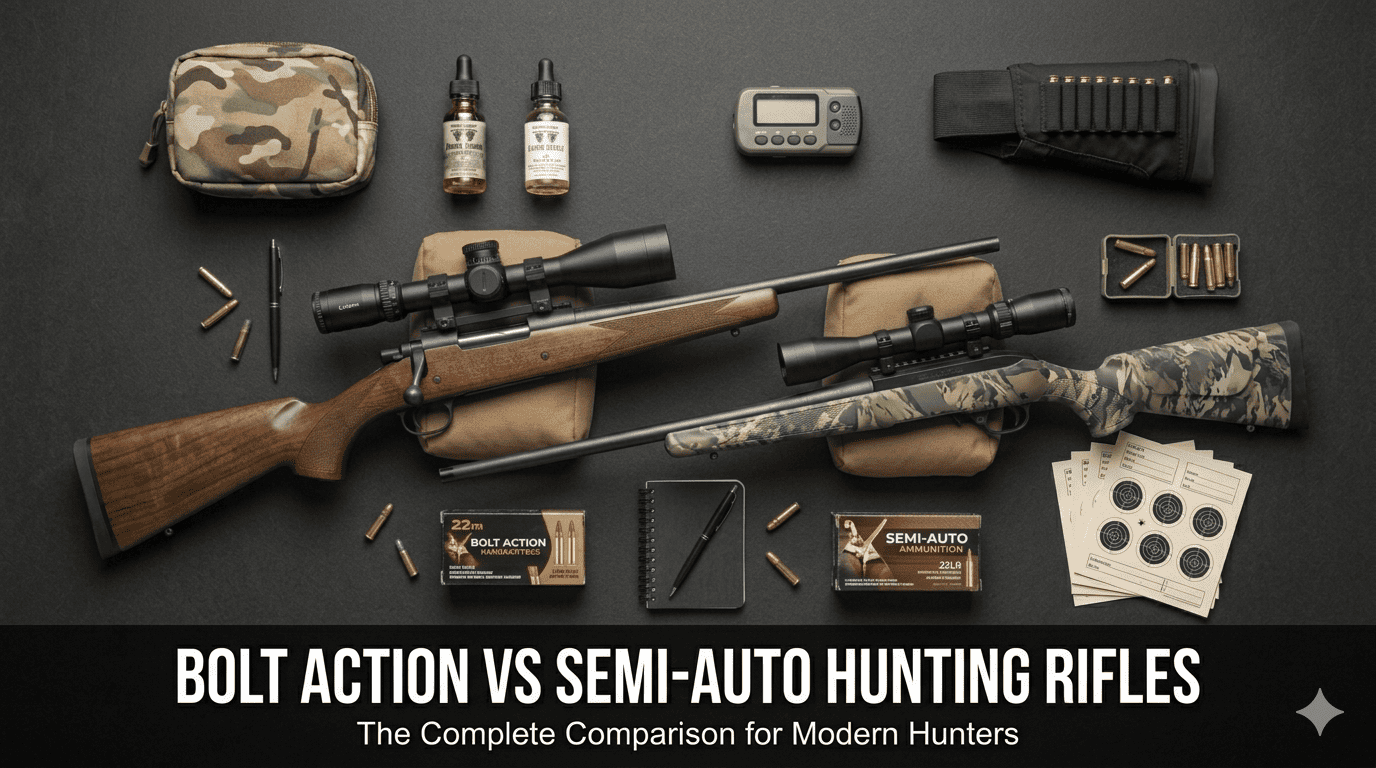
For most hunters, a bolt-action rifle is the safer default when reliability, simple maintenance, and first-shot precision matter most. A semi-auto hunting rifle can still be a good fit when legal in your area and when fast follow-up shots, reduced felt recoil, or hog/predator hunting are priorities. The best choice is not about which action is “better” in every case; it is about matching the rifle action to your local rules, hunting style, cartridge, terrain, and skill level.
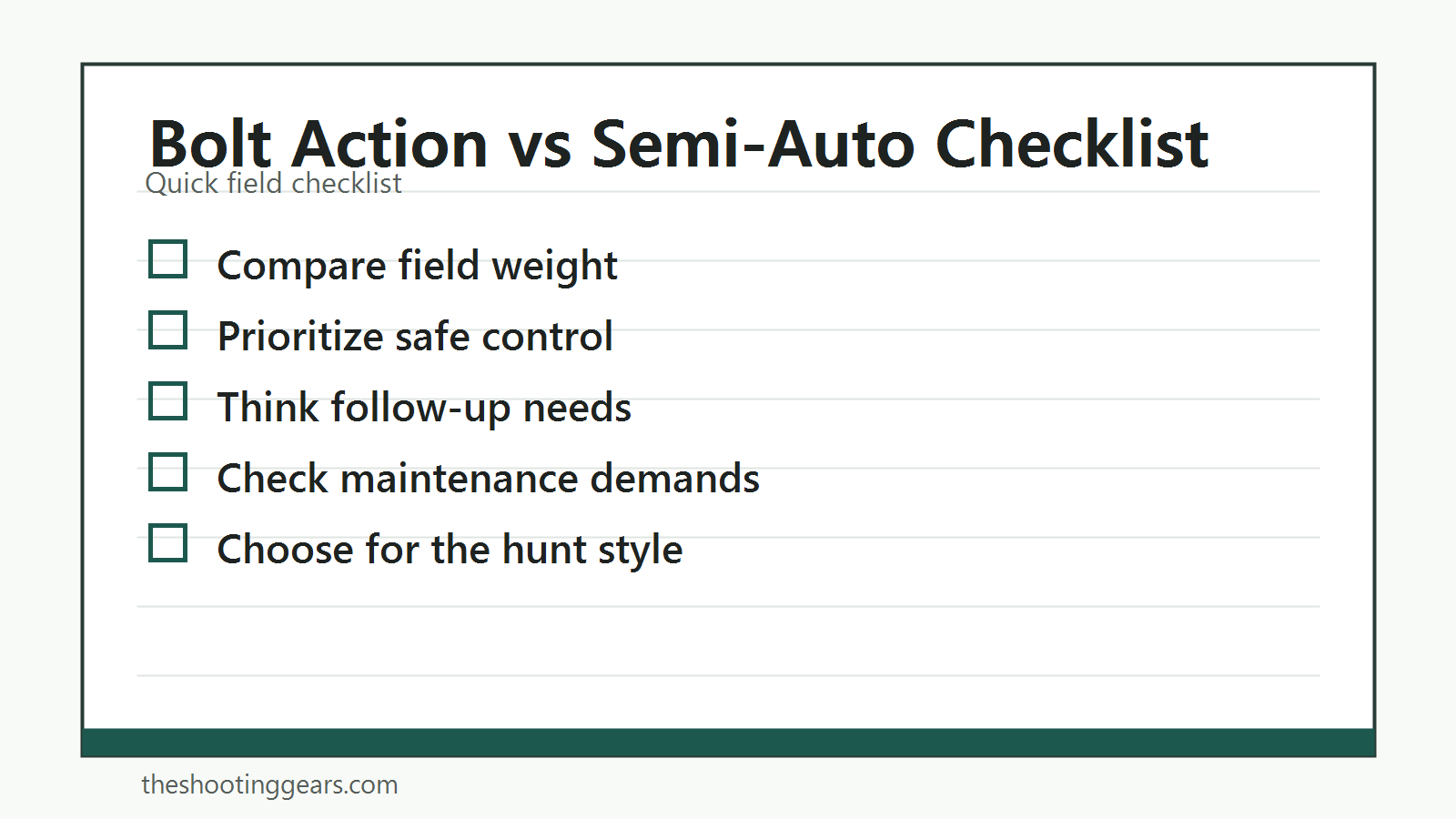
Table of contents
Table of Contents
Quick Answer
Choose a bolt-action hunting rifle if you want a simple, proven rifle for deer, elk, antelope, sheep, or general big-game hunting. Choose a semi-auto hunting rifle only if it is legal for your hunt, you can handle it safely, and the practical advantages fit your use case.
Best Default Choice: Bolt Action
Bolt actions are popular because they are mechanically simple, easy to inspect, and widely chambered for common hunting cartridges. They encourage deliberate shooting, which matters when the goal is one clean, ethical shot instead of speed.
Best Specialized Choice: Semi-Auto
Semi-autos make sense for some hunters, especially predator, hog, and close-to-medium-range hunting where legal follow-up shots may matter. They also reduce manual movement between shots, which can help keep the rifle on target. The tradeoff is that semi-auto rifles usually need more attention to magazine fit, ammunition compatibility, cleaning, and local regulations.
How Each Action Works
Bolt-Action Basics
A bolt-action rifle requires the shooter to manually lift, pull, push, and lock the bolt to eject a fired case and chamber the next round. This manual cycle is slower than a semi-auto, but it also makes the rifle easy to understand. A hunter can usually see and feel whether the action is open, closed, loaded, or clear.
Semi-Auto Basics
A semi-automatic rifle uses energy from the fired cartridge to cycle the action and chamber the next round. It still fires only one shot per trigger pull. Because the rifle cycles itself, the hunter must be disciplined about muzzle direction, trigger finger placement, and knowing what is beyond the target after every shot.
Field Reliability
In rough hunting conditions, reliability usually favors simplicity. Mud, snow, dust, cold fingers, thick gloves, and wet gear all make basic rifle handling more important than bench-rest features.
Why Bolt Actions Are Trusted in Bad Weather
Bolt actions have fewer cycling variables. If the chamber is clean, the ammunition fits the rifle, and the shooter runs the bolt fully, the system is usually straightforward. That is why many mountain, timber, and backcountry hunters still prefer bolt actions for difficult weather and long hikes.
Where Semi-Autos Need More Attention
Semi-autos can be reliable, but they are more sensitive to ammunition, magazines, lubrication, and cleaning. A rifle that runs perfectly with one load may not run the same way with a different bullet weight or pressure curve. Before hunting, confirm function at the range using the exact legal ammunition you plan to carry.
Accuracy and Shot Discipline
Accuracy depends more on the shooter, ammunition, optic, trigger control, and rifle setup than action type alone. Still, bolt actions often make it easier to build a simple, precise hunting setup because the design is rigid, common, and easy to bed, scope, and maintain.
First-Shot Accuracy Matters Most
Hunting is not a speed contest. The most important shot is the first careful shot from a stable position. A bolt action naturally slows the process down and encourages the hunter to reset, watch the animal, and avoid rushing.
Semi-Auto Accuracy Can Be Good Enough
Modern semi-auto hunting rifles can be accurate enough for ethical hunting inside the hunter’s proven range. The key is honest range work. Do not assume the rifle is ready because it looks tactical or modern; confirm groups, zero, reliability, and point of impact with your actual hunting load.
Follow-Up Shots and Recoil
The biggest practical advantage of a semi-auto is faster follow-up capability with less disruption to the shooting position. The biggest risk is that speed can tempt a hunter to shoot before confirming a safe, ethical opportunity.
When Follow-Up Speed Helps
Follow-up speed can matter for hogs, coyotes, some close-cover hunts, and situations where multiple legal animals may appear. A semi-auto can also feel softer because some recoil energy is used to cycle the action.
When Follow-Up Speed Hurts
Speed becomes a problem if the hunter fires without a stable sight picture, clear background, or legal target confirmation. If a semi-auto makes you rush, it is the wrong rifle for that hunt. Ethical follow-up shots still require control, patience, and a safe lane.
Weight, Maintenance, and Weather
Rifle action affects how the gun carries and how much attention it needs after the hunt. This matters more than many buyers expect.
Carry Weight
Bolt actions are often lighter for the same cartridge class, especially in mountain and backcountry setups. Semi-autos can be heavier because of the receiver, gas system, magazine, and accessory-ready furniture. Weight can be helpful from a stand but tiring on long walks.
Cleaning and Inspection
Both rifle types need safe cleaning and inspection according to the owner’s manual. Semi-autos usually require closer attention to the chamber, bolt, gas system, and magazines. Bolt actions are generally simpler for beginners to inspect after wet or dusty hunts.
Legal and Safety Checks
Before choosing any hunting rifle, check your state wildlife agency rules for legal firearm type, magazine capacity, season restrictions, cartridge rules, and public-land requirements. Semi-auto rifles and magazine capacity can be treated differently depending on location and hunt type.
Use Official Sources
For safety fundamentals, review the NSSF firearm safety rules. For hunter education and state-specific learning, use Hunter-Ed or your state wildlife agency. For ammunition compatibility warnings, review SAAMI unsafe firearm and ammunition combinations.
Do Not Treat Online Advice as Legal Permission
A blog article can explain buying factors, but it cannot replace current regulations. Rules can change by state, season, species, county, public land unit, and magazine capacity. If the rule is unclear, ask the wildlife agency or a qualified local instructor before the hunt.
Best Fit by Hunting Style
Deer and General Big Game
A bolt action is usually the cleanest fit for deer and general big-game hunting. It is simple, accurate, easy to carry, and available in proven cartridges. Most hunters will be better served by a well-zeroed bolt action than a faster rifle they have not practiced with enough.
Hogs, Coyotes, and Close-Cover Hunting
A semi-auto may make sense for hogs, coyotes, or close-cover hunting where legal and where repeat opportunities can happen quickly. The rifle still needs to be carried safely, used within a proven range, and loaded with ammunition appropriate for the animal and local rules.
New Hunters
New hunters are often better off starting with a bolt action because it is easier to learn loading, unloading, chamber checks, and deliberate shot habits. A semi-auto is not automatically unsafe, but it gives the beginner more things to manage.
Decision Checklist
- Choose bolt action if you want simple operation, easy maintenance, and deliberate first-shot hunting.
- Choose semi-auto only if it is legal, reliable with your chosen ammunition, and useful for your hunting style.
- Check state wildlife rules before buying or hunting with any rifle.
- Confirm cartridge, magazine, and ammunition compatibility from the rifle manual and official sources.
- Practice from real hunting positions, not only a bench.
- Never let fast follow-up capability replace safe target identification and background awareness.
FAQ
Is a bolt action more accurate than a semi-auto?
Not always, but bolt actions are often easier to set up for simple hunting accuracy. The real answer depends on the rifle, ammunition, optic, trigger, shooter, and maintenance.
Is a semi-auto rifle legal for hunting?
It depends on your state, season, species, magazine capacity, and land rules. Check your state wildlife agency before buying or hunting with a semi-auto rifle.
Which rifle action is better for beginners?
A bolt action is usually better for beginners because it is easier to inspect, unload, and understand. It also encourages slower, more deliberate shooting habits.
Can a semi-auto hunting rifle be ethical?
Yes, if it is legal, reliable, properly zeroed, and used by a disciplined hunter. Ethical hunting depends on safe handling, shot placement, range limits, and judgment, not action type alone.
Final Takeaway
If you want the simplest and most dependable hunting-rifle choice, start with a bolt action. If your hunting style truly benefits from faster follow-up shots and your local rules allow it, a semi-auto can be a useful tool. Either way, choose the rifle you can carry safely, maintain correctly, zero honestly, and use within your proven limits.