10 Best Takedown Recurve Bows

The Best Takedown Recurve Bow for Hunting: Bowhunting is an ancient hunting method, and it is popular too. But it is not an easy task. You need colossal practice to be successful in this method.
And for successful bowhunting, you need a good quality bow. A good quality bow will provide you the best durability and much accuracy.
But there are thousands of takedown recurve bows available in the market. That’s why; it is not so easy to find out the Best Takedown Recurve Bow for Hunting.
Choose archery gear by exact fit, draw weight, bow compatibility, and whether setup should be checked by a qualified bow tech. USA Archery provides helpful archery resources for safe practice habits.
Table of Contents
- Quick Picks Table
- Our Top Picks – The 10 Best Takedown Recurve Bow for Hunting
- Reviews of the Best Takedown Recurve Bow for Hunting
- Southwest Archery Spyder Takedown Recurve Bow
- Samick Sage Takedown Recurve Bow
- Courage SAS 60″ Hunting Recurve Archery Bow
- Southwest Archery Spyder XL Takedown Recurve Bow
- KESHES Takedown Hunting Recurve Bow
- Southwest Archery Tigershark Takedown Recurve Bow
- XQMART Takedown Recurve Bow
- Southland Archery Supply SAS Spirit 62″ Recurve Bow
- SinoArt Falcon 60″ Takedown Hunting Recurve Bow
- Southland Archery Supply SAS Recurve Bow
- What to Consider When Choosing a Takedown Recurve Bow for Hunting?
- Draw Weight
- Draw Length
- Riser
- Limbs
- Frequently Asked Questions
- Can You Hunt With a Takedown Recurve Bow?
- Can a Takedown Recurve Bow Kill a Deer?
- What Size Takedown Recurve Bow Do I Need?
- What Kind of Wood Is Used to Make a Recurve Bow?
- How Far Can a 50 Lb Takedown Recurve Bow Shoot?
- Are Takedown Bow Limbs Interchangeable?
- Is a Recurve Bow Good for Beginners?
- How to Find a Recurve Bow That Fits Your Measurements?
Quick Picks Table
Product Best for Details Price
Southwest Archery Spyder Takedown Recurve Bow Best for value comparison Read review Check Amazon
Samick Sage Takedown Recurve Bow Best for value comparison Read review Check Amazon
Courage SAS 60″ Hunting Recurve Archery Bow Best for value comparison Read review Check Amazon
Southwest Archery Spyder XL Takedown Recurve Bow Best for value comparison Read review Check Amazon
KESHES Takedown Hunting Recurve Bow Best for value comparison Read review Check Amazon
Southwest Archery Tigershark Takedown Recurve Bow Best for value comparison Read review Check Amazon
XQMART Takedown Recurve Bow Best for value comparison Read review Check Amazon
Southland Archery Supply SAS Spirit 62″ Recurve Bow Best for value comparison Read review Check Amazon
SinoArt Falcon 60″ Takedown Hunting Recurve Bow Best for value comparison Read review Check Amazon
Southland Archery Supply SAS Recurve Bow Best for value comparison Read review Check Amazon
Our Top Picks – The 10 Best Takedown Recurve Bow for Hunting
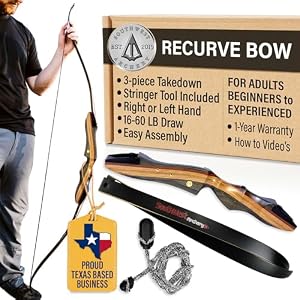
The Spyder's three-piece layout: one handcrafted riser plus a matched pair of limbs.
- SOUTHWEST ARCHERY SPYDER TAKEDOWN RECURVE BOW
Check Latest Price

The 62-inch Sage strung at its recommended 7–8 inch brace height.
- SAMICK SAGE TAKEDOWN RECURVE BOW
Check Latest Price

- COURAGE SAS 60 HUNTING RECURVE ARCHERY BOW
Check Latest Price

The XL adds two inches of length for archers drawing past 29 inches.
- SOUTHWEST ARCHERY SPYDER XL TAKEDOWN RECURVE BOW
Check Latest Price

- KESHES TAKEDOWN HUNTING RECURVE BOW
Check Latest Price

- SOUTHWEST ARCHERY TIGERSHARK TAKEDOWN RECURVE BOW
Check Latest Price
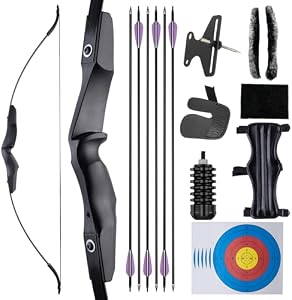
- XQMART TAKEDOWN RECURVE BOW
Check Latest Price

The Spirit's three-wood riser gives it that distinctive pale yellow finish.
- SOUTHLAND ARCHERY SUPPLY SAS SPIRIT 62 RECURVE BOW
Check Latest Price

- SINOART FALCON 60 TAKEDOWN HUNTING RECURVE BOW
Check Latest Price
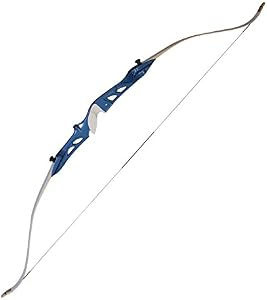
The Explorer's machined aluminum riser is the stiffest platform on this list.
- SOUTHLAND ARCHERY SUPPLY SAS RECURVE BOW
Check Latest Price
Reviews of the Best Takedown Recurve Bow for Hunting
A good quality takedown recurve bow for hunting will provide you much durability, accuracy, and comfort while hunting. From thousands of takedown recurve bows of the market, you need to find out the best one. As a result, you have to face stress.
We have researched well about the takedown recurve bows and found out the ten takedown bows to reduce your stress. These bows are of good quality, provides much accuracy and comfort.
Here we are giving reviews on the hunting takedown recurve bows. We hope these reviews will help you enough to find out and buy the Best Takedown Recurve Bow for Hunting from online.
How We Judged These Takedown Recurve Bows
Every bow below was assessed against the same practical criteria rather than marketing copy, and the list is re-checked each season — including for 2026 — because budget archery listings appear and disappear constantly. Where a model has been discontinued, we say so in an editor's note instead of quietly leaving a dead link.
- Fit range. How many shooters the bow suits: available draw weights, AMO length, and whether left-handed risers exist. A bow that only comes in one hand or one weight is a narrower recommendation.
- Riser rigidity and hand shock. A riser that flexes under load throws arrows inconsistently. Wood risers with laminated hardwood cores and machined aluminum risers both work; thin, single-species wood does not.
- Limb quality and longevity. Delamination and limb twist are the two failures that end a cheap recurve's life. Fiberglass-faced maple laminations, reinforced tips, and clean glue lines are what we look for.
- Upgrade path. Pre-installed brass bushings for a rest, sight, quiver, or stabilizer, plus the ability to buy heavier limbs later, mean the bow grows with you instead of being replaced.
- What's actually in the box. A stringer tool, string, and rest included saves real money; a bow sold without a stringer needs one added to the budget immediately.
- Support. A stated warranty (one year is typical, three on the SAS Spirit) and a responsive brand matter more on a $150 bow than most buyers expect.
In practice, the single biggest predictor of whether a beginner sticks with traditional archery is not the bow's brand — it's whether the draw weight was chosen sensibly. A well-made 35 lb bow you can hold at full draw for five seconds will out-shoot a 55 lb bow you have to heave back every time.
1. Southwest Archery Spyder Takedown Recurve Bow
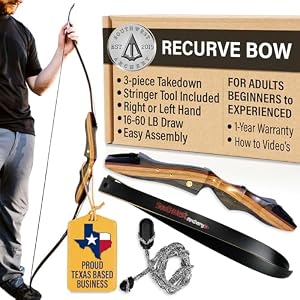 Bowhunting is always a risky and stressful task. And a good quality bow is a must for bowhunting. That’s why; you have to choose the takedown bow for hunting to be successful in bowhunting. The South Archery Spyder Takedown Recurve bow is an excellent bow for this purpose.
It contains some great features with much durability and accuracy. This bow is too compact and lightweight and made of naturally sourced wood. For learners, this bow can be a great choice. It can draw up to 20lb to 60 lbs of weight.
You will get some preinstalled threads to install or upgrade various types of accessories. Its limb tips reinforced, and this item has made the bow Fast Flight and compatible with the Flemish string. It contains one riser, which is handcrafted.
The bow also contains matching limbs (one pair) and 14 strand Dacron string. Using the stringer tool, you can quickly assemble and disassemble the bow with much safety. Both left-hander and left hander can use this bow. This price affording bow is backed with a year warranty by its manufacturer.
Pros
Affordable price
Compact and lightweight
Perfect for learners
Preinstalled threads
Handcrafted riser
One year warranty
Cons
Limbs may get delaminated
Stringer tool may break early
Editor's note: The Southwest Archery Spyder listing originally reviewed here has been discontinued on Amazon. The link above now points to the current Spyder Takedown Recurve Bow listing (62", Right Hand, 25 lb with stringer tool), which matches the same handcrafted riser, fiberglass/maple limbs, and 14-strand Dacron string described in this review. Stock on this listing is limited, so check current availability before ordering.
2. Samick Sage Takedown Recurve Bow
 You need an excellent takedown to recurve bow to enjoy a successful bowhunting. There are thousands of bows available in the market. So, you have to work hard to find out the best one.
The Samick Sage takedown recurve bow for hunting is excellent in quality and price, and you can select this for its quality, durability, and accuracy. Its length is 62 inches and comes with B-50 grade strings and arrow rest.
You will get Preinstalled Brass Brushing in this bow. There you can easily install various items like Brass Plunger, Stabilizer, Sight, or Quiver. This great takedown bow is ready to fit with all Samick Sage hunting kits. It has a great design.
Limbs of this bow are made using Hard Maple and Black Fiberglass. In this bow, you will also get Single Tapered Knob. This bow includes Metal Limb Pocket also. To increase or decrease the weight, you can buy limbs separately.
The maximum draw length of this bow is 29 inches. Brace height is 7 inches to 8 inches, which is recommended. Its dimension is 26 x 6 x 2 inches, and its weight is 2.7 pounds only.
Pros
62 inches long
It has Arrow rest and B-50 strings
Preinstalled brass brushing
Metal Limb Pocket Design
29 inches maximum draw length
Cons
Limbs width varies
A crack may found in the riser
3. Courage SAS 60″ Hunting Recurve Archery Bow
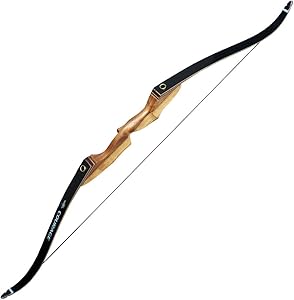 Bowhunting is not an easy task. That’s why you need a good quality takedown recurve bow to be successful in bowhunting with less stress. The Courage SAS 60 inches Takedown Bow is an excellent bow for hunting.
It’s a great combination of quality, durability, and accuracy. It is perfect for experienced level archers. Bintangor, Chulgum, Makore, these types of hardwoods are used to make the riser of this bow. So, you will get a super sturdy service from it.
Its limbs are also made using the lamination of Maple and Makore wood, but these contain fiberglass face. The total length of the Courage SAS Archery bow is 60 inches. This model is perfect for left-hander archers only. But there is another model which is suitable for right-handed archers.
Using this bow, you will get 35 to 55 lbs of draw weight. In this package, you will get one SAS Courage bow, one bowstring, and one Rug rest. This bow is stable and sturdy enough. But you won’t have to face any stress while using this because the bow is much more comfortable. Its shooting speed is also high.
Pros
Hardwood material riser
Hardwood laminated limbs
35 to 55 lbs draw weight
Much stable
Comfortable enough
Cons
- Drawstring may not stay in place
4. Southwest Archery Spyder XL Takedown Recurve Bow
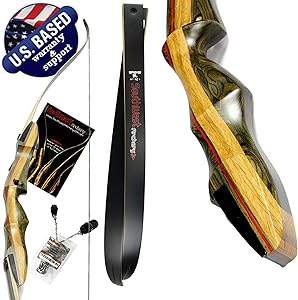 Bowhunting is an old hunting process. People have improved this day by day. But the difficulty of this process is almost the same as in the past days. Now a day you will find some great bows that have made bowhunting a bit easier.
The Southeast Archery Spyder bow is one of those bows. It is the best takedown recurve bow for hunting due to its stability, durability, and accuracy. It’s design and engineering are of good quality. It is a combination of four types of woods which sourced naturally.
A beginner or an expert archer can easily use this bow. The Southeast Archery Spyder takedown bow is perfect for both left and right-handed archers. It can draw from 30 lbs to 55 lbs.
Preinstalled threaded bushings are also available in this bow. These are to allow you to use various accessories like mechanical rests, quivers, stabilizers, etc. in the bow.
For providing Flemish string compatibility and Flight fast, its limp tips are reinforced. You will get an upper and lower matching pair of limbs, one stick for adhesive arrow rest, and one Dacron string, which is of 14 strands with this bow. You will get one year warranty for this bow.
Pros
Naturally sourced wood material
Perfect for left and right both hander
Preinstalled threaded bushings
Reinforced limb tips
One year warranty
Cons
The string may come out
The top limb may get delaminate
5. KESHES Takedown Hunting Recurve Bow
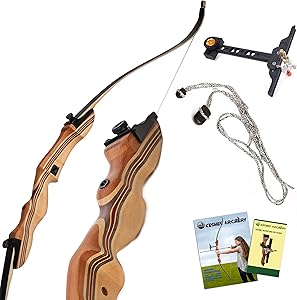 Though bowhunting is a popular hunting method, it is not so easy. You have to select a good quality takedown recurve bow for successful bowhunting. KESHES takedown hunting recurve bow can be your best choice.
The bow is on the list of the best takedown recurve bow for hunting due to its quality, stability, and accuracy. Utmost comparable quality manufacturing is used to make this bow. It is a combination of the best quality woods that are from different sources. This bow is enough lightweight and provides much comfort for holding.
It is a perfect bow for experienced and beginner-level archers. The bow comes with a different weight option range, which starts from 15 lbs and is available up to 55 pounds. To increase or decrease the draw weight, you can buy the limbs separately and attach those to this bow.
Due to its preinstalled brass bushing, you can connect or upgrade any components in it. This bow is available in right-hander and left-hander, both draw positioning model. You will get knob screws to attach the limbs to the riser. For perfect aiming, it contains eyesight.
Pros
Different sourced wood materials
Comfortable holding
Perfect for any ages archers
62 inches length
Round edge riser
Easy and safe stringer tool
Cons
Assembling is not easy
Holes may not match to attach limbs
6. Southwest Archery Tigershark Takedown Recurve Bow
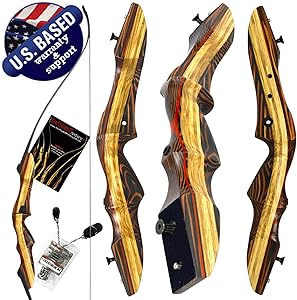 The Tigershark takedown bow is a third-generation upgrade by the Samick Sage and has become globally popular among beginner hunters since its release. It has many features but comes at an affordable price. It is a beautiful 62″ hunting takedown recurve bow made from four natural wood sources.
This bow is available in both right, and left-handed model has a draw weight of 25-60 lbs. This bow is fast and accurate thanks to its reinforced limb tips feature. The Tigershark has a precision pin-locking technology that helps with exact limb placement to improve performance.
Both models have a preinstalled threaded layer that helps with customization in the future. It comes one in all packages. The package includes a handcrafted riser, one pair of limbs, a 14 strand Dacron string, an instruction manual, etc.
Also, it is possible to order a string tool along with the package. This bow offers extraordinary quality with a manufacturer’s warranty. A 1-year warranty is included with all Southwest Archery bows.
Pros
It has a great design
Easy to set up
Lightweight and durable
Pin-locking technology
Top-quality materials
1- year warranty
Cons
No arrows included in the package
Some old hunters don’t like the shiny design
7. XQMART Takedown Recurve Bow
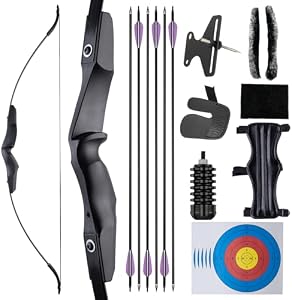 XQMART Takedown Recurve Bow is indeed one of the toughest recurve bows. It is a powerful bow and arrow made for adults because it’s very sturdy and reliable but lightweight at the same time. It is a comfortable bow.
Again, this bow has a solid aluminum made well-crafted riser. The grip is comfortable and well designed. This bow is easy to assemble and disassemble. So, it is convenient to carry around. This bow is trendy as it is compact, sturdy, and stylish.
The XQMART Recurve bow boasts impressive speed, shooting both quietly and smoothly. With multiple limb weight options, this bow provides unparalleled flexibility, while also delivering impressive stopping power. Designed primarily for right-handed users, it should be held in the left hand while pulling the string with the right. This bow comes complete with a package that includes 1 recurve bow, 12 Fiberglass arrows, 1 bow sight, and other useful tools. Featuring a draw weight function, it is available in both camo and black color options.
Pros
Draw weight selection feature
It is a very durable product
It is a lengthy bow
Amazing design
Package includes a variety of accessories
Top-quality product at a reasonable price
Cons
Left-handed people can’t use it
It takes too much force to pull the bow
Editor's note: The XQMART Takedown Recurve Bow reviewed here has been discontinued on Amazon; the brand's listings are no longer available. The link above now points to the GQT Takedown Recurve Bow, a comparable right-handed takedown kit with a similarly quiet, smooth-shooting design and a complete arrows-and-accessories bundle.
8. Southland Archery Supply SAS Spirit 62″ Recurve Bow
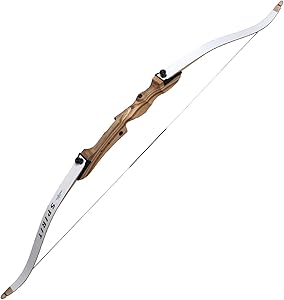 The SAS Spirit bow is a perfect instrument for backyard shooting or hunting. Primary materials used in this bow are maple laminations and top-quality fiberglass. It ensures both the flexibility and durability of the bow. It is tough to break this bow for its guaranteed strength.
The fantastic central part is its riser. Riser usually made of three different types of wood. It gives the bow a unique pale yellow finish. It is the finest recurve bow for newbies . The SAS Spirit bow has a beautiful and durable riser.
Although it is not well finished, it doesn’t affect the performance of this bow. The riser has extra slots for the installation of additional tools. Its white color limb is made of fiberglass lamination with maple wood. This bow has several draw weights of 22, 26, 30, and 34 lbs.
The length of the SAS Spirit bow is 62 inches. It comes with 14-strand Dacron string and can upgrade up to 16 strands. Again, it is a lightweight bow with only 2.8 lbs weight. This bow shoots very quietly and also very easy to assemble. It is quiet, and the vibration is almost zero.
Pros
Top-quality bow at a meager price
The perfect tool for beginners
It is an accurate and flexible bow
Easy to string and assemble
Lightweight, quiet and zero vibration bow
This bow has a 3-year warranty
Cons
Riser and limb aren’t well finished
Package doesn’t include a bow stringer
9. SinoArt Falcon 60″ Takedown Hunting Recurve Bow
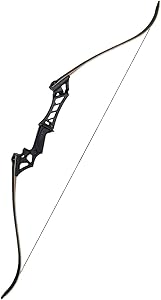 The SinoArt Falcon Takedown Recurve Bow is a hunting bow that is designed exclusively for right-handed shooters. This bow has the finest top quality metal riser. The metal riser and the limb pockets have also rounded to ensure a comfortable experience for you.
Its riser is made of high-strength composite materials. This bow is easy to hold and very pleased as well. Again, it is lightweight and compact – this bow is designed for long-term usage.
The SinoArt Falcon Recurve bow is of camo and black color. The bow length is 58.6″ with string. The AMO length is 60,” and the riser height is 18″. This bow has a draw weight of 30lbs-70lbs for versatile usage.
The user has the option to buy additional limbs to make it more substantial. This bow very well built, but it is also a bit heavy with added limbs. The accuracy and flexibility of the SinoArt Falcon are remarkable.
This bow weighs 2.75 lbs, and the package contains 1x riser, 2x bow limbs, and 1x bowstring. Without any doubt, this bow is perfect for both beginners and professional hunters.
Pros
This bow works with various limbs
It has got a top-quality metal riser
It has multiple draw weights
This bow is very durable
Price is affordable also
Customer service is very satisfying
Cons
This bow is a bit heavy compared to other models
Arrow holder is fragile
10. Southland Archery Supply SAS Recurve Bow
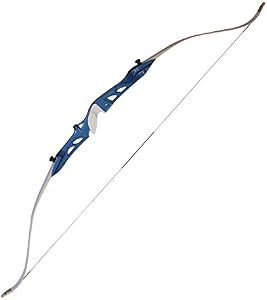 The SAS Explorer Recurve bow is made to last forever. It is made using durable fiberglass and maple laminations to provide the traditional stunning design, durability, accuracy, and flexibility. novice archers can select it to get the best output.
The riser is also very well polished, and the bow has five different colors. The SAS Explorer bow is stunning, and it is a very challenging task to break it. This bow has a high-strength aluminum riser with sturdy construction.
The SAS Explorer bow offers the most beautiful shooting experience. This bow is made for right-handed users only. It has a plastic grip to ensure comfort. Fiberglass and maple laminations are used to make the limbs of this bow.
It has a draw weight of 22-34lbs, and the length is 66inches. This bow is very compact and also easy to assemble. Its aluminum-made body makes it lightweight and flexible.
The SAS Explorer bow is made to ensure high accuracy. This bow comes in a package that includes only 66″ explorer bow with assembling a sting. So, other essential tools need to be purchased separately.
Pros
This bow is very sturdy
It provides high performance and accuracy
This bow is easy to assemble and carry around
It offers five different colors to choose from
It is a long-lasting bow
Price is very reasonable
Cons
Only for right-handed use
Grip is weak
Editor's note: The SAS Explorer listing originally reviewed here has been discontinued on Amazon. The link above now points to the current SAS Explorer Metal Riser Takedown Recurve Bow (Blue, 30 lb), which uses the same high-strength aluminum riser, fiberglass/maple limbs, and 66" length described in this review. Available draw weight and color options may differ from the original listing.
Takedown Recurve Bow Comparison Table
Use this side-by-side view to narrow the field before you click through. Length is the AMO rating (the number that matters for draw-length fit), and draw weights are the ranges the manufacturers list across their limb options.
| Bow | AMO Length | Draw Weight Range | Riser Material | Hand Options | Best Suited To |
|---|---|---|---|---|---|
| Southwest Archery Spyder | 62" | 20–60 lb | Laminated hardwood | Right & left | All-round first hunting recurve |
| Samick Sage | 62" | 25–60 lb | Hard maple / olive dymondwood | Right & left | The classic upgrade-friendly platform |
| SAS Courage | 60" | 35–55 lb | Bintangor, Chulgum, Makore | Right & left (separate models) | Experienced archers wanting hunting weight |
| Spyder XL | 64" | 30–55 lb | Four-wood lamination | Right & left | Draw lengths of 29"+ |
| KESHES | 62" | 15–55 lb | Multi-wood lamination | Right & left | Households sharing one bow |
| Tigershark | 62" | 25–60 lb | Four-wood lamination | Right & left | Beginners who want pin-locked limbs |
| GQT/XQMART-style kit | Compact takedown | Multiple limb weights | Aluminum | Right only | Buyers who want everything in one box |
| SAS Spirit | 62" | 22–34 lb | Three-wood lamination | Right & left | Youth, target practice, low-weight starters |
| SinoArt Falcon | 60" | 30–70 lb | High-strength composite/metal | Right only | Hunters wanting heavy limb options |
| SAS Explorer | 66" | 22–34 lb | Aluminum | Right only | Long-draw target shooters and new archers |
A word of honesty about that table: a 60-inch bow with 55 lb limbs is not automatically "better" for hunting than a 62-inch bow with 40 lb limbs. Shorter bows stack sooner and pinch the fingers at long draw lengths; heavier limbs are only an advantage if you can shoot them with control. Pick the length that matches your draw first, then the weight you can genuinely manage.
Ready to commit? Match your draw length to the AMO length in the table above, then open that bow's Amazon listing and filter to your hand and weight — buying the right size the first time saves you the cost of a second set of limbs.
Takedown vs. One-Piece Recurve vs. Compound
Plenty of buyers land on this page still deciding what kind of bow they want. Here's the honest comparison.
| Feature | Takedown Recurve | One-Piece Recurve | Compound |
|---|---|---|---|
| Portability | Breaks into three pieces; fits a daypack | Full length always | Bulky but shorter axle-to-axle |
| Draw weight changes | Swap limbs in minutes | Buy a whole new bow | Adjustable within a range |
| Let-off at full draw | None — you hold full weight | None | 65–90% let-off |
| Learning curve | Moderate; form-dependent | Moderate | Faster to shoot accurately |
| Maintenance | String wax and limb bolts | Minimal | Cams, cables, press work |
| Typical effective hunting range | 20–25 yards | 20–25 yards | 40+ yards |
| Cost of entry | Lowest | Low to mid | Highest |
If you want one bow that grows with you, the takedown wins outright — you can start at 30 lb, move to 45 lb next season, and keep the same riser and grip you've already learned. If you're comparing traditional gear to horizontally-limbed options, our explainer on what makes a recurve crossbow different covers the other end of the traditional-versus-modern spectrum, and the Tenpoint Stealth NXT breakdown shows what a fully modern crossbow platform offers by comparison.
How to Assemble and String a Takedown Recurve Safely
Almost every one-star review of a budget recurve traces back to stringing it wrong. The limbs twist, the string slips, and the archer blames the bow. Do it this way instead:
- Seat the limbs correctly. Slide each limb into its pocket and tighten the limb bolts finger-tight, then snug them with the supplied Allen key. Do not crank them — over-torqued bolts crush wood risers.
- Check top from bottom. Most limbs are marked "upper" and "lower." Fitting them backwards changes the tiller and makes the bow shoot high or low no matter what you do with your form.
- Use a bow stringer. Always. The step-through method twists limbs and is the single most common cause of limb failure on budget takedowns. A stringer costs a few dollars; a limb set costs many times that.
- Position the pockets. Place the large saddle pocket over the lower limb tip and the small pocket over the upper tip, stand on the stringer cord, pull the riser straight up, and slide the string loop into its groove with your free hand.
- Verify before you shoot. Lower the bow, sight down the string from the tip: it should bisect both limbs evenly. If the string sits off-centre, the limb is twisted — unstring, reseat, and check again.
- Measure brace height. Nock-point-to-throat distance should land in the manufacturer's window (roughly 7–8 inches on most 62-inch bows). Twist the string to shorten it and raise brace height; untwist to lower it.
A common mistake is leaving a wooden-riser bow strung for weeks on end in a hot vehicle. Unstring it if it will sit unused for more than a few days, and never leave it strung in a truck cab in summer heat.
Tuning a Takedown Recurve for Hunting Accuracy
Getting a recurve to group is less about the bow and more about three adjustments most beginners never touch.
- Brace height. Move it in 1/8-inch increments and shoot a group at 15 yards after each change. The quietest, tightest setting is usually your best. Too low and the bow is loud and slaps the forearm; too high and you lose arrow speed.
- Nocking point. Set the nock locator roughly 1/2 to 5/8 inch above square on the string. If arrows kick tail-high, raise it slightly; tail-low, lower it. Bare-shaft testing at 10–15 yards will show you the answer faster than guessing.
- Arrow spine. This is the big one. A stiff arrow shot from a 40 lb recurve will consistently land left of the mark for a right-handed shooter (and vice versa). Use the shaft manufacturer's spine chart, matched to your actual draw length and point weight — not the bow's marked poundage alone.
- Centre shot and rest pressure. With a stick-on rest, small shims behind the plate change where the arrow sits relative to the riser. A plunger button (screwed into that brass bushing) gives you finer, repeatable control.
Tune in that order — brace height, nock height, then spine — and re-check after any limb change. Swapping to heavier limbs alters your dynamic spine, so the arrows that flew perfectly at 35 lb may need a heavier spine at 50 lb.
Choosing Arrows and Broadheads for a Recurve
Recurves are less forgiving of mismatched arrows than compounds because there's no cam timing or drop-away rest to mask errors.
- Shaft material: carbon for durability and consistency, aluminium for a slightly heavier, quieter flight, and wood if you're chasing a fully traditional setup. Fiberglass arrows shipped with budget kits are fine for backyard practice but are not hunting arrows.
- Total arrow weight: aim for at least 9 grains per pound of draw weight for hunting. Heavier arrows carry more momentum and penetrate better — a real advantage when you're working with 45 lb rather than 70 lb of stored energy.
- Fletching: feathers, not vanes, if you shoot off a shelf or a stick-on rest. Feathers fold as they pass the riser; plastic vanes bounce and steer the arrow off line.
- Broadheads: fixed-blade, cut-on-contact heads are the traditional-archery standard. Mechanicals rob energy that a recurve can't spare. Sharpen to shaving-sharp and re-check the edge before every hunt.
- Point weight: adding front-of-centre weight stabilises arrow flight. Many recurve hunters run 175–250 grain heads for exactly this reason.
Once your broadhead-tipped arrows group with your field points at 20 yards, your setup is hunt-ready — and no earlier. Guidance from the Archery Trade Association and your local pro shop is worth seeking out if you're building a hunting arrow for the first time.
Hunting Legally and Ethically With a Recurve
Rules vary by state and, in some cases, by unit or season. Before you carry a takedown recurve into the woods:
- Check the minimum legal draw weight. Many states set a floor for big game — commonly in the 35–45 lb range — and some also specify minimum broadhead width or ban mechanical heads. Confirm the current numbers in your state's regulations rather than relying on a forum post.
- Confirm broadhead and arrow rules. A few states regulate barbed heads, lighted nocks, or arrow length.
- Know your season dates. Traditional and archery-only seasons often open earlier and run longer than firearm seasons, which is one of the quiet advantages of picking up a recurve.
- Check the land. National wildlife refuges and federal lands have their own permits and conditions; the U.S. Fish and Wildlife Service publishes hunting access rules for the refuge system, and state wildlife agencies handle everything else.
Ethically, the recurve's shorter effective range puts the burden on woodcraft rather than equipment. That means paying far more attention to wind, entry routes, and where you hang your stand than a rifle hunter ever has to. Understanding terrain-specific approaches matters more when 20 yards is your ceiling.
Practice Drills That Actually Transfer to the Field
Shooting groups at a paper target from a flat lawn is not the same as drawing on a deer at last light. Build these into your routine:
- The blank-bale drill. Stand three yards from a target butt, close your eyes, and shoot 20 arrows focusing only on back tension and release. It fixes target panic faster than anything else.
- One cold arrow. Every practice session, take one shot with no warm-up. That's the shot you'll get in the field.
- Kneeling, seated, and leaning. Practise from a chair, from one knee, and around a trunk. Your form changes and you need to know how much.
- Shoot in your hunting clothes. A bulky jacket sleeve catching the string at full draw is a genuinely common miss. So is a face mask shifting your anchor point.
- Elevated angles. If you hunt from a stand, practise from an elevated platform and remember to bend at the waist, not to drop your bow arm.
- Low light. Shoot at dusk. You'll discover very quickly whether your instinctive aiming holds up when the target goes grey.
If you're setting up somewhere to shoot regularly, our rundown of what to put on a beginner's range list covers backstops, target stands, and safety kit worth having before you start slinging arrows.
Care, Maintenance, and Storage
Takedown recurves are simple machines, and a few minutes of upkeep buys years of service.
- Wax the string every few hundred shots, or whenever it looks fuzzy. Rub wax in with your fingers until it warms and absorbs — never use a heat source.
- Replace the string when strands fray, the serving separates, or brace height starts creeping down on its own. Dacron strings stretch with age.
- Check limb bolts before each outing. Vibration loosens them, and a loose limb bolt is how limbs get damaged.
- Store unstrung, flat or hanging, in a stable indoor environment. Wood risers and laminated limbs hate humidity swings and heat. A garage or vehicle is not storage.
- Dry it thoroughly after wet weather and wipe metal parts. If you regularly hunt in the rain, our notes on staying effective in wet conditions are worth a read alongside your gear-drying routine.
- Inspect limbs in good light for hairline cracks, lifted glue lines, or twist. Retire any limb showing delamination — that's not a repair job.
Packing a Takedown Recurve for the Backcountry
The whole point of a takedown is that it disassembles. Take advantage of it:
- Carry the riser inside your pack and strap the limbs to the outside in a soft sleeve, or use a purpose-made three-piece bow case.
- Keep the Allen key and a spare string in a zip bag in the lid pocket. A spare string weighs almost nothing and saves a trip.
- Assemble at the trailhead, not at the stand — you don't want to be fumbling with limb bolts in the dark.
- For fly-in or checked-baggage trips, a broken-down recurve fits standard hard cases far more easily than a one-piece bow.
Because the whole rig weighs under three pounds, it fits neatly into a minimalist pack setup — and when you're planning what else goes in, a checklist for a full trip prevents the classic mistake of arriving with a perfect bow and no arm guard.
Common Mistakes Beginners Make
- Buying too much draw weight. By far the most frequent error. Ego-weight bows produce flinching, short-drawing, and abandoned hobbies.
- Skipping the stringer. Covered above, but worth repeating — it's the leading cause of limb damage.
- Mismatched arrows. Shooting whatever shafts came in the kit and then blaming the bow for left-and-right misses.
- No finger protection. A tab or glove is not optional; bare fingers on a 40 lb string wreck your release within a dozen shots.
- Anchoring inconsistently. A recurve has no peep sight to enforce head position. Pick a hard anchor — corner of mouth, knuckle under jawbone — and hit it identically every time.
- Over-tightening limb bolts on a wooden riser, which compresses the pocket and can crack the wood over time.
- Ignoring the shelf. Add a stick-on rest and strike plate. Shooting off bare wood chews the riser and destroys fletching.
Beyond Deer: What Else a Takedown Recurve Is Good For
Hunting whitetails is the obvious use case, but a takedown recurve earns its keep in other ways too. Lighter limbs in the 30–40 lb range make an excellent stump-shooting and small-game setup with judo or blunt points. Swap to a reel and heavy fibreglass shaft and the same riser becomes a serviceable rig for shooting rough fish in the shallows — one of the best ways to log hundreds of instinctive shots in a single afternoon. And because the draw weight is adjustable by limb swap, one riser can serve an entire household, which is part of what makes traditional archery such a good fit for getting the whole household outdoors together.
For deer specifically, remember that a recurve rewards patience over reach. Tactics that pull animals inside 20 yards — drawing a buck into close range with a decoy, working funnels, or hunting food sources hard in the tail end of the season — matter far more with traditional tackle than with a 300 fps compound.
Frequently Asked Questions
Can You Hunt With a Takedown Recurve Bow?
Yes, you can. A recurve bow can hunt animals, including elk, whitetail deer, moose, an elephant, and a wide variety of games.
Can a Takedown Recurve Bow Kill a Deer?
Yes, a takedown bow can kill a deer with its powerful shots.
What Size Takedown Recurve Bow Do I Need?
A takedown recurve bow should be at least 2-times longer than your draw length. It will help you hit targets from longer distances. For example-if, your draw length is 28″, you should pick a 56″ long recurve bow. Generally, longer bows are more accurate.
What Kind of Wood Is Used to Make a Recurve Bow?
Ash, cherry, hickory, walnut, and mulberry are all types of wood used to make recurve bows. However, Maple is the most common type of wood used in recurve bows because it is durable and flexible.
https://www.youtube.com/watch?v=I7TV5v9JwsM
How Far Can a 50 Lb Takedown Recurve Bow Shoot?
If you use a 50-pound takedown recurve bow, expect to have a range of 300 yards at least. Keep the bow within a 30-40 yard range for the best results.
Are Takedown Bow Limbs Interchangeable?
It depends on the brand. most manufacturers pay particular attention to this function because it allows users to alter their bow settings based on their level of expertise.
Is a Recurve Bow Good for Beginners?
Recurve bows are less expensive (compared to most compound bows) and available in a wide range of draw weights. Therefore, they are an excellent choice for beginning archers.
How to Find a Recurve Bow That Fits Your Measurements?
Most new archers feel completely overwhelmed by the amount of information they need to acquire a bow and begin using it. You need 3 measurements to locate a recurve bow that fits, and then you’re all set to go hunting.
The following are the three measurements that must be measured:
Your draw weight
Your bow length
Your draw length
What Is the Difference Between ILF and Bolt-Down Limbs?
Bolt-down (sometimes called "Samick-style" or Sage-pattern) limbs attach with a single knob or bolt into a matching pocket, and they're only interchangeable within that pattern — Sage, Spyder, and Tigershark limbs, for example, share the same fitting. ILF (International Limb Fit) is an open standard used across many mid-and-high-end risers, allowing limbs from different manufacturers to be mixed and also offering adjustable limb alignment and preload. Nearly every bow on this list uses a bolt-down system, which keeps costs down; ILF is the natural upgrade path if you later buy a metal riser.
What Draw Weight Do I Actually Need for Deer?
For whitetail-sized game with a well-tuned, heavy, sharp arrow, most experienced traditional hunters consider 40–45 lb at your draw length a sensible working minimum, and many states set a legal floor in that neighbourhood. More important than the number is control: if you can't hold at full draw, settle your anchor, and release cleanly, the weight is too high. Check your state's current regulations before you buy limbs.
How Do I Measure My Draw Length at Home?
Stand with your arms outstretched, have someone measure your wingspan in inches from fingertip to fingertip, and divide by 2.5. That gives a close estimate. Verify it with a marked arrow at full draw against your normal anchor point — measured from the string groove to the front of the riser shelf, plus 1¾ inches, gives the AMO draw length that arrow charts use.
Can I Fly With a Takedown Recurve Bow?
Yes. Archery equipment must be checked, not carried on, and should travel in a locked hard case. A takedown breaks down to roughly the length of the riser plus limbs, so it fits standard cases easily — one of the practical reasons hunters choose them for travel. Confirm your airline's specific policy before you book.
How Often Should I Replace the Bowstring?
For a recreational shooter, once a year is a reasonable rhythm; heavy shooters or hunters who shoot in wet conditions may want to replace sooner. Replace immediately if you see broken strands, a worn or separating centre serving, or a brace height that keeps dropping despite twisting. Only fit a Fast Flight or FlemishFast-Flight string if the manufacturer states the limb tips are reinforced for it — Dacron on non-reinforced tips is the safe default.
Do I Need a Sight on a Hunting Recurve?
Not necessarily. Most traditional hunters shoot instinctively or use gap shooting, and at the 15–25 yard ranges where recurves excel, a sight adds little. If you prefer one, the brass bushings on the risers reviewed above accept standard sights. Shooters who struggle with optics generally — including those dealing with blur and starbursts through a red dot — often find bare-bow instinctive shooting simpler, not harder.
Are Cheap Takedown Recurves Worth It?
For learning, yes — genuinely. The riser geometry and limb construction on the better budget bows are good enough to develop solid form, and the limb-swap system means you're not throwing money away when you get stronger. The trade-off is finish quality, occasional quality-control lapses, and limbs that won't last as long as premium laminations. Where cheap bows are not worth it is at the very bottom of the market, where a fiberglass one-piece "hunting bow" with no upgrade path will simply frustrate you.
How Long Should It Take to Get Hunting-Ready?
Plan on a few months of consistent practice rather than a few weekends. A realistic benchmark: you're ready to hunt when you can put three consecutive cold arrows into a paper-plate-sized group at your maximum intended range, from your actual hunting position, wearing your actual hunting clothes. For most people that's 20 yards or less with a recurve — and that's fine.
Final Thoughts
For a successful bowhunting season, a good quality takedown recurve hunting bow is a must needed. But it is not so easy to find out the perfect bow from online.
Here in this article, we have given reviews on the top ten hunting takedown recurve bow. These bows are on this list because of their quality, durability, and accuracy.
If you use one of these bows, your bowhunting will be much more comfortable, and you will gain success. We hope these reviews will help you enough to find out and buy the best takedown recurve bow for hunting and enjoy a successful bowhunting season.
Next step: pick the bow whose AMO length matches your draw, order it in a weight you can hold steady for five seconds, and add a bow stringer, a finger tab, and properly spined arrows to the same order — that's the complete kit that gets you shooting tight groups in your first month rather than your sixth.