243 vs 308 Winchester Comparison
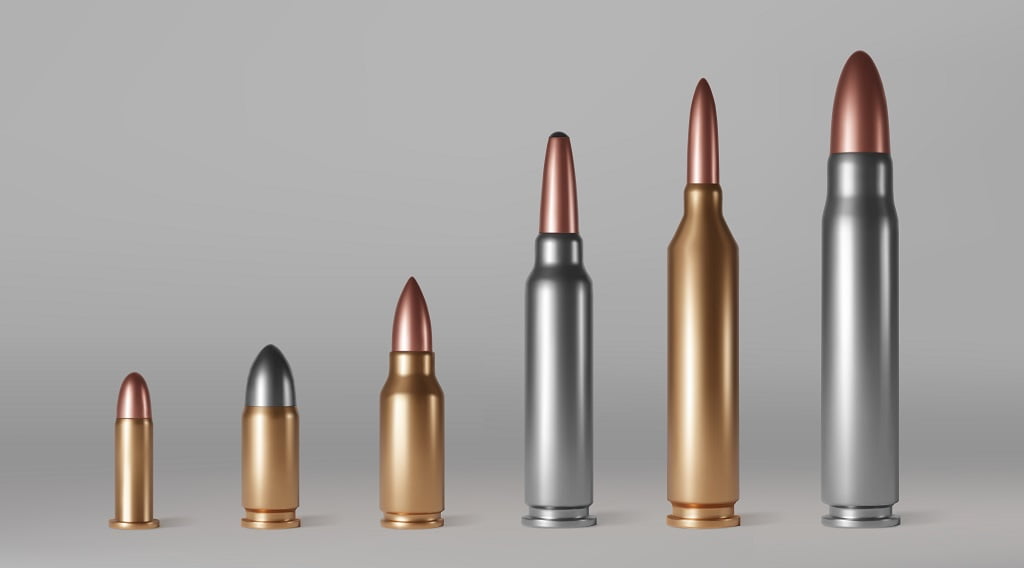
The .243 Winchester and .308 Winchester are related cartridges, but they solve different problems. The .243 is based on the .308 case necked down for a smaller bullet, so it is usually known for mild recoil and flatter-shooting varmint or deer use. The .308 uses a larger bullet and is usually chosen when hunters want more bullet weight and broader big-game flexibility.
Table of contents
Quick Answer
.243 Winchester Overview
Best Fit For .243 Winchester
.308 Winchester Overview
Best Fit For .308 Winchester
.243 vs .308 Comparison Table
Hunting Fit
Range And Practice Fit
Safety And Compatibility Checks
Is .243 or .308 better for deer?
Is .243 better for beginners?
Is .243 enough for elk?
The safest answer is not “which cartridge is more powerful?” It is “which cartridge matches your firearm, your legal hunting requirements, your recoil tolerance, and the game or target you are actually shooting?” Always confirm the exact cartridge marking on the firearm and ammunition box before loading anything.
Table of contents
Quick Answer
.243 Winchester Overview
.308 Winchester Overview
.243 vs .308 Comparison Table
Hunting Fit
Range And Practice Fit
Safety And Compatibility Checks
FAQ
Final Takeaway
Quick Answer
Choose .243 Winchester when you want mild recoil, a flat-shooting cartridge, and a rifle mainly used for varmints, predators, target practice, or deer-sized game where legal and appropriate bullets are used. Choose .308 Winchester when you want a more versatile medium-game cartridge with heavier bullet options, more recoil, and broad rifle and ammunition availability.
Both cartridges can be accurate. Neither cartridge makes up for poor shot placement, wrong bullet choice, an unverified zero, unsafe backstop, or ignoring state hunting rules.
A 30-Second Decision Shortcut
If you only have time for one question, ask what the rifle will be asked to do in its worst-case season, not its average one. A rifle that spends most of its life on prairie dogs and coyotes but occasionally takes a whitetail is a .243. A rifle that spends most of its life on deer but might get pointed at a hog at 60 yards or a black bear over bait is a .308. The mistake worth avoiding is buying the "more powerful" option and then shooting it half as often because the recoil is unpleasant — practice volume beats paper ballistics almost every time.
.243 Winchester Overview
The .243 Winchester is a popular light-recoiling rifle cartridge. It is often used for varmints, predators, range work, and deer-sized game where legal. Its lighter bullets can make it feel easier to shoot well, especially for recoil-sensitive shooters, younger hunters, and anyone practicing from field positions.
The tradeoff is bullet weight and margin. On larger game, the .243 demands careful bullet selection, reasonable distance, and disciplined shot placement. It is not a universal big-game cartridge. State rules may also set caliber, energy, or cartridge restrictions, so check current regulations before hunting.
Best Fit For .243 Winchester
Low-recoil range practice.
Varmints and predators where legal.
Deer-sized game with suitable bullets and responsible distances.
Shooters who value mild recoil and easier follow-through.
Common .243 Bullet Weights And What They Actually Do
The .243 is really two cartridges wearing one headstamp, and the split is bullet weight:
- 55–70 grain: Extremely fast, explosive on varmints, and very wind-sensitive at distance. These are thin-jacketed bullets designed to come apart. They are a poor choice for deer and are illegal for big game in some states.
- 80–90 grain: The middle ground. Some are varmint-style, some are bonded or controlled-expansion hunting bullets. Read the box — weight alone tells you nothing about construction.
- 95–105 grain: The deer end of the range. Controlled-expansion, bonded, or monolithic bullets in this weight band are what most experienced .243 deer hunters use, because penetration through the on-side shoulder is where the cartridge earns or loses its reputation.
In practice, a common mistake is buying whatever .243 ammunition is on the shelf for a deer hunt. A 58-grain varmint load and a 100-grain bonded load will not shoot to the same point of impact, and they will not behave remotely the same on an animal. Pick the hunting load first, then buy enough of it to zero, confirm, and hunt with the same lot.
.308 Winchester Overview
The .308 Winchester is known for versatility. It is used for hunting, target shooting, and general rifle practice in many rifle platforms. Compared with .243, it normally uses heavier bullets and produces more recoil, but it also gives hunters more bullet weight options for deer, hogs, black bear, and similar medium-game uses where legal.
The .308 is not magic at long range, and it is not automatically the best cartridge for every hunter. It still requires a properly fitted rifle, quality ammunition, verified zero, range practice, and an ethical understanding of your personal limit.
Best Fit For .308 Winchester
Hunters who want heavier bullet options.
Deer, hogs, black bear, and similar medium game where legal.
Shooters comfortable with moderate recoil.
Rifles used for both hunting and range practice.
Common .308 Bullet Weights And What They Actually Do
- 125–130 grain: Reduced-recoil and "managed recoil" hunting loads live here, along with some fast varmint-style loads. Useful for smaller-framed shooters who still want a .308, but expansion is often designed around a narrower velocity window, so watch minimum impact velocities at distance.
- 150 grain: The classic all-round deer load. Flat enough for most field distances, mild enough to practice with, and available from nearly every ammunition maker.
- 165–168 grain: Arguably the sweet spot for a do-everything .308. Match-grade 168s dominate target lines, and 165-grain hunting bullets give a good balance of trajectory and penetration.
- 175–180 grain: Heavier, slower, and better suited to bigger-bodied animals, quartering shots, and heavy timber. Trajectory suffers past about 300 yards unless you dial.
A useful field observation: the difference between a 150-grain and a 168-grain .308 load matters far less to a deer at 150 yards than whether the bullet lands in the vitals. Choose the load your rifle groups best, confirm it, and stop chasing the internet's favourite bullet of the month.
.243 vs .308 Comparison Table
Factor .243 Winchester .308 Winchester
Recoil feel Usually milder Usually stronger
Common role Varmint, predator, deer-sized game, practice Medium game, hunting, target practice
Bullet weight range Generally lighter Generally heavier
Shooter comfort Often easier for recoil-sensitive shooters Requires more recoil management
Game fit Best for smaller to deer-sized game where legal Broader medium-game flexibility where legal
Main caution Needs careful bullet choice and shot placement on deer More recoil can reduce practical accuracy for some shooters
For ammunition compatibility, do not rely on cartridge names alone. The SAAMI unsafe ammunition combinations resource is a useful reminder that similar-looking cartridges can still be unsafe in the wrong firearm.
Ballistics And Trajectory In Practical Terms
Published numbers vary by manufacturer, barrel length, and lot, so treat the figures below as typical factory-load ballpark values rather than promises. Always chronograph or verify against the data printed by the maker of the ammunition you actually bought — Winchester and the other major loaders publish velocity and energy tables for each load on their official ammunition pages.
| Practical factor | .243 Winchester | .308 Winchester |
|---|---|---|
| Typical hunting bullet weight | 90–105 gr | 150–180 gr |
| Typical muzzle velocity (hunting loads) | Roughly 2,900–3,100 fps | Roughly 2,600–2,850 fps |
| Trajectory to ~300 yd | Slightly flatter | Slightly more drop |
| Wind drift, 10 mph crosswind | Comparable or slightly better with high-BC 105s | Comparable or slightly better with 168–175 gr match bullets |
| Recoil energy, ~8 lb rifle | Roughly 8–11 ft-lb | Roughly 15–20 ft-lb |
| Penetration on heavy shoulder bone | Bullet-dependent, less margin | Greater margin with premium bullets |
| Barrel life reputation | Shorter, especially with hot loads | Long; often several times the round count |
| Semi-auto platform availability | Limited | Excellent (AR-10 pattern, M1A, and others) |
| Subsonic / suppressed options | Very limited | Widely available |
The trajectory gap is smaller than most people expect. Out to about 300 yards, a 100-grain .243 and a 150-grain .308 are within a few inches of each other with the same zero — a difference that disappears entirely if you dial or use a marked reticle. Where the two genuinely separate is at the ends: the .243 wins on recoil and flat-shooting varmint work, and the .308 wins on bullet mass, terminal margin, and load selection. If you plan to stretch either one past your usual comfort zone, invest first in matching glass to the rifle rather than in a hotter load, because a repeatable turret and a verified drop chart fix more misses than 150 fps ever will.
Barrel Life, Twist Rate, And Rifle Availability
The .243 burns roughly the same powder charge as the .308 through a much smaller bore, which is why it has a reputation for eroding throats faster. High-volume varmint shooters running strings of shots in warm barrels will notice it first; a deer hunter firing 60 rounds a year will likely never reach the limit. If you buy a used .243 from a prairie-dog shooter, a throat-erosion gauge check is money well spent.
Twist rate matters more on the .243 than most buyers realise:
- 1:10 twist — common on older and budget .243 rifles. Stabilises bullets up to roughly 100 grains, but often will not stabilise long, high-BC 105–115 grain projectiles.
- 1:8 or faster — increasingly standard on newer .243 rifles and the choice if you want the heavy, high-BC bullets that make the cartridge competitive at distance.
- .308 at 1:10 or 1:11 — handles essentially the entire practical bullet range from 150 to 178 grains without drama, which is one quiet reason the .308 is easier to buy blind.
Platform availability is the other real-world divider. The .308 is available in bolt guns, AR-10-pattern semi-autos, lever actions, single shots, and precision chassis rifles, and it feeds military-derived magazines that are cheap and everywhere. The .243 is overwhelmingly a bolt-action cartridge with a smaller selection of factory rifles. If you want one action type and multiple uses, that alone can decide the question.
Ammunition Cost And Availability
Supply has largely normalised since the shortages of the early 2020s, and by 2026 both cartridges are again easy to find on shelves — but not equally. The .308 is one of the most widely stocked centrefire rifle cartridges in North America, with everything from inexpensive steel-case and bulk FMJ practice ammunition to premium bonded hunting loads and match-grade offerings. The .243 is a common hunting cartridge but has a narrower catalogue, and cheap plinking-grade .243 barely exists; almost every box is either a varmint load or a hunting load, and both are priced accordingly.
The practical consequence is training cost. If your plan is to shoot a few hundred rounds a year from unsupported field positions, the .308's cheap practice ammunition may let you shoot two or three times as much for the same money — and that extra trigger time is worth more than any ballistic advantage on paper. Reloaders see the equation differently: .308 brass is abundant and cheap, .243 brass can be formed from .308 cases, and the .243 uses noticeably less powder per shot.
Recoil Management And Rifle Setup
Recoil is not a fixed property of a cartridge — it is the product of the cartridge, rifle weight, stock fit, and recoil pad. A 6.5 lb mountain .308 can be genuinely unpleasant while a 9 lb .308 with a good pad is a pussycat. Before you conclude that the .308 "kicks too much," check these:
- Length of pull. Too long is the number one cause of shoulder-pocket bruising, especially for smaller-framed and youth shooters wearing bulky layers.
- Comb height. If you have to mash your cheek down to see through the scope, recoil will slap you every shot and you will start flinching.
- Recoil pad. A modern soft pad is one of the cheapest meaningful upgrades available.
- Rifle weight. Adding a pound of scope, mount, and a heavier stock takes real bite out of a .308.
- Suppressor or brake. A suppressor reduces both blast and recoil; a brake reduces recoil but makes the muzzle blast worse for everyone nearby.
A common mistake in the field is blaming a flinch on the cartridge when the real cause is a rifle that does not fit. If you cannot call your shots or you keep pulling low-left on the third round of a string, back off to dry fire and low-recoil practice before you buy a different rifle. Shooters who already deal with sight-picture difficulties — for example those who have researched dot smear and blur with astigmatism — should be especially careful to separate an optics problem from a recoil problem.
Hunting Fit
For deer-sized game, both cartridges can work when legal, properly zeroed, and paired with suitable hunting bullets. The .243 may be easier to shoot accurately for some hunters because recoil is lighter. The .308 gives more bullet weight and may offer more confidence on larger-bodied animals within appropriate limits.
For larger game, do not assume a cartridge is appropriate just because someone online used it once. Check state regulations, outfitter recommendations, bullet construction, shot angle, expected distance, and your own proven accuracy. For a broader framework, see our guide on what to check before choosing a firearm for hunting.
Matching The Cartridge To The Animal And The Country
Animal body size drives bullet requirements more than species name does. A 120 lb southern whitetail and a 250 lb northern buck are different problems, and the size gap between deer species is one of the reasons blanket cartridge advice falls apart. A .243 with a 100-grain bonded bullet inside 200 yards on a broadside lung shot is a proven deer combination; the same rifle on a heavy, quartering-to bull-sized animal at 350 yards is not.
Terrain matters just as much:
- Open plains and agricultural fields: flat trajectory and low recoil favour the .243, particularly if you also shoot coyotes and prairie dogs off the same rifle.
- Thick timber and brushy creek bottoms: shots are close, angles are bad, and heavier .308 bullets give more forgiveness when you have to punch through a shoulder.
- Mountains and steep country: rifle weight and shot angles dominate; both cartridges work, but a lighter rifle amplifies .308 recoil.
- Hogs and predators after dark, where legal: the .308 has the edge on tough, gristle-plated boars, and it pairs well with a thermal setup like the Helion-series thermal monocular we tested.
Whichever you choose, plan your shot distances around the ground you actually hunt. Our notes on adapting to open country versus thick timber are a better starting point than any energy chart, and a compact tripod or stable field rest will do more for your hit probability than 20 extra grains of bullet weight.
Legal Minimums Are Real — Check Them Every Season
Some states and provinces set a minimum bore diameter, minimum cartridge case length, minimum bullet weight, or minimum muzzle energy for big game, and a handful still restrict certain cartridges outright or ban bullets designed to fragment. The .243 sits close to those thresholds in a few jurisdictions, and regulations change. Read the current regulation booklet from the state wildlife agency for the exact unit you are hunting — not a summary from a forum, and not last season's copy.
Range And Practice Fit
At the range, recoil and cost matter because practice volume matters. A .243 can be pleasant for longer practice sessions, especially for newer shooters. A .308 can be excellent practice too, but shooters need to manage recoil so they do not build flinch or poor trigger habits.
Whichever cartridge you use, confirm zero from realistic positions and with the ammunition you intend to use later. If you switch bullet type, bullet weight, or brand, check point of impact again. Our rifle scope sight-in guide explains why zero confirmation matters before hunting or serious practice.
A Simple Pre-Season Range Routine
The point of range work is not to produce one small group and go home. Use a repeatable sequence you can finish in about 40 rounds:
- Confirm zero cold-bore, from a bag or bipod, at your chosen distance (100 yards is standard; 200 suits flatter .243 loads).
- Shoot a cold-bore check at the start of each subsequent session and record it. Hunting shots are cold-bore shots.
- Verify drops at two distances beyond zero so you know your holds are real, not printed guesses.
- Practise positionally — kneeling, sitting, off sticks, off a pack — because that is how animals are actually shot.
- Fire a fouled-barrel group after cleaning, so you know how many rounds it takes your barrel to settle.
- Record everything in the same notebook: load, lot, temperature, and point of impact.
If you are setting up a home or club range station for that routine, the gear worth bringing to the bench makes those sessions far more productive, and it keeps your zero data honest instead of anecdotal.
Safety And Compatibility Checks
Before loading any rifle, read the cartridge marking on the barrel or receiver, check the owner’s manual, inspect the ammunition box, and make sure the ammunition is clean and undamaged. The NSSF firearm safety rules still apply regardless of cartridge: keep the muzzle in a safe direction, keep your finger off the trigger until ready to shoot, and know your target and what is beyond it.
Reloading should not be treated casually. If you reload, use current published load data from reputable manuals and component manufacturers, and never improvise powder charges. This article does not provide load data. For general ammunition decision-making, read our guide on choosing the right ammunition for your firearm.
.308 Winchester vs 7.62x51mm NATO — What To Know
These two are dimensionally similar and are frequently, but not always, interchangeable. The military 7.62x51mm specification and the commercial .308 Winchester specification differ in how pressure is measured and in typical chamber dimensions, and some rifles are chambered specifically for one or the other. The short, safe version:
- If your rifle is marked .308 Winchester, commercial .308 ammunition is correct.
- If your rifle is marked 7.62x51mm NATO or 7.62 NATO, follow the manufacturer's written guidance about firing commercial .308 in it — some makers approve it and some do not.
- Never treat a headstamp, a magazine, or an internet chart as authorisation. The barrel marking and the owner's manual are the only sources that count.
- If a marking is worn, unreadable, or you are dealing with a rebarrelled or surplus rifle, have a gunsmith chamber-cast or gauge it before firing anything.
The .243 has no equivalent ambiguity — but the parent-case relationship to the .308 makes it easy to grab the wrong box from a shared range bag. Store hunting ammunition in labelled boxes, and physically separate .243 and .308 if you own both.
Which Cartridge Should You Buy? Scenario Picks
| Your situation | Better pick | Why |
|---|---|---|
| First deer rifle for a youth or small-framed shooter | .243 | Mild recoil builds good habits instead of a flinch |
| One rifle for deer, hogs, and occasional black bear | .308 | Heavier bullets and far more load options |
| Coyotes and prairie dogs with occasional deer | .243 | Flat-shooting varmint loads plus a legal deer option |
| Semi-auto or AR-10-pattern rifle | .308 | Platform and magazine support is unmatched |
| Highest practice volume per dollar | .308 | Cheap bulk practice ammunition is readily available |
| Long, windy shots you intend to dial for | Either, with a fast-twist barrel | High-BC 105s or 175s both perform; the shooter is the variable |
| Suppressed or subsonic use | .308 | Purpose-built subsonic loads exist; .243 options are scarce |
| Shoulder injury or documented recoil sensitivity | .243 | Roughly half the recoil energy in a comparable rifle |
If both columns look acceptable for your use, buy the .308 — not because it is superior, but because the deeper rifle and ammunition catalogue gives you more ways to fix problems later.
Common Mistakes With Both Cartridges
- Buying "power" instead of practice. A .308 you shoot twice a year is worse in the field than a .243 you shoot monthly.
- Ignoring bullet construction. A 100-grain varmint bullet and a 100-grain bonded bullet are entirely different tools in the same weight.
- Zeroing with one load and hunting with another. Point of impact shifts, sometimes by several inches, whenever the load changes.
- Assuming the twist rate handles heavy bullets. Check the specification before you buy 105-grain .243 match ammunition.
- Overestimating your range. Most missed and wounded animals come from shots taken beyond a hunter's proven distance, not from an underpowered cartridge.
- Neglecting the whole system. Poor mounts, an untorqued base, or a scope you cannot trust will ruin either cartridge. Pack thoughtfully, keep the rifle setup light enough to carry all day, and treat glass and mounts as part of the cartridge decision.
Next step: build your rifle around real field conditions — walk through our complete pre-hunt packing checklist and you will spot the gear gaps that actually cost hunters shots, long before caliber ever does.
FAQ
Is .243 or .308 better for deer?
Both can be suitable for deer where legal. The .243 offers mild recoil and can work well with proper bullets and shot placement. The .308 offers heavier bullet options and more margin for some hunters, but it also recoils more.
Is .243 better for beginners?
Often, yes, because recoil is usually milder. A lower-recoil rifle can help beginners practice without flinching. Fit, instruction, safety habits, and ammunition cost also matter.
Is .243 enough for elk?
For many hunters, .243 is not the preferred elk cartridge because bullet weight and margin are limited. Always check state rules and choose a cartridge, bullet, and distance that match the game and your proven ability.
Is .308 good for long-range shooting?
.308 can be used at longer ranges by trained shooters, but it still has wind drift and drop. Long-range shooting requires verified data, quality optics, stable positions, and safe backstops.
Can I shoot .243 in a .308 rifle?
No. Use only the exact cartridge marked for your firearm and listed in the owner’s manual. Related case design does not mean cartridges are interchangeable.
Frequently Asked Questions
How much more does a .308 recoil than a .243?
In comparable rifles, roughly double the recoil energy — typically somewhere near 8–11 ft-lb for the .243 versus 15–20 ft-lb for the .308 in an 8-pound rifle. Felt recoil depends heavily on stock fit, pad quality, and rifle weight, so the perceived gap can be much smaller or much larger than the numbers suggest.
Which has more effective range for hunting?
Effective range is set by the shooter and the bullet's minimum expansion velocity, not by the cartridge name. Both are comfortably capable inside 300 yards on deer-sized game with the right bullet. Beyond that, the .308 with a heavy high-BC bullet generally retains more energy, while the .243 with a modern 105-grain bullet holds a small trajectory edge — and both demand verified dope, a stable position, and honest wind reading.
Can .243 brass be made from .308 brass?
Yes — the .243 is the .308 case necked down, and reloaders commonly form .243 brass from .308 cases. Trim to the correct length, check for donuts at the neck-shoulder junction, and always use current published data from a reputable manual. Case forming does not make the finished cartridges interchangeable in a rifle.
Does the .243 really burn out barrels?
It erodes throats faster than the .308 because it pushes a similar powder charge through a smaller bore, but "burn out" is a high-volume problem. A hunter shooting a box or two a year will not see it. A varmint shooter running hot loads in long strings on warm summer days can shorten accurate barrel life dramatically — let the barrel cool between strings and the difference narrows considerably.
Which is better for a suppressed rifle?
The .308, comfortably. Purpose-built subsonic .308 loads are widely available and heavy supersonic bullets suppress well, whereas .243 subsonic options are effectively nonexistent because the small, light bullets do not stabilise or perform well at low velocity.
Is either cartridge a good choice for a first rifle for a teenager?
The .243 is one of the traditional answers, and for good reason — but fit matters more than caliber. A youth-length stock, a soft recoil pad, and a properly mounted scope will do more for a new shooter's confidence than any cartridge choice. Reduced-recoil .308 loads are also a legitimate route if you want the rifle to grow with them. Introducing new shooters carefully is a big part of what makes hunting together as a family stick over the long term.
Do I need a different scope for .243 versus .308?
Not fundamentally. Both are moderate-recoil cartridges that any quality hunting scope handles. The difference shows up in reticle and turret choice: if you shoot high-BC .243 loads at distance, a scope with repeatable exposed turrets or an accurate marked reticle pays off. Either way, focus on repeatable adjustments, solid mounts, and glass you can see through in the last legal minutes of light.
What about .243 for late-season deer in heavy cover?
It works with a stout, controlled-expansion bullet at sensible distances, but late-season deer are often heavier-bodied, wearing thick winter coats, and shot at awkward angles from a stand. That is the scenario where extra bullet mass buys forgiveness. If most of your hunting looks like cold-weather stand tactics, lean toward the .308 or toward the heaviest premium bullets your .243's twist rate will stabilise.
Conclusion
The .243 Winchester and .308 Winchester are close relatives that split along one clear line: recoil and flat-shooting comfort on one side, bullet mass and load versatility on the other. Neither is objectively "better." The .243 rewards shooters who value low recoil, high practice volume, and dual-purpose varmint-and-deer use. The .308 rewards shooters who want one rifle that covers deer, hogs, black bear, semi-auto platforms, suppressed work, and cheap practice ammunition. In both cases, the deciding factors are the same ones that decide every hunt — legal requirements where you hunt, correct bullet construction for the animal, a zero you have personally verified, and a distance you can actually hold under field conditions.
Your next step: pick the load you intend to hunt with, buy two boxes of it from the same lot, and spend one range session confirming a cold-bore zero plus your drops at two distances beyond it. That single afternoon will settle the .243-versus-.308 question for your rifle more convincingly than any comparison chart — including this one.
Final Takeaway
The .243 Winchester is usually the easier-shooting choice for recoil-sensitive shooters, varmints, practice, and deer-sized game where legal. The .308 Winchester is usually the broader medium-game option with heavier bullets and more recoil. Choose based on the firearm, law, game, bullet, distance, and your proven accuracy, not cartridge myths.
Related reading: best holographic sights under $200.