Nighttime Bowfishing for Carp: Legal, Safety, Gear, and Ethics Guide
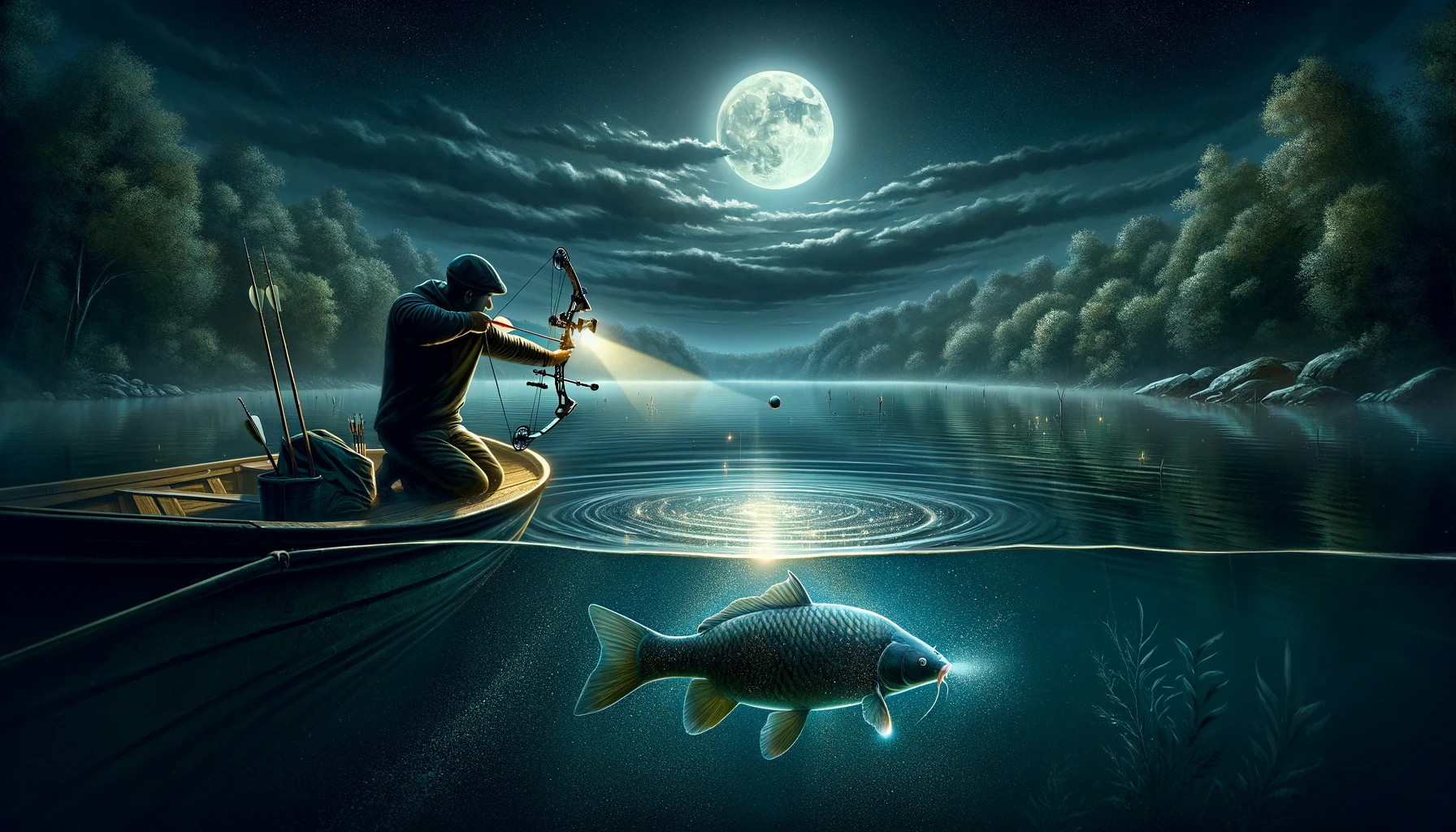
Nighttime bowfishing for carp should start with legal species, waterbody rules, boat lights, personal flotation devices, sober operation, and safe arrow-line setup before anyone launches. It is a night boating activity with sharp projectiles, bright lights, fish disposal rules, and species-identification risk.
This guide is for lawful recreational bowfishing. Regulations vary by state, waterbody, season, species, boat type, and local authority. Always check current rules before you shoot. For daytime and general technique context, see our bowfishing strategies guide.
Table of Contents
Quick Answer: What Makes Nighttime Bowfishing Safe?
A safe nighttime bowfishing trip needs legal water, legal target species, required boating equipment, navigation lights, wearable life jackets, a sober operator, a float plan, controlled deck space, proper bowfishing arrows and line, and a legal fish-handling plan.
Do not shoot first and identify later
Bowfishing is not catch-and-release. If you cannot identify the fish and confirm it is legal before the shot, pass.
Night boating is the main risk
Bright lights and shallow-water excitement can distract from navigation, other boats, stumps, rocks, current, weather, and passengers on deck.
1. Check Bowfishing Legality Before You Launch
Bowfishing rules can sit inside fishing regulations, legal devices, archery equipment, rough fish, nongame fish, or special waterbody rules. Texas Parks and Wildlife, for example, lists lawful archery equipment under legal devices for fish. Use your state agency as the final authority.
Check license and waterbody rules
You may need a fishing license, boat registration, local access permit, invasive species decal, or special area permission. Some waters restrict bowfishing, night access, lights, or fish disposal.
Check hours and local ordinances
Night access can be limited by ramps, parks, cities, marinas, refuges, or lake authorities. Do not assume legal bowfishing means legal night access.
Check boat equipment rules
Boating requirements vary by state and boat size. The U.S. Coast Guard maintains a state boating laws hub for finding local requirements.
2. Identify Legal Carp and Other Fish Species
Carp rules are not the same everywhere. Some carp are invasive in many waters, but not every fish commonly called carp is treated the same by every state or waterbody. The USDA National Invasive Species Information Center has an invasive carp overview, but your state fish list decides what you can shoot.
Know common carp, grass carp, and invasive carp rules
Species names matter. Some waters have rules for common carp, grass carp, bighead carp, silver carp, black carp, gar, buffalo, drum, rays, or other fish. Check the legal target list.
Do not shoot native or protected fish
If you are unsure whether the fish is legal, do not shoot. Bowfishing arrows injure fish; a mistaken shot cannot be undone cleanly.
Practice fish ID before the trip
Review state fish-identification guides in daylight. Night lights, muddy water, and movement make identification harder.
3. Set Up the Boat Safely
A bowfishing boat needs more than a deck and lights. It needs required safety gear, safe wiring, controlled footing, and a plan for passengers, fish, arrows, and line.
Wear life jackets
The Coast Guard’s life jacket guidance explains why wearing a properly fitted life jacket matters. At night, cold water, current, and surprise falls make wearing one even more important.
Keep the deck clear
Loose line, fish slime, batteries, cables, coolers, and arrows create trip hazards. Keep a shooter lane, a fish area, and a passenger area.
Use a sober operator
The Coast Guard states that boating under the influence is illegal in every state. Review its boating under the influence page before any night trip.
Assign emergency roles
Before leaving the ramp, decide who operates the boat, who manages lights, who watches for obstacles, and who calls for help if something goes wrong. Night trips fall apart fast when everyone is staring at fish.
4. Use Lights Without Creating Hazards
Bowfishing lights help you see fish, but they can also hide navigation lights, blind another operator, overload batteries, or make passengers focus on fish instead of hazards.
Keep navigation lights visible
Navigation lights and sound signals are part of night boating. Review the Coast Guard navigation rules and your state requirements before running after dark.
Manage glare
Aim deck and bowfishing lights so they help the shooter without blinding the operator or other boats. Dim or redirect lights when approaching ramps and traffic.
Protect batteries and wiring
Secure batteries, cover terminals, manage cables, and keep fuel and electrical gear separated. If your boat has fuel systems or enclosed spaces, follow manufacturer and Coast Guard fire-safety requirements.
Carry required distress and sound gear
Depending on boat size, water type, and location, you may need visual distress signals, a sound-producing device, fire extinguisher, throwable flotation, or other required equipment. Check the Coast Guard and state boating requirements before the trip.
5. Use Proper Bowfishing Gear
A regular hunting bow is not safe as-is for bowfishing. You need a bowfishing arrow, point, reel, heavy line, and a line setup that prevents dangerous tangles.
Use bowfishing arrows and points
Bowfishing arrows are heavier than standard arrows and use points designed to hold fish. Inspect points, barbs, slides, and line before shooting.
Do not tie line to the tail of a regular arrow
Unsafe line attachment can cause snap-back or entanglement. Use a bowfishing reel and line system according to the maker’s instructions.
Keep spare line controlled
Loose line around feet, trolling motors, lights, or passengers is a hazard. Clear it before the next shot.
6. Shoot Safely at Night
Night shots require target identification, line control, deck awareness, and a safe direction. Do not shoot toward docks, boats, people, pets, roads, homes, or hard surfaces.
Account for refraction
Fish appear higher than they are because light bends at the water surface. Keep shots close until you understand the angle.
Use one active shooter lane
Multiple shooters can work only when lanes and commands are clear. Beginners should start with one shooter active at a time.
Stop when tired
Fatigue leads to poor fish ID, line mistakes, slips, and bad boat handling. Set a return time before the night starts.
Watch weather and current
Wind, fog, storms, dropping temperature, river current, and changing water levels are harder to judge at night. Cancel or return early when visibility or boat control gets worse.
7. Handle and Dispose of Fish Legally
Before shooting, know what you will do with the fish. Some fish can be eaten, used as bait where legal, donated, composted, or disposed of through approved methods. Dumping carcasses at ramps or shorelines can be illegal and harms public access.
Bring fish containers
Use tubs, coolers, bags, or bins that keep fish slime and sharp points contained.
Clean the boat and ramp area
Pick up line scraps, fish parts, trash, batteries, and light hardware. A messy ramp can create local backlash against bowfishing.
Check invasive-species rules
Some areas have special rules for moving fish, water, bait, or boat equipment. Clean, drain, and dry as required.
8. Be Careful With Drone Scouting
Drones add legal, privacy, wildlife, and airspace issues. They are not a simple shortcut for bowfishing scouting.
Check FAA rules
The FAA’s recreational flyers page explains requirements such as TRUST, registration when required, airspace rules, and visual line of sight. State wildlife and local rules may add more restrictions.
Do not disturb wildlife or people
Flying low over wildlife, homes, ramps, or other boaters can create conflict and may violate rules.
Skip drones when unsure
If you cannot confirm the airspace, local law, and wildlife rules, do not use a drone for scouting.
9. Use Ethical Limits
Legal harvest still needs restraint. Do not shoot fish you cannot identify, do not waste fish, and do not use bowfishing as an excuse to damage access or habitat.
Set a fish limit before launching
Decide how many fish you can legally handle, store, and dispose of before the first shot.
Respect other water users
Give anglers, docks, homes, swimmers, paddlers, and other boats space. Bright lights and late noise carry across water.
Use a float plan
The Coast Guard recommends float plans for boating safety. Use its float plan resource so someone knows your launch, route, passengers, and return time.
10. Plan a Safer First Night Bowfishing Trip
A beginner’s first night trip should be short, close to the ramp, and focused on learning the boat, lights, target ID, and line handling. Do not make the first trip a long river run or a remote all-night session.
Pick familiar water
Choose water you already know in daylight. Mark hazards, shallow areas, stumps, docks, and no-wake zones before relying on night lights.
Bring an experienced operator
If possible, have one person focused on boat operation and one person learning the bowfishing gear. New shooters should not also manage navigation in the dark.
End before mistakes stack up
Most preventable problems happen after people get tired, cold, rushed, or frustrated. Set a short first-trip window and leave while everyone is still making good decisions.
11. Nighttime Bowfishing Launch Checklist
Use this before every night trip.
Legal checklist
- Fishing license and bowfishing rules checked
- Legal species confirmed
- Waterbody and night-access rules checked
- Fish disposal plan confirmed
- Boat registration and equipment rules checked
Boat checklist
- Life jackets ready and worn
- Navigation lights working
- Sound signal and required safety gear aboard
- Lights and batteries secured
- Float plan shared
Shooting checklist
- Bowfishing arrows and line inspected
- Deck clear of loose line
- Fish identified before shot
- No people, boats, docks, or homes in shot direction
- Return time set before fatigue
FAQ
Can I bowfish for carp at night on any water?
No. Rules vary by state, waterbody, species, season, lighting, and local authority. Check current regulations before launching.
Can I release a fish after shooting it?
No. Bowfishing arrows injure fish. Identify legal target species before the shot and have a legal handling plan.
Do I need navigation lights while bowfishing?
Night boating requires proper lighting under applicable federal and state rules. Bowfishing lights do not replace navigation lights.
Are all carp invasive?
No single statement is safe for every waterbody. Some carp are invasive in many places, but local rules and species lists decide what you can shoot.
Can I use a normal hunting bow?
Only after it is set up with proper bowfishing arrow, point, reel, heavy line, and safe line attachment. Do not improvise line attachment on a regular arrow.
Final Takeaway
Nighttime bowfishing for carp can be productive, but safety starts before the lights turn on. Verify the law, identify fish before shooting, wear life jackets, keep the boat visible, manage line hazards, stay sober, and know exactly how you will handle the fish.