How to Zero a Scope for .308

To zero a scope for a .308 rifle, start with a safe range and backstop, confirm the scope is mounted securely, get on paper at 25 yards, then confirm and fine-tune at 100 yards or your chosen zero distance. Use the same .308 ammunition you plan to hunt or practice with, and make measured turret adjustments instead of chasing single shots.
Table of contents
A good zero is not just a bullseye once. It is a repeatable point of impact from a stable position. For most .308 rifles, a 100-yard zero is a practical starting point because it is easy to confirm and gives a clean baseline for hunting, range practice, and later long-range data.
Table of contents
Quick Answer: Best Way To Zero A .308 Scope
The best way to zero a .308 scope is to bore sight or start at 25 yards, fire a careful three-shot group, adjust the scope based on the center of the group, then move to 100 yards and repeat until the group center matches your chosen point of aim. After the rifle is zeroed, record the ammo, distance, weather, and final turret setting.
Simple .308 Zeroing Workflow
- Use a safe range, stable bench, and proper eye and ear protection.
- Use the exact .308 load you plan to rely on.
- Start close enough to get on paper.
- Adjust from the group center, not from one random hole.
- Confirm at your true zero distance.
- Let the barrel cool if heat starts changing group location.
Safety And Setup Before Zeroing
Zeroing a .308 rifle uses live centerfire ammunition, so safety comes first. Use an approved range or a location with a known safe backstop. Keep the muzzle pointed in a safe direction, keep your finger off the trigger until ready to fire, and confirm what is beyond the target.
Use A Safe Backstop
A .308 bullet can travel far beyond a paper target. Do not zero across open land unless the impact area is unquestionably safe and legal. The NSSF firearm safety rules are a useful baseline before any range session.
Protect Your Eyes And Ears
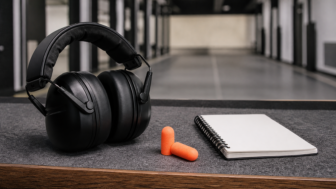
Use quality eye and ear protection. A zeroing session can involve many rounds from a bench, and repeated rifle blast is not something to treat casually.
Start With A Cold, Checked Rifle
Before firing, confirm the rifle is clean enough, the bore is unobstructed, the action works correctly, and all screws and mounts are secure. If anything feels loose or unsafe, stop and fix the setup first.
Tools You Need To Zero A .308 Scope
You do not need a complicated kit, but a few basics make the process cleaner and more reliable.
Paper Targets With A Grid
Grid targets make adjustments easier because you can measure how far the group is from the aiming point. Use large targets at 25 yards so the first shots are easy to see.
Stable Front And Rear Support
A front rest, sandbag, bipod, and rear bag help remove wobble. Zeroing is not a test of how well you can hold offhand. It is a test of where the rifle and scope send bullets from a stable position.
Consistent Ammunition
Use one .308 load during zeroing. Different bullet weights and loads can shift point of impact. If you switch from range ammunition to hunting ammunition, confirm zero again.
Notebook Or Data Card
Write down the rifle, scope, ammunition, zero distance, group size, and final settings. Good notes make future checks faster and help you notice if something changed.
Check The Scope Mount Before Zeroing
If the scope is not mounted correctly, zeroing becomes frustrating. A loose mount can make groups wander, and a poorly positioned scope can create inconsistent eye position.
Confirm Eye Relief
Set eye relief from your normal shooting position so you see a full image without stretching your neck. This matters for comfort and safety, especially with centerfire recoil. Our guide to eye relief explains the concept in more detail.
Level The Reticle
A canted reticle can make elevation adjustments introduce side error. If you are not confident mounting the scope yourself, use a qualified gunsmith or follow the mount maker’s torque instructions carefully.
Check Ring And Base Screws
Loose hardware is one of the easiest problems to miss. If your groups move randomly while the rifle and ammunition are otherwise consistent, check the mount before blaming the scope.
Choose A .308 Zero Distance
A 100-yard zero is the most practical default for many .308 rifles because it is easy to confirm and gives a clear reference for dialing or holdover later. Some hunters use other zero distances based on terrain, ammunition, and personal preference.
Why 100 Yards Is A Good Baseline
At 100 yards, groups are easy to measure and most ranges support the distance. It also keeps the process honest: if the rifle cannot group well at 100 yards, longer distances will only magnify the issue.
When A 200-Yard Zero Makes Sense
A 200-yard zero may make sense for certain hunting setups, but it should be confirmed on paper. Do not rely only on a chart. Ammunition, scope height, barrel, and conditions all affect the actual impact.
Know Your Ballistic Data
Bullet path is shaped by gravity, velocity, bullet design, and environmental conditions. The broad concept of external ballistics helps explain why your .308 impact changes with range.
Step-By-Step: How To Zero A Scope For .308
Use a repeatable process and make patient adjustments. Most zeroing mistakes happen when shooters adjust too quickly after one shot or change several things at once.
Step 1: Bore Sight Or Start At 25 Yards
Bore sighting can save ammunition, but it does not replace live-fire zeroing. If you do not bore sight, start at 25 yards with a large target. The goal is simply to get the group on paper.
Step 2: Fire A Three-Shot Group
Fire three careful shots from a stable rest. Do not adjust after the first shot unless you are completely off paper. A group tells you more than a single impact.
Step 3: Adjust From The Group Center
Find the center of the group and measure how far it is from the aiming point. Adjust elevation and windage based on that measurement. If the group is scattered, focus on shooting fundamentals before making big scope changes.
Step 4: Move To 100 Yards
Once the rifle is close at 25 yards, move to 100 yards. Fire another three-shot group and adjust again. This is where your real zero starts to matter.
Step 5: Confirm With A Final Group
After the group center matches your point of aim, fire a final confirmation group. Let the barrel cool if necessary. A hot barrel, rushed trigger press, or tired shooter can make a good zero look worse than it is.
How Scope Adjustments Work
Most rifle scopes adjust in MOA or MIL. Read the markings on your turret before turning anything. The common 1/4 MOA click moves impact about one quarter inch at 100 yards, about one eighth inch at 50 yards, and about one sixteenth inch at 25 yards.
Elevation Moves Up And Down
If your group is low, turn the elevation turret in the direction marked up. If the group is high, move it down. Make adjustments based on the group center, then shoot again to confirm.
Windage Moves Left And Right
If your group is left, move impact right. If your group is right, move impact left. Calm conditions are best for zeroing because strong wind can confuse the result.
Track Your Clicks
Write down how many clicks you moved and in which direction. If the result gets worse, notes help you return to the previous setting. For broader scope setup, see our guide on using a scope for long range shooting.
Confirming Your .308 Zero
A confirmed zero should be repeatable. That means you can return later, use the same load, shoot from a stable position, and see the group land where expected.
Confirm After Changing Ammunition
Different .308 loads may print in different places. If you switch bullet weight, brand, or load type, recheck zero before hunting or serious range work.
Confirm After Travel Or Hard Use
Travel, bumps, hard recoil, and rough field use can shift equipment. If the rifle was dropped or transported hard, confirm zero before relying on it.
Build Distance Data After Zeroing
Once the 100-yard zero is confirmed, you can build verified data at longer ranges. Do this gradually and safely. For reticle choices and holdover marks, see our guide on choosing the right reticle.
Common .308 Zeroing Mistakes
Zeroing is simple in theory, but small mistakes create confusion. Avoid these and the process gets much easier.
Adjusting After Every Single Shot
Single shots can be affected by shooter error, barrel heat, or ammunition variation. Use groups. Adjust from the group center.
Using An Unstable Rest
If the rifle moves differently every shot, the zero will not be trustworthy. Use stable front and rear support and keep your shoulder pressure consistent.
Ignoring Parallax
Parallax can shift the apparent aiming point if your eye position changes. If your scope has parallax adjustment, set it for the target distance. Our rifle scope parallax adjustment guide explains this in more depth.
Forgetting To Record The Final Zero
After the rifle is zeroed, record the load and settings. If a turret gets bumped or you change ammunition later, the notes help you recover quickly.
FAQ
What distance should I zero a .308 rifle?
A 100-yard zero is a practical starting point for many .308 rifles. Some hunters prefer a 200-yard zero, but it should be confirmed with the exact rifle and ammunition, not assumed from a chart.
How many shots should I use to zero?
Use three-shot groups at minimum, and use more shots if the rifle or shooter is inconsistent. Adjust from the group center rather than one shot.
Can I zero at 25 yards only?
A 25-yard target can help you get on paper, but it should not be your only confirmation for a .308 rifle. Confirm at your true zero distance before relying on the rifle.
Why does my zero change with different ammo?
Different loads can have different bullet weights, velocities, and barrel harmonics. Those changes can shift impact. Recheck zero after changing ammunition.
Should I clean the barrel before zeroing?
Use a safe, consistent rifle condition. Some rifles shift point of impact between a freshly cleaned bore and a fouled bore. If you clean before zeroing, fire a few settling shots if your rifle needs them and confirm with the condition you expect in the field.
Final Thoughts
Zeroing a .308 scope is a measured process: safe range, stable rest, consistent ammunition, careful groups, and calm adjustments. Start close, confirm at 100 yards or your chosen zero distance, record the final setting, and recheck whenever the rifle, scope, or ammunition changes.