How to Build a Shooting Range Safely
How do you build a shooting range safely? Start with the legal, safety, environmental, and professional-design questions before you think about targets or lanes. A real firearm range is not a casual backyard project. It needs local approval, a safe backstop plan, lead management, noise control, insurance, emergency procedures, and qualified range-design review.
This guide is a planning checklist, not a construction blueprint. It does not provide engineering instructions for bullet traps, berms, ventilation systems, or range structures. For any live-fire range, work with qualified professionals and your local authorities.
Table of Contents
Quick Answer
To build or set up a shooting range, first confirm that shooting is legal at the location, then get professional review for backstop, bullet containment, ventilation, lead management, noise, emergency access, and insurance. For most readers, the safest and simplest choice is to use an established public, private, or club range instead of trying to build a live-fire range at home.
If you are only setting up an airgun, archery, dry-fire, or laser-training area, the risk is different, but you still need safe direction, a reliable backstop, local rule compliance, eye protection, and control over who can enter the area.
Home Range vs. Professional Range
A home practice area and a true shooting range are not the same thing. A dry-fire corner, laser trainer, airgun pellet trap, archery lane, or rimfire-rated club range each has different risks. The more energy, distance, projectile type, and public access involved, the more serious the design and legal requirements become.
For live firearms, do not rely on improvised materials or internet drawings. Range safety depends on site-specific factors: direction of fire, terrain, projectile type, ricochet risk, soil, drainage, nearby roads and houses, overhead hazards, and how the range will be supervised.
Legal Permission and Neighbors
Before planning any range, check city, county, state, and property rules. Local firearm-discharge ordinances, zoning, building permits, nuisance rules, noise limits, HOA restrictions, public-land rules, and lease terms may all matter. Rural land does not automatically mean live-fire practice is legal.
Also think about neighbors. Even if shooting is technically legal, a range that creates noise, dust, lead concerns, or unsafe perceptions can turn into complaints or legal trouble. A responsible plan includes communication, written permission, controlled hours, safe access, and documented procedures.
Backstop and Downrange Safety
The backstop is the heart of range safety, but it is also where DIY advice becomes dangerous. A safe backstop is not just a pile of material. It must be designed for the firearm, ammunition, distance, impact angle, maintenance schedule, drainage, and ricochet control. It must also account for what is behind and around the target area.
Use professional range-design guidance for live fire. At a minimum, confirm the direction of fire, side containment, overhead concerns, target placement, shooter position, access control, and emergency stop procedures. The basic firearm-safety principle still applies: know your target and what is beyond it. The NRA’s gun safety rules are a useful baseline for every range discussion.
Lead, Ventilation, and Environmental Risk
Lead is one of the biggest issues range owners overlook. Outdoor ranges need a lead-management plan for soil, runoff, reclamation, and maintenance. The EPA’s Best Management Practices for Lead at Outdoor Shooting Ranges explains why range owners and operators should treat lead management as an environmental responsibility, not an afterthought.
Indoor ranges add another layer: ventilation and airborne lead. NIOSH guidance on indoor firing ranges and OSHA’s lead safety information show why casual indoor live-fire setups are a bad idea without professional ventilation, cleaning, exposure control, and maintenance procedures.
Noise, Insurance, and Emergency Plan
Noise matters for safety, comfort, and community acceptance. A range plan should include hearing protection rules, shooting hours, sound direction, distance from neighbors, and local noise ordinances. Indoor or covered firing points can change sound behavior, so do not assume a structure automatically makes things quieter.
Insurance matters too. If guests, students, club members, or customers use the range, liability exposure increases. A written emergency plan should cover cease-fire commands, first aid, emergency vehicle access, communication, fire risk, weather, and who has authority to stop shooting.
Range Rules and Supervision
A safe range also needs written rules that every shooter can understand before any firearm is uncased. Post the firing line rules, cease-fire command, eye and ear protection requirement, allowed targets, allowed firearms, guest policy, and emergency contact steps. If more than one person is shooting, assign one person to control the line instead of assuming everyone will coordinate naturally.
Supervision matters most when new shooters, visitors, youth shooters, or mixed experience levels are present. A quiet, clear command system prevents confusion and gives everyone permission to stop shooting immediately if something feels wrong.
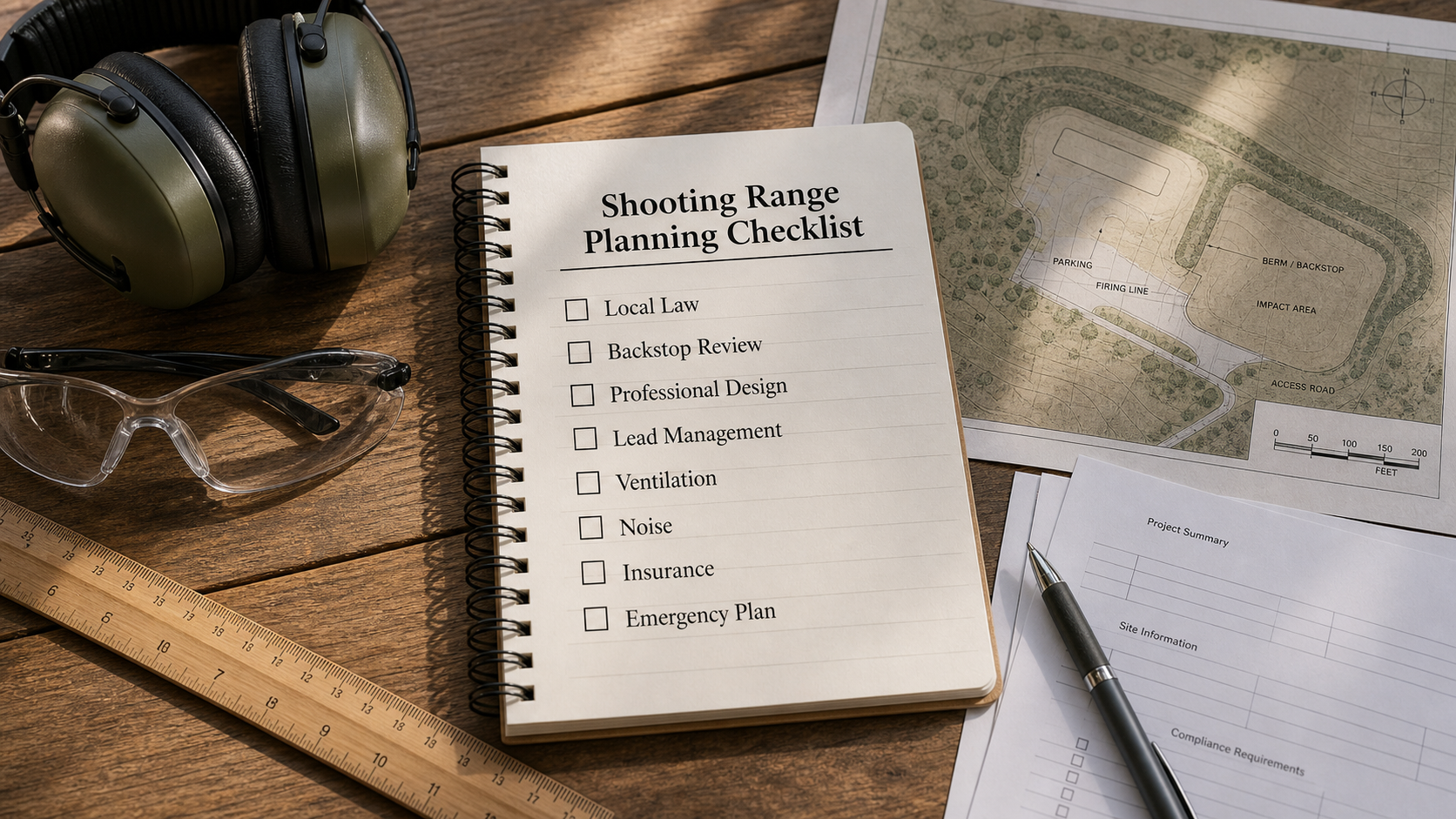
Safe Range Planning Checklist
- Local law: Confirm zoning, discharge rules, permits, and land-use restrictions.
- Professional design: Use qualified review for live-fire backstops, bullet containment, and range layout.
- Safe direction: Control where every projectile could go, including misses and ricochets.
- Access control: Prevent people, animals, vehicles, or neighbors from entering the danger area.
- Lead plan: Plan for lead recovery, soil/runoff protection, and safe cleanup.
- Ventilation: Do not build an indoor live-fire range without professional air-handling design.
- Noise: Check local limits and protect shooters and neighbors.
- Insurance: Confirm liability coverage before anyone else uses the range.
- Emergency plan: Post commands, first-aid steps, communication, and access routes.
FAQ
Can you build a shooting range at home?
Sometimes, but only if local law, land layout, safety design, backstop, noise, lead management, and insurance all support it. Many homes are not suitable for live-fire ranges.
Is an indoor home shooting range safe?
A live-fire indoor home range is not something to improvise. It requires professional bullet containment, ventilation, fire safety, lead control, noise control, and legal approval.
What is the biggest risk in a DIY shooting range?
The biggest risks are unsafe projectile containment, ricochet, people entering the downrange area, lead exposure, and legal problems from local rules or neighbor complaints.
Can you set up an airgun range more easily?
Usually yes, but it still needs a safe backstop, local-rule compliance, eye protection, controlled access, and a clear shooting direction. Treat it as a controlled practice area, not a toy setup.
Who should review a shooting range plan?
For live-fire firearms, consult local authorities, a qualified range designer or engineer, an insurance provider, and environmental or lead-management professionals where needed.
Final Recommendation
If your goal is practice, an established range is usually the better choice. If your goal is to build or operate a real shooting range, treat it as a legal, engineering, environmental, and safety project from day one.
Do not build a live-fire range from casual online advice. Start with local law, professional design, safe backstop review, lead and ventilation planning, noise control, insurance, and emergency procedures. That is the responsible path.