Vortex Riflescope Bubble Level 30-mm
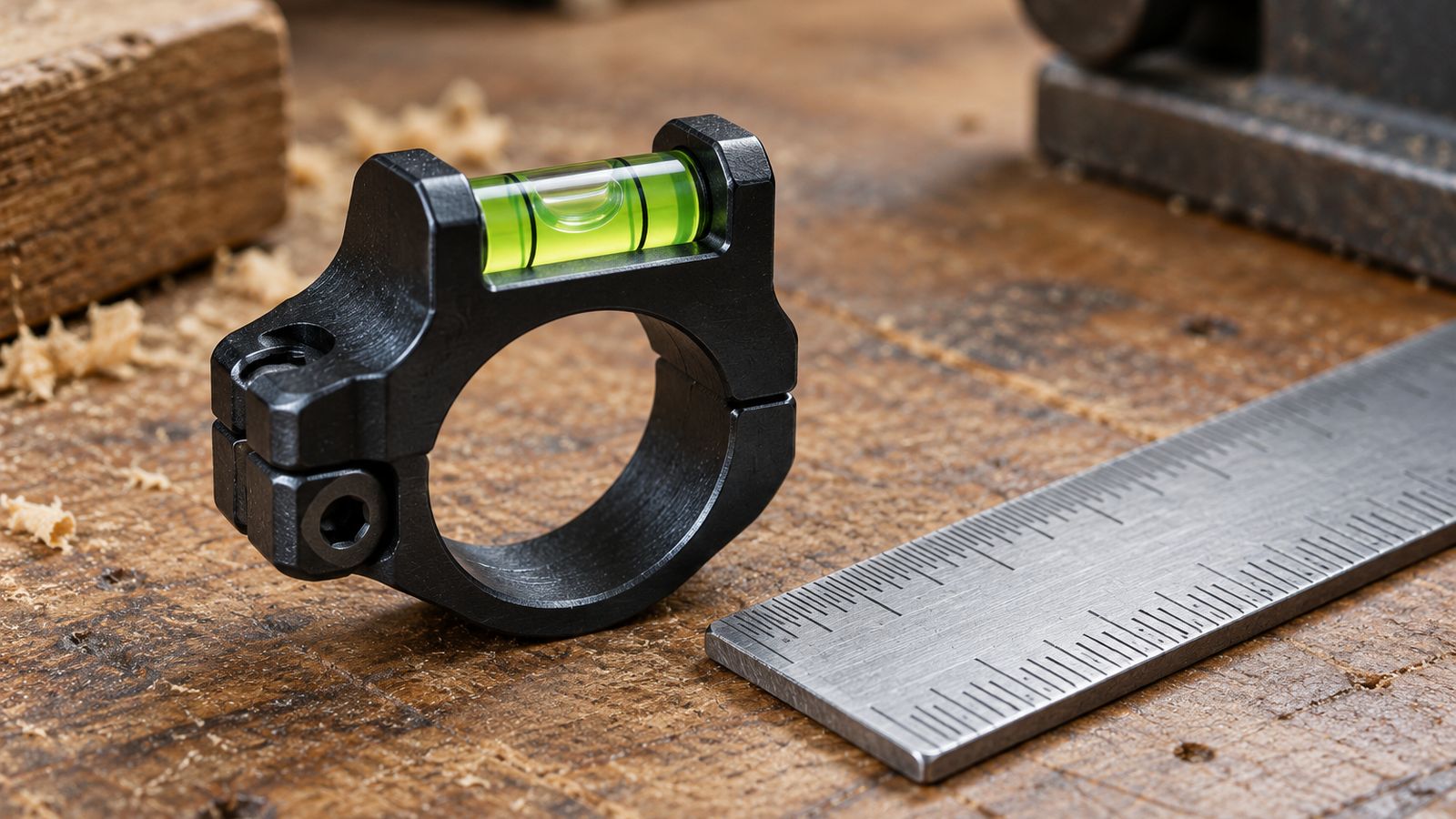
Long-range shooters usually blame wind or a bad trigger break when a shot drifts left at 800 yards, but a tilted rifle is often the real culprit, which is exactly the problem the Vortex Riflescope Bubble Level 30-mm is built to solve. Our team dug into this one after mapping how many precision rifle buyers add an anti-cant device within six months of buying their first 6.5 Creedmoor build.
Here's the bottom line up front: it's worth it if you shoot past 400 yards with a 30mm scope tube and want a simple, machined-aluminum level backed by a real warranty. Skip it if your tube is 34mm or you shoot inside 200 yards, where cant error is invisible. Here's how it stacks up.

What it is
An anti-cant device (ACD) is a small spirit level that clamps to your riflescope tube so you can confirm the rifle isn't tilted before you press the trigger. The Vortex Riflescope Bubble Level 30-mm is the offset version of that idea: the vial sits out to the left side of the tube rather than on top, so it lands in your lower peripheral vision instead of blocking the objective bell.
Vortex Optics competes here against Warne, Badger Ordnance, Flatline Ops, and a stack of unbranded imports. The Vortex sits in the accessible middle of that market: machined aluminum construction and a lifetime warranty, without the price tag of a milled titanium competition unit.
Setup and first impressions
Aggregate buyer feedback points at the same three things over and over: it arrives in a small blister pack, the anodized finish matches Vortex scope bodies closely, and the whole install takes under five minutes with the included hex wrench.
The clamp is a two-piece ring design. You loosen the screws, slide the halves around a bare section of the 30mm tube, rotate the level until the vial reads centered against a known-level rifle, then snug it down. Verified reviewers repeatedly stress the same setup rule: level the rifle first using the scope base or a machined flat on the receiver, then adjust the bubble to match.
Level the bubble to a crooked rifle and you've just built a very precise error into your system.
Manufacturer documentation specifies aluminum construction with a hard-anodized matte black finish, which is why user reports rarely mention finish wear at the clamp seam. The one consistent gripe in first-impression reviews is torque: several buyers note the small screws want a gentle hand, and a drop of blue thread locker is worth adding before you head to a match.
| Tube size | 30mm only (not 1-inch or 34mm) |
| Type | Offset anti-cant bubble level |
| Material | Machined aluminum body |
| Finish | Hard-anodized matte black |
| Mounting | Two-piece split clamp, hex screws |
| Vial position | Offset to the side, visible in lower peripheral view |
| Tools required | Hex wrench (included) |
| Install time | Typically under 5 minutes per user reports |
| Warranty | Vortex VIP: unlimited, unconditional, transferable |
| Best suited for | Precision rifle, long-range hunting, rimfire competition |
Daily-use experience
Does a bubble level actually make you shoot straighter?
Yes, and the math is not subtle. Horizontal miss from cant is roughly your bullet drop multiplied by the sine of the tilt angle, so a rifle canted 2 degrees with 300 inches of drop at 1000 yards throws the shot about 10 inches sideways.
At 300 yards with 12 inches of drop, that same 2 degrees costs you less than half an inch. That's the honest dividing line. Under roughly 400 yards, cant hides inside your group size.
Past that, it becomes a repeatable error that looks exactly like a wind call you got wrong.
Competitive shooters chasing scores through the Civilian Marksmanship Program and PRS-style clubs report the biggest gains on unstable positions, where the rifle rolls without you feeling it.
Visibility through the scope
The offset design is the whole reason to pick this over a top-mounted level. Because the vial sits out to the side rather than perched above the tube, buyer feedback consistently notes you can read it with a slight eye flick while staying in the scope, instead of lifting your head off the cheek rest.
Right-handed shooters running the level on the left side get the cleanest read. Left-handed shooters can flip the unit, though a handful of reviewers mention the vial sits closer to the bolt handle in that orientation.
Low light is the honest weak point. There's no tritium and no illumination, so at legal shooting light on a Wyoming evening the bubble goes dim. A cheap headlamp on red mode solves it, but a tritium unit from a competitor solves it better.
Fit, clearance and compatibility
Compatibility is a hard yes/no, not a maybe. This ring is cut for a 30mm main tube, which covers a wide slice of the market including many Vortex Viper PST, Diamondback Tactical, Athlon Argos, and Leupold Mark models.
What trips buyers up is clearance, not diameter. You need a bare stretch of straight tube between the turret housing and the rear ring, and some short-tube scopes on cantilever mounts simply don't leave any. Users mounting on rifles with tall bolt handles also report checking bolt-throw clearance before final torque.
If your scope wears a 34mm tube (common on Nightforce ATACR and higher-end Vortex Razor models), this exact part won't work and you'll need the matching size.
Build quality over time
Long-term buyer reports on this level are unusually boring, and that's a compliment. The aluminum clamp doesn't crack, the vial doesn't fog, and the anodizing holds up to being dragged in and out of a padded case season after season.
The recurring failure mode in reviews is rotation, not breakage. If the screws aren't snugged evenly or thread locker is skipped, hard recoil from a magnum cartridge can nudge the level a fraction of a degree out of calibration. Since you calibrated it against a level rifle, that drift silently poisons every shot afterward.
The fix is a 30 second habit: check bubble alignment against a machined flat during every scope cleaning.
✓ Pros
- Offset vial placement keeps the bubble in peripheral view, so you never lift your cheek off the stock mid-stage
- Machined aluminum body with hard anodizing survives repeated case packing without finish chipping at the clamp seam
- Two-piece split clamp installs in under five minutes with the included hex wrench, no gunsmith needed
- Vortex VIP warranty is unlimited, unconditional and transferable, which matters on a part that can be over-torqued by the owner
- Removes a measurable error source: 2 degrees of cant costs about 10 inches at 1000 yards on a typical drop curve
✗ Cons
- No tritium or illumination, so the vial washes out in the last 20 minutes of legal shooting light
- 30mm only, with no shim or adapter option, so a 34mm or 1-inch tube means buying a different part entirely
- Needs bare tube real estate between turret housing and rear ring, which short-tube scopes on cantilever mounts often don’t have
- Small clamp screws can rotate under magnum recoil if thread locker is skipped, quietly de-calibrating your reference
Who should buy it
Buy it if you…
You're the shooter who just built a 6.5 Creedmoor or .308 rig with a 30mm-tube optic, and you've started dialing elevation instead of holding over hash marks. That's the moment cant stops being theoretical. If you shoot steel at 600 to 1000 yards, or you hunt Western terrain where every slope tricks your inner ear, this pays for itself the first time you connect on a first-round cold bore shot.
It's also a smart pickup for PRS and NRL22 competitors building positions on barricades, tank traps, and rooftop props, where the rifle rolls a few degrees without you ever noticing.
Skip it if you…
You run a 1-inch tube on a classic hunting scope, or a 34mm tube on a Razor or ATACR. This part is diameter-specific and there's no adapter path, so buying the wrong size just means a return label.
Skip it too if your realistic engagement distance is a 150 yard tree stand shot at a whitetail. At that range, 2 degrees of cant moves the bullet a fraction of an inch, far less than your own wobble. And if your scope is short with a cantilever mount, measure your bare tube first.
No clearance means no clean install.
Better alternatives
Two names worth checking before you commit:
- Flatline Ops Accu-Level: a low-profile, precision-machined competitor favored by PRS shooters who want the vial sitting even closer to the tube for a faster read.
- Badger Ordnance Dead Level: a heavier-duty, rugged option with a wider vial and a build aimed at hard-use tactical rifles, at a noticeably higher price tier.
Frequently Asked Questions (FAQ)
Will this fit a 1-inch or 34mm scope tube?
No. The Vortex Riflescope Bubble Level 30-mm is machined for a 30mm main tube only, and there's no shim or spacer kit sold to adapt it. Vortex produces separate levels for other tube diameters, so measure or check your optic's spec sheet before ordering.
Most mid-tier tactical scopes from Vortex, Athlon, and Leupold use 30mm, while high-end models like the Nightforce ATACR commonly run 34mm.
How do I calibrate it correctly?
Level the rifle first, then the bubble. Clamp the rifle in a vise or bipod, set a small machinist's level on the scope base or a flat on the receiver, and adjust until the rifle itself is true. Only then rotate the bubble level until its vial centers, and torque the screws evenly.
Reversing that order builds permanent error into your setup, which is the single most common mistake in buyer reports.
Does it work in low light or at night?
Not well without help. There's no tritium insert or illumination, so once ambient light drops the vial gets hard to resolve. Shooters who need dusk or dark capability either add a red headlamp, run a small clip-on light, or step up to a tritium-equipped level from another maker.
For daylight range work and daytime competition, visibility is a non-issue.
Will it stay put under heavy recoil?
Generally yes, but add thread locker. The two-piece clamp holds fine on standard cartridges, and long-term reviews rarely mention slippage on a .308 or 6.5 Creedmoor. On magnums like a .300 Win Mag, a few buyers report the level creeping slightly out of calibration over a season.
A drop of blue thread locker plus an alignment check at each cleaning eliminates the problem.
What does the Vortex VIP warranty actually cover?
The Vortex Optics VIP warranty is unlimited lifetime, unconditional, and fully transferable, with no registration or receipt required. In practice that means damage from over-torquing, a cracked vial, or a stripped screw is covered, not just manufacturing defects. Buyer feedback about Vortex's warranty service is consistently strong, which is a genuine part of the value calculation on an accessory this small.
Final verdict
Rating: 4.5 out of 5.
The Vortex Riflescope Bubble Level 30-mm does one job and does it cleanly: it removes cant, the last invisible variable standing between a good wind call and a first-round hit at distance. For anyone running a 30mm tube who regularly stretches past 400 yards, the improvement in horizontal consistency is real and measurable, and the offset design means you never break your cheek weld to check it.
It loses half a star for two honest limits: no tritium for low-light hunting, and a strict 30mm-only fit with no adapter path. Neither is a dealbreaker for the daylight range shooter or match competitor this is aimed at, but both matter if you're chasing legal-light elk or running a 34mm optic. Install it properly, blue-loctite the screws, and it becomes a part of the rifle you stop thinking about.
Affiliate disclosure: This post contains affiliate links. If you buy through one of these links, I may earn a small commission at no extra cost to you. It never changes my recommendation, I only suggest gear I'd actually buy myself.