Celestron NexYZ 3-Axis Phone Adapter
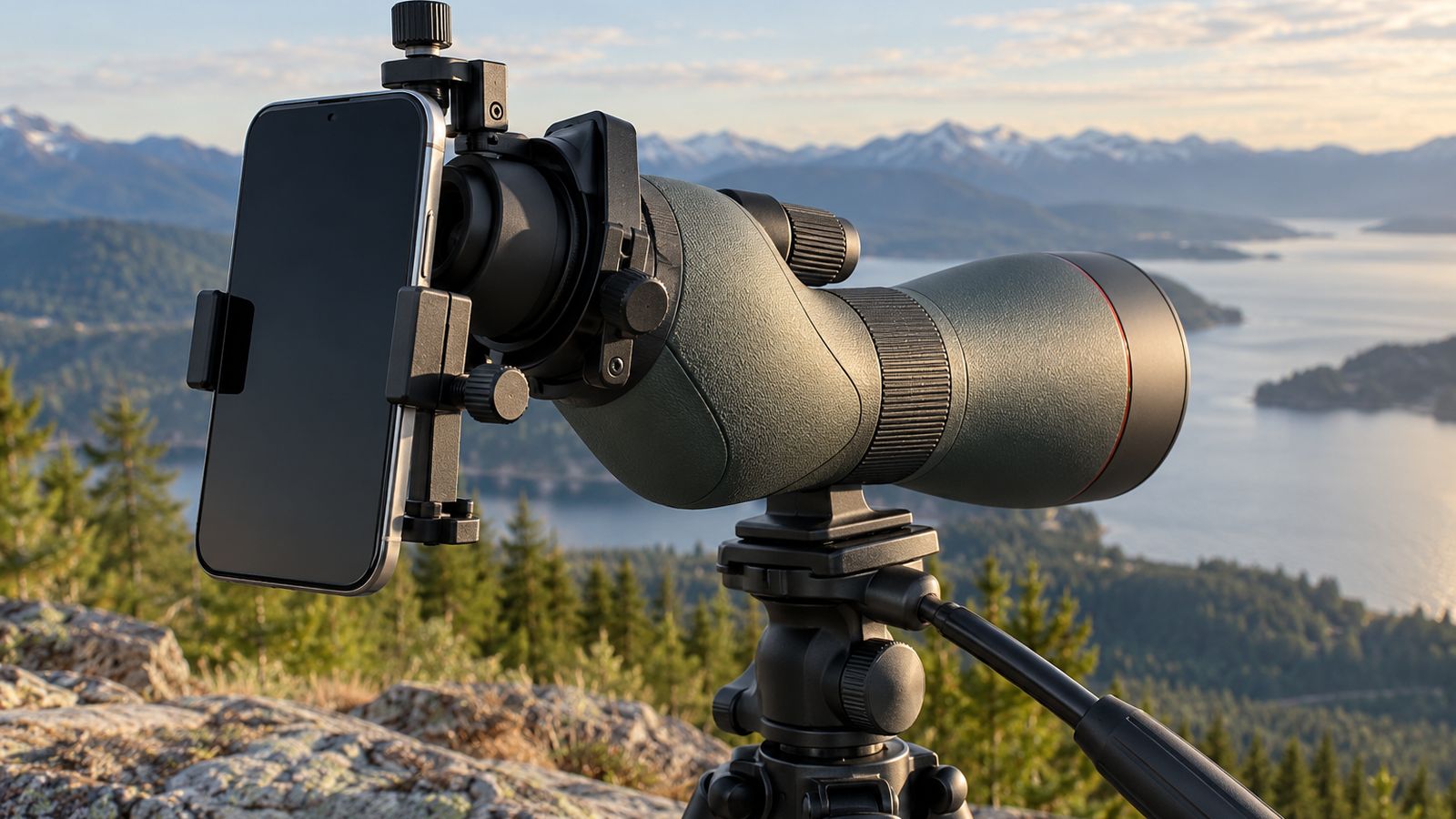
Chasing Saturn with a phone taped to an eyepiece is a rite of passage, and it fails every single time. That frustration is exactly why the Celestron NexYZ 3-Axis Phone Adapter for Precise Telescope Imaging keeps showing up in beginner astronomy forums, birding groups, and microscope classrooms. Our editorial team pulled manufacturer datasheets, aggregate buyer feedback, and optical fundamentals to figure out whether the three-knob design actually solves the alignment problem or just adds bulk to your eyepiece.
Short answer: it's worth it if you own a decent telescope or spotting scope and you're tired of missing the shot, and it's overkill if you just want casual moon snaps. Here's the full breakdown, starting with where it lands overall.

What it is
A smartphone telescope adapter is a clamp that holds your phone's camera lens centered over an eyepiece so you can shoot afocal images, meaning the phone photographs the magnified image the eyepiece already forms. The Celestron NexYZ is the three-axis version of that idea: separate knobs move the phone along the X, Y, and Z planes independently.
Most budget adapters give you one clamp and a lot of guesswork. Competing designs from Orion, Gosky, and Solomark rely on friction fits or a single sliding bracket, which means every bump restarts your alignment. Celestron positions the NexYZ as the precision option, and the mechanism is the reason people upgrade to it after a cheaper mount frustrates them.
Setup and first impressions
Aggregate buyer feedback across thousands of reviews points to the same first reaction: it feels heavier and more mechanical than expected. The body uses a metal-and-composite mix with rubber-lined jaws, and verified buyers consistently describe the three knurled knobs as smooth with no play, which matters because backlash in the Z-axis is what ruins focus repeatability on cheap clones.
Manufacturer documentation from Celestron shows the adapter clamps to eyepiece barrels with an outer diameter of roughly 35mm to 60mm, which covers most 1.25-inch Plössl eyepieces, many 2-inch wide-fields, and standard binocular and spotting scope oculars.
The first 30 minutes usually go like this. You clamp the eyepiece, drop the phone into the spring-loaded jaws, then turn one knob at a time until the black vignette ring shrinks into a full circle of light. Buyers repeatedly note that reaching a clean, centered image takes under a minute once you've done it twice.
One consistent complaint: the phone clamp screw threads are fine-pitch, so first-timers tend to overtighten and report the plastic knob feeling stiff afterward.
| Model | Celestron NexYZ 3-Axis Universal Smartphone Adapter |
| Adjustment axes | 3 (X, Y, Z) with independent thumbscrews |
| Eyepiece barrel range | Approx. 35mm to 60mm outer diameter |
| Phone width range | Up to approx. 3.5 in (89mm) |
| Weight | Approx. 12.6 oz (357 g) |
| Compatible optics | Telescopes, binoculars, spotting scopes, monoculars, microscopes |
| Materials | Metal and composite body, rubber-lined clamping jaws |
| Warranty | 2-year Celestron limited warranty (US and Canada) |
1. Celestron NexYZ 3-Axis Phone Adapter Precise
In our research across telescope accessory listings, the NexYZ is the model most often recommended by club members to new owners of Celestron NexStar and Sky-Watcher Dobsonian scopes. The reason is boring and practical: it holds alignment when you let go of it. That single behavior is what separates a usable digiscoping session from a folder of black circles.
Daily-use experience
Alignment precision
Independent axis control is the entire product, and it's the one area where buyer consensus is close to unanimous. Because X, Y, and Z move separately, you can fix a horizontal offset without disturbing the eye relief distance you already dialed in. Single-clamp adapters force you to redo everything.
The Z-axis matters more than beginners expect. Eye relief on a 25mm Plössl runs around 15mm to 20mm, and moving the phone even 3mm too far back introduces heavy vignetting, that dark ring around your frame. The NexYZ lets you creep in on that distance in small increments.
Verified buyers shooting the Moon at 100x to 150x commonly report full-frame, edge-to-edge lunar images once alignment is set, then repeat the setup on later nights without re-hunting.
Phone and case compatibility
Manufacturer specifications indicate a clamping range up to roughly 3.5 inches (89mm) wide. That comfortably covers an iPhone 15, a Pixel 8, and a Galaxy S24. Where users run into trouble is Max and Ultra-class phones inside thick OtterBox-style cases, which push past the jaw limit.
There's a second wrinkle nobody mentions on the box: modern multi-camera arrays. Phones with a raised triple-lens bump sit slightly off-plane, and buyers report needing an extra half-turn on the Z-axis to compensate. It works, it's just an extra step.
The rubber jaw pads protect the phone body well. Reports of scratched frames are rare, and the spring tension holds a naked phone securely even when the scope is tilted near vertical.
Balance and mount load
Adding roughly 12.6 oz (357 g) of adapter plus 6 to 8 oz of phone at the eyepiece end changes your scope's balance, and this is the honest weak point. On a heavy equatorial mount or a solid Dobsonian, you re-tension the altitude bearing and move on.
On a 60mm or 70mm refractor riding an aluminum photo tripod, aggregate feedback describes noticeable droop and post-touch vibration that takes 2 to 4 seconds to settle. That's long enough to blur a handheld tap-to-shoot.
The fix is cheap. A Bluetooth shutter remote removes the touch vibration entirely, and it costs a fraction of the adapter. Many buyers pair one immediately and describe it as mandatory rather than optional.
Build quality over time
Long-term buyer reports skew positive on the metal chassis and negative on one specific part: the phone clamp thumbscrew. It's the highest-torque contact point in the design, and a small share of owners describe thread wear or a stripped knob after a year of frequent removal.
Celestron backs the adapter with a 2-year limited warranty in the US and Canada, and replacement handling is generally reported as straightforward with proof of purchase.
Compared to Orion's SteadyPix Pro, which uses a simpler two-point clamp, the NexYZ has more moving parts and therefore more to eventually wear. The tradeoff is real. You buy more precision and accept more mechanism.
✓ Pros
- Three independent axes let you correct one plane without losing the other two, which cuts setup from minutes to under a minute
- 35mm to 60mm barrel range fits 1.25-inch and many 2-inch eyepieces plus spotting scopes and binoculars, so one adapter covers your whole optics kit
- Rubber-lined jaws grip a naked phone securely even at near-vertical scope angles, with very few scratch complaints in buyer feedback
- Fine Z-axis travel handles the 15mm to 20mm eye relief of common Plössl eyepieces, which is what kills vignetting
- Backed by a 2-year Celestron limited warranty, longer than most no-name adapters offer
✗ Cons
- Roughly 12.6 oz at the eyepiece unbalances small refractors on photo tripods, adding 2 to 4 seconds of settle time after every touch
- Phone clamp thumbscrew is the reported failure point, with occasional thread wear after a year of daily clamping
- Oversized phones in thick protective cases exceed the 3.5-inch jaw limit, forcing you to remove the case every session
- No Bluetooth remote included, and you really do need one to avoid shutter-tap vibration
Who should buy it
Buy it if you…
You already own real glass and you're the one person at the star party whose phone photos look like smudges. A 6-inch Dobsonian, a NexStar SCT, or a 20-60x spotting scope gives the NexYZ enough magnification and mount stability to shine.
It's also the right pick for birders who digiscope. Locking a phone onto a spotting scope ocular and keeping it there across a two-hour session is exactly what the three-axis lock does well. Science teachers running compound microscopes report the same benefit, since students can capture slides without shoving a phone around by hand.
Skip it if you…
You're shooting deep-sky objects. Afocal smartphone imaging works beautifully on bright targets like the Moon, Jupiter's moons, Saturn's rings, and terrestrial subjects, but nebulae and galaxies need long exposures and cooled sensors. NASA's public imagery from missions documented at NASA sets expectations that no phone adapter can meet.
Skip it too if your entire rig is a 60mm department-store refractor on a wobbly tripod. Adding 12.6 oz to that setup makes things worse, not better. Fix the mount first, then buy the adapter.
Better alternatives
- Orion SteadyPix Pro Universal Adapter: simpler two-axis clamp, lighter on small refractors, cheaper if you only need occasional Moon shots.
- Gosky Universal Cell Phone Adapter Mount: budget option with a metal barrel clamp, fine for spotting scopes and binoculars where precision demands are lower.
Frequently Asked Questions (FAQ)
Does the NexYZ work with a phone case on?
Sometimes, and it depends on total width. The jaws accept phones up to roughly 3.5 inches (89mm) wide, so a slim silicone or TPU case usually fits. Thick rugged cases from OtterBox or similar brands typically push a Pro Max or Ultra phone past the limit.
Buyer feedback also notes that a case can shift the camera lens position slightly, so you may need extra Z-axis travel to clear vignetting.
Will it fit binoculars and spotting scopes?
Yes, as long as the eyepiece housing measures between about 35mm and 60mm in outer diameter. That covers most spotting scope oculars, monoculars, and full-size binoculars. Compact roof-prism binoculars with narrow eyecups can fall under the minimum clamping range, and buyers with small 8×25 models occasionally report a loose grip.
Fold down rubber eyecups before clamping, which is the standard practice for digiscoping.
Why do my photos have a black ring around them?
That's vignetting, caused by the phone camera sitting outside the eyepiece's exit pupil. Move the phone closer using the Z-axis until the dark border disappears, then re-center with X and Y. Zooming the phone camera to roughly 1.5x to 2x also crops out residual vignette, though it costs some resolution.
Lower-magnification eyepieces with longer eye relief are far more forgiving for phone imaging.
Do I need a Bluetooth shutter remote?
Practically speaking, yes. Tapping the screen transmits vibration straight through the adapter into the eyepiece, and on lighter mounts that shake takes several seconds to settle. A Bluetooth remote or your phone's volume-button timer eliminates the problem for very little money.
Many verified buyers describe the remote as the single accessory that turned mediocre results into sharp ones.
How does the Celestron warranty actually work?
Celestron covers the NexYZ under a 2-year limited warranty for original owners in the United States and Canada, with regional terms varying elsewhere. Claims run through Celestron's support process and generally require proof of purchase from an authorized dealer. Buyer reports on the thumbscrew failure point suggest replacements are handled without much friction.
Keep your Amazon order confirmation, since third-party marketplace sellers can complicate authorization.
Final verdict
4.5 out of 5 stars.
The Celestron NexYZ earns its reputation by solving one problem completely: holding a phone camera exactly where the eyepiece wants it, and keeping it there. If you own a capable telescope or spotting scope and you've been frustrated by handheld phone shots, this is the accessory that finally makes lunar craters, Saturn's rings, and distant birds look the way they do through the eyepiece.
The people who win here are intermediate observers with stable mounts, birders who digiscope regularly, and educators running microscope labs. The people who should wait are deep-sky imagers and anyone whose tripod already shakes, because the added 12.6 oz will amplify problems the adapter can't fix.
As of 2026 it remains the reference point for three-axis smartphone adapters, and nothing in its tier matches the repeatability.
Affiliate disclosure: This post contains affiliate links. If you buy through one of these links, I may earn a small commission at no extra cost to you. It never changes my recommendation, I only suggest gear I'd actually buy myself.