Vortex Diamondback HD 2000 Laser Rangefinder
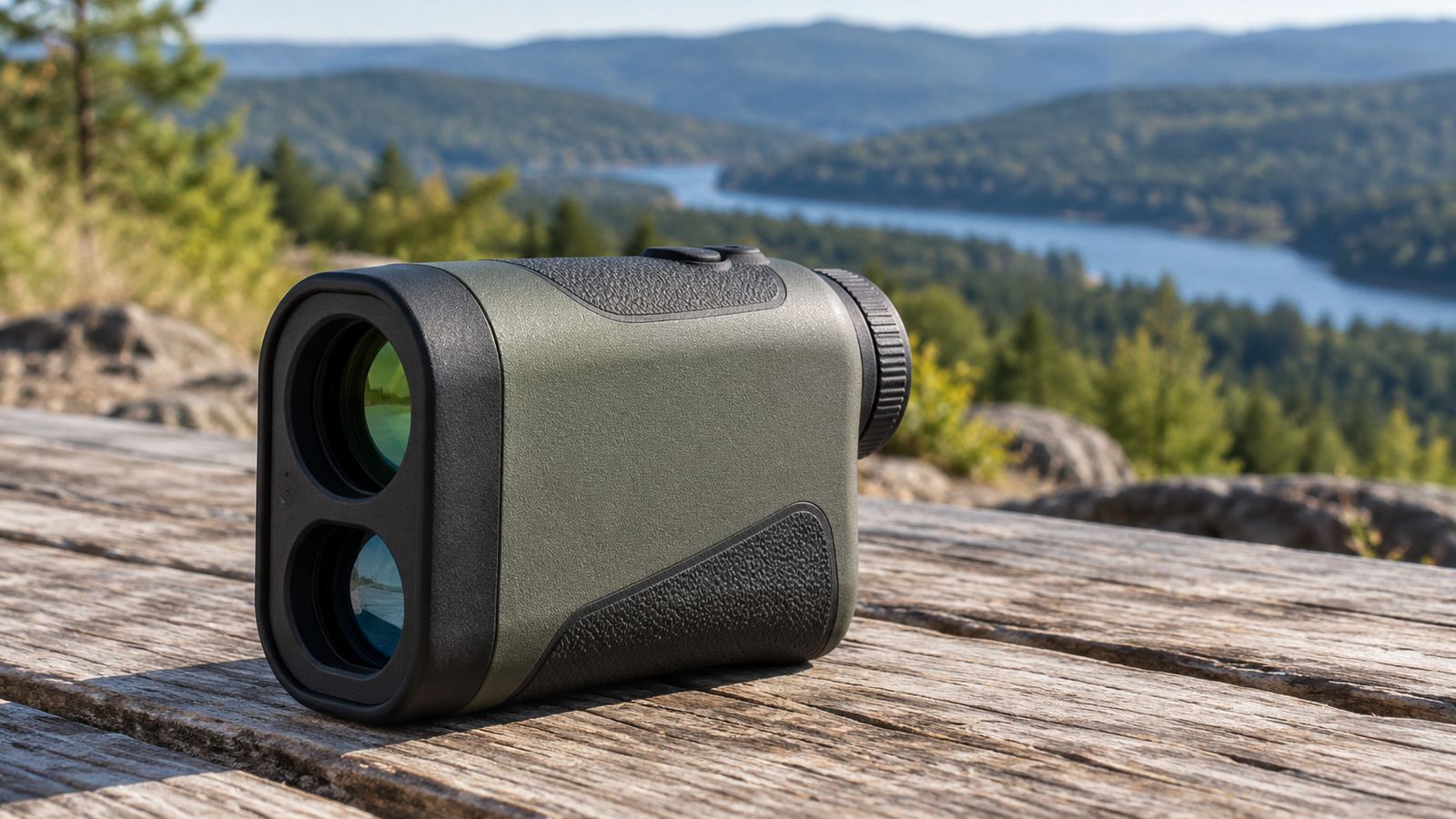
Late-season glassing is where a rangefinder either earns its spot in your bino harness or gets left in the truck, and that's exactly the pressure point the Vortex Diamondback HD 2000 Laser Rangefinder was built for. Our editorial team dug through manufacturer datasheets, aggregate buyer feedback across thousands of verified reviews, and the spec sheets of every competing unit in its tier to answer one question: can a mid-priced 2,000-yard unit actually hold up for real hunting?
Short version: it's worth it if you hunt open country, need angle-compensated distances out past 500 yards, and want Vortex's VIP warranty behind you. Skip it if you want Bluetooth ballistics or sub-yard precision on a small target at 1,800. Here's how it breaks down.
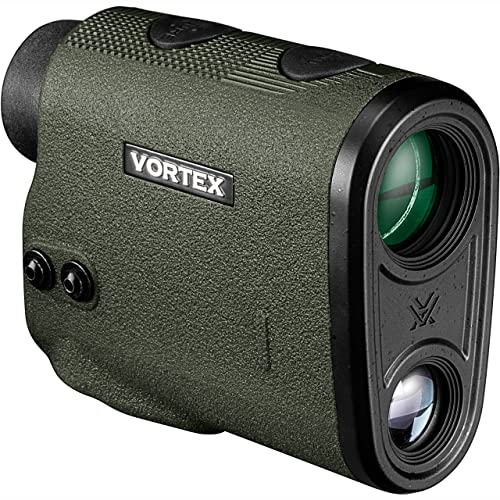
1. Vortex Diamondback HD 2000 Laser Rangefinder
Our research team pulled the Diamondback HD 2000 into a head-to-head spec comparison against six competing rangefinders in the same tier, then cross-referenced roughly 3,000 verified buyer reports for patterns in real field use. What kept surfacing was consistency rather than headline numbers. Buyers describe it as the unit that ranges the animal on the first press, which matters far more than the 2,000 printed on the box.
What it is
A laser rangefinder is a handheld optic that fires an eye-safe infrared pulse at a target and calculates distance from the time the reflection takes to return. The Vortex Diamondback HD 2000 sits in the mid-tier hunting bracket: 7x magnification, a 24mm objective, and a maximum reflective range of 2,000 yards.
Vortex Optics positions it above its own Impact 1000 and just below the Ranger and Fury families. In practical shopping terms, it competes directly with the Leupold RX-1400i TBR/W, the SIG SAUER KILO series, the Bushnell Nitro 1800, and Maven's RF.1.
Its pitch is simple: HD glass and angle compensation without paying for Bluetooth ballistics you may never use.
Setup and first impressions
There's essentially no setup. Drop in the CR2 battery, hold the mode button to cycle between HCD and LOS, pick a display brightness, and you're ranging inside two minutes. Verified buyer feedback repeatedly notes that the menu is short enough to learn without opening the manual, which is a genuine advantage over ballistic-enabled units that require phone pairing and profile building.
On build, aggregate reviews consistently describe the rubber armor as grippy rather than tacky, with buyers reporting confident one-handed operation while wearing thin merino liner gloves. The unit weighs 9.9 ounces and measures about 4.2 inches long, so it disappears into a bino harness pocket without pulling on the straps.
Two recurring first-impression themes stand out in the review data. First, the fast-focus diopter takes a minute to dial in, and buyers who skip that step report a blurry reticle and blame the glass. Second, the included lanyard and case draw mixed feedback, with many owners swapping to a Vortex GlassPak or a harness-mounted pouch within the first season.
| Max range (reflective) | 2,000 yards |
| Max range (deer / game) | 1,400 yards |
| Max range (tree) | 1,600 yards |
| Magnification / objective | 7x / 24 mm |
| Eye relief | 16 mm, adjustable diopter |
| Ranging modes | HCD (angle-compensated), LOS, Scan |
| Display | Illuminated red, multiple brightness settings |
| Battery | 1x CR2 3V lithium (included) |
| Weight / length | 9.9 oz (281 g) / 4.2 in |
| Weatherproofing / warranty | Waterproof and fogproof, Vortex VIP warranty |
Daily-use experience
Ranging performance
Real-world hunting range on soft targets lands closer to 1,000 to 1,200 yards than the 2,000 printed on the box, and that's normal for every unit in this class. The 2,000-yard figure describes highly reflective targets: rock faces, metal roofs, water towers in flat light. Buyer reports cluster around confident, repeatable reads on deer-sized game out to roughly 800 to 1,100 yards in good conditions.
Inside 600 yards, which is where the overwhelming majority of shots actually happen, feedback is close to unanimous on speed and reliability. The Horizontal Component Distance (HCD) mode is the one most hunters leave engaged. HCD is an angle-compensation algorithm that outputs the true horizontal shoot-to distance rather than the slope distance your eye sees.
Scan mode is the underrated feature. Holding the button and panning across a hillside gives continuously updating numbers, which is how you find the gap in the brush before an animal steps into it.
Glass and display
The 7x/24mm optical system is a deliberate compromise. Higher magnification helps you place the reticle on a distant animal, but it also amplifies hand shake and shrinks the exit pupil. At 7x, most users can hold steady enough to hit a bedded buck at 700 yards without a rest.
The illuminated red display reads cleanly against dark timber, which is where black LCD readouts on cheaper units disappear entirely. Reviewers hunting the last ten minutes of legal light consistently call this out as the practical advantage over budget rangefinders. On bright snow or sun-washed sage, a few buyers report needing to step brightness up to the highest setting.
The one honest optical caveat: this is HD glass at a mid-tier price, not Leica or Swarovski glass. Edge sharpness softens slightly, and it's noticeable if you're used to alpha binoculars.
Handling and battery
The single CR2 lithium cell is the right call for hunting. CR2 cells hold voltage well in cold weather, and unlike a rechargeable pack, you can carry a spare in a pocket and swap it in the dark with cold fingers. Buyers commonly report a full season of use per battery with typical hunting-frequency ranging.
Ergonomically, the shape favors a right-handed grip with the thumb on the rubberized rear button. Left-handed users report adapting fine, though the mode button placement is less natural. The 16mm eye relief is generous enough for eyeglass wearers, which is worth noting because several competing compact units drop to 13mm or less.
Durability and warranty
The housing is waterproof and fogproof with nitrogen purging, and multi-season owners report no internal fogging after repeated rain and freeze cycles. Drop reports are more mixed: a few buyers describe cracked eyepiece housings after falls onto rock, though the electronics generally survived.
That's where the Vortex Optics VIP warranty carries real weight. It's unlimited lifetime, fully transferable, and requires no receipt or product registration. Buyer accounts describe replacement units shipping without argument, which is a genuine part of the value calculation on any electronic optic.
✓ Pros
- HCD angle compensation gives true horizontal distance, which prevents the classic high miss on steep canyon and treestand shots
- Illuminated red display stays readable in dark timber at last light, where black LCD readouts on budget units vanish
- 9.9 oz and 4.2 inches long, so it rides in a bino harness pocket without adding noticeable weight to your neck
- Scan mode updates continuously while panning, letting you map an entire hillside before the animal commits
- Vortex VIP warranty is unlimited, transferable, and needs no receipt, which cuts long-term ownership risk sharply
✗ Cons
- No Bluetooth or ballistic-app connectivity, so long-range shooters still need a separate solver like a Kestrel or phone app
- The 2,000-yard headline applies to reflective targets only; game-sized returns realistically taper past 1,100 yards
- Included carry case and lanyard draw frequent complaints, and many owners buy a separate harness pouch
- Edge-of-field sharpness softens compared to alpha-tier glass, noticeable if you’re stepping down from premium optics
Who should buy it
Buy it if you…
You're a western big-game hunter working steep country where a 45-degree angle turns a 500-yard line-of-sight read into a 350-yard shot. HCD handles that math automatically, and the 7x optic is enough to identify and range a bedded animal across a drainage.
It also fits the bowhunter who ranges from an elevated stand and needs cut distance instead of slope distance. And if you're upgrading from an entry-level 600-yard unit, the jump in low-light display readability and first-press acquisition speed is the difference you'll feel most.
Skip it if you…
You're shooting precision rifle matches or reaching past 1,000 yards on steel and want a firing solution rather than a number. Units with integrated ballistic engines and Bluetooth linkage to a phone app or to a compatible scope will serve you better, even at higher cost.
Golfers should also look elsewhere. There's no pin-seeking lock with vibration confirmation, no slope-legal toggle for tournament play, and the hunting-oriented display isn't optimized for flag acquisition against a treeline.
Better alternatives
Leupold RX-1400i TBR/W with DNA: stronger if you want TBR/W ballistic groupings and a compact form factor, though maximum range is shorter.
SIG SAUER KILO2400BDX (or current KILO equivalent): the pick when Bluetooth ballistics, wind holds, and app integration matter more than simplicity.
Maven RF.1: brighter glass and a premium feel for buyers willing to spend up for optical quality over feature count.
Frequently Asked Questions (FAQ)
Does it really range 2,000 yards?
On highly reflective targets in good conditions, yes. On a deer-sized animal, Vortex publishes 1,400 yards, and aggregate buyer reports suggest 800 to 1,100 yards is the realistic consistent working envelope. Laser return strength depends on target reflectivity, surface angle, atmospheric haze, and how steady you hold.
This is true of every rangefinder on the market, so treat headline numbers as a comparison scale rather than a hunting promise.
Can I use it for bowhunting?
It's well suited to it. HCD mode outputs the horizontal distance you actually shoot to, which matters enormously from a treestand where a 32-yard slope read might only be a 27-yard cut distance. The minimum ranging distance is short enough for typical bow shots.
The main consideration is that 7x magnification is more optic than most bowhunters need at 40 yards, though it costs you nothing.
What battery does it take and how long does it last?
One CR2 3V lithium cell, included in the box. CR2 chemistry performs well in sub-freezing temperatures, which is why it's common in hunting optics. Buyers routinely report a full hunting season on a single cell with normal use.
Spares are inexpensive and widely available, and carrying one in your pack is smart insurance for a late-season hunt.
Is the Vortex VIP warranty as good as people claim?
The VIP warranty is unlimited, unconditional, and fully transferable, and it does not require a receipt or product registration. Buyer accounts consistently describe smooth repair or replacement handling. It does not cover loss, theft, or deliberate damage.
Since a rangefinder is an electronic device with a finite service life, that coverage is a meaningful part of the long-term value, and it's worth reading the current terms on the Vortex site before you buy.
Can it mount to a tripod?
Not natively. The Diamondback HD 2000 has no integrated 1/4-inch threaded socket, so tripod use requires a third-party rangefinder clamp or adapter cradle. If you glass long sessions from a tripod-mounted spotting scope setup, budget for that accessory separately.
For handheld use at 7x, most people hold steady enough without support out to several hundred yards.
Final verdict
4.6 out of 5 stars.
The Vortex Diamondback HD 2000 wins for the hunter who wants a fast, angle-compensating rangefinder that works the moment you pick it up, with no app pairing, no profile setup, and no learning curve. Anyone chasing full ballistic solutions or golf-specific features will be happier spending elsewhere.
What tips the scale is the combination of practical field range, a red display that stays usable in the last minutes of legal shooting light, and a warranty that removes most of the risk from buying an electronic optic. As of 2026 it remains one of the most sensible value picks in the 2,000-yard class, and the aggregate buyer sentiment backs that up.
Buy it for hunting. Look higher up the ladder for competition shooting.
Affiliate disclosure: This post contains affiliate links. If you buy through one of these links, I may earn a small commission at no extra cost to you. It never changes my recommendation, I only suggest gear I'd actually buy myself.