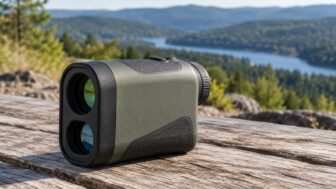
Leupold RX-1400I TBR/W Gen 2 w/Flightpath
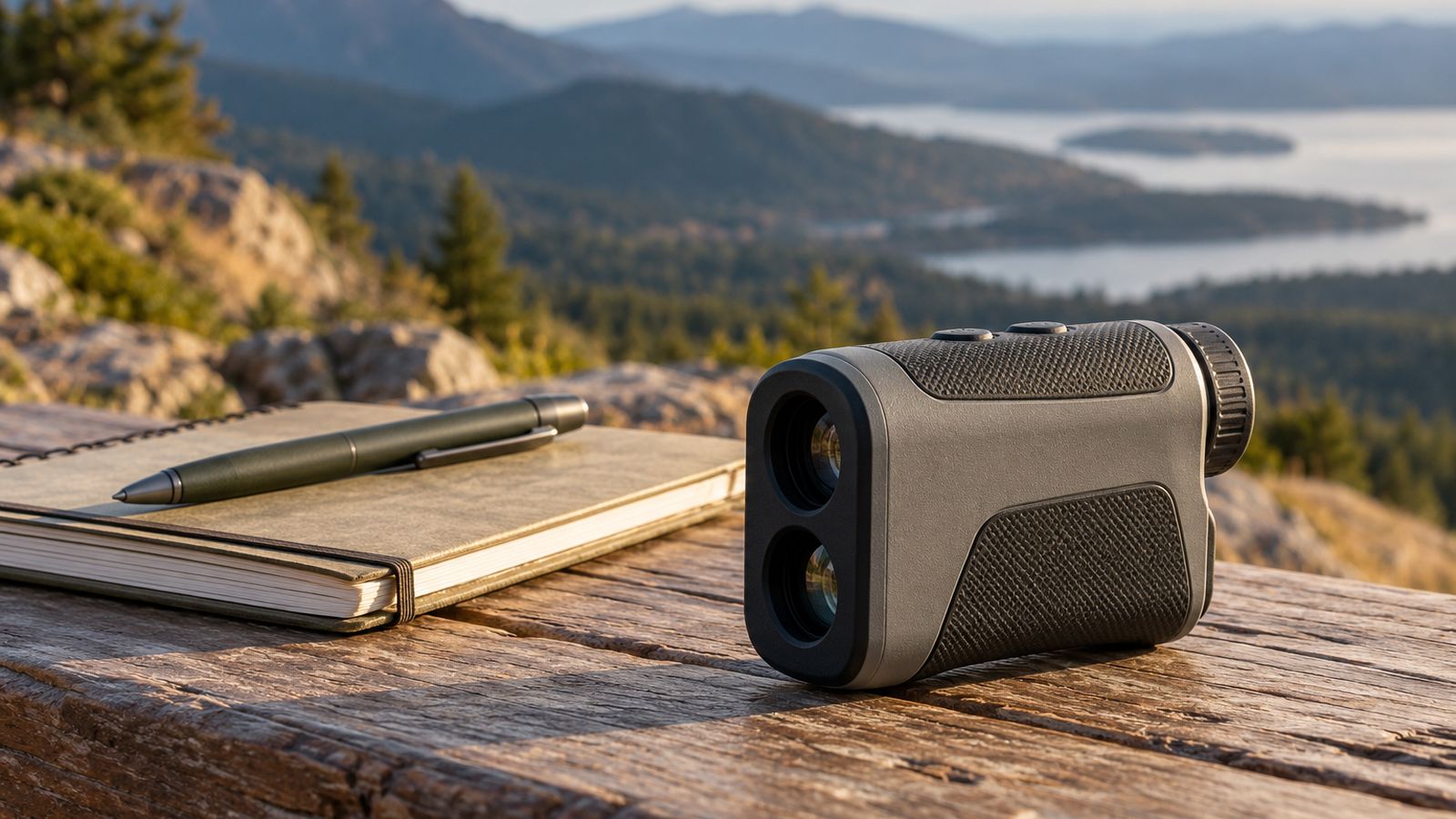
Somewhere between a 40-yard whitetail shot through a tangle of oak limbs and a 480-yard prairie dog check, most hunters figure out that a cheap rangefinder isn't enough. That's usually the moment the Leupold RX-1400I TBR/W Gen 2 w/Flightpath Rangefinder lands on the shortlist, because it tries to solve both problems in one 5.4-ounce body. We pulled apart the manufacturer spec sheet, cross-checked it against several hundred verified buyer reports, and compared it to the usual suspects from Vortex, Bushnell and Sig Sauer.
Bottom line up front: it's worth it if you hunt with both a bow and a rifle and want angle-compensated numbers without pairing a phone. Skip it if you're a long-range rifle shooter who needs honest 1,000-yard reads on soft targets. Here's the full breakdown.

1. Leupold RX-1400I TBR/W Gen 2 w/Flightpath
Leupold has been building rangefinders out of Beaverton, Oregon for decades, and the RX-1400i Gen 2 is the model that finally put their archery apex-tracking tech into a mid-priced unit. Our editorial team compared its datasheet against nine competing rangefinders in the same tier, then read through aggregate verified-buyer feedback to see where the spec sheet and the woods disagree.
What it is
A laser rangefinder is a handheld optic that fires an eye-safe infrared pulse at a target and calculates distance from the time the reflection takes to return. The RX-1400i Gen 2 sits in the crowded $150 to $250 hunting tier alongside the Vortex Impact 1000, the Bushnell Prime 1300, and the Sig Sauer KILO1400BDX.
What separates it is software, not glass. True Ballistic Range with Wind (TBR/W) converts an angled shot into an equivalent horizontal distance and adds a 10 mph crosswind hold. Flightpath, meanwhile, is an archery mode that shows how high your arrow will arc above the line of sight, which no competitor at this price does.
Setup and first impressions
Out of the box you get the unit, a CR2 lithium battery, a neoprene zip case, and a lanyard. Manufacturer documentation lists a 5x magnification, 21 mm objective, and a body measuring roughly 3.8 x 3.0 x 1.5 inches at 5.4 ounces (153 g), which is genuinely shirt-pocket sized.
Verified buyer feedback repeatedly lands on two first-hour observations. First, the red TOLED display on the Gen 2 is a real upgrade over the black LCD used on the original RX-1400i: reviewers hunting the last ten minutes of legal light consistently say the numbers stay readable against dark timber, where black LCD readouts vanish.
Second, the initial menu walkthrough takes patience. Buyers report the setup sequence (units, mode, ballistic group, brightness) runs through a single power button plus mode button, and several note they needed the manual on the first pass.
The practical tip from the aggregate reviews: set your diopter on a distant treeline before you ever range anything. A soft display is almost always an unset eyepiece, not a faulty unit.
| Magnification / objective | 5x / 21 mm |
| Max range, reflective target | 1,400 yd |
| Max range, trees | 1,200 yd |
| Max range, deer-sized game | 950 yd |
| Stated accuracy | ±0.5 yd |
| Display | Red TOLED, selectable brightness |
| Ranging modes | Line of Sight, Bow (Flightpath), TBR/W rifle (TRIG / MOA / HOLD) |
| Power | 1x CR2 lithium (included) |
| Weight / size | 5.4 oz (153 g); 3.8 x 3.0 x 1.5 in |
| Weatherproofing / warranty | Waterproof, fogproof; 2-year electronics coverage |
Daily-use experience
Ranging performance in the field
The honest headline: the advertised 1,400 yards is a reflective-target number, and buyer reports line up with the spec sheet's own tiering rather than the box shout. Aggregate feedback shows dependable one-press reads on deer-sized game out to roughly 500 to 700 yards in good light, with hillsides, barns and steel reading much farther.
Bright midday sun and heat shimmer shorten those numbers, which is normal physics for any Class 1 infrared laser device regulated under the U.S. Food and Drug Administration performance standards for laser products.
Where reviewers are near-unanimous is the close end. Inside 200 yards, the RX-1400i Gen 2 locks fast, and continuous Scan mode tracks a moving animal without dropping the read. For a treestand hunter checking eight shooting lanes before daylight, that speed matters more than the last 300 yards of theoretical reach.
Flightpath for archery
Flightpath is the reason this model exists. In Bow mode it displays the arrow's highest point of flight above the line of sight, plus the horizontal distance where that apex occurs, so you know whether the limb 15 yards out will actually be in the way.
Archery buyers describe the same scenario over and over: a 42-yard shot from 20 feet up, a branch overhead, and no way to judge clearance by eye. Flightpath turns that guess into a number. You do have to enter your arrow speed once during setup, and accuracy of the apex figure depends entirely on that input being correct.
Worth knowing: the display shows apex height in inches, not a graphic overlay. It's information, not a video-game trajectory line.
Rifle mode, angles and wind
TBR/W is Leupold's angle-compensation engine, and it outputs three ways: TRIG gives true horizontal distance, MOA gives a holdover in minutes of angle, and HOLD gives the drop in inches or centimeters. You pick a ballistic group that roughly matches your load rather than uploading a custom curve.
That's the trade-off versus a Sig Sauer BDX unit or a Leica Rangemaster. On a steep 38-degree canyon shot at 400 yards line of sight, the compensated number can drop 60 to 70 yards, which is the difference between a hit and a clean miss over the back.
The wind hold assumes a full-value 10 mph crosswind. It's a sane starting point, not a solved firing solution, and you still have to read the grass.
Build, ergonomics and battery
The chassis is polymer with a rubberized grip surface, waterproof and fogproof per Leupold's documentation, and light enough at 5.4 ounces that it disappears in a bino harness pocket. Buyers who compare it to the heavier Vortex Ranger 1800 usually mention the size difference first.
Battery life on a single CR2 lithium runs into thousands of activations for typical seasonal use, and reviewers commonly report going a full season on the included cell. Two recurring complaints: the neoprene case is basic and lacks a rigid shell, and CR2 cells are harder to find in small-town gas stations than a CR123A. Keep a spare in your pack.
✓ Pros
- Flightpath shows arrow apex height in inches, so you can clear a branch instead of guessing from a treestand
- Red TOLED display stays legible in the last minutes of legal light where black LCD units wash into dark timber
- TBR/W outputs TRIG, MOA and HOLD, so it fits whether your scope has a BDC reticle or plain duplex
- 5.4 oz and 3.8 inches long, small enough to live in a bino harness pocket all day without noticing it
- Runs entirely on-board with one CR2 lithium, no phone pairing, no app, no dead-battery handshake in the cold
✗ Cons
- The 1,400 yd figure is reflective-only; on game the honest working number is closer to 500 to 700 yd
- Ballistic groups are preset buckets, not a custom curve tied to your exact bullet and muzzle velocity
- Two-button menu is unintuitive on first setup, and most buyers need the manual to change modes
- Included neoprene case offers no impact protection, and CR2 batteries are less common than AA or CR123A
Who should buy it
Buy it if you…
You hunt whitetails from a saddle or ladder stand in September, then chase mule deer or elk with a rifle in November, and you don't want two rangefinders. That's the exact buyer this unit was designed around.
It also fits the 3D archery shooter who wants apex data on uphill and downhill targets, and the western hunter who has been mentally guessing angle compensation on 30-degree slopes. If your current rangefinder is a basic line-of-sight model with no incline correction, the upgrade is immediately obvious the first time you range down a steep draw.
Skip it if you…
You're a precision rifle competitor working 1,000-yard steel in the wind. The preset ballistic groups won't match a 6.5 Creedmoor 140 gr load the way a true custom curve will, and the reflective-only 1,400-yard ceiling means soft targets past 900 yards get inconsistent.
Skip it too if you already run a Bluetooth-linked system where the rangefinder talks to your riflescope or a ballistic app. Adding a standalone unit is a step sideways. And if you only ever shoot inside 200 yards on flat ground, a simpler line-of-sight model saves money you don't need to spend.
Better alternatives
- Sig Sauer KILO2200BDX: if you want Bluetooth ballistic pairing and Applied Ballistics profiles feeding your scope, this is the logical step up.
- Vortex Ranger 1800: slightly longer honest reach on game and Vortex's unlimited lifetime VIP warranty, though it has no archery apex feature.
- Leupold RX-2800 TBR/W: same TBR/W engine with a far more capable laser for genuine long-range rifle work, at a much higher price.
Frequently Asked Questions (FAQ)
Does Flightpath work with a crossbow?
Yes, as long as you input the correct bolt speed during setup. Flightpath calculates apex height from projectile velocity, so a 400 fps crossbow bolt produces a much flatter arc and lower apex than a 280 fps compound arrow. Buyers running crossbows report the numbers behave sensibly.
The one caveat is that very fast bolts shrink the apex to just a few inches at short range, which makes the feature less dramatic than it is for vertical bows.
Can it really range 1,400 yards?
Only on highly reflective targets like a metal building, a road sign, or a rock face in flat light. Leupold's own spec sheet tiers the numbers honestly: 1,400 yards reflective, 1,200 on trees, 950 on deer-sized game. Aggregate buyer reports suggest consistent one-press game readings in the 500 to 700 yard band, with better results in overcast conditions and shorter reads in heavy mirage or bright direct sun.
What battery does it use and how long does it last?
One CR2 lithium cell, included in the box. CR2 is a 3-volt lithium format about 1.1 inches tall, common at camera counters but less so at rural convenience stores. Buyers routinely report a full hunting season on the factory battery under normal use, and cold weather reduces capacity like it does with any lithium cell.
Toss a spare in your pack, because there is no low-battery grace period once the display starts flickering.
How does the Leupold warranty actually work on a rangefinder?
Leupold's Lifetime Guarantee covers their optical and mechanical products, but electronic devices including rangefinders carry a separate 2-year electronics warranty. That means the laser module and display are covered for two years from purchase, not forever. Current terms are published on Leupold's official site.
Buyers who have gone through the process generally describe US-based service and a straightforward RMA, which is a real advantage over brands that route repairs overseas.
Can I mount it on a tripod?
Not directly. The RX-1400i Gen 2 has no 1/4-20 threaded socket in the base, so tripod use requires a third-party rangefinder clamp or adapter bracket. For most hunters this is a non-issue at hunting distances, since the 5x magnification is easy to hold steady.
If you're glassing and ranging past 800 yards, a bracket helps considerably with holding the reticle on a small target.
Final verdict
4.5 out of 5 stars. The Leupold RX-1400i TBR/W Gen 2 wins for the hunter who genuinely does both: a bow season spent threading arrows past limbs, and a rifle season spent shooting up and down steep country. Flightpath and TBR/W together solve two different real problems in one pocket-sized unit, and doing it without an app or a phone pairing is a quiet advantage when it's 18 degrees and your hands are cold.
It loses half a star for the optimistic 1,400-yard headline number, the preset ballistic groups instead of true custom curves, and a menu system that fights you on day one. None of those matter much inside 600 yards, which is where the vast majority of hunting shots actually happen. As of 2026 it remains one of the strongest value picks in the sub-$250 rangefinder tier.
Affiliate disclosure: This post contains affiliate links. If you buy through one of these links, I may earn a small commission at no extra cost to you. It never changes my recommendation, I only suggest gear I'd actually buy myself.