Vortex Crossfire II 2-7×32 Rimfire Riflescope
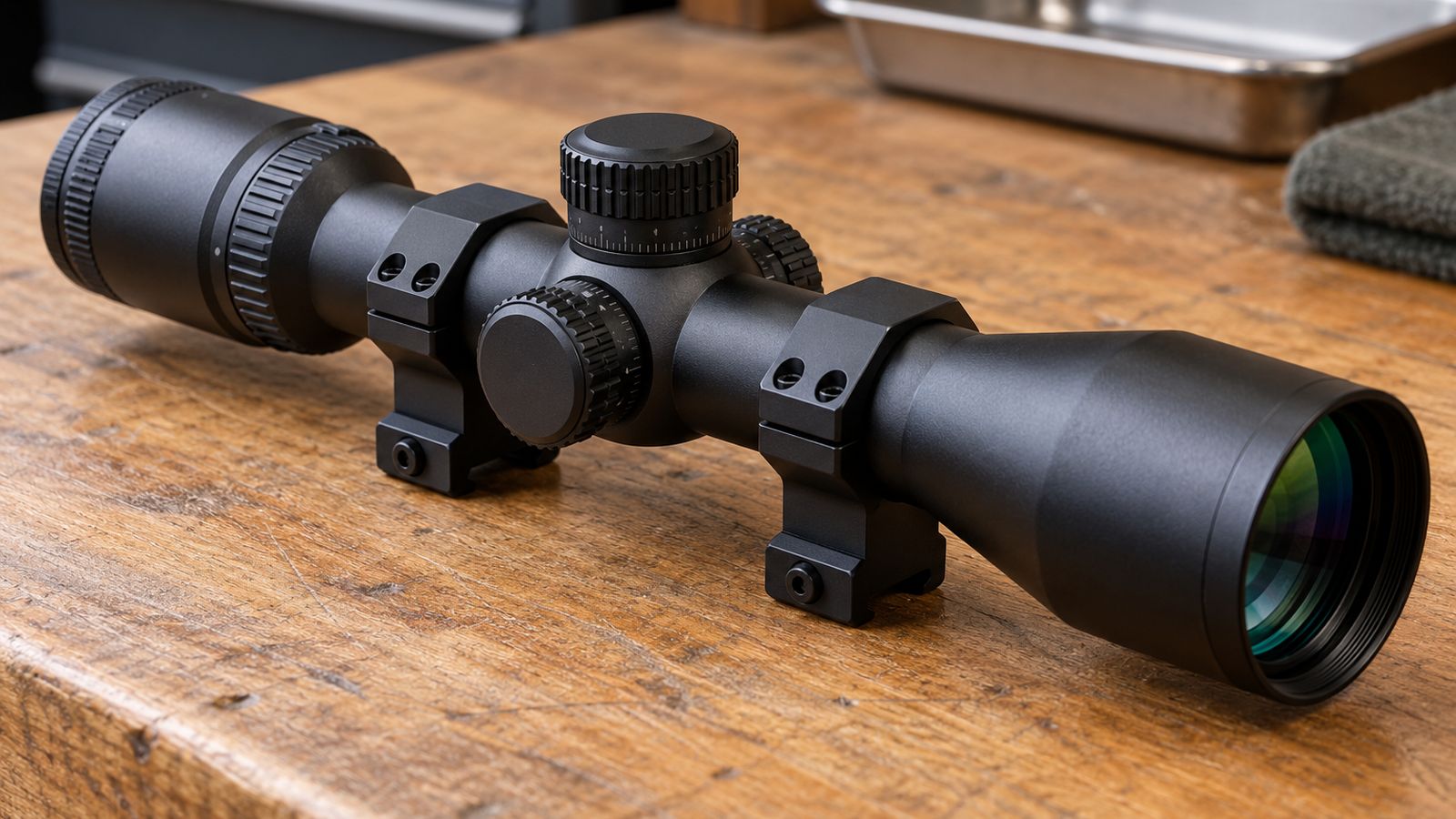
Squirrel season rolls around, the iron sights on your Ruger 10/22 suddenly feel useless, and you start pricing glass that won't eat your whole budget. That's the exact question that pushed our team into the spec sheets and buyer reports on the Vortex Crossfire II 2-7×32 Rimfire Riflescope with V-Plex Reticle, a 1-inch tube optic built around a 50-yard parallax setting instead of the usual 100.
Bottom line up front: it's worth it if you shoot .22 LR inside 100 yards and want glass that survives recoil, rain, and years of truck-bed abuse. Skip it if you need exposed target turrets or plan to dial past 200 yards. Here's what the research actually shows.

1. Vortex Crossfire II 2-7×32 Rimfire Riflescope
Our editorial team compared this model against roughly a dozen rimfire-specific scopes in the same tier, reading through aggregate verified-buyer feedback and cross-checking every number against Vortex Optics published specifications. What kept pulling it to the top wasn't optical wizardry. It was the combination of a genuinely rimfire-correct 50-yard parallax and a warranty policy that removes almost all of the risk from a budget purchase.
What it is
A rimfire riflescope is a low-magnification optic with its parallax fixed at a short distance, usually 50 yards, because .22 Long Rifle shooting happens close. That single design choice is what separates this from a centerfire scope, and it's the reason the Crossfire II CF2-31001R exists as its own SKU.
Vortex Optics sits in the crowded value tier alongside Leupold's Rimfire line, Bushnell's Rimfire Optics series, Athlon's Neos, and Simmons' long-running .22 Mag scopes. The Crossfire II positions itself in the middle: better glass coatings and warranty terms than the entry-level crowd, without the price jump of a Leupold VX-Freedom. As of 2026 it remains one of the most-recommended first upgrades for a 10/22 owner.
Setup and first impressions
Most buyers get the scope zeroed in under 20 rounds, and that's the number that matters more than any unboxing detail.
Verified buyer feedback across thousands of reviews consistently describes the out-of-box feel as solid rather than luxurious. The one-piece aircraft-grade aluminum tube has a matte black anodized finish that reviewers repeatedly note doesn't scuff during ring installation, and the included flip-up caps and lens cloth are frequently mentioned as a nice inclusion at this tier.
The touch points people flag as budget: the magnification ring takes a firm grip to rotate when new, and the fast-focus eyepiece has a slightly gritty feel compared with a Leupold. Neither affects function.
Rings and bases are not included, which trips up first-time buyers. You'll need 1-inch medium-height rings, and on a Ruger 10/22 that usually means a Weaver-style or Picatinny rail adapter first. Buyers who mount on the factory 3/8-inch grooved receiver report the scope clears the barrel fine with low or medium rings.
| Model | Vortex Crossfire II CF2-31001R |
| Magnification | 2x to 7x variable |
| Objective lens | 32 mm |
| Reticle | V-Plex (MOA), second focal plane |
| Parallax setting | Fixed at 50 yards |
| Tube diameter | 1 inch (25.4 mm) |
| Eye relief | 3.9 inches |
| Field of view | 45.8 ft at 2x, 13.1 ft at 7x (per 100 yards) |
| Turret adjustment | 1/4 MOA per click, capped, 60 MOA travel |
| Length / weight | 11.3 in / 14.3 oz (405 g) |
| Sealing | O-ring sealed, nitrogen purged (waterproof, fogproof) |
| Warranty | Vortex VIP, unlimited lifetime, fully transferable |
Daily-use experience
Optical performance and glass quality
Fully multi-coated lenses mean every air-to-glass surface carries anti-reflective coating, and that's where most of this scope's brightness advantage over the entry tier comes from.
At 2x through about 5x, buyer consensus is that the image is bright, flat, and free of noticeable color fringing. Push to the full 7x and reports of slight edge softness become common, which is normal behavior for a 32 mm objective at the top of its magnification range. The exit pupil shrinks to roughly 4.6 mm at 7x, so dusk performance drops off noticeably.
For practical use, that matters less than it sounds. Squirrel hunters and paper punchers report living at 4x to 6x most of the time, where the glass is at its best. If you need genuine last-light performance, a 40 mm or 44 mm objective centerfire scope is the honest answer.
Reticle and zeroing behavior
The V-Plex is a classic duplex crosshair: thick outer posts that draw your eye inward, a fine center cross for precision. It sits in the second focal plane, so it stays the same visual thickness at 2x and at 7x.
Verified buyers consistently report holding zero through hundreds of rounds, including on semi-autos like the 10/22 where bolt slap adds vibration. The 1/4 MOA clicks are audible and tactile, and the resettable zero lets you spin the turret back to zero after sighting in.
The trade-off: there are no hash marks. For 100-yard .22 shots you're holding the crosshair somewhere above the target and remembering how much, rather than using a marked holdover point. Shooters coming from a BDC reticle notice this immediately.
Mounting, eye relief, and fit
Eye relief measures 3.9 inches, which is generous for a rimfire scope and forgiving of sloppy cheek weld.
That number is why this scope keeps getting recommended for youth rifles and first-time shooters. You don't have to press your face into an exact spot to get a full sight picture, and the eye box stays reasonably wide down at 2x. Instructors in buyer reviews mention it repeatedly for exactly this reason.
At 11.3 inches long and 14.3 ounces, it balances well on a 10/22 or a CZ 457 without making the rifle feel nose-heavy. The most common mounting complaint is height clearance on rifles with tall factory rear sights, so measure before ordering rings.
Build quality and weather sealing
The tube is O-ring sealed and nitrogen purged, which is the standard combination for keeping water out and internal fogging away during temperature swings.
Field reports from hunters describe the scope surviving rain, a dunk in a creek, and repeated 20-degree-Fahrenheit mornings without fogging. The hard anodized finish holds up to brush contact, though a few buyers note the turret caps thread slightly loosely and can loosen in a pack.
Failures do appear in the review data, mostly reticle canting out of the box or a turret that stops tracking. The frequency is low, and the Vortex Optics VIP warranty covers them with no receipt and no registration required. That policy is a big part of why this scope earns the trust it does.
✓ Pros
- Parallax fixed at 50 yards instead of 100, so the reticle stops floating on the target at realistic rimfire distances
- 3.9 inches of eye relief gives a forgiving eye box, which matters when a new shooter’s cheek weld changes shot to shot
- Fully multi-coated lenses deliver a visibly brighter image than uncoated budget glass in the same tier
- Unlimited lifetime VIP warranty is transferable and needs no receipt, so a used unit is still covered
- 14.3 ounces and 11.3 inches keeps a lightweight 10/22 or CZ 457 balanced instead of nose-heavy
✗ Cons
- Edge sharpness softens at the full 7x, which shows up when reading small groups at 100 yards
- V-Plex has no hash marks, so 100-yard holdover is guesswork rather than a marked reference point
- Capped turrets are meant for set-and-forget zeroing, not for dialing between stages in NRL22 matches
- No rings, bases, or rail included, and a 10/22 usually needs an adapter before you can mount anything
Who should buy it
Buy it if you…
You own a .22 LR that gets used, not admired. Maybe it's a Ruger 10/22 for backyard plinking and squirrels, a Savage Mark II for the bench, or a Henry lever gun that rides in a truck. You shoot mostly between 25 and 75 yards, you'd like to see the target properly instead of squinting through iron sights, and you don't want to spend more on glass than the rifle cost.
You also want this if you're setting up a rifle for a kid or a new shooter. The forgiving eye box and low 2x setting make it far easier to teach on than a high-magnification scope.
Skip it if you…
You've moved past casual plinking into precision rimfire competition. NRL22 and similar formats reward dialing elevation between stages, reading wind with a hash-marked reticle, and adjusting parallax for targets set anywhere from 25 to 300 yards. Capped turrets and a fixed 50-yard parallax fight you on all three.
Skip it too if your rimfire work happens at first light or last light in heavy timber. A 32 mm objective simply can't gather what a 44 mm or 50 mm front lens does, and no coating fixes physics.
Better alternatives
Leupold VX-Freedom Rimfire 2-7×33: costs more but delivers noticeably better low-light glass and Leupold's own lifetime guarantee, worth it if dusk hunting is your main use.
Athlon Argos BTR Gen2 6-24×50 FFP: the opposite end of the spectrum, built for precision rimfire matches with a first focal plane hash reticle, exposed turrets, and side parallax from 10 yards.
Frequently Asked Questions (FAQ)
Will this scope fit a Ruger 10/22?
Yes, but not directly out of the box. The 10/22 ships with a 3/8-inch grooved receiver plus a Weaver-style base in the box on most models. You'll need 1-inch rings in low or medium height, and if your rifle has the factory rear sight installed, medium rings usually clear it.
Buyers frequently pair this scope with Vortex Hunter or Weaver Grand Slam rings.
Does it hold zero on a semi-automatic .22?
Aggregate buyer feedback across semi-auto platforms reports strong zero retention, with the most common complaints tracing back to loose ring screws rather than the scope itself. Torque your ring caps evenly to the manufacturer's spec (typically 15 to 18 inch-pounds) and use a witness mark. If the scope genuinely won't hold zero, the VIP warranty covers replacement.
What does "50-yard parallax" actually mean for me?
Parallax is the apparent shift of the reticle against the target when your eye moves off the scope's center axis. This scope is corrected so that shift disappears at 50 yards, the distance most rimfire shooting happens. On a centerfire scope corrected at 100 yards, aiming at a 40-yard squirrel introduces small aiming errors that a rimfire scope removes.
How does the Vortex VIP warranty actually work?
It's unlimited lifetime, fully transferable, and requires no warranty card, no receipt, and no product registration. You contact Vortex, describe the problem, and they repair or replace the scope. It covers accidental damage from normal use, though it excludes deliberate damage, theft, and loss.
That transferability is why used Crossfire II scopes hold value.
Can I use it on an air rifle?
Generally yes for standard break-barrel and PCP air rifles, and the 50-yard parallax suits airgun distances well. Be aware that some spring-piston air rifles produce a sharp bidirectional recoil that can damage scopes not specifically rated for it. If you shoot a heavy magnum springer, check with Vortex or choose an airgun-rated optic instead.
Final verdict
4.5 out of 5 stars.
The Vortex Crossfire II 2-7×32 Rimfire earns its reputation the boring way: correct parallax for the job, honest multi-coated glass, and a warranty that means a bad unit costs you a phone call rather than a new scope. Buyers who shoot .22 LR inside 100 yards, whether that's squirrels, steel, or paper, get the most out of it, and so does anyone setting up a rifle for a new shooter.
It's not the scope for precision rimfire matches or for last-light timber hunting. Accept those two limits and there's very little else at this price that competes on trust. For a first optic on a 10/22, it's still the default recommendation among rimfire shooters, and organizations like the National Shooting Sports Foundation will tell you the same thing about starting new shooters on forgiving, low-magnification glass.
Affiliate disclosure: This post contains affiliate links. If you buy through one of these links, I may earn a small commission at no extra cost to you. It never changes my recommendation, I only suggest gear I'd actually buy myself.