Traditional Bow vs Modern Compound Bow
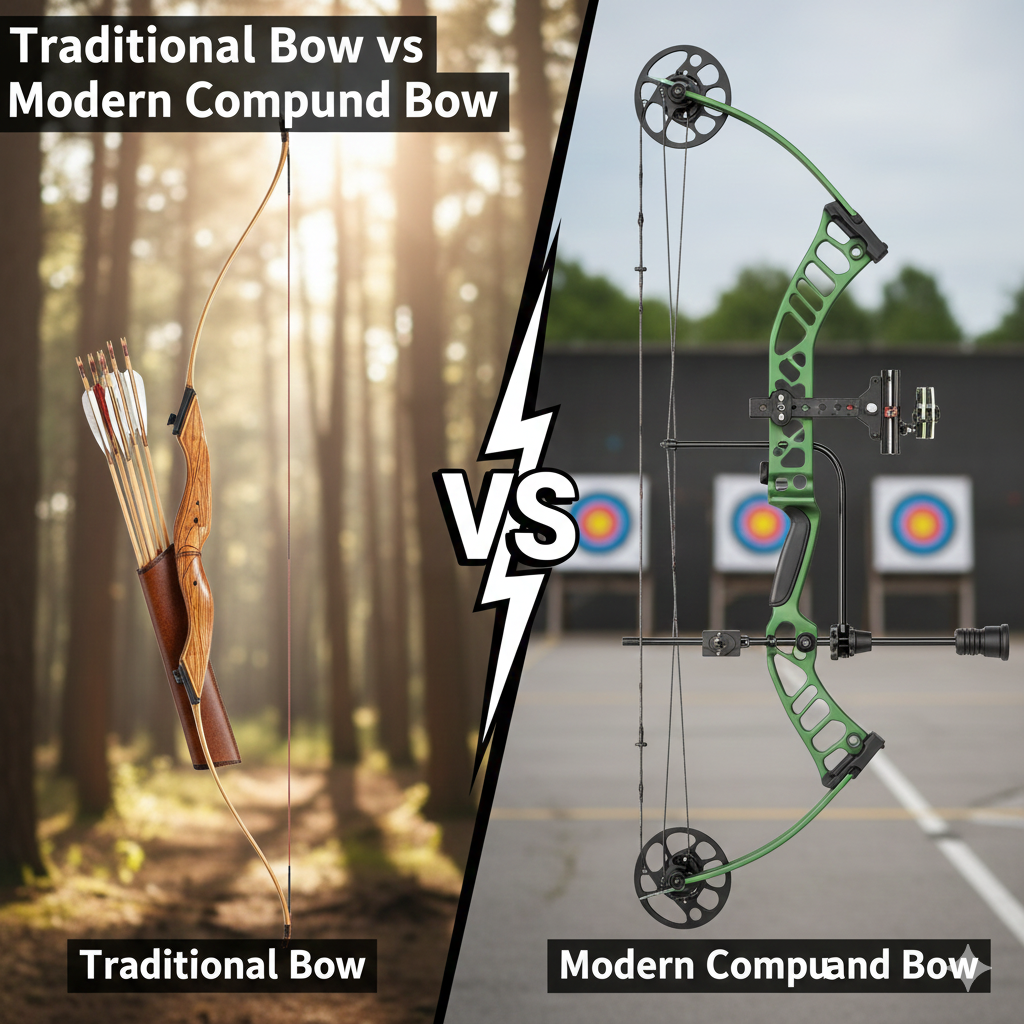
A traditional bow and a modern compound bow can both be rewarding, but they fit different hunters. Traditional bows are simpler, lighter, and more instinctive, while compound bows are more efficient, adjustable, and forgiving for many hunting setups. The best choice depends on your draw weight, practice time, hunting distance, local rules, and whether you value simplicity or technical help. If you are starting from zero, first review what you need to start shooting a bow safely; if you already prefer a compound, use our compound bow selection guide.
Table of contents
Table of Contents
Quick Answer
Choose a traditional bow if you want simplicity, lighter gear, close-range challenge, and a more instinctive archery experience. Choose a modern compound bow if you want more let-off, easier aiming with sights, better arrow speed, and a more forgiving hunting setup. For most new bowhunters, a properly fitted compound bow is usually easier to hunt with responsibly.
Best for Simplicity
Traditional bows have fewer parts, no cams, and a clean shooting feel. They reward consistent form and close-range practice.
Best for Hunting Forgiveness
Compound bows give most hunters more practical help through let-off, sights, releases, peep systems, stabilizers, and higher arrow speed.

Traditional Bow Basics
Traditional bows include longbows and recurves. They are usually shot with fingers, simple rests or shelves, and little or no sighting equipment. The archer holds the full draw weight at anchor, which makes strength and form especially important.
Strengths
- Simple design with fewer mechanical parts.
- Lightweight and easy to carry.
- Quiet, close-range shooting experience.
- Strong appeal for instinctive archery and traditional skills.
Tradeoffs
- Requires more consistent form.
- No let-off at full draw.
- Shorter practical hunting range for most archers.
- Can be less forgiving of draw-length and release mistakes.
Modern Compound Bow Basics
Compound bows use cams or wheels to reduce holding weight at full draw. That let-off helps hunters aim longer and more steadily. Compounds also support sights, rests, releases, stabilizers, quivers, and other accessories that can improve repeatability when properly set up.
Strengths
- Let-off makes full draw easier to hold.
- Higher arrow speeds with efficient energy transfer.
- More precise aiming with sights and releases.
- Adjustable options for draw length and draw weight on many models.
Tradeoffs
- More parts to tune and maintain.
- Heavier and bulkier than many traditional bows.
- Can be expensive once accessories are included.
- Setup mistakes can hurt accuracy and consistency.
Learning Curve
Traditional archery often has a steeper learning curve because the archer must control more of the shot with body mechanics and repeatable form. Compound bows still require good form, but accessories and let-off make it easier for many beginners to build repeatable groups.
Practice Commitment
If you choose a traditional bow for hunting, plan for close-range practice and honest limits. If you choose a compound, do not let the technology replace practice. Both systems demand repetition before hunting.
Hunting Performance
Compound bows usually offer more practical hunting performance for the average bowhunter because they are faster, easier to hold at full draw, and easier to aim with sights. Traditional bows can still be effective when used by a disciplined archer at close range.
Shot Distance
Your ethical distance is not the bow’s maximum distance. It is the distance where you can repeatedly place arrows in the vital area under realistic field conditions.
Animal Recovery
Bowhunting requires careful shot selection, sharp broadheads where legal, and patience after the shot. Do not take steep, rushed, or uncertain shots just because the bow is capable of launching an arrow farther.
Fit and Draw Weight
Bow fit matters for both styles. Draw length, draw weight, anchor point, grip, and arrow setup all affect accuracy and safety. For beginners and youth archers, an archery pro shop or qualified coach can prevent a lot of frustration.
Traditional Bow Fit
Do not overbow yourself. A traditional bow that is too heavy can damage form and make hunting shots less ethical. Start with a draw weight you can control smoothly.
Compound Bow Fit
A compound bow should match draw length and draw weight, and the cams should be tuned according to the bow manual. If timing, peep alignment, or arrow flight is off, get help before hunting.
Maintenance and Tuning
Traditional bows need string care, limb inspection, and arrow matching. Compound bows need those checks plus cams, cables, rests, sights, peeps, and fasteners. Follow the manufacturer’s manual and inspect gear before every hunt.
When To Get Help
If you see frayed strings, damaged limbs, loose hardware, poor arrow flight, or inconsistent groups, stop and get the setup checked. A bow that is out of tune can create bad hits and unsafe shooting.
Legal and Ethical Checks
Before hunting, check state wildlife agency rules for legal bow type, draw weight, broadhead requirements, crossbow rules, season dates, and tag requirements. General resources such as Hunter-Ed, the International Hunter Education Association, and USA Archery can support learning, but they do not replace current state regulations.
Ethical Bowhunting Rule
Use the bow that lets you make clean, repeatable shots inside your practiced range. A traditional bow is not more responsible simply because it is simple, and a compound bow is not more responsible simply because it is faster.
Which Bow Fits You?
If your goal is to hunt as soon as you can do it responsibly, a compound bow usually gives the smoother path. You can tune draw weight, use sights, hold with let-off, and build confidence from measured groups. If your goal is to learn traditional archery as a craft, a recurve or longbow may be more satisfying, but the hunting timeline should be slower and your distance limits should be stricter.
Choose Traditional If
You enjoy simple equipment, short-range shooting, instinctive practice, and a bigger skill challenge. You should also be willing to practice often and pass shots that a compound hunter might reasonably take.
Choose Compound If
You want a more adjustable hunting system, better holding comfort, more sighting help, and a setup that can be tuned around your body. A compound still requires practice, but it gives many hunters a more forgiving starting point.
Decision Checklist
- Choose traditional if you want simplicity and accept a steeper practice curve.
- Choose compound if you want let-off, sights, speed, and easier hunting repeatability.
- Check state rules for legal bow type and draw-weight requirements.
- Get draw length, draw weight, and arrows matched to your body and bow.
- Practice from realistic hunting positions before setting your shot limit.
- Inspect strings, limbs, cams, and arrows before every hunt.
FAQ
Is a compound bow better than a traditional bow for hunting?
For most hunters, a compound bow is easier to hunt with because it has let-off, sights, and more forgiving performance. Traditional bows can be effective with enough practice and close-range discipline.
Is a traditional bow harder to learn?
Usually, yes. Traditional bows require more form consistency and strength because there is no let-off at full draw.
Do compound bows require more maintenance?
Yes. Compound bows have cams, cables, rests, sights, and accessories that need inspection and tuning. Traditional bows are simpler but still need string, limb, and arrow checks.
Which bow should a beginner choose?
A beginner who wants to hunt soon will usually progress faster with a properly fitted compound bow. A beginner who wants traditional archery as a skill may prefer a recurve or longbow and a slower learning path.
Final Takeaway
Traditional bows offer simplicity and challenge. Modern compound bows offer efficiency and hunting forgiveness. Choose the bow that fits your body, your practice habits, your legal season, and your ability to make ethical shots.