Southeast Alaska Rut Hunting: 10 Sitka Deer Safety and Timing Checks
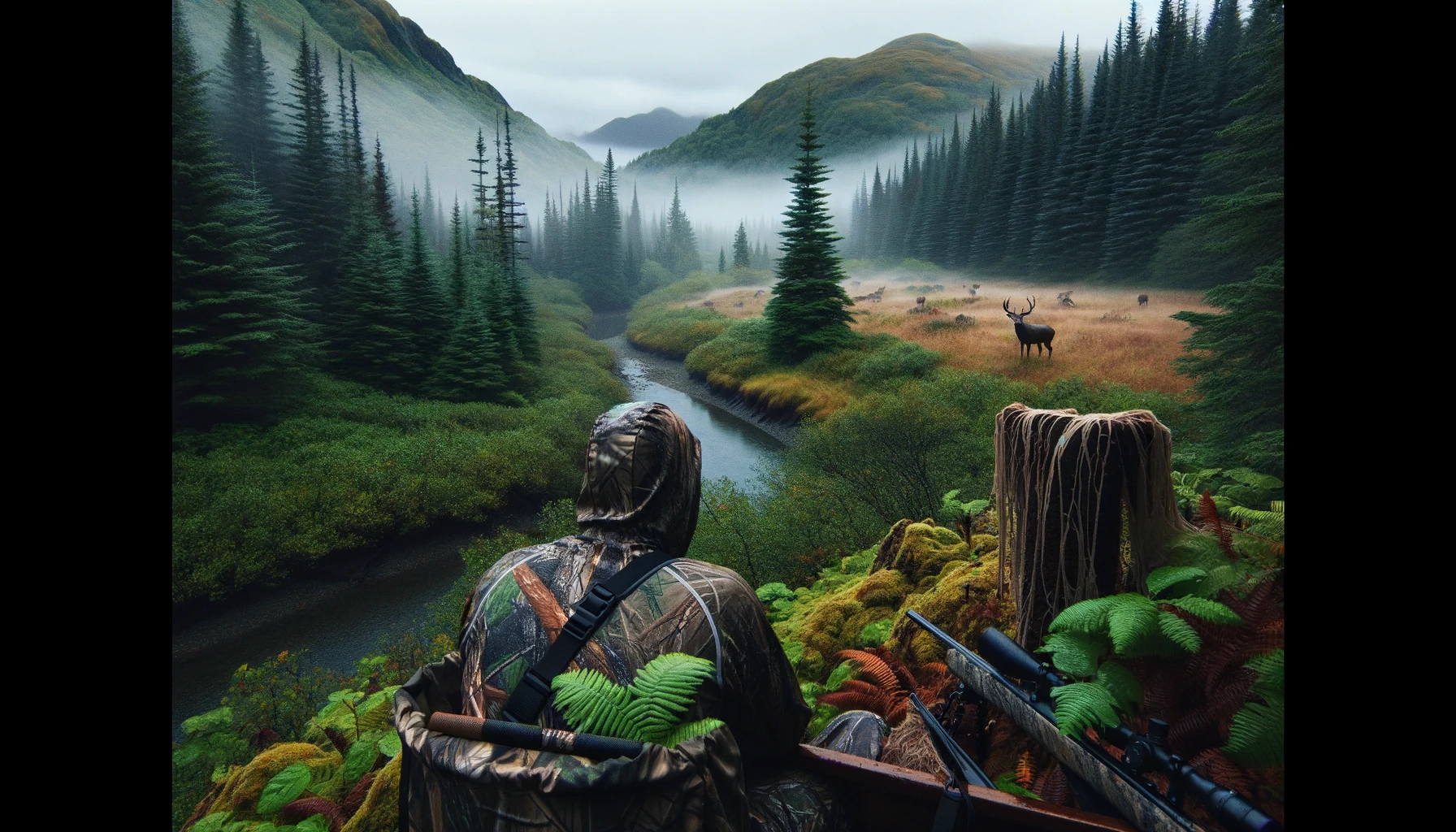
Southeast Alaska rut hunting is mostly a Sitka black-tailed deer plan, not a generic whitetail plan. The rut can make deer more visible, but the rainforest, island travel, snow line, wind, tide, bears, and current Alaska rules matter more than any calling trick. Start by checking the Alaska Department of Fish and Game rules for your unit, then build the hunt around legal access, safe travel, and patient glassing.
This guide is for planning and field judgment. It does not replace current regulations, permit conditions, emergency orders, land-owner rules, guide requirements, or local weather decisions.
Table of Contents
Quick Answer: What Makes Southeast Alaska Rut Hunting Different?
Southeast Alaska rut hunting is different because Sitka black-tailed deer live in wet coastal rainforest, island country, steep muskeg edges, logged units, old-growth cover, and changing snow conditions. The best plan is to hunt legal areas during the rut, move slowly, glass openings, watch fresh sign, keep wind in mind, and stay prepared for fast weather changes.
Best short plan
Pick one legal hunt area, study access before leaving home, confirm the current season and reporting rules, then hunt the edges between feeding cover, timber, muskeg, and travel routes. If snow pushes deer lower, adjust with care instead of forcing the original plan.
Biggest risk
The biggest risk is poor planning. Southeast Alaska can punish casual decisions with bad weather, wet clothing, steep footing, boat delays, poor visibility, and confusing access rules. A legal deer is only a good outcome if the hunt stays safe.
Check Rules First
Start with the current Alaska hunting information page and the current regulations for the game management unit you plan to hunt. Alaska rules can vary by resident status, unit, species, weapon, permit type, harvest ticket, sealing or reporting requirement, and emergency order.
Unit and permit check
Do not assume a tip from last season is still current. Before travel, check the unit map, open dates, bag limit, harvest ticket or permit requirement, and whether your exact area has closures or special conditions. Keep a saved copy available offline because service can be weak.
Emergency orders
Emergency orders and advisory announcements can change the practical plan. Check them before leaving and again shortly before the hunt. If you are flying, boating, or using a transporter, confirm that everyone is working from the same current rule set.
Public and private access
Southeast Alaska access may involve state land, federal land, corporation land, municipal areas, logging roads, marine access, or private property. Legal hunting season does not automatically mean legal access. Confirm permission, road status, and landing or anchoring plans before relying on a route.
Know Sitka Black-tailed Deer
The ADF&G Sitka black-tailed deer profile describes the deer as native to the wet coastal rainforests of Southeast Alaska and north-coastal British Columbia. That matters because the habitat shapes the hunt as much as the calendar.
Smaller deer, thick cover
Sitka black-tailed deer are smaller and stockier than many hunters expect if they come from whitetail or mule deer country. In thick rainforest, that smaller body can disappear quickly behind brush, alder, spruce, hemlock, and broken terrain.
Food and cover pattern
Look for the places where feeding cover meets security cover. Muskeg edges, benches, old cuts, timber margins, and protected pockets can all matter. The right spot often looks less dramatic than a big viewpoint but has fresher tracks, droppings, browse, and quiet travel lanes.
Winter pressure
ADF&G notes that deer populations fluctuate with winter severity. Deep snow can move deer lower and concentrate them, but it can also mean harder travel and stressed animals. Hunt legally and ethically; do not let easy access replace good judgment.
Time the Rut Carefully
Rut timing is useful, but it is not a promise. ADF&G’s Sitka deer hunting page says a large portion of harvest happens in November during the rut, when both sexes may respond to a fawn-bleat style call. Use that as a planning clue, then read the current weather, sign, and local pressure.
Early rut movement
Early rut movement may be uneven. Bucks can check doe areas, move more in daylight, and travel between cover types. This is a good time to slow down and watch travel routes rather than marching through every patch of cover.
Peak rut patience
During stronger rut movement, a quiet sit near fresh sign can beat constant relocation. Stay ready after short calling sessions, glass the edges, and expect deer to appear in pieces: an ear, a leg, a dark shape, or movement through brush.
Late rut adjustment
Later in the season, weather and snow can matter more than the rut label. If snow stacks up high, deer may shift lower. If conditions stay mild, they may remain spread out. Let fresh sign guide the day.
Read Rainforest Terrain
The Southeast Alaska rainforest can make a short map distance feel long. Brush, blowdown, muskeg, steep drainages, slippery roots, and low visibility all slow the hunt. Pick routes that you can safely travel while carrying gear and, possibly, meat.
Muskeg edges
Muskeg edges can give visibility without leaving deer cover too far behind. Watch the timber line, small openings, and subtle crossings. Move slowly because deer can step out and vanish within seconds.
Old-growth timber
Old-growth cover can matter when snow increases. A broken canopy may reduce snow depth and offer browse. It can also make shooting angles close and quick, so identify the deer clearly before raising a firearm or bow.
Clearcuts and logging roads
Clearcuts and logging roads can help with glassing, but they also attract hunting pressure. Check road status and land rules first. If a road is crowded, consider nearby cover transitions instead of standing where every other hunter stops.
Plan for Weather and Snow
Weather is not background noise in Southeast Alaska. Rain, wind, fog, snow, short daylight, and cold water can shape the hunt. Your clothing, navigation, communication, and exit plan should be ready before the first glassing stop.
Rain management
Bring layers that still work when damp, and keep one dry layer protected. Wet hands and cold wind can make safe handling harder. If you cannot operate your gear safely, pause the hunt and fix the problem.
Fog and visibility
Fog can make navigation and target identification risky. Do not shoot at shapes, sound, or movement. Wait until you can identify the animal, confirm legality, and see what is beyond it.
Snow line changes
Snow can reveal tracks and move deer, but it can also hide hazards. Watch for steep sidehills, wet logs under snow, creek crossings, and the time needed to return before dark.
Handle Boat and Road Access
Many Southeast Alaska hunts involve more travel planning than a road-only hunt. Weather windows, tides, floatplanes, skiffs, ferries, logging roads, and pickup times can decide how much hunting you actually get.
Boat access
If you use a boat, plan for tides, shore landing, dry storage, emergency gear, and the return trip with meat. A productive cove is not useful if you cannot leave safely when weather changes.
Road access
Logging roads can be helpful but may have gates, washouts, active work, snow, or private restrictions. Check status before committing the day to one road system.
Meat care
Think through meat care before the shot. Bring bags, a knife, a headlamp, flagging or GPS marking, and enough time to cool and move meat legally and cleanly. Rain does not excuse poor field care.
Use Calling With Restraint
Calling can help during the rut, but it should not turn the hunt into constant noise. Short, believable calls with long quiet windows are usually more useful than calling every few minutes.
Fawn-style bleats
ADF&G notes that both sexes may respond to a call resembling a fawn bleat during the rut. Keep the sound natural and give deer time to approach through cover.
Wind after calling
After you call, watch the downwind side. Deer may try to confirm the sound before stepping into the open. A setup with visibility downwind is often better than a prettier view in the wrong wind.
When not to call
Skip calling if you cannot identify approaching animals safely, if another hunter is close, if the wind exposes your position, or if local pressure has deer nervous. Silence can be the better tactic.
Safety and Shot Checks
Rut movement never lowers the safety standard. The NSSF firearm safety rules emphasize muzzle control and knowing your target and what is beyond it. In thick Southeast Alaska cover, those rules matter on every setup.
Identify legality
Confirm the animal, sex, antler rule if applicable, distance, angle, and background before deciding. Do not let excitement or a short opening rush the decision.
Watch other hunters
Calling, road systems, and beach access can concentrate people. Wear required visibility, avoid shooting toward trails or roads, and assume sound may draw another hunter as well as deer.
Track with discipline
After a shot, mark the spot, wait when needed, and follow sign carefully. If weather, darkness, or terrain makes recovery unsafe, make the safest legal decision available and document the location.
Common Southeast Alaska Rut Mistakes
Hunting too fast
Many hunters cover ground as if visibility is open. In this country, slow glassing and careful listening often beat noisy walking. Take fewer steps and make each stop count.
Ignoring the exit
A route that feels easy in daylight can become a hard problem after rain, fog, or a successful shot. Know how you will return before you go deeper.
Treating November like a guarantee
November can be productive, but it does not erase weather, pressure, access, or low deer density in a specific pocket. Hunt the sign in front of you.
Southeast Alaska Rut Hunting Checklist
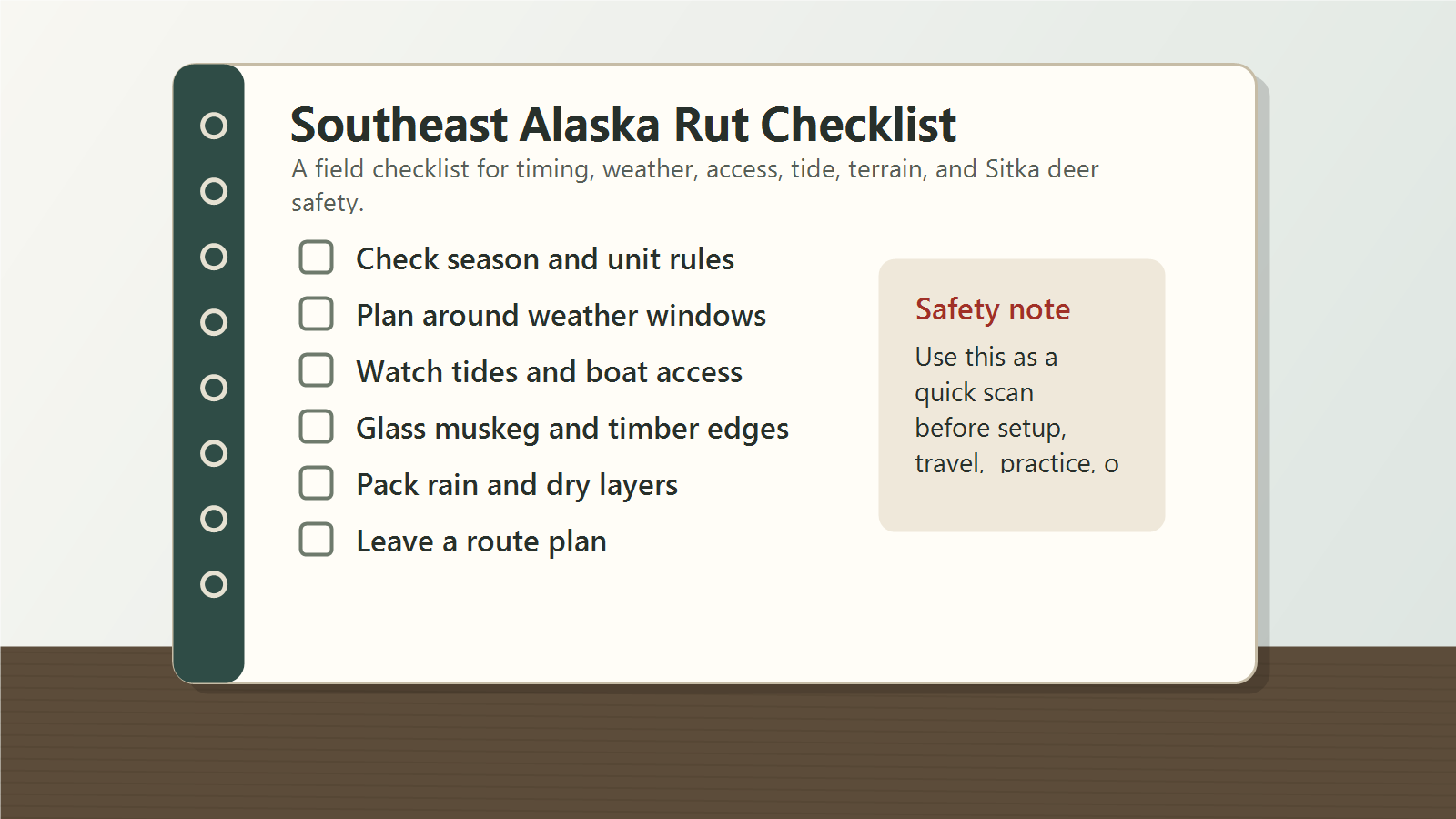
- Current ADF&G unit rules, dates, harvest ticket or permit, and emergency orders checked
- Access, land status, road status, tide, pickup, and weather plan confirmed
- Rain layers, dry insulation, navigation, headlamp, and communication packed
- Meat bags, knife, marking tools, and return route planned before hunting
- Fresh sign, wind, visibility, and safe shot background confirmed before setting up
- Calling used sparingly, with quiet time after each sequence
- Target identified clearly before any shot decision
FAQ
When is the rut for Sitka black-tailed deer in Southeast Alaska?
ADF&G describes breeding activity around late November, and its hunting page notes that much of the harvest occurs in November during the rut. Local weather and deer distribution still decide the daily plan.
Is Southeast Alaska deer hunting mostly a calling hunt?
No. Calling can help, but glassing, fresh sign, wind, access, weather, and safe shot angles are just as important. Calling too much can hurt more than help.
What deer species is hunted in Southeast Alaska?
The main deer is the Sitka black-tailed deer, a smaller coastal rainforest deer native to Southeast Alaska and north-coastal British Columbia.
Do I need to check regulations every year?
Yes. Check current regulations, permits, harvest tickets, reporting rules, and emergency orders every season. Do not rely on an old article, old map, or old camp note.
What is the safest way to hunt thick rainforest cover?
Move slowly, identify every animal clearly, keep your muzzle or bow pointed safely, watch your background, and avoid shots through brush or toward uncertain movement.
Final Takeaway
Southeast Alaska rut hunting rewards careful planning more than shortcuts. Check the current Alaska rules, understand Sitka black-tailed deer behavior, match your plan to weather and snow, move slowly in rainforest cover, and keep safety ahead of every shot opportunity.