Random Decibullz Percussive Moldable Ear Plugs
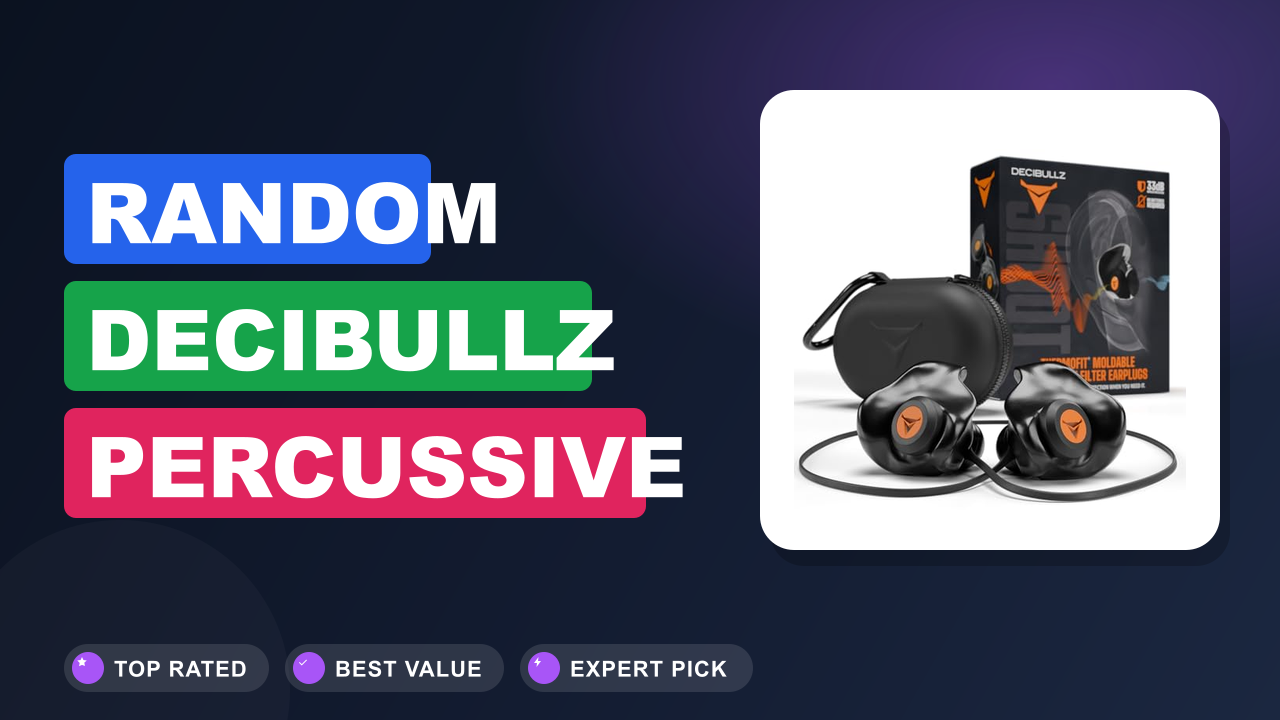
Most range days start the same way: cheap foam plugs get rolled, shoved in, and half of them work their way loose by the third magazine. That gap between "ear protection I own" and "ear protection that actually seals" is what pushed our team to dig into the Decibullz Percussive Moldable Ear Plugs and the growing category of custom-molded hearing protection for shooters.
Bottom line up front: these are worth it if you shoot regularly and hate the muffled, disconnected feeling of foam or bulky muffs, and worth skipping if you need maximum attenuation next to indoor magnum blast. Here's the full breakdown, starting with where they land overall.

1. Decibullz Percussive Moldable Ear Plugs
Our team pulled together manufacturer documentation, aggregate verified-buyer feedback, and published hearing-conservation guidance to work out whether a self-molded thermoplastic plug really solves the fit problem shooters complain about. The short answer from the review data is yes, with a learning curve on the molding step. What follows is what the research consistently shows, including where these fall short.
What it is
A moldable earplug is a hearing protector with a thermoplastic outer shell that softens in hot water so you can press it into the shape of your own outer ear. Decibullz sits in the DIY custom category, between disposable foam and a $150+ audiologist-fitted mold.
The Percussive version pairs those custom shells with impulse filters designed for gunfire and other sharp percussive noise. That puts it up against SureFire EP4 Sonic Defenders, Etymotic ETY Plugs, Axil filtered plugs, and passive slim muffs from 3M Peltor. The difference is the shell: the others come in preset sizes, while Decibullz conforms to your conchal bowl.
Setup and first impressions
Molding is the whole story here, and it takes about ten minutes total. Decibullz instructs you to heat the thermoplastic earpiece in hot water for roughly five minutes, let it cool briefly, then press it into your ear and hold for about five minutes while it firms up.
Verified buyer feedback across thousands of reviews lands on one consistent theme: the first mold is often mediocre and the second attempt is where it clicks. Reviewers repeatedly describe pushing the material too shallow on attempt one, reheating, and getting a noticeably better seal on the retry. That remoldability is the feature, not a workaround.
Out of the box, buyers describe the kit as compact and practical rather than luxurious: two thermoplastic shells, percussive filters, extra tips, and a small carry case. Several reports mention the filters look small and plasticky next to the chunky shells.
The clearest first-session signal in review data is the drop in wind noise on outdoor ranges once the conchal seal is right.
| Brand / model | Decibullz Percussive Moldable Ear Plugs |
| Noise Reduction Rating (NRR) | 33 dB in the maximum-protection configuration, per the manufacturer listing |
| Shell material | Custom thermoplastic, remoldable |
| Molding process | ~5 min in hot water, ~5 min set time in ear |
| Remolds | Unlimited, per manufacturer documentation |
| Filter type | Percussive impulse-noise filters |
| Included tips | Multiple tip sizes plus filter set |
| Profile | Low-profile, sits inside the ear (muff-compatible) |
| Best suited for | Outdoor ranges, trap and skeet, motorsport, industrial impulse noise |
Daily-use experience
Noise reduction on the firing line
An impulse filter is a mechanical valve that stays acoustically open at conversational levels and restricts sharply when a pressure spike hits. That's the design goal here, and aggregate shooter feedback says it delivers on outdoor ranges with rifle and shotgun.
Reviewers routinely describe hearing a range officer at normal talking volume while still getting the concussion knocked off a 5.56 muzzle blast. The trade-off shows up indoors. Multiple buyers report that in enclosed pistol bays, especially with braked rifles or .357 Magnum, they double up with muffs over the plugs.
That matches hearing-conservation logic. The Occupational Safety and Health Administration sets its permissible exposure limit at 90 dBA over an 8-hour time-weighted average, and gunfire peaks sit far above anything a single filtered plug fully neutralizes.
Fit, comfort, and retention
The custom conchal mold is what separates these from every foam plug in your range bag. Because the thermoplastic locks into the bowl of your outer ear rather than relying on canal pressure, buyer reports consistently describe them staying put through recoil, movement, and hours of wear.
Long-session comfort comes up repeatedly in positive reviews: shooters describe forgetting they're wearing them after 30 to 45 minutes, which almost never happens with over-ear muffs in summer heat. There's no clamp force on the temples of shooting glasses either.
The recurring complaint is people with narrow or unusually shaped ear canals who need three or four molding attempts. A minority report the shell feels bulky in the outer ear for the first week.
Practicality over a season
Durability holds up well in long-term reports. The thermoplastic shells don't degrade like foam, and reviewers who've owned them for a year or more describe the same seal they got on day one, with an occasional reheat to refresh the fit.
The maintenance routine is simple: wash the shells with soap and water, keep the filters clear of debris, and store them in the case so the small filter pieces don't wander. That last part matters. Lost filters are the single most common gripe in buyer feedback, and they're small enough to vanish into a range bag lining.
Compared to disposable foam, the math works out fast. One pair replaces a year or more of throwaway plugs, and there's no rolling and waiting for expansion between strings of fire.
How they compare in practice
Against electronic muffs like Howard Leight Impact Sport, the Decibullz give up amplification entirely. Electronic muffs boost quiet sounds and compress loud ones, which is genuinely better for hunting or for hearing a soft-spoken instructor across a bay.
What Decibullz win on is profile and heat. Nothing sits between your cheek and the stock, so your cheek weld on a scoped bolt gun stays consistent shot to shot. On a 95°F August range day, there's no sweat trapped under a cup.
Against fixed-size filtered plugs like SureFire EP4, the custom shell is the differentiator, though EP4s win on grab-and-go simplicity since there's no molding step at all.
✓ Pros
- Custom thermoplastic mold locks into the outer ear, so plugs stay seated through recoil instead of backing out like foam
- Unlimited remolds mean a bad first attempt costs you five minutes of hot water, not a new purchase
- Percussive filters pass conversation and range commands, so you’re not lifting a muff cup every time the RO speaks
- Zero-clamp low profile keeps cheek weld consistent on a scoped rifle and stops sweat build-up in summer heat
- One pair replaces a season of disposable foam, which makes the value strong over a full year of range days
✗ Cons
- Filters are tiny and easy to lose in a range bag, and buyers report replacements as the most common re-order
- The molding step has a real learning curve, with many users needing two or three attempts for a proper seal
- Single filtered plug is not enough for indoor pistol bays or braked rifles, where doubling up with muffs is the safe call
- No electronic amplification, so hunters wanting boosted situational awareness need a different category
Who should buy it
Buy it if you…
Buy these if you shoot outdoors often and you're tired of the compromise between hearing nothing and protecting nothing. The clearest fit is a rifle or shotgun shooter who runs a scoped bolt gun or shoots trap, where muffs get in the way of a repeatable cheek weld.
They also make sense if you already own electronic muffs and want a plug that works underneath them for indoor sessions. Motorsport crews, drummers, and industrial workers dealing with impulse noise show up frequently in positive buyer feedback too.
Skip it if you…
Skip these if your primary use is indoor pistol shooting with magnum calibers or muzzle-braked rifles, where a single filtered plug leaves you under-protected. Doubling up works, but then you're paying for a feature (hearing conversation) you can't use.
Skip them if you hunt and want amplified awareness for detecting movement, since these are passive only. And skip if you need shared protection for a family, a scout group, or a class, because each mold belongs to one set of ears permanently.
Better alternatives
Two models handle the gaps well. The Howard Leight Impact Sport electronic muff is the pick if you want sound amplification for hunting or instruction, and it's usually a similar or lower spend.
The SureFire EP4 Sonic Defenders are the better call if you want filtered plugs with zero setup, since they come in fixed sizes and go straight in the ear. You lose the custom seal but gain grab-and-go convenience for occasional shooters.
Frequently Asked Questions (FAQ)
Can I remold them if I mess up the first try?
Yes, and the manufacturer treats unlimited remolding as a core feature rather than a repair. You reheat the thermoplastic shell in hot water for about five minutes, let it cool enough to touch, and press it into your ear again. Buyer feedback strongly suggests planning for two attempts, since the most common first-mold mistake is not seating the material deeply enough into the conchal bowl before it sets.
Is a 33 dB NRR enough for indoor ranges?
For most outdoor rifle and shotgun shooting, a properly sealed plug at this rating is adequate. For indoor pistol bays, braked rifles, or magnum calibers, the safer approach is doubling up with over-ear muffs. Keep in mind that NRR is a laboratory-derived number under EPA labeling rules, and real-world attenuation is typically lower because of fit variation.
Hearing damage from impulse noise is cumulative and permanent, so err toward more protection.
Can I wear earmuffs over these?
Yes, and that's one of their genuine advantages. Because the molded shell sits inside the outer ear with almost no protrusion, muff cups seal against your head normally instead of riding on a bulky plug stem. Verified buyers who shoot indoors regularly describe this combination as their standard setup.
It's also the reason these work under a ball cap, shooting glasses, and a communications headset at the same time.
Will they fall out during recoil or movement?
Retention is the strongest theme in positive buyer feedback. Because the custom mold anchors in the conchal bowl rather than depending on canal expansion like foam, they hold position through recoil, running, and head movement. Shooters who've had foam plugs work loose mid-string report this as the main reason they switched.
The exception is a poorly executed mold, which will loosen and needs to be redone.
How do you clean and store them?
Wash the thermoplastic shells with mild soap and warm (not boiling) water, dry them fully, and keep the filters clear. Store everything in the included case, because the filters are small enough to disappear into a bag lining and are the most commonly re-ordered replacement part. Avoid leaving them on a hot dashboard for long stretches, since the material is designed to soften with heat.
Final verdict
4.4 out of 5 stars.
The Decibullz Percussive Moldable Ear Plugs solve a specific, real problem: shooters who want a locked-in seal without the bulk, heat, and cheek-weld interference of muffs. If you shoot outdoors regularly and value hearing range commands while still killing the concussion of a muzzle blast, this is one of the smarter buys in passive hearing protection.
The people who win most here are outdoor rifle and shotgun shooters, plus anyone who wears glasses, a cap, and a headset together and needs protection that fits under all of it. The people who lose are indoor magnum shooters wanting single-layer protection, and hunters who need electronic amplification instead.
Budget ten minutes for the molding process, plan on a second attempt, and keep the filters in the case. Do that, and this is protection you'll actually wear every session instead of leaving in the bag.
Affiliate disclosure: This post contains affiliate links. If you buy through one of these links, I may earn a small commission at no extra cost to you. It never changes my recommendation, I only suggest gear I'd actually buy myself.