How to Shoot a Gun Safely: Beginner Range Basics
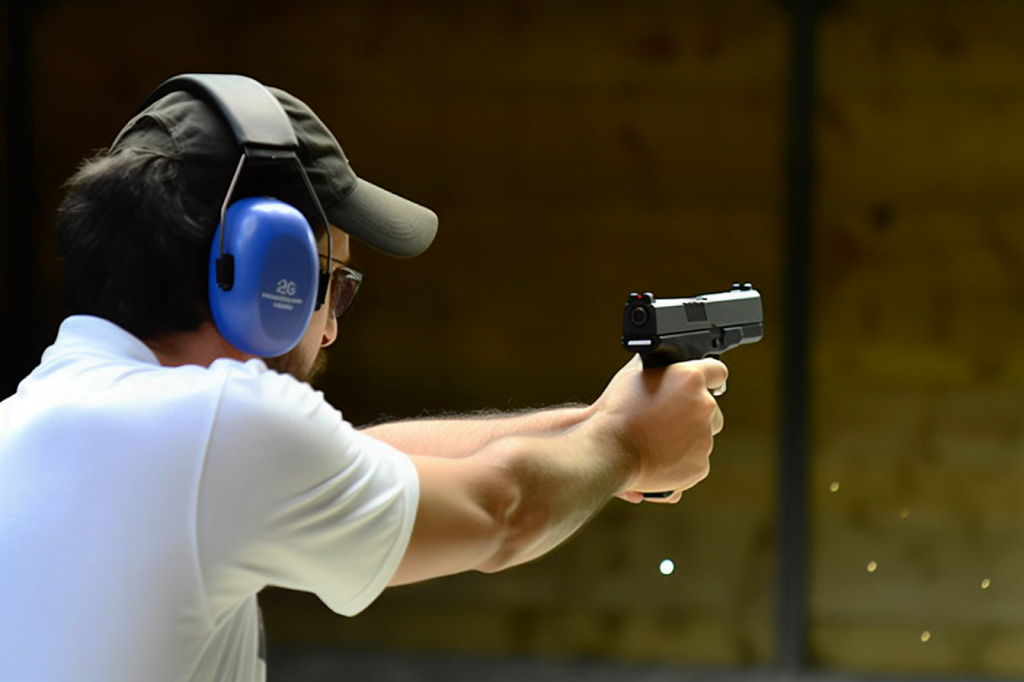
Learning how to shoot a gun starts with safety, not speed or accuracy. A beginner should first learn the firearm safety rules, how to handle an unloaded firearm, how to follow range commands, and when to ask a qualified instructor for help.
This guide explains the basic shooting process in plain language for safe range learning. It is not tactical training, defensive instruction, or a replacement for hands-on coaching. New shooters should learn with a qualified instructor at a safe range.
Table of Contents
Safety First
Before live fire, learn and repeat the basic firearm safety rules. Treat every firearm as loaded, keep the muzzle pointed in a safe direction, keep your finger off the trigger until ready to shoot, and know your target and what is beyond it.
The NSSF firearm safety rules and Hunter Ed firearms safety rules are good source-backed references. Read them before handling a firearm and review them again before range practice.
Before You Go to the Range
A safe first range session should be simple. Use a firearm that fits the shooter, ammunition that exactly matches the firearm marking and manual, eye protection, hearing protection, and a range with clear rules and supervision.
- Read the owner’s manual for the firearm.
- Learn how to unload and verify empty status with an instructor.
- Use eye and ear protection before anyone starts shooting.
- Start with short sessions so attention stays high.
- Follow range commands immediately.
- Ask questions before touching controls you do not understand.
If firearms are present in a home, secure storage matters before and after training. Project ChildSafe provides firearm safety and storage resources for households.
Basic Shooting Process
At a safe range, the shooting process is usually taught in small steps: confirm safety, load only when instructed, aim at the approved target, press the trigger smoothly, follow through, and keep the firearm pointed downrange until the instructor or range command says otherwise.
- Confirm the range is hot or cold. Do not handle firearms during a cold range unless the range officer allows it.
- Load only when allowed. Keep the muzzle downrange and finger off the trigger.
- Aim at the approved target. Use the range’s designated backstop.
- Press the trigger deliberately. Do not slap or rush the trigger.
- Keep control after the shot. Stay pointed downrange and wait for instruction.
This is why a qualified instructor helps. They can correct unsafe habits immediately and keep the first session organized.
Trigger Discipline
Trigger discipline means keeping your finger outside the trigger guard until your sights are on target and you have decided to fire. This rule applies when loading, unloading, moving, talking, clearing a malfunction, and setting the firearm down.
For more detail, see our guide to trigger discipline and firearm safety. New shooters should learn this habit before live ammunition is introduced.
Stance, Grip, and Sights
Stance, grip, and sight alignment help the shooter control the firearm safely and aim consistently. Keep the body balanced, grip the firearm firmly without fighting it, and align the sights according to the firearm type and instructor guidance.
Stance
Use a stable stance that lets you control recoil without leaning backward. A beginner should focus on balance and muzzle control, not speed.
Grip
Grip should be firm and consistent while keeping the trigger finger indexed until ready. If the firearm is too large, too small, or uncomfortable, ask for help choosing a better fit.
Sights
Use the sights or optic as taught by the instructor. A new shooter should learn close, slow, safe hits before moving to longer distances or faster strings.
After the Shot
After firing, keep the firearm pointed safely downrange, keep your finger off the trigger unless firing another aimed shot, and listen for range commands. Do not turn around with the firearm, lower it toward your feet, or talk with the firearm still in your hands unless the instructor directs you.
- Keep the muzzle in a safe direction.
- Keep the finger off the trigger.
- Unload only when instructed or when the session is complete.
- Verify empty status before leaving the firing line.
- Store the firearm securely after the session.
Firearm injury prevention also includes secure storage and responsible access. The CDC’s firearm injury and violence prevention resources provide broader safety context.
Common Beginner Mistakes
- Skipping safety rules: safety rules are not optional warm-up material.
- Putting the finger on the trigger too early: index the finger until the shot decision is made.
- Starting with too much recoil: a poor first fit can make learning harder and less safe.
- Ignoring hearing protection: gunfire can damage hearing quickly.
- Chasing speed too soon: safe, slow, controlled handling comes first.
- Practicing alone too early: get coaching until the safety habits are consistent.
For hearing safety, see our guide to gunshot decibels and hearing risks.
FAQ
What is the first thing a beginner should learn before shooting?
Learn the firearm safety rules first, especially muzzle direction and keeping your finger off the trigger until ready to shoot.
Should I learn to shoot with an instructor?
Yes. A qualified instructor can teach safe handling, range commands, loading, unloading, stance, grip, and sight use while correcting unsafe habits immediately.
Do I need hearing protection for one shot?
Yes. Gunfire can damage hearing quickly, including from a single unprotected exposure. Use hearing protection whenever shooting or standing near shooting.
What is a safe direction?
A safe direction is one where an unintended discharge would be stopped by a safe backstop and would not injure a person. At a range, this is usually downrange into the approved backstop.
Can I practice at home?
Only follow safe dry-practice procedures after instruction, with the firearm unloaded, ammunition removed from the area, and a safe direction. Beginners should get hands-on instruction before practicing alone.