How Do Guns Work? Safe Firearm Mechanics Basics
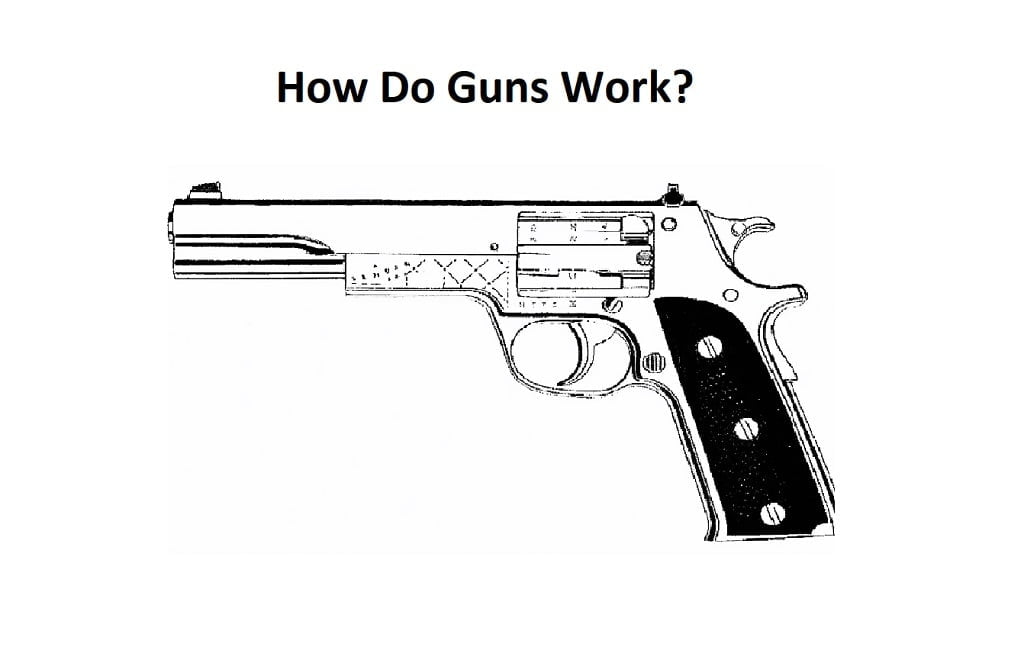
Guns work by using controlled energy to send a projectile through a barrel, but safe handling matters more than the mechanical details. At a high level, a firearm holds ammunition, supports the cartridge in the chamber, releases energy when fired, directs the bullet through the barrel, and then must be made safe again according to its design.
This article is a beginner-friendly overview for safety education and general understanding. It is not a repair manual, build guide, modification guide, or substitute for manufacturer instructions and qualified training.
Table of Contents
Quick Answer
A firearm works by chambering the correct cartridge, locking or supporting it in the firearm’s action, firing it when the trigger system releases the firing mechanism, sending the bullet through the barrel, and then extracting or preparing for the next safe handling step depending on the firearm type. The exact process varies by design.
Safety Before Mechanics
Understanding parts is useful, but it does not make someone safe by itself. The NSSF firearm safety rules are the starting point: keep the muzzle in a safe direction, keep your finger off the trigger until ready to fire, know your target and what is beyond it, use the correct ammunition, and wear proper protection.
- Treat every firearm with serious attention, even when you believe it is unloaded.
- Read the owner’s manual for the exact firearm model.
- Use only the cartridge approved by the manufacturer.
- Do not disassemble, modify, or repair a firearm without qualified guidance.
- Store firearms securely when they are not in use.
Project ChildSafe provides firearm safety and secure-storage education for households. Mechanical knowledge should always be paired with secure storage and controlled access.
Basic Firearm Parts
Barrel
The barrel is the tube the bullet travels through after firing. Many firearm barrels have rifling, which means internal grooves that help stabilize the bullet in flight. Shotguns may use a different bore design depending on the model and purpose.
Chamber
The chamber is the part of the barrel or cylinder area that supports the cartridge before firing. The cartridge must match the firearm’s chamber marking and manual.
Action
The action is the operating system of the firearm. It handles loading, firing, extracting, and preparing for the next safe step. Different firearms use different actions, so one manual cannot explain every design.
Stock, Grip, or Frame
The stock, grip, or frame helps the shooter hold and control the firearm. Fit affects comfort, safety, and consistency, but safe muzzle direction and trigger discipline still come first.
Sights or Optic
Sights or optics help the shooter aim at an approved target. They do not make a shot safe by themselves. The shooter must still identify the target, background, and range rules before firing.
Cartridge Basics
A modern cartridge usually includes a case, primer, propellant, and projectile. The firearm and cartridge are designed to work together within specific standards. Similar-looking ammunition can be unsafe if it is not the exact cartridge approved for that firearm.
The Sporting Arms and Ammunition Manufacturers’ Institute publishes technical standards for firearms and ammunition. For everyday readers, the practical takeaway is simple: exact cartridge names and manufacturer instructions matter.
Common Action Types
Bolt Action
A bolt-action firearm uses a manually operated bolt. The shooter cycles the bolt according to the firearm’s design to load, extract, and prepare the next round.
Lever Action
A lever-action firearm uses a lever to cycle the action. The loading and unloading process depends on the exact model, so the manual is important.
Pump Action
A pump-action firearm uses a sliding fore-end to operate the action. Pump-action shotguns and rifles may handle differently, so follow the model-specific instructions.
Revolver
A revolver uses a rotating cylinder with multiple chambers. Cylinder checks, loading, unloading, and safe handling depend on the revolver’s design.
Semi-Automatic
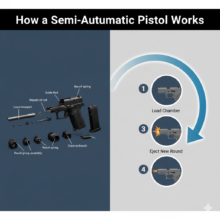
A semi-automatic firearm uses energy from firing to cycle the action and prepare for another shot when operated correctly. The shooter still controls each shot with the trigger, and safe handling rules still apply at all times.
Why Manuals and Training Matter
Two firearms can look similar but operate differently. Controls, safeties, loading procedures, takedown steps, ammunition restrictions, and maintenance schedules can vary by model. That is why the owner’s manual and qualified instruction are more reliable than guessing from appearance.
For new shooters, a certified class or supervised range session is the better first step. Learn safe handling, range commands, storage, and basic operation before trying to understand every internal part.
FAQ
How does a gun fire a bullet?
At a high level, the firearm supports the correct cartridge, the firing mechanism starts the cartridge’s ignition process, expanding gas pushes the bullet through the barrel, and the action then handles extraction or the next safe operating step depending on the design.
Are all guns operated the same way?
No. Bolt actions, lever actions, pump actions, revolvers, and semi-automatic firearms work differently. Always read the manual for the exact model.
What is the most important firearm part to understand?
For safety, the muzzle, trigger, chamber, and ammunition marking are the first things to understand. They connect directly to safe direction, trigger discipline, loaded status, and correct cartridge use.
Can I learn firearm mechanics without handling a gun?
You can learn basic terms from diagrams and classes, but safe handling should be learned with qualified supervision. Do not handle an unfamiliar firearm without instruction.
Should I take apart a firearm to learn how it works?
No, not without the manual and qualified guidance. Some firearms require specific steps for safe disassembly and reassembly. If anything is unclear, ask a qualified gunsmith or instructor.
Final Takeaway
Firearms use mechanical systems to chamber, fire, and cycle cartridges, but the most important lesson is safety. Learn the rules, read the manual, use the correct ammunition, store firearms securely, and get qualified instruction before handling unfamiliar equipment.