Duck Hunting Gear Checklist: Must-Have Items for Every Season
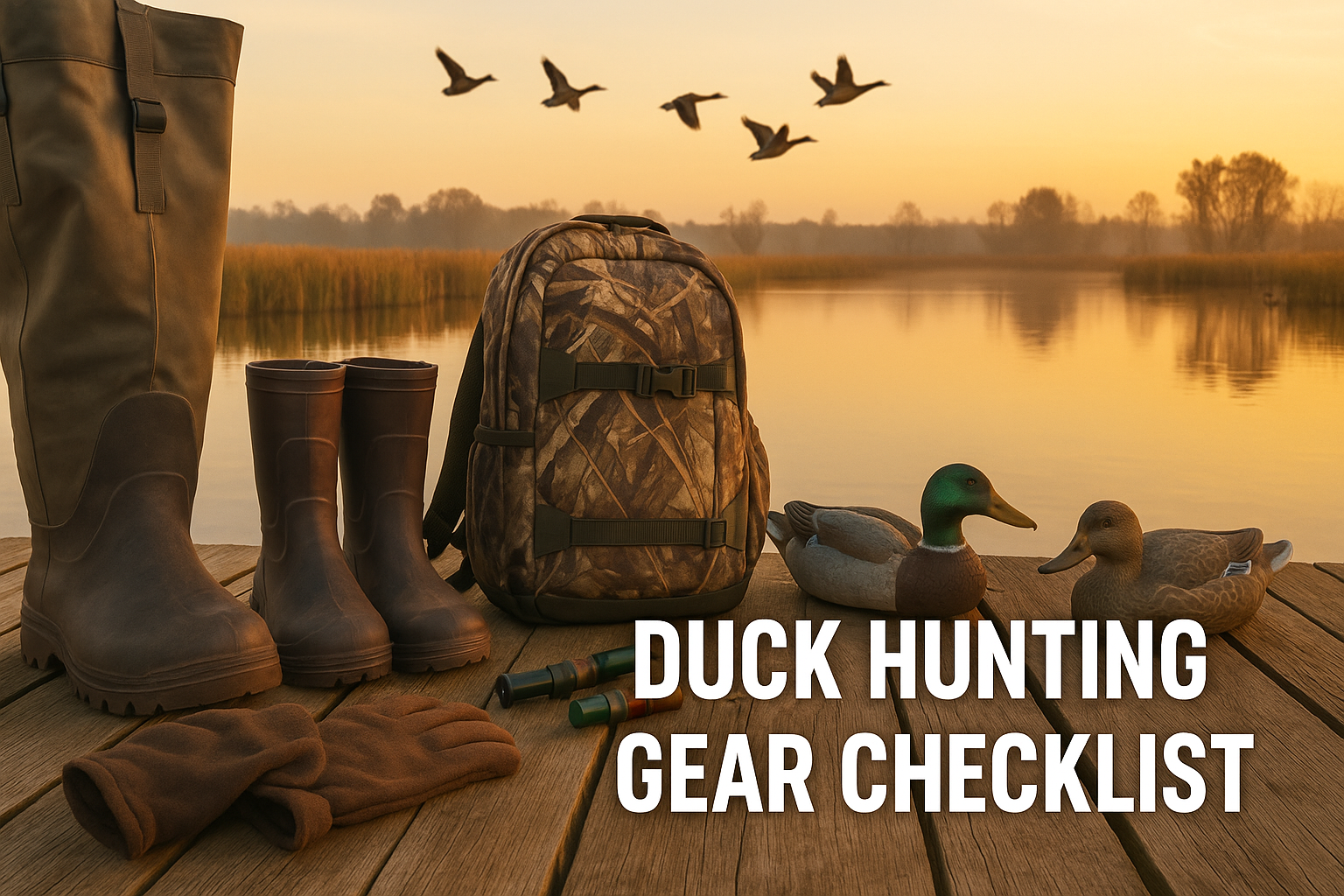
A complete duck hunting gear checklist starts with safety and legal compliance, then covers waders and layered clothing for cold and wet conditions, the right shotgun loaded with non-toxic shot, decoys and calls, a blind or concealment, and the small items that make a long sit bearable. The single most important rule is that waterfowl hunting requires federally approved non-toxic shot and a current federal duck stamp, so confirm both before you load a shell. Use the list below to pack by category, then adjust for the season and the water you hunt.
Table of contents
Safety and legal essentials first
Before any gear talk, settle the safety and legal items, because waterfowl hunting is regulated at both the federal and state level and takes place in cold, wet, often dark conditions. Get these right and the rest of the list is just comfort and efficiency.
- Valid state hunting license and any required state waterfowl or migratory bird permit.
- A current federal duck stamp, required for hunters 16 and older, available through the U.S. Fish and Wildlife Service migratory bird program.
- Harvest Information Program (HIP) registration where your state requires it.
- Eye and ear protection appropriate for shooting.
- A U.S. Coast Guard approved personal flotation device for every person when hunting from or near a boat.
- A charged phone in a waterproof case, plus a whistle and a small first aid kit.
- A plan left with someone on shore: where you are hunting and when you expect to return.
Bag limits, legal shooting hours, season dates, and species restrictions change every year and vary by flyway and state. Confirm the current federal framework and your state regulations before each season, and treat this article as general guidance, not legal advice. The four standard rules of firearm safety from the National Shooting Sports Foundation apply fully in a blind, where crowded seating and excitement can lead to unsafe muzzle direction.
Shotgun and non-toxic shot
Waterfowl hunting requires federally approved non-toxic shot, so lead shot is not legal for ducks and geese anywhere in the United States. Match your shotgun, choke, and load to the birds and the range you expect.
The shotgun and choke
Most duck hunters use a 12 gauge for its load options, though 20 gauge works well for close decoy work. A pump or semi-automatic action handles the dirt, mud, and water of a marsh better than many other designs. Carry a couple of choke tubes so you can open up for close decoying birds or tighten for pass shooting. Keep the action clean and lightly lubricated, and protect it from grit between hunts.
Choosing non-toxic shot
Steel is the most common and affordable non-toxic option, and other approved materials such as bismuth and tungsten alloys are also legal. Because steel is lighter than lead, many hunters step up one or two shot sizes compared with old lead recommendations. Confirm the current list of approved non-toxic shot types and any local restrictions with the U.S. Fish and Wildlife Service and your state agency, since the approved list and field rules are set by regulation.
Clothing and cold-water safety
Dress in layers for cold, wet conditions and treat cold water as a genuine hazard, not a discomfort. Hypothermia and cold-water immersion are the real dangers of late-season waterfowling.
- Insulated, properly fitted chest waders with a belt cinched at the waist to limit water entry if you fall.
- A moisture-wicking base layer, an insulating mid layer, and a waterproof, windproof outer layer in a marsh or camo pattern.
- Warm, waterproof gloves plus a spare dry pair, and a warm hat.
- Hand and toe warmers for late-season sits.
- A change of dry clothes left in the vehicle.
A safety note on waders: if you go into deep water, waders can fill and make swimming difficult, which is one reason a wading belt and a flotation device matter so much. Know the depth and bottom of the water you wade, move slowly, and use a wading staff in unfamiliar marsh or current.
Boat and blind safety
If you hunt from a boat, treat boating safety as seriously as firearm safety, because cold-water boating accidents are a leading cause of waterfowl hunting fatalities. Most incidents involve overloading, standing to shoot, or not wearing a flotation device.
- Wear a Coast Guard approved life jacket while underway, and ideally while hunting in deep or cold water.
- Do not overload the boat with hunters, dogs, decoys, and gear; respect the rated capacity.
- Keep weight low and distributed, and never stand to shoot from a small boat.
- Unload and case firearms while running the boat, and load only after you are set in position.
- Carry a bailing device, a paddle, navigation lights for low-light runs, and a means to signal for help.
For a fixed or layout blind, make sure everyone knows their assigned shooting zone before birds arrive. Clear, pre-agreed zones keep muzzles pointed safely and prevent the swing-through-the-line problem that causes blind accidents.
Decoys, calls, and concealment
Decoys, calls, and good concealment are what bring birds into range, and they scale with the water and the hunt. Start simple and add as you learn the spot.
Decoys
A workable spread can be a dozen mallard decoys for small water, scaling up for big open water or late-season pressured birds. Carry extra decoy line and weights, a decoy bag, and consider a jerk cord or motion decoy where legal in your state. Match species and confidence decoys to the birds you expect.
Calls and concealment
A basic mallard call and, where appropriate, a whistle for teal or pintail will cover most situations; learn a few clean sounds rather than many sloppy ones. For concealment, carry blind material, natural vegetation that matches the area, a face mask or paint, and gloves so bare skin does not flare birds. A layout blind or a brushed-in boat blind extends where you can hunt.
Dog and retrieve basics
If you hunt with a retrieving dog, pack for the dog’s safety and recovery just as you do for yourself, and have a backup plan for retrieving birds without a dog. A good dog recovers downed birds, including cripples that would otherwise be lost.
- A neoprene vest for the dog in cold water, which adds warmth and buoyancy.
- Fresh water and a bowl for the dog, plus high-energy food for long days.
- A dog stand or platform to keep the dog out of cold water between retrieves.
- A basic canine first aid kit and knowledge of the nearest vet.
- A way to recover birds without a dog: a long-handled net, a retrieving dummy on a line, or wadeable access, so cripples are not lost.
Recovering every downed bird is part of ethical hunting. Mark falls carefully, follow up on cripples promptly, and do not take low-percentage shots that lead to lost birds.
Seasonal adjustments
The core checklist stays the same all season, but early-season and late-season hunts call for different emphasis. Adjust clothing, decoy strategy, and water access to the conditions.
Early season
Early-season hunts can be warm and buggy. Favor lighter, breathable layers and uninsulated or lightweight waders, add insect protection, and plan for shade and hydration. Birds are often less pressured, so smaller spreads and simpler calling can work.
Late season
Late-season hunts bring cold, ice, and higher cold-water risk. Switch to insulated waders and heavier layers, carry hand and toe warmers, and add ice-fishing-style tools to open or maintain holes where legal. Pressured birds may demand larger or more realistic spreads and lighter calling. Cold-water safety becomes the top priority.
Frequently asked questions
What do I legally need to hunt ducks?
You generally need a state hunting license, a current federal duck stamp if you are 16 or older, HIP registration where required, and you must use approved non-toxic shot. Confirm the exact requirements and season dates with the U.S. Fish and Wildlife Service and your state wildlife agency each year.
Why can’t I use lead shot for ducks?
Federal regulations require non-toxic shot for waterfowl because spent lead pellets can poison birds and wildlife. Steel, bismuth, and approved tungsten alloys are legal alternatives. Check the current approved list with the U.S. Fish and Wildlife Service.
What is the most important safety item for duck hunting?
For boat and deep-water hunts, a Coast Guard approved life jacket is the most important item, because cold-water immersion is a leading cause of waterfowl hunting deaths. A wading belt on your waders is a close second.
How many duck decoys do I need?
It depends on the water. A dozen can be plenty on small ponds or timber, while big open water or pressured late-season birds may call for larger spreads. Start small, watch how birds respond, and adjust.
Final takeaway
Pack the legal and safety items first: license, duck stamp, non-toxic shot, eye and ear protection, and a life jacket for any boat hunt. Build out from there with waders and layers, a reliable shotgun and chokes, a sensible decoy spread, concealment, and dog or retrieve gear, then fine-tune by season. Confirm current season dates, bag limits, and shot rules with the U.S. Fish and Wildlife Service and your state agency before each hunt, and let safety, legal compliance, and clean recovery guide every trip.
Related reading: best hunting gloves.
Related reading: best hunting blinds.
Related reading: shotgun chokes for goose and duck hunting.
Related Waterfowl Guides
- California duck season checklist
- how to attract ducks to your pond
- how to hunt duck safely
- duck hunting dogs
- late-season duck calling
- duck decoy spread setup