Benefits of Hunting: Conservation, Food, Skills, and Ethical Limits
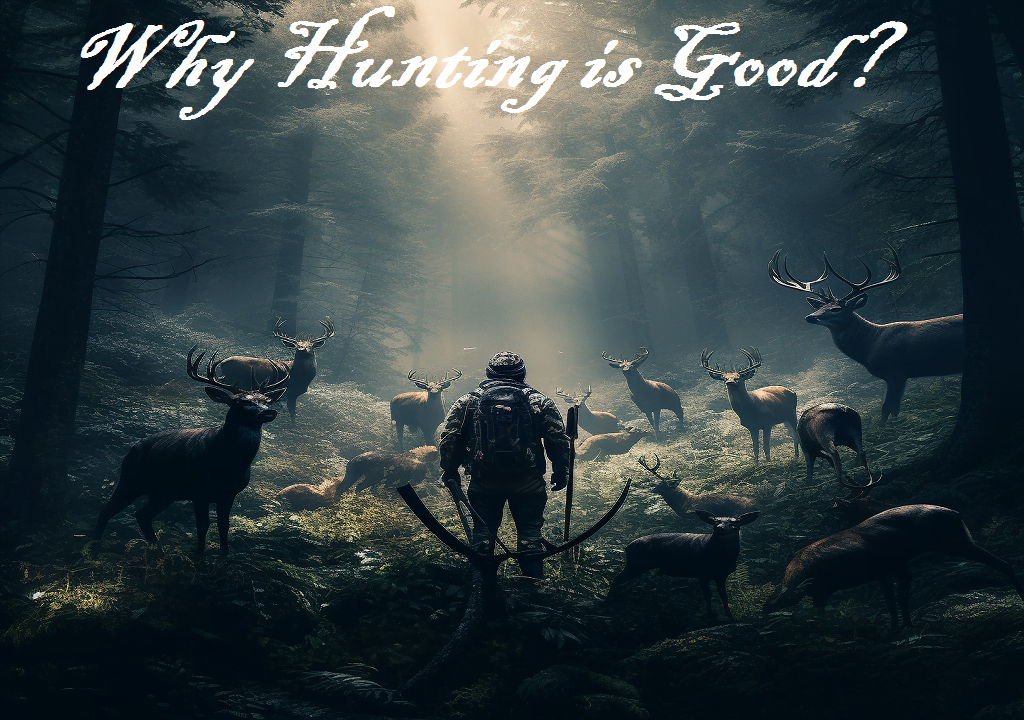
Hunting can have benefits when it is legal, science-informed, and practiced responsibly. Those benefits may include wildlife-management funding, population control in some areas, local food, outdoor skills, and stronger connections to land and habitat.
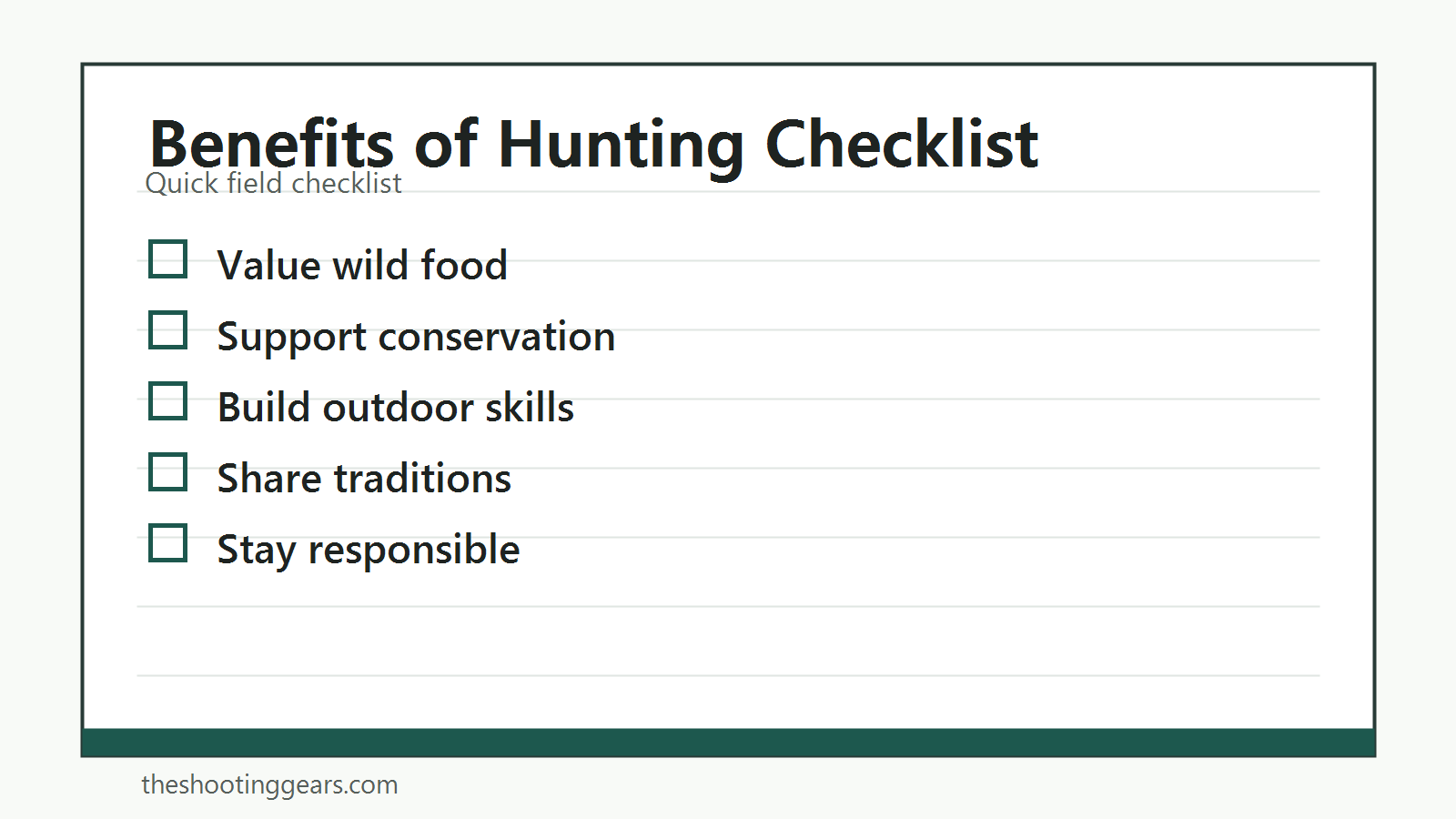
That does not mean every hunt, method, or policy is automatically good. Hunting should be judged by current law, wildlife data, fair-chase ethics, safety, land access, species status, and how the meat or animal is used.
Table of Contents
Short Answer
Hunting can be good when it follows legal seasons, supports conservation, uses animals responsibly, and puts safety and ethics first. It is not good when it ignores regulations, wastes animals, damages trust with landowners, targets vulnerable species unlawfully, or puts people at risk.
The U.S. Fish and Wildlife Service explains hunting as part of wildlife conservation and public-land recreation on its hunting initiative page. The key is regulated hunting, not careless or illegal taking.
Conservation Funding
One of hunting’s strongest public benefits is funding. License fees, permits, stamps, and excise taxes connected to firearms, ammunition, archery gear, and fishing equipment help support wildlife agencies, habitat work, public access, research, and hunter education.
The U.S. Fish and Wildlife Service’s Wildlife and Sport Fish Restoration Program explains how these funds are distributed to states for conservation and recreation projects. That does not make every hunting decision perfect, but it is a real part of the conservation model in the United States.
Population Management
In some places, regulated hunting helps wildlife managers control population levels, reduce crop damage, limit habitat pressure, and manage conflicts between wildlife and people. Deer are a common example, but the details depend on local biology, habitat, predators, disease, weather, and land use.
Population management should be based on current data and agency rules, not guesses. Bag limits, season dates, antler restrictions, tags, and reporting requirements are management tools. Hunters help most when they follow those rules and submit harvest reports where required.
Food and Field-to-Table Value
Many hunters value wild game as food. Venison, turkey, waterfowl, small game, and other legal harvests can provide lean meat and encourage people to understand where food comes from. That value depends on clean field care, legal harvest, safe meat handling, and avoiding waste.
- Plan how the meat will be cooled, processed, and stored before the hunt.
- Learn field dressing and food-safety basics from qualified sources.
- Follow rules for tagging, transport, reporting, and chronic wasting disease testing where applicable.
- Use as much of the animal as practical and legal.
Outdoor Skills and Safety
Responsible hunting builds outdoor skills: navigation, weather planning, tracking, patience, observation, first aid planning, safe firearm or bow handling, and respect for private and public land. Those skills are valuable only when paired with safety and restraint.
Hunter education teaches those foundations. Hunter Ed’s overview of why hunting laws and regulations matter is a helpful reminder that ethics, safety, and conservation are tied together. If firearms are involved, keep the NSSF firearm safety rules in place.
Local Economic Impact
Hunting can support local businesses such as gas stations, diners, processors, guides, lodging, sporting-goods shops, and rural services. This impact varies by region and season, but it can matter in communities near public land, wildlife areas, and hunting leases.
Economic value should not be the only argument for hunting. A hunt still needs to be legal, safe, ethical, and biologically sound.
Limits and Ethical Responsibilities
Responsible hunters should be honest about limits. Hunting can create problems when people ignore laws, crowd land, take unsafe shots, waste meat, trespass, harass wildlife, or treat animals carelessly. Poor behavior also damages public trust.
- Follow current state and local regulations.
- Know your target and what is beyond it.
- Get permission before entering private land.
- Use legal methods and respect season limits.
- Recover and use game responsibly.
- Teach new hunters safety and ethics before gear talk.
For new hunters, see our guide to deer hunting for beginners. It starts with hunter education, regulations, and safe decision-making.
FAQ
Is hunting good for conservation?
Regulated hunting can support conservation through license revenue, excise taxes, habitat work, and wildlife agency funding. The benefit depends on legal, science-informed management.
Does hunting help control deer populations?
In many areas, regulated deer hunting is one tool used by wildlife managers. The details depend on local population data, habitat, disease concerns, and agency rules.
Is wild game meat a benefit of hunting?
Yes, for many hunters. Wild game can provide food when harvested legally, handled safely, and used responsibly.
Can hunting be harmful?
Yes. Illegal, unsafe, wasteful, or poorly managed hunting can harm wildlife, people, landowner relationships, and public trust.
What makes hunting ethical?
Ethical hunting follows the law, respects wildlife and landowners, takes safe shots, makes a real recovery effort, uses the animal responsibly, and puts safety first.
Related reading: hunting license requirements and hunting safety tips.