How to Sharpen an Axe Safely: File, Stone, Bevel, and Edge Care
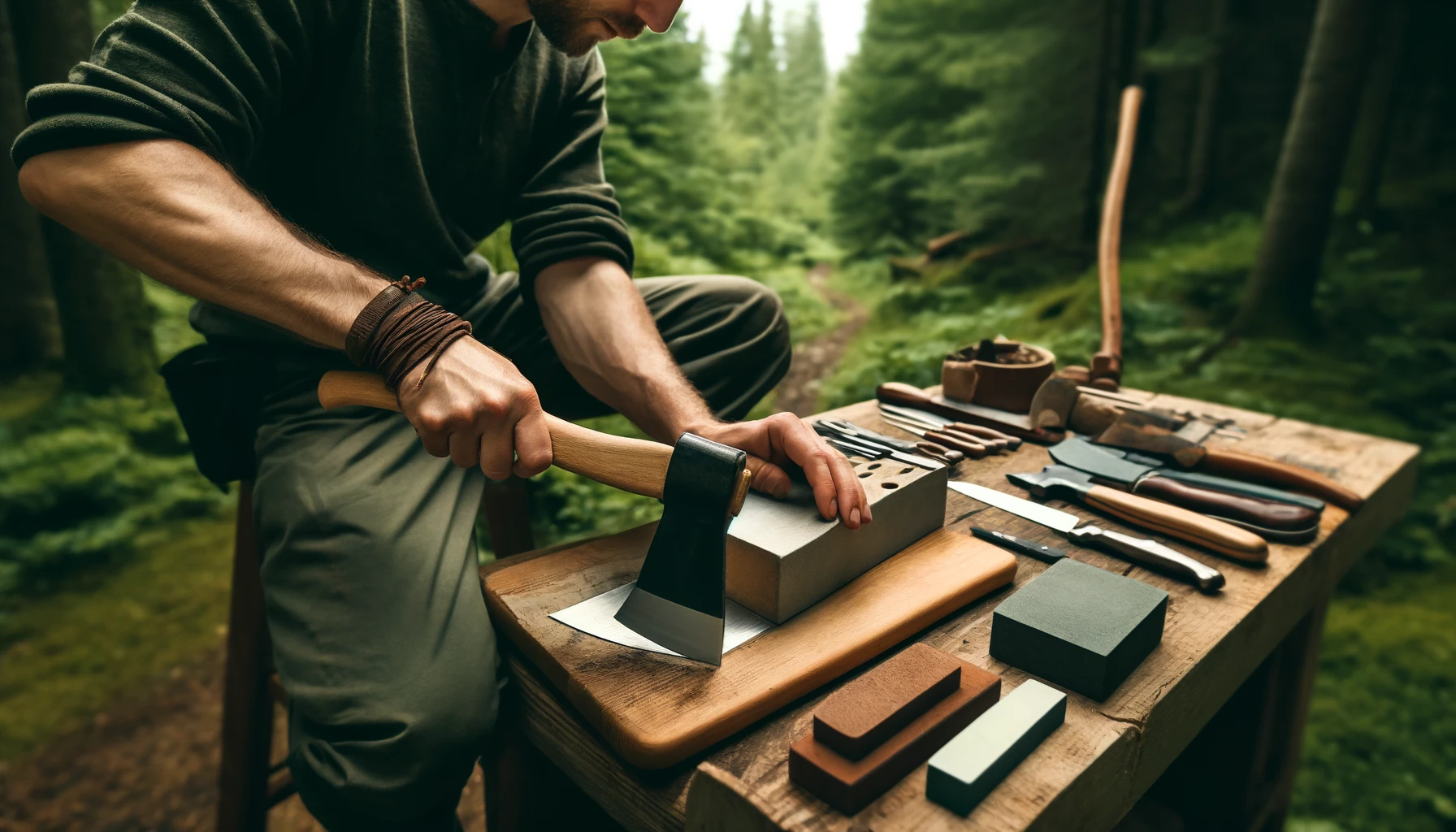
Sharpening an axe is less about making the edge look shiny and more about making it safe, predictable, and suited to the work. A dull axe can bounce, glance, or force you to swing harder than you should. An edge that is too thin can chip or roll. The useful middle ground is a clean bevel that bites wood without becoming fragile.
This guide keeps the process simple: secure the axe, inspect the edge, use a file or stone at a steady angle, remove burrs, test carefully, and protect the tool afterward. If the axe head is cracked, loose, badly chipped, or damaged near the eye, fix that problem before sharpening. A sharp unsafe axe is still unsafe.
Table of Contents
Safety Before Sharpening
Secure the axe before touching the edge
Do not sharpen an axe while it wobbles in your lap or slides on a bench. Clamp the head, brace the handle, or use another stable setup that keeps the cutting edge from moving unexpectedly. The edge should face away from your body whenever possible. Good sharpening starts with control, not speed.
Protect your hands and eyes
Wear eye protection when filing because small metal filings can lift off the edge. Gloves can help, but they should not make your grip clumsy. Keep fingers away from the path of the file or stone. Work slowly enough that a slip does not become a deep cut.
Keep children, pets, and loose gear away from the work area. An axe on a bench is easy to bump, and a freshly sharpened edge can cut before you realize how sharp it has become.
Inspect the Axe First
Check the head and handle
Before sharpening, inspect the axe head, handle, wedge, and eye. Look for cracks, looseness, mushroomed metal, deep chips, bent cheeks, or a handle that has split near the head. A loose head needs repair before the edge matters. A cracked handle can fail during use. Do not let a fresh edge distract you from a structural problem.
Decide whether the edge needs repair or touch-up
A lightly dull axe may only need a stone. A nicked or rolled edge may need a file first. A deeply damaged edge may need careful reshaping over more than one session. Removing too much steel at once can change the tool and make the edge harder to maintain later.
Tools You Can Use
File for shaping
A mill file or axe file is useful when the edge has small chips, flat spots, or heavy dullness. Use a file with a handle so the tang cannot dig into your palm. A file removes metal quickly, so it is best for shaping the bevel before finer work.
Stone or puck for finishing
A sharpening stone or round axe puck is better for refining the edge. Many axe pucks have a coarse side and a fine side. The coarse side cleans up file marks or light dullness, and the fine side smooths the edge. Some stones are used dry, some with water, and some with oil. Follow the tool maker’s instructions.
Marker and rag for cleaner work
A marker can help you see where the file or stone is touching the bevel. A rag helps clean filings and dust from the head. A little light oil after sharpening can reduce rust, especially if the axe will be stored in a damp shed, truck box, or camp survival kit.
Find the Existing Bevel Angle
Follow the bevel that is already there
Most axes already have a bevel shape that fits their purpose. A splitting axe usually has a thicker wedge-like edge than a carving axe. A general camp axe should not be filed into a razor-thin knife edge. Start by matching the existing bevel instead of inventing a new one.
Use the marker trick
Color the bevel with a marker. Make a few light passes with the file or stone. If the marker disappears evenly across the bevel, your angle is close. If only the shoulder or only the very edge is touched, adjust before removing more steel. This small check prevents uneven bevels.
How to Sharpen With a File
Push the file away from the edge
Place the file on the bevel and push it across the metal with steady pressure. Files cut on the push stroke. Lift or lighten pressure on the return stroke so you do not dull the file or drag filings back across the edge. Work from one end of the bit to the other, keeping the angle steady.
Use even passes on both sides
Count passes or check the bevel often so one side does not become steeper than the other. Your goal is an even edge centered on the axe head. If one side has more damage, it may need more work, but do not grind away the good side just to make both sides look identical in one session.
Stop when the damage is gone
Filing should remove nicks, flat spots, and heavy dullness. Once the edge shape is restored, stop filing and move to a stone. More filing is not automatically better. It just removes more steel.
How to Finish With a Stone
Use small circular or sweeping strokes
With the axe secure, place the coarse side of the stone on the bevel and work in small circles or controlled sweeping strokes. Keep the same angle you used with the file. Cover the full length of the bit. Then repeat on the other side. The goal is to smooth file marks and refine the edge.
Remove the burr
As you sharpen, a thin burr may form on the opposite side of the edge. Alternate sides with lighter strokes until the burr disappears. Finish with the fine side of the stone if you have one. A clean axe edge should feel crisp, not ragged.
How to Test the Edge Safely
Do not test with your thumb along the edge
Never slide a finger along the cutting edge. If you check by touch, move carefully across the edge, not along it, and use very light pressure. A safer test is to look at the edge under light. A dull flat spot reflects light. A clean edge usually does not show shiny flat sections.
Use wood, not skin
Try controlled cuts on a small piece of wood. The axe should bite without bouncing or requiring wild force. If it skids, the edge may still be dull or the bevel may be too rounded. If it chips quickly, the edge may be too thin for the job or the steel may have damage.
Common Sharpening Mistakes
Making the edge too thin
A knife-like edge may feel impressive, but many axes need a stronger bevel. A thin edge can roll or chip when chopping knots, dirty wood, frozen wood, or hard hardwood. Match the edge to the axe’s job.
Using power tools carelessly
Bench grinders and angle grinders can remove metal quickly and may overheat the edge if used carelessly. Heat can affect the temper of the steel. If you do not know how to control heat, pressure, and angle, use hand tools or get help from someone experienced.
Ignoring the handle
A sharp edge does not make up for a loose head, cracked handle, slippery grip, or damaged sheath. Inspect the whole tool before and after sharpening. The axe is only as safe as its weakest part.
After-Sharpening Care
Clean and oil the head
Wipe away filings and dust. Add a light coat of oil if rust is a concern. Do not put a wet axe straight into a sheath or toolbox. Moisture trapped against the head can rust the edge you just worked on.
Use a sheath
Cover the edge before storing or carrying the axe. A sheath protects the edge and protects you from the edge. Store the axe where it cannot fall, slide, or be grabbed accidentally by a child, and keep broader packing choices organized with a hunting gear checklist.