Types of Sporting Pistols: Revolver, Semi-Auto, and Air Pistol

Sporting pistols include revolvers, semi-automatic pistols, single-shot target pistols, and air pistols used in organized shooting sports. The right category depends on the discipline, rulebook, caliber or power source, safety requirements, and the shooter’s training level.
This guide explains the main types at a high level for readers comparing sporting pistol categories. It is not a buying guide, legal guide, or handling manual. Always follow local law, range rules, event rules, and qualified instruction.
Table of Contents
Quick Answer
The main sporting pistol types are revolvers, semi-automatic pistols, single-shot target pistols, and air pistols. Revolvers use a rotating cylinder, semi-automatic pistols feed from a magazine, single-shot target pistols load one round at a time, and air pistols use compressed air or gas instead of firearm cartridges. Each type fits different match rules and training goals.
Sporting Pistol Safety Comes First
Any pistol used for sport must be handled under strict safety rules. The NSSF firearm safety rules are a clear baseline: keep the muzzle in a safe direction, keep your finger off the trigger until ready, know the target and what is beyond it, use the correct ammunition, and wear eye and ear protection where required.
Competition and training ranges may add their own commands for loading, unloading, casing, benching, scoring, and cease-fire procedures. Those commands are part of the sport, not optional etiquette.
Storage is part of sporting use as well. Project ChildSafe provides firearm safety and secure-storage education that is useful for households where sporting pistols, air pistols, ammunition, or pellets are present.
Revolvers
A revolver holds cartridges in a rotating cylinder. When the action cycles, a chamber lines up with the barrel. Revolvers may be used in some target, practical, and recreational shooting formats depending on local range rules and match divisions.
Where Revolvers Fit
Revolvers appeal to some sport shooters because the operating system is visible and the grip angle can feel natural for slow-fire practice. They also require careful reloading habits and clear cylinder checks. In a match setting, the rulebook decides what calibers, sights, barrel lengths, and equipment are allowed.
Semi-Automatic Pistols
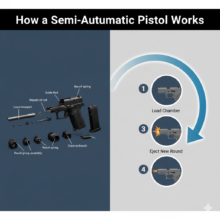
A semi-automatic pistol uses energy from firing to cycle the action and feed the next round from a magazine. Semi-automatic pistols are common in many modern shooting sports, but rules vary widely by discipline.
Where Semi-Auto Pistols Fit
Some sports emphasize slow, precise target fire. Others include timed stages, movement, reloads, or specific equipment divisions. Shooters should read the match rules before choosing a pistol because sights, trigger weight, magazine capacity, holsters, and modifications may be regulated.
Single-Shot Target Pistols
Single-shot target pistols are built for one deliberate shot at a time. They are common in certain bullseye-style disciplines and training environments where consistency, sight alignment, trigger control, and follow-through matter more than speed.
Because only one round is loaded at a time, the shooter must build a steady routine for loading, aiming, firing, clearing, and confirming safe condition. That slow process can be useful for learning disciplined range habits.
Air Pistols
Air pistols use compressed air or gas to launch pellets. They are widely used in formal target shooting and beginner training because they can support careful technique practice in controlled environments. The International Shooting Sport Federation is the governing body for Olympic shooting disciplines, including air pistol events.
Air pistols are not toys. They still require safe muzzle direction, eye protection where required, secure storage, and range discipline. Local laws can also treat air guns differently by location, age, power level, and use.
How to Compare Sporting Pistol Types
Do not compare sporting pistols only by appearance. Compare the discipline first. A pistol that fits one event may be wrong for another. USA Shooting is one example of a national organization connected to Olympic-style shooting pathways, while many local clubs run their own leagues and rule sets.
- Match rulebook and equipment division.
- Required caliber, pellet type, or power source.
- Allowed sights, grips, triggers, and accessories.
- Training cost and local range access.
- Safety instruction and supervision requirements.
- Storage and transport laws in your area.
A beginner should start by choosing the sport, class, and instructor before choosing a pistol. That order prevents wasted money and helps keep training safe from the start.
FAQ
What is a sporting pistol?
A sporting pistol is a handgun or air pistol used in organized or recreational target shooting. The exact equipment allowed depends on the discipline, range, and rulebook.
Are revolvers still used in shooting sports?
Yes. Revolvers still appear in some target, practical, and recreational formats. Their eligibility depends on the match division and local rules.
Is an air pistol safer than a firearm?
An air pistol may use a different power source, but it still requires safe handling, muzzle control, eye protection where required, and secure storage. It should never be treated as a toy.
Which pistol type is best for beginners?
The best starting point depends on the sport and instruction available near you. Many beginners do better by taking a class or joining a supervised club before buying equipment.
Do shooting sports have different pistol rules?
Yes. Each discipline can set rules for caliber, sights, grips, trigger weight, magazines, stance, timing, and allowed modifications. Always read the current rulebook before choosing equipment.
Final Takeaway
Sporting pistol categories are easier to understand when you start with the discipline. Learn the rules, get qualified instruction, follow range commands, and treat every pistol or air pistol with the same careful safety mindset.