Health Benefits of Archery: Fitness, Focus, and Safe Practice

Archery can support fitness, focus, coordination, posture awareness, confidence, and outdoor activity when it is practiced safely and consistently. It should not replace medical care, but it can be a useful low-impact sport for people who enjoy skill-based movement and measured practice.
If you have pain, heart concerns, balance issues, recent injury, or a medical condition, ask a qualified health professional before starting. New archers should also learn at a supervised range, follow range commands, and use equipment matched to their size and strength.
Table of Contents
Quick Answer: What Are the Health Benefits of Archery?
Archery may help people move more, build upper-body control, improve hand-eye coordination, practice focus, spend time outdoors, and enjoy a structured hobby. The benefits depend on safe instruction, suitable draw weight, regular practice, and realistic expectations. Archery should be adjusted for age, fitness, injury history, and comfort.
Best fit
Archery is a good fit for people who like patient skill-building more than fast exercise. It rewards repeatable form, careful breathing, and steady practice. It can also be adapted for many ages when equipment and coaching are appropriate.
Main caution
The main risk is treating archery as easy because the movement looks slow. Poor draw weight, weak form, unsupervised shooting, and ignoring shoulder or wrist pain can turn a good hobby into a problem.
Start Safely Before Chasing Benefits
The first health benefit is staying safe enough to keep practicing. Learn at a real range or club when possible, follow whistle or line commands, point arrows only in a safe direction, and never shoot where people, animals, roads, homes, or hard surfaces are behind the target. USA Archery’s archery safety guidance is a useful starting point for range and participation basics.
Use proper draw weight
A bow that is too heavy encourages poor form and overuse. Beginners should choose a draw weight they can control smoothly without leaning back, shaking, or forcing the shoulder.
A lighter bow is often the smarter starting point. Clean form with a manageable bow does more for long-term progress than struggling with heavy draw weight and building habits that are hard to correct.
Get basic instruction
Good instruction helps with stance, grip, anchor, release, and range safety. It also helps prevent bad habits that can cause discomfort later.
Respect local rules
Backyard shooting, public-park shooting, and broadhead use may be restricted by local law or property rules. Practice only where archery is allowed and safely supervised.
Archery Adds Low-Impact Movement
The MedlinePlus benefits of exercise page gives a cautious health overview, and the WHO physical activity fact sheet explains why regular movement matters. Archery can contribute to an active lifestyle, especially when paired with walking, range setup, retrieving arrows, and regular practice.
Gentle but not passive
Archery does not feel like running or heavy lifting, but it still asks the body to stand, balance, draw, hold, aim, release, and repeat. That steady movement can be useful for people who prefer skill practice over intense workouts.
Add walking when possible
Outdoor ranges and 3D courses may involve walking between targets. That can add light aerobic activity, but terrain, weather, and footing should be matched to the archer’s ability.
Do not overstate calories
Archery is not a shortcut for weight loss. Treat it as one enjoyable activity that can sit beside walking, strength work, mobility, and healthy eating patterns.
Archery Can Build Upper-Body Strength and Control
Drawing and holding a bow uses the back, shoulders, arms, grip, and core. Over time, properly scaled practice may help an archer build better control in those areas. The key is using enough resistance to practice well, not so much that form breaks down.
Back and shoulder engagement
Good archery form uses back tension and shoulder control rather than only arm strength. That is why coaching matters. Pulling with the wrong muscles can create fatigue and soreness quickly.
Grip control
Archery can teach a relaxed but consistent grip. Gripping too hard can twist the bow and strain the hand. Better control often comes from doing less, not squeezing harder.
Progress slowly
Increase draw weight only after form stays clean and pain-free. Young archers, older adults, and anyone returning from injury should be especially patient.
Archery Encourages Posture and Body Awareness
Archery makes posture visible. A small change in stance, head position, shoulder height, or bow arm can change the shot. That feedback can help archers notice their body position more clearly.
Stance awareness
A stable stance gives the shot a repeatable base. Archers learn to feel foot pressure, balance, and alignment instead of rushing into the draw.
Shoulder position
Raised, pinched, or collapsed shoulders can make shooting uncomfortable. Safe practice teaches archers to notice those signs early and reset before pain appears.
Breathing and rhythm
Many archers use calm breathing as part of their shot routine. That rhythm can make practice feel grounded, but it should not be presented as clinical care.
Archery Trains Coordination
Archery blends vision, balance, grip, anchor, aiming, release, and follow-through. That makes it a useful coordination sport because each shot gives clear feedback.
Hand-eye coordination
Archers learn how sight picture, body alignment, and release timing affect the arrow. Improvement usually comes from repeated clean shots, not from rushing more arrows downrange.
Fine motor control
Small movements matter. Finger pressure, release aid use, grip tension, and anchor consistency can all affect results. That makes archery a patient-control sport.
Feedback loop
The target gives immediate feedback, but the archer should avoid chasing every arrow. Good coaching helps separate form issues from wind, fatigue, distance, and equipment setup.
Archery Can Support Focus and Attention
Archery requires a short window of attention: stance, draw, anchor, aim, release, and follow-through. That routine can be useful for people who enjoy structured concentration.
One shot at a time
Each arrow gives a chance to reset. Instead of multitasking, the archer learns to focus on one repeatable process. This can feel satisfying, especially for beginners who like measurable progress.
Process over score
Score can motivate, but it can also create tension. A healthier approach is to track form, safety, comfort, and consistency before chasing smaller groups.
Safe attention
Focus should include range awareness. Do not become so locked on the target that you ignore commands, other archers, weather, or people near the range.
Archery May Support Stress and Mood Through Activity
General physical activity can support mood, sleep, and daily function for many people. Archery may contribute to those activity benefits for some people because it combines movement, routine, outdoor time, and skill progress. It should not be described as a treatment for anxiety, depression, trauma, or any health condition.
Calm routine
A simple practice routine can help archers slow down. Setting up, checking safety, shooting a small number of arrows, and reviewing form gives the session a clear structure.
Outdoor reset
Outdoor archery can add fresh air and quiet time. That benefit depends on the range, weather, safety, and the archer’s comfort level.
Know when to get help
If stress, anxiety, mood, pain, or sleep problems are affecting daily life, archery is not enough by itself. Talk with a qualified health professional.
Archery Builds Confidence Through Progress
Archery progress is visible. A beginner can learn safer range behavior, better stance, closer groups, cleaner release, and better equipment care over time. That steady improvement can build confidence without needing competition.
Measurable improvement
Targets show progress clearly. A new archer can track safe form, grouping, distance comfort, and consistency. Keep goals small so practice stays enjoyable.
Patience under pressure
Missing the center is part of learning. Archery teaches people to reset after a poor shot, check form, and try again without rushing.
Accessible competition
Some archers enjoy leagues, 3D shoots, or target events. Competition should be introduced only after safety, rules, and equipment fit are solid.
Archery Can Add Outdoor Time and Community
World Archery represents target archery worldwide, and USA Archery offers U.S. participation pathways. The sport is practiced in clubs, schools, ranges, and competitions. For many people, the community side is as valuable as the score.
Range community
A good range gives beginners structure, safety rules, equipment guidance, and people to learn from. That can make practice safer and more enjoyable than trying to learn alone.
Family activity
Archery can work for families when each person uses age-appropriate gear and follows range rules. Children need close supervision and instruction from adults who understand archery safety.
Outdoor variety
Target ranges, indoor lanes, outdoor courses, and club events can keep practice interesting. Choose settings that match skill, weather, and safety needs.
Know the Limits and Prevent Injury
Archery is generally controlled and low-impact, but shoulder, elbow, wrist, finger, back, and neck discomfort can happen. Pain is a signal to stop, lower draw weight, review form, or get professional guidance.
Warm up first
Start with light movement and a few easy shots. Cold muscles and rushed practice can make form worse.
Use protective gear
Arm guards, finger tabs, releases, chest guards, and proper arrows can prevent common problems. Equipment should match the bow and the archer.
Arrow length, spine, nocks, and points should also match the bow. Mismatched arrows can fly poorly or create safety problems, so beginners should have equipment checked by a coach, shop, or range staff.
Stop for pain
Do not push through sharp pain, numbness, tingling, or repeated joint pain. Rest, review setup, and ask a coach or clinician when needed.
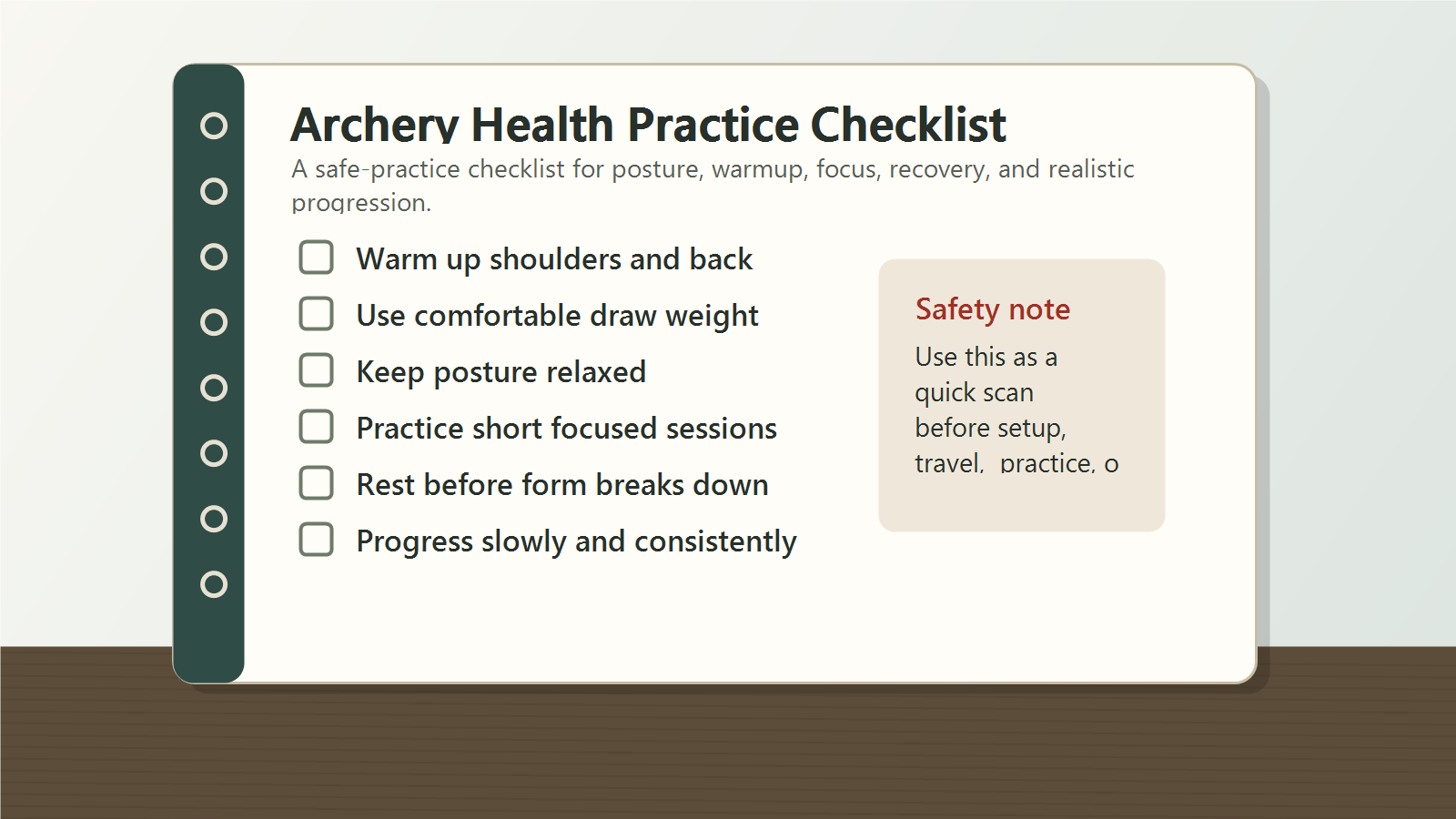
Beginner Archery Health and Safety Checklist
- Practice at a legal, supervised, safe range when possible
- Use a draw weight you can control without strain
- Get basic instruction before building habits
- Warm up and stop if pain appears
- Use properly matched arrows and protective gear
- Follow range commands and never shoot toward unsafe backgrounds
- Track progress through form, consistency, and comfort, not only score
- Pair archery with walking, strength, mobility, and healthy daily habits
- Ask a health professional if you have medical concerns
- Keep archery claims realistic: support, not treatment
FAQ
Is archery good exercise?
Archery can be part of an active lifestyle, especially when practice includes walking, setup, repeated drawing, and standing balance. It is usually not enough by itself for a complete fitness plan.
Can archery help with focus?
It can support focus for some people because each shot uses a repeatable routine. That does not mean archery treats attention problems or replaces professional care.
Is archery safe for beginners?
Archery can be safe for beginners when practiced at a legal range with supervision, suitable equipment, and clear range rules. Unsupervised backyard or public-space shooting can be dangerous and may be illegal.
Does archery build muscle?
It may help build control and endurance in the back, shoulders, arms, grip, and core when practiced with proper form. Increase draw weight slowly and avoid shooting through pain.
Can archery reduce stress?
Some people find archery calming because it combines movement, routine, breathing, and outdoor time. It should not be treated as a mental-health treatment. Get professional help for serious or ongoing symptoms.
Final Takeaway
Archery can be a healthy, skill-based activity when it is practiced safely. It may support movement, strength, coordination, focus, confidence, outdoor time, and community, but the best benefits come from proper instruction, suitable equipment, realistic health claims, and steady practice without pain.