Mountain Lion Encounter Safety: What to Do Before, During, and After
Contents
Table of Contents
What to know
Most encounters end without contact
Mountain lions, also called cougars or pumas, live in many parts of the western United States. They are built to avoid people. Most encounters end without drama because the animal notices a human, decides the situation is not worth the risk, and moves on. That is the most common outcome. The best response is calm, steady, and unhurried.
The response is simple on purpose
The goal is not to win a staring contest or act brave for its own sake. The goal is to make the animal understand that you are alert, upright, and hard to catch. A mountain lion is far less likely to commit to an encounter if you do not panic, do not sprint away, and do not give it a chance to read you as prey. That is why the same advice appears again and again in official guidance from the National Park Service and state wildlife agencies: stay calm, keep children close, face the animal, make yourself appear larger, back away slowly, and be ready to fight back only if the cat actually attacks.
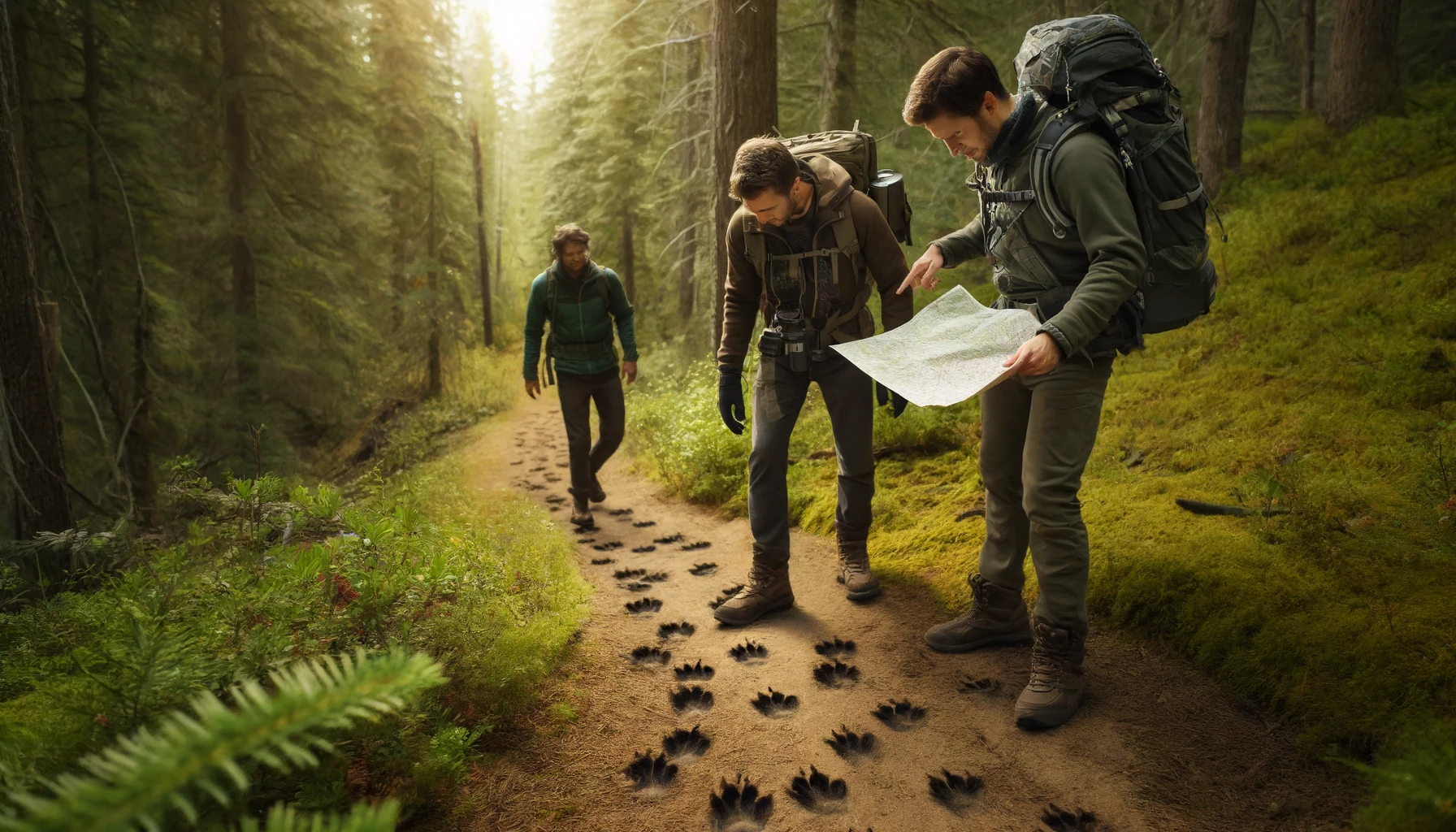
This is practical advice, not theater. In mountain lion country, the quiet habits matter most. Hike with awareness. Keep your head up on trails. Know where your children are. Pay attention at dawn, dusk, and in thick cover. If you see fresh tracks, a kill site, or a cat that seems too comfortable around people, do not drift closer out of curiosity. Give it room and move out of the area with the same calm you would want from someone else if roles were reversed.
Before you go
Keep the group together
Most prevention is ordinary. Travel with other people when you can. Make some noise on the trail so you do not surprise an animal resting in brush or moving through a ravine. Keep children within arm’s reach on narrow paths and in places where sight lines are poor. A child should not be out ahead, wandering around a bend, or lagging far behind where an adult cannot react fast enough.
Manage camp, pets, and visibility
If you are camping, keep food secured and scraps cleaned up, and keep defensive tools in context with our bear spray safety guide where local guidance recommends it. A tidy camp matters because it limits the small animals that draw larger predators. Do not leave pet food, trash, or animal feed out overnight. If you are in a neighborhood near open space, bring pets in after dark and keep livestock in secure enclosures. Lights around walkways help too, not because light scares every cougar away, but because good visibility helps people avoid surprise and respond early.
Children need special attention. They are smaller, they move faster, and their first instinct may be to run. That is exactly what you want to prevent. Tell children ahead of time what to do if they see a cougar: stop, come back to you, and stay beside an adult. On a hike, make this a habit rather than a lecture. The simple rule is easy to remember: keep kids close enough that you can touch them quickly if the situation changes.
Dogs deserve care as well. A loose dog can draw a cougar toward the people holding the leash. Keep dogs leashed and under control. If a dog starts acting oddly, barking hard at brush, or pulling toward a hidden spot, treat it as information. Slow down, look around, and decide whether to back out before you have a face-to-face problem.
If you spot a cougar
Stop and gather children first
The first task is to stop. Do not run. Do not turn and sprint down the trail, toward a car, or toward a tree. Rapid movement can trigger a chase response, and you do not want to test that reflex. Stop where you are and gather children immediately. If anyone is a few steps away, bring them in close before you do anything else.
Face the animal and back away
Then face the animal. Keep it in view. Speak firmly and steadily. The point is not to shout in a blind panic. A clear voice tells the cougar that you are aware of it and not easy to surprise. Back away slowly while still facing the animal. Move sideways if that helps you keep distance without stumbling. Leave the cat a route to leave. A cornered animal is a much worse problem than one that can slip off into cover.
Look larger without rushing
Try to look larger. Stand tall. Raise your arms. Open a jacket if you are wearing one. If you have a pack, hold it up. If you are on uneven ground, step onto a rock or stump if that gives you a little height without risking a fall. If you are with others, stand together shoulder to shoulder. This is not about bluffing. It is about sending a simple message: you are not a small, scattered target.
Do not crouch, do not bend over, and do not turn your back. Do not try to hide behind a tree or a boulder and hope the problem passes. Keep your attention on the animal until you are safely away. If the cougar begins to leave, do not follow it. Let the encounter end cleanly. If it pauses, keep backing away. The fewer sudden changes you make, the easier you are to read.
If you are near a kill site or a cat with kittens, use even more care. In those situations, the animal is more likely to defend space, and your best move is still distance. Do not linger to take video. Do not inch closer for a better look. Curiosity has no place here. Give the animal room, keep your group together, and move off.
If it comes closer
Be louder and more assertive
If the cougar does not leave, become more assertive without losing control. Make yourself bigger. Shout if needed. Wave your arms. Throw objects if you have them, such as a water bottle, hat, backpack, or trekking pole. The purpose is not to hurt the animal for sport. The purpose is to make the animal decide the risk is too high.
Keep children behind or beside you
Stay on your feet if you can. If you stumble, get up quickly. Keep children behind you or right beside you, not off to one side where you must split your attention. If there is a vehicle, building, or fenced area within a short, safe distance, move toward it while staying aware of the cougar; for broader emergency planning, review ways to signal for help in the wilderness. But do not break into a run. Back away with purpose.
It can help to rehearse the steps in your head before you hit the trail. Stop. Gather children. Face the cat. Look large. Back away slowly. Those five actions cover most ordinary encounters and keep your response from falling apart in the moment. People often remember the one dramatic line, such as “do not run,” but the fuller sequence matters more. Calm is the frame that holds the rest of the advice together.
Mountain lion encounters are rare, and attacks are rarer still. That does not mean the risk is imaginary. It means that sensible behavior works. Wildlife agencies do not give this advice to fill pamphlets. They give it because it helps people leave the area safely and gives the animal a clean escape. That is the outcome everyone wants.
If there is physical contact
Fight back and protect your head and neck
If a mountain lion makes physical contact, fight back. Do not play dead. Do not freeze and hope the situation passes. Use anything at hand. Rocks, sticks, a backpack, a jacket, trekking poles, your hands, and your feet can all matter in a close fight. Aim to protect your head and neck and to drive the animal off long enough to break contact and get to safety.
Get to help quickly
This advice can sound harsh because nobody likes imagining it, but it is better to know it before a bad moment. If physical contact is happening, your job is not to look impressive. Be as forceful as you can. Keep moving if you can move. If the animal releases and withdraws, get away immediately and get help. If you have a phone and can call emergency services, do that as soon as you are able.
Even after contact ends, do not assume the danger is over until you are in a secure place. Move to a vehicle, building, or other protected spot. Check children first. Then check yourself for injuries and bleeding. If anyone is hurt, seek medical help right away. A shallow scratch still deserves attention, and anything more serious needs prompt treatment.
After the encounter
Report the encounter
Report the sighting or encounter to the proper wildlife agency or park authority, and keep the rest of your trip kit practical with a day hunting pack checklist before heading back out. That matters even when nothing bad happened. Agencies use reports to track animal movement, warn other visitors, and decide whether extra staff or follow-up is needed. A calm report helps the next family, hiker, rancher, or ranger make better choices.
Review what made the encounter possible
When you report, give the location, time, direction of travel, what the animal was doing, whether children or pets were present, and whether there was any aggressive behavior. If you can remember the size, color, and any marks without staying in the area longer than necessary, share that too. Do not go back to the exact spot just to confirm what you saw. The report is enough.
It is also worth thinking about what made the encounter more likely. Were you walking into thick brush without making noise? Were the children spread out? Was a dog off leash? Were you near dawn or dusk? Was there food out near a campsite or porch? That kind of honest review turns a tense moment into a useful one. Prevention gets better when people learn from the field instead of pretending the field never mattered.
If you live, work, or recreate in mountain lion country, the long-term pattern is simple. Stay alert. Keep children close. Do not run. Make yourself look larger. Back away slowly. Fight back only if attacked. Report the encounter. That is the whole shape of it. The advice is plain because the situation itself is plain: a wild animal deserves space, and people deserve a clear way to respond without panic.
Sources
Official guidance and background used for this draft: