Alligator Safety: Prevention, Pets, Water Edges, and Emergency Response
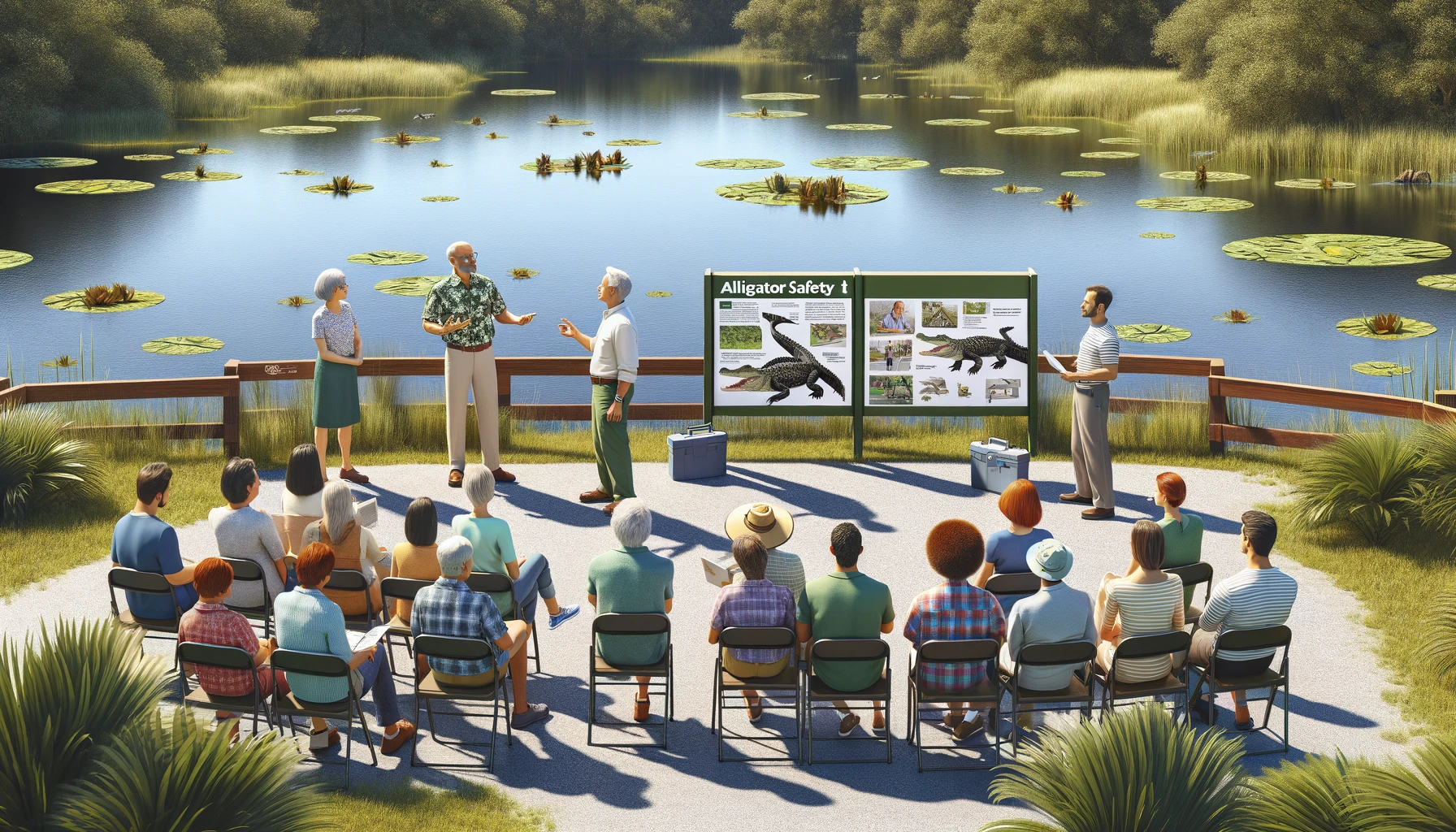
Alligator safety starts long before an emergency. The safest plan is to avoid close encounters near water, keep children and pets away from the shoreline, never feed alligators, and treat every pond, canal, marsh, or slow river in alligator country with respect. Most problems happen when people get too close, ignore signs, swim in the wrong place, feed wildlife, or let a pet wander near the edge.
This guide keeps the focus on prevention and calm response. It does not turn alligator country into a fear story. It explains where risk is higher, what to do near water, how to handle pets and children, what to do if an alligator is nearby, and when to call wildlife officials. If you are in a park, refuge, campground, or managed property, posted rules and local staff guidance always come first.
Table of Contents
Quick Answer
The safest response is distance
If you see an alligator, give it space and move away from the water edge. Do not feed it, touch it, tease it, throw objects at it, or try to take a close photo. Keep children close, leash pets, and leave the area calmly. If the animal is in a swimming area, campground, yard, road, or other place where it may threaten people, pets, or property, contact the local wildlife agency or park staff.
If contact happens, fight to get free
If an alligator makes physical contact, fight back and try to get away. Do not play dead. Protect your head and neck, use anything available, and seek emergency medical care after escape. Alligator bites can cause serious injuries and infection risk, so even wounds that look manageable should be treated quickly by medical professionals.
Where Alligator Risk Is Higher
Expect alligators near warm freshwater
American alligators live in many freshwater and brackish habitats across the southeastern United States. Ponds, lakes, marshes, canals, ditches, golf-course water hazards, retention ponds, slow rivers, and wetland edges can all hold alligators. Clear water is not a guarantee of safety, and muddy water is not the only risk. If the area is known alligator habitat, act as if an alligator could be nearby even when you do not see one.
Dawn, dusk, and warm weather need extra care
Alligator behavior changes with temperature, season, food availability, and breeding activity. People should be especially careful around water at dawn, dusk, and night, and during warm months when both people and reptiles are more active. Do not swim outside designated areas, and do not assume a quiet shoreline is empty.
Risk also increases when people clean fish near the water, leave food scraps out, let pets roam, or approach an alligator that has become used to people. The pattern is simple: the closer people bring food, pets, and careless behavior to the shoreline, the less margin they leave.
How to Behave Near the Water Edge
Stay back from the shoreline
Alligators are ambush predators. The water edge is where surprise matters most. Avoid standing, sitting, crouching, or fishing with your feet right at the edge in alligator country. Give yourself room to see, move, and gather children or pets if the situation changes. If a sign says no swimming, no feeding, or alligator area, treat it as a serious safety instruction.
Use designated swimming areas only
Swim only where swimming is clearly allowed and managed. Do not swim in canals, retention ponds, marshes, or unmarked water just because the surface looks calm. Avoid swimming at night or in low light. If local officials close an area or post an alligator warning, do not try to decide that your own judgment is better than the warning.
Handle fish scraps away from the water
Fishing can create extra risk if scraps, bait, or hooked fish attract alligators. Dispose of fish remains in approved containers, not in the water. Do not feed an alligator from a dock or boat. If an alligator approaches a fishing spot repeatedly, leave the area and report the behavior if needed.
Children, Pets, and Small Animals
Keep children within reach near water
Children should not play unsupervised at the edge of ponds, lakes, canals, or marshes in alligator country. Keep them close enough that you can pull them back quickly. Teach a simple rule: stay away from the water edge unless an adult says it is safe. Do not let children throw food, rocks, sticks, or toys toward an alligator.
Leash pets and keep them away from the edge
Pets are at special risk because they are small, low to the ground, and often move quickly near water. Keep dogs leashed and away from shorelines. Do not let a dog swim in alligator habitat, retrieve toys from the water, or bark at an alligator from close range. Small pets should not be left outside unattended near ponds or canals.
If a pet is taken or injured by an alligator, do not enter the water after it. Call emergency services or wildlife officials. Trying to rescue a pet from the water can put a person in the same danger zone.
Why Feeding Alligators Is Dangerous
Fed alligators lose their fear of people
Feeding alligators is dangerous because it teaches them to connect people with food. Once an alligator begins approaching people, docks, boats, or shorelines for food, the risk to everyone nearby rises. In many places, feeding alligators is illegal for exactly that reason. It can also lead to the animal being removed as a nuisance alligator.
Food behavior can start indirectly
People sometimes create the same problem without meaning to. Fish scraps, bait, pet food, trash, picnic leftovers, and handouts to other wildlife can all draw animals toward people. Keep campsites, docks, yards, and fishing spots clean. Do not toss food into water to see what comes up. Curiosity is not worth changing an animal’s behavior.
If You See an Alligator Nearby
Move away calmly
If an alligator is on land or close to a trail, give it a wide path and leave it alone. Do not crowd it for a photo. Do not stand between the animal and the water. Do not try to move it. Back away and choose a different route. If you are in a park, tell staff if the animal is close to a trail, campsite, parking area, or swimming area.
Do not handle small alligators
Small alligators may look less dangerous, but they can still bite, and adult alligators may be nearby. Never pick up, chase, or corner a young alligator. If one is in a place where it should not be, call the proper wildlife authority or property manager instead of handling it yourself.
Leave the area if behavior feels bold
An alligator that approaches people, boats, docks, pets, or fishing spots may have lost some fear of people. Leave the area and report it if the situation creates a public safety concern. Do not try to scare it off with close-range behavior, and do not throw food to move it away.
If There Is Physical Contact
Fight back and get away
If an alligator makes physical contact, fight back. Do not play dead. Use your hands, feet, elbows, a stick, paddle, pack, or anything else available to create a chance to get free. Protect your head and neck as much as possible. Once you are free, move away from the water and get to a secure place immediately.
Get medical care quickly
Call emergency services as soon as you can. Alligator bites can involve deep tissue damage, crushing injuries, bleeding, and infection risk. Even if the wound looks small, medical care matters. Report the incident to the local wildlife agency or park authority after immediate medical needs are handled.
When to Report an Alligator
Report public safety concerns
Report an alligator if it is approaching people, threatening pets, staying in a swimming area, blocking a public path, entering yards repeatedly, or showing behavior that suggests it has been fed. Use the local wildlife agency, park staff, county animal services, or the property manager depending on where you are.
Give useful details
When you report, give the location, time, approximate size, behavior, and whether people or pets were involved. Do not stay close just to collect better photos. A clear report from a safe distance is more useful than a risky video.
FAQ
Are alligators aggressive toward people?
Most alligators avoid people, but close contact near water, feeding, pets, small children, and low-light activity can raise risk. Treat every alligator as a wild animal that deserves distance.
Is it safe to swim where alligators live?
Use only designated swimming areas and follow posted rules. Avoid swimming at night, in unmarked water, near vegetation-heavy edges, or anywhere officials warn against swimming.
What should I do if an alligator is in my yard?
Keep people and pets away, do not feed or approach it, and contact the local wildlife agency or nuisance alligator program if it creates a safety concern.
Can I move a small alligator myself?
No. Do not handle any alligator. Small alligators can bite, and the situation may involve adult animals nearby. Call the proper authority if the animal needs to be moved.