How to Set Up Duck Decoys: Spread Patterns, Wind, and Landing Zones
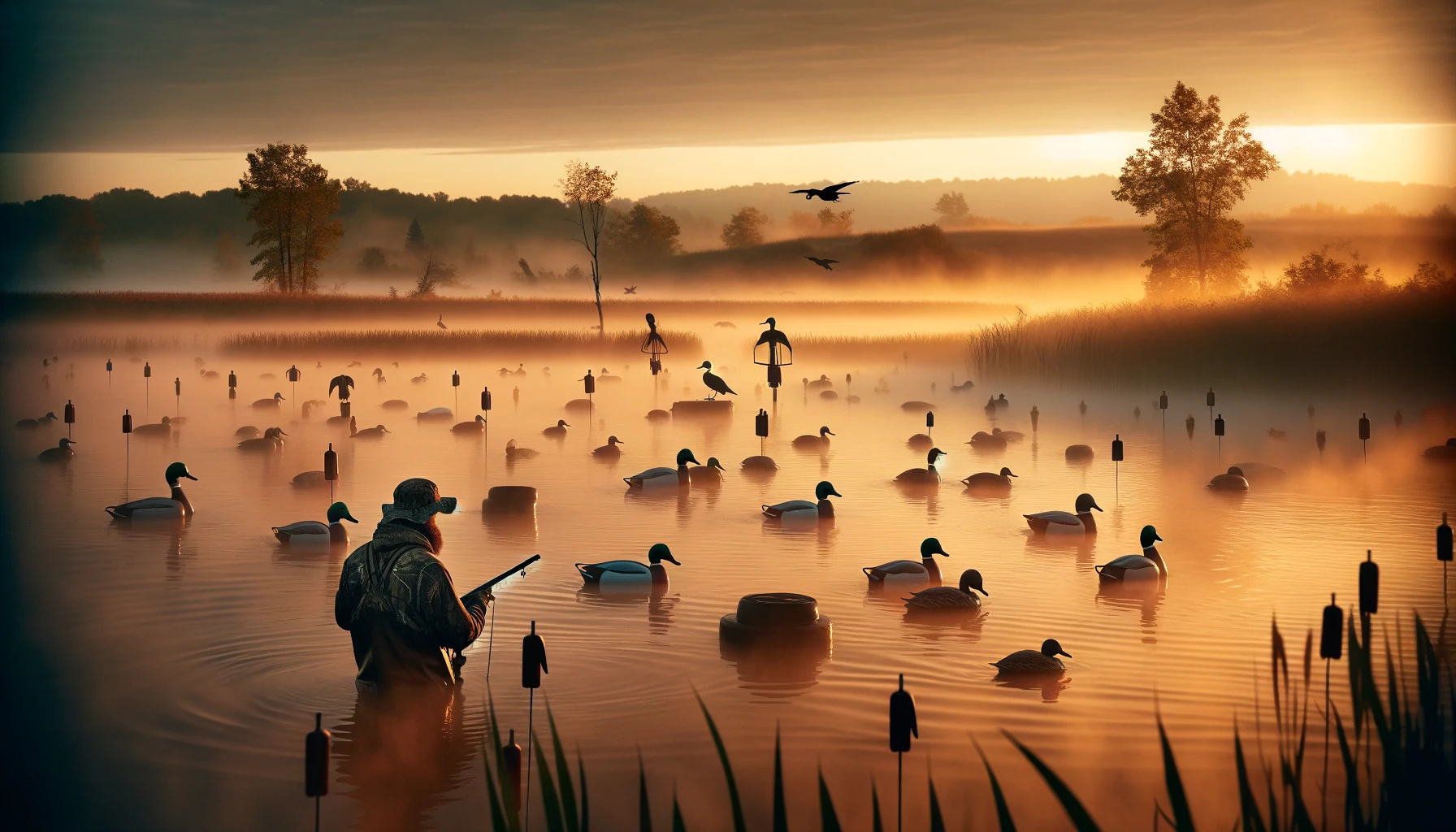
Duck decoys work best when they look like birds that belong in the exact water in front of them. The spread does not need to be fancy. It needs to fit the wind, the cover, the target species, the hunting pressure, and the place where birds want to land. If the setup feels like a natural resting or feeding pocket, ducks are far more likely to finish where you want them. If it feels crowded, exposed, or aimed at the wrong water, they often slide wide, hang up, or keep going.
This article is about the practical side of placement: how to build a spread that creates a landing zone, how to adjust for wind, and how to avoid the legal and ethical mistakes that can ruin a hunt. It is written for real-world use, not for showing off a pile of plastic. Before any hunt, check the current federal and state rules for seasons, shooting hours, bag limits, possession limits, license requirements, HIP registration, and any local access restrictions. Federal waterfowl rules sit in 50 CFR Part 20, and state rules can be tighter.
Contents
Start With the Water
Read the wind before you drop a decoy
Wind is the first field note that matters. Ducks usually want to land into the wind, so the open side of your spread should often face that direction. If the wind changes, the landing lane changes with it. A setup that works at first light can fall apart two hours later if the breeze swings around. Before you throw out the first block, stand still for a minute and feel the drift on your face, the movement of reeds, and the way the current is pulling in the water. That small pause saves a lot of guesswork.
Choose the landing zone before the spread
The landing zone is the open spot you are asking birds to use. It should be visible, wide enough for a safe shot, and placed where birds naturally want to settle. Think about depth changes, weed edges, shallow bars, points, and open lanes between cover. If birds can see the hole but cannot commit to it, the spread is probably too tight, too symmetrical, or pointed at the wrong place. Good decoy work is less about filling water and more about directing attention.
Watch how the place already functions
Some water is a feeding area, some is a loafing area, and some is just a travel corridor. A backwater with soft edges may suit mallards and mixed ducks. A deeper basin with open water may suit divers. If you can identify where birds naturally enter, rest, or work into the wind, you can place decoys to match that use instead of fighting it. Cornell Lab notes that Mallards use a wide range of wetlands, marshes, ponds, farms, and flooded fields, while Canvasbacks prefer deeper lakes, marshes, bays, ponds, and open water areas. Let that behavior shape the spread.
Build a Usable Spread
Use fewer decoys when the spot is small
Small pockets do not need a giant spread. In tight marshes, narrow creeks, or tiny holes in reeds, too many decoys can make the water look busy but not safe. A few well placed blocks often work better than a dense cluster. Leave enough room for birds to commit, and keep the shape clean. If the spread is too crowded, ducks may see movement but lose confidence in the place. The point is to create a believable patch of water, not to erase the water itself.
Use more spread when visibility is wide
On open lakes, big river bends, or broad marshes, a small cluster can disappear. In those places, scale matters. You may need a larger family group, a longer running line, or a wider J or U shape so birds can read the setup from a distance. Open water gives you more room, but it also demands cleaner lanes and better spacing. The spread should still leave one obvious place to land, not several confusing options.
Keep the center open and the edges believable
The center hole is where the hunt happens, so resist the urge to fill it. Ducks want to see some room between the nearest blocks and the place where they would land. If every corner is packed, the birds may circle and look for a cleaner option. The edge birds should look relaxed and naturally spaced, with a few closer groups and a few farther ones. That unevenness helps the setup feel like a flock that arrived on its own terms.
Match the number of decoys to the pressure
Heavy hunting pressure can make birds shy, but it can also make them careful. On pressured water, a smaller, cleaner spread may beat a noisy pile of plastic. On quiet water with lots of natural bird traffic, you may need a fuller look to get noticed. The answer is not always “more.” Sometimes the better move is a tighter footprint, better spacing, and a better landing hole. The birds should recognize the spot as safe before they decide to drop.
Pattern Choices That Work
Try a J shape when wind is steady
A J-shaped spread can guide birds around the curve and into the opening. The long leg of the J helps draw the eye, and the bend can create a natural approach line. This works best when the wind is steady enough that birds are likely to finish where the open end points. Keep the hook from getting too tight. The goal is a smooth turn, not a trapdoor. If the bend is too sharp, birds may hesitate rather than commit.
Use a U shape for a clear pocket
A U spread gives birds a simple visual cue: the open center is the place to land. It works especially well when there is enough room to define the edges without crowding the middle. Place the open end so birds can drift in from the windward side. The two arms should not be perfectly matched if the spot is irregular. Slight asymmetry looks more natural and often works better than a perfectly drawn shape.
Build a runway for diving ducks
Diving ducks often like open water and a direct approach line. Canvasbacks, for example, are built for deeper water and are strong, fast flyers that use large rafts and open wetland spaces. For those birds, a long runway or a wide open pocket can help. Give them a path to come in, check the spread, and settle. A cramped landlocked block of decoys may look wrong to a diver that wants room, depth, and an easy exit path.
Use loose clusters for dabbling ducks
Dabblers often work shallows, edges, and softer cover. Mallards are generalist foragers that dabble rather than dive, and they use marshes, ponds, fields, ditches, and flooded areas. That means a looser, more relaxed arrangement can fit their habits. A few small family groups placed along a feeding edge, with an open lane toward the wind, usually looks better than a rigid grid. Keep some birds turned different ways so the spread does not look staged.
Break symmetry on purpose
Wild ducks do not line up like a diagram. A little asymmetry gives the spread life. Offset a group, leave a gap, bend a line, or place one small cluster closer to cover. Those small choices keep the water from looking flat. Symmetry can work in certain clean settings, but it often looks artificial. The more natural the decoy field appears, the less the birds need to question it.
Wind and Weather Adjustments
Turn the landing hole into the wind
Most days, the easiest way to finish ducks is to make the open landing hole face into the wind. That gives birds the approach they want and helps them settle with control. If the wind is light, keep the landing lane obvious. If it is stronger, widen the hole a bit so birds have room to work. In both cases, the basic idea stays the same: make the wind help the bird finish where you want it.
Change the spread when the wind is crosswise
Crosswind conditions can push birds off line or make them swing wider than expected. In that case, shift the spread so the birds still have a clean path into the pocket. Sometimes that means sliding the hole slightly, angling a string line, or widening one side of the U. If birds keep dropping just outside the shotgun lane, the answer may not be more decoys. It may be a different orientation.
Use current and chop as part of the design
Moving water and surface chop can change how decoys ride. In a river, bay, or tidal marsh, the current may pull the blocks into a shape you did not intend. Build with that in mind. On rough water, use stronger anchors and leave more room between birds so the spread does not bunch up. On calm water, the same spacing may look too loose, so shorten the layout and sharpen the edges a little. Let the water work with you instead of against you.
Adjust for glare, fog, and low light
At dawn or in thin fog, ducks may see movement before detail. In bright sun, glare can hide a landing hole or make the decoys sparkle in an odd way. Repositioning by just a few yards can fix a lot. Try to place the open water where birds can see contrast, not just shine. On dim mornings, simpler shapes often read better than busy ones. On bright mornings, avoid making the hole so exposed that it feels unsafe.
Why Species Behavior Matters
Mallards want shallow options and a gentle finish
Mallards use a broad mix of habitats and feed by dabbling. That makes them comfortable in shallow water, flooded edges, and fields that touch open water. A spread for mallards should usually offer an easy glide path, a relaxed feel, and enough space near the edges to suggest feeding or resting birds. If the setup looks too deep, too tight, or too exposed, mallards may keep circling for a better place.
Canvasbacks need room, depth, and open sight lines
Canvasbacks breed and migrate through deeper wetlands and open water, and Cornell notes that they are diving ducks that live at home in the water. Their habits point toward larger open holes and longer approach lanes. A compact mallard-style raft can look out of place to them. If you are targeting divers, think about distance, water depth, and the ability of the birds to enter without having to thread a narrow gap.
Mixed flocks call for a middle ground
Mixed ducks can be trickier because the spread must satisfy different habits at once. In that case, build a broad but not crowded layout. Give dabblers a few tighter groups near cover and divers a more open lane farther out. The middle ground should still have one clear finish point. If you try to look like everything at once, the setup can end up looking like nothing in particular.
Use field behavior, not just species names
Species identity matters, but behavior matters too. Birds in feeding mode, loafing mode, or migration mode may respond to different shapes on the water. A flock that is already comfortable and feeding may tolerate a tighter pocket. Birds that are wary, flaring, or circling high may need a bigger hole and more obvious entry line. Watch the birds that are already on the water and mirror the way they are using the space.
Set the Landing Zone
Keep the finish point inside a safe shot window
The landing zone should not be so far away that the birds are out of range or so close that the shot becomes reckless. Do not skybust. Long, hopeful shots waste birds and waste chances. Place the hole where birds can finish inside a controlled range you can actually handle. A smaller, closer, calmer shot is usually better than a long poke at a flock that never really committed.
Leave room for birds to set their wings
Ducks need a little time and space to flare, slow down, and settle. If the hole is too tiny, they may hang over it without committing. A good landing zone usually gives a bird a clear line of sight, a bit of airspace, and a path that lets it turn or brake naturally. Watch where birds want to touch down, then make that place feel easy to use.
Keep the opening away from hard cover
If the landing zone is jammed up against tall brush, timber, or a hard bank, birds may not feel comfortable finishing there. Hard edges can block visibility and reduce confidence. In many situations, the best hole sits just off the edge of cover, where birds can see the water and still feel protected. The exact distance depends on the spot, but the principle is simple: do not bury the landing lane in clutter.
Use a few sentinel birds near the edge
A couple of decoys near the outside edge can help frame the landing pocket. They suggest a flock that has already settled and is not alarmed. Place them where they support the approach, not where they crowd the hole. Too many edge birds can shut the opening down. A few well placed birds near the rim often do more than a thick wall of plastic.
Safety, Law, and Ethics
Know the current legal rules before the hunt
Federal rules in 50 CFR Part 20 cover Migratory Bird Harvest Information Program requirements, shooting hours, bag limits, possession limits, species identification, wanton waste, and baiting restrictions. State law also matters, and under the federal rules you cannot take, possess, transport, or export migratory birds in violation of state law. Check the current state season dates, opening and closing days, zone boundaries, and any special youth, veterans, or refuge rules before you hunt. Do not assume last year still applies.
Carry the required stamp and hunt with valid credentials
Waterfowl hunters age 16 and older must buy a Federal Duck Stamp or E-Duck Stamp, and many states also require their own stamp or license steps. The federal stamp is more than paperwork: it supports habitat conservation and can serve as entry to fee-charging national wildlife refuges. Also make sure your HIP registration is complete where required. If you are missing one of those pieces, the rest of the setup does not matter.
Avoid baited areas and respect field rules
You must not hunt on or over a baited area, and you should know how baited areas are defined. The federal rule treats an area as baited if feed that could lure migratory game birds has been placed there, and the status can linger after the feed is removed. Natural vegetation, normal agricultural planting and harvesting, and some other legal field conditions are treated differently, but the burden is still on the hunter to know the ground. If you are unsure, do not set up there.
Use approved nontoxic shot and safe gear handling
Waterfowl hunting requires approved nontoxic shot types. Do not load illegal shot or mix in old shells without checking them. Keep muzzle control strict, especially when loading in a boat or in close cover. Know the legal shell capacity rules for your shotgun and use the correct plug where required. Every safety routine you use on dry land matters even more when the gun, water, blind, and decoys all share a tight space.
Retrieve birds promptly and avoid wanton waste
Downed birds should be retrieved as soon as practical. Wanton waste is not just bad form; it is a federal issue under Part 20. Plan your spread so a dog, boat, or wading path can reach the landing zone without confusion. If a bird sails, mark it, recover it, and end the job properly. A clean retrieve is part of the hunt, not an afterthought.
Protect people, dogs, and boats
Boat safety starts before the first shot. Keep weight balanced, keep gear secured, and do not make a crowded deck more dangerous by stacking decoys in a hurry. If you hunt with a dog, give the animal a clear job and avoid forcing it into broken ice, heavy current, or boat traffic without need. Be careful with crossing shots and never swing a muzzle through people, dogs, or other boats. A good setup is one where everybody gets home in one piece.
Field Checks and Fast Fixes
If birds flare, open the hole first
When birds circle once and leave, the spread may be too tight, too bright, or too closed. Before you add more decoys, ask whether the landing hole is big enough and whether the line of approach is obvious. A wider opening, a cleaner curve, or a little more space from cover can solve the problem faster than doubling the spread size.
If birds land short, shift the center
Birds that keep dropping outside your shot window are telling you something. The landing zone may be too far away, or the spread may be guiding them to a different point than the one you intended. Move the pocket a little, not everything. Small changes in the center of the layout often produce better results than a complete reset.
If decoys drift, re-anchor before you shoot
Drifting blocks can ruin a good setup and create a safety issue. If the wind or current is moving decoys out of place, fix the anchors before the pattern becomes unreadable. In shallow water, check that the lines are not tangled. In stronger current, use better weight and shorter runs. A setup that stays where you put it is much easier to trust.
If the spread looks dead, break it up
A spread can lose life if all the birds are facing the same way or are lined up too neatly. Turn a few heads, widen one group, tighten another, or shift one pair closer to the edge. The goal is to make the water look used. Small touches matter. You are not trying to impress another hunter; you are trying to create a place ducks would choose on their own.
Common Mistakes to Avoid
Do not overbuild the setup
More decoys do not automatically mean more ducks. In a lot of places, overbuilding creates clutter and reduces confidence. If you cannot explain why a decoy is where it is, it may not need to be there. Start with the shape, the wind, and the landing zone. Add size only when the water and the birds call for it.
Do not ignore species identification
Part 20 requires species identification for certain actions, and the practical rule is simple: know what you are shooting at. This matters for legal limits, safe shooting decisions, and ethical restraint. If a flock is not clearly identified, do not take the shot just because it is moving over the spread. Good waterfowl hunting depends on knowing the bird before the trigger is touched.
Do not treat every wet spot the same
A flooded field, a timber hole, a tidal flat, a marsh pocket, and an open lake all call for different thinking. A setup that works in one place can look wrong in another. Read the water, the food, the cover, and the typical bird behavior. Let the place tell you what shape belongs there.
Do not forget the ethics after the shot
Success is not just getting birds to land. It is making a clean shot, retrieving the bird, handling it properly, and leaving the area in decent shape. Avoid unnecessary disturbance, keep your trash out of the marsh, and respect other hunters and nonhunters sharing the water. The best decoy setup still needs a clean end.
Source Anchors
Federal rules
50 CFR Part 20, Migratory Bird Hunting covers HIP, shooting hours, daily and possession limits, wanton waste, baiting, species identification, and other core migratory bird rules. For legal planning, this is the first stop before any local review.
Violation of State law is part of the federal framework, which is why state regulations must be checked every season. For nontoxic shot, see the shot approval provisions in Part 20, including nontoxic shot approval.
FWS guidance
Federal Duck Stamps explains the stamp requirement and the conservation role of the program. For hunters, the federal stamp or E-Duck Stamp is a required part of the waterfowl checklist where applicable.
For baiting and waterfowl compliance questions, review the U.S. Fish and Wildlife Service guide to Waterfowl Hunting and Baiting, especially the plain-language interpretation of baited areas and lawful field conditions.
For shot requirements, the U.S. Fish and Wildlife Service explains nontoxic shot regulations for hunting waterfowl and coots in the U.S..
Cornell species anchors
Mallard Life History notes that mallards use many wetland types and dabble to feed, which supports looser, shallower, more relaxed spread choices near feed and cover.
Canvasback Life History describes a diving duck tied to deeper lakes, marshes, bays, and open water, which supports longer approach lanes and larger landing pockets for diver setups.