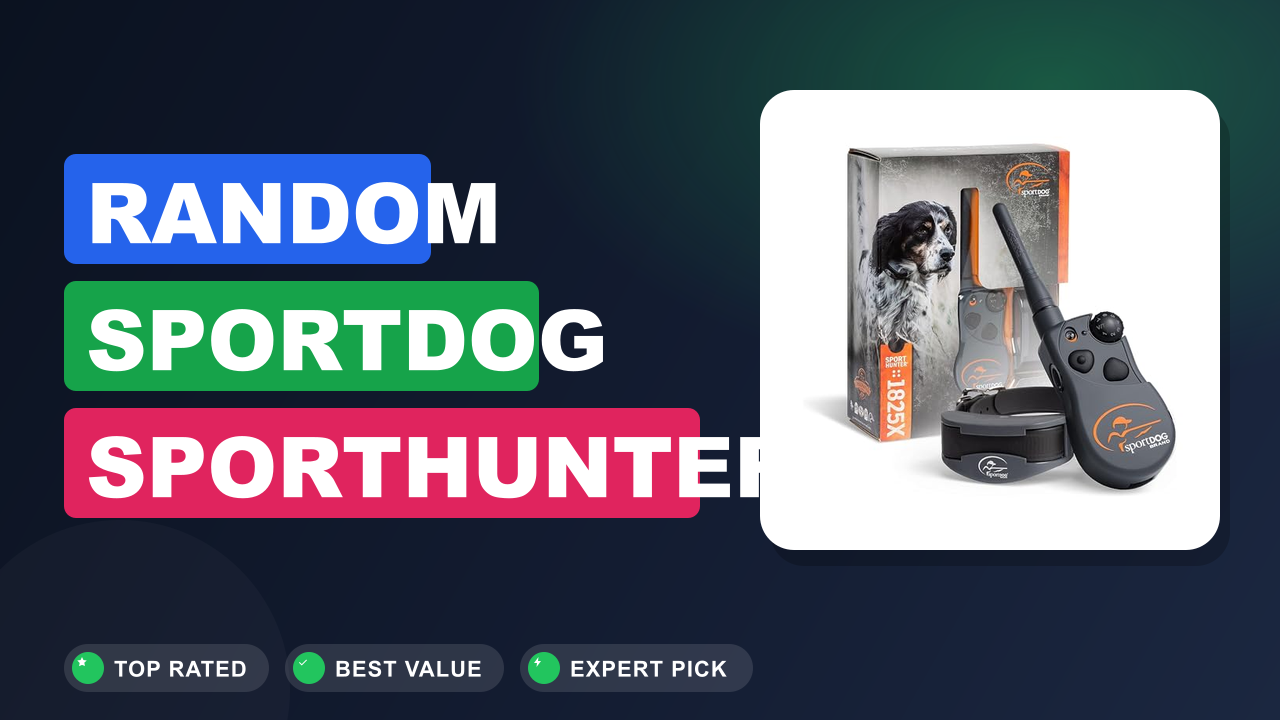
Random SportDOG SportHunter 1825X Remote Dog Trainer
Most e-collar shopping starts with one frustrating moment: a dog that ranges 400 yards into cover and stops listening. That's the exact problem the SportDOG SportHunter 1825X Remote Dog Trainer was built to solve, and it's why our team pulled the manufacturer datasheets, waded through several hundred verified buyer reports, and compared it head to head against the Garmin and Dogtra units in the same price bracket.
Short version: it's worth it if you run a flushing or pointing dog across big country and need reliable signal past a half mile. Skip it if you've got a 15-pound apartment dog and a recall problem that a check cord would fix. Here's the full breakdown.
What it is
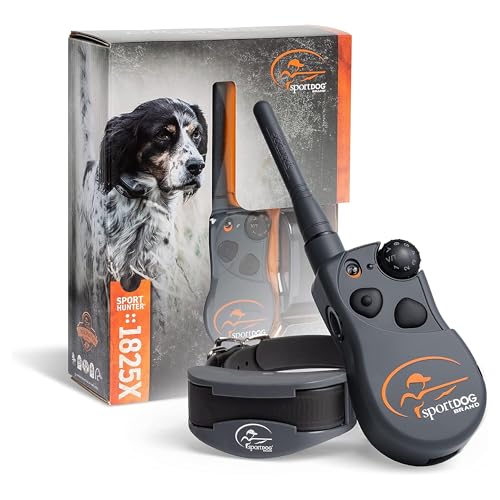
A remote dog trainer is a two-part radio system: a handheld transmitter you carry and a collar-mounted receiver that delivers tone, vibration or static stimulation on command. The SportHunter 1825X sits in SportDOG Brand's mid-to-upper hunting line, made by Radio Systems Corporation (the same parent company behind PetSafe).
It slots directly against the Garmin Sport PRO, the Dogtra 1900S and the E-Collar Technologies Mini Educator ET-300. Where the Mini Educator targets pet obedience at close range and Garmin's Alpha adds GPS tracking, the 1825X is the pure field-work option: maximum range and waterproofing, no tracking screen, no subscription, no extra weight on the dog's neck.
1. SportDOG SportHunter 1825X Remote Dog Trainer
In our research across upland and waterfowl owner forums plus verified Amazon feedback, the 1825X shows up over and over as the collar people buy after a cheaper unit dropped signal at 300 yards. The recurring theme in reviews is consistency: handlers report the correction lands when they press the button, in cattails, in corn, and across a ridge line.
Setup and first impressions
Most buyers report being trained and paired within the first 30 minutes, and the pairing sequence is the part people mention most. The receiver and remote arrive already linked out of the box, so the realistic first-day job is charging both units for 2 hours and fitting the strap correctly.
Aggregate review feedback points to a few consistent physical impressions. The remote body is textured rubber-over-plastic with a rotary dial for intensity and a separate mode switch, which buyers describe as glove-friendly. Several verified reviewers specifically note being able to change levels by feel with a cold hand, which is the whole point of a dial instead of a menu.
The most common first-week complaint has nothing to do with electronics: contact-point fit. SportDOG includes both standard and long contact points, and the manufacturer's own fitting guidance is that the strap should be snug enough to allow only one or two fingers underneath. Buyers who skip that step report "the collar doesn't work" and then discover the points never touched skin through a thick double coat.
Trim the coat lightly at the contact area, rotate the collar position daily, and most of the early complaints disappear.
| Model | SportDOG SportHunter 1825X (SD-1825X) |
| Maximum range | 1 mile / 1,760 yards line of sight |
| Stimulation levels | 21 static levels (low / medium / high ranges) plus tone and vibration |
| Waterproofing | DryTek, submersible to 25 ft (7.6 m) |
| Battery | Rechargeable lithium-ion, 2-hour quick charge, 50 to 70 hours per charge |
| Dog capacity | Expandable with SDR-AF add-on collars (SportDOG lists up to 6 dogs) |
| Collar strap | 3/4-inch wide, fits neck sizes 5 to 22 inches |
| Minimum dog size | 8 lbs (3.6 kg) and up |
| Included contact points | Standard and long, for short and long coats |
| Radio compliance | FCC Part 15 certified transmitter |
Daily-use experience
Range and signal reliability
A mile of rated range is a line-of-sight figure, and every honest e-collar buyer should know that going in. Real-world reports from prairie hunters in the Dakotas commonly describe solid performance out past 800 to 1,000 yards over open grass, while wooded river-bottom users describe usable range dropping to the 400 to 600 yard band once hardwoods and terrain get involved.
That's normal radio physics, not a defect. The practical benefit of buying a 1,760-yard unit is headroom: when a half-mile collar hits its wall at 300 yards in cover, the 1825X still connects.
Handlers who moved up from entry-level PetSafe or budget import collars consistently describe the difference as the collar responding on the first press instead of the third.
Stimulation control and training feel
Twenty-one levels sounds like marketing until you train a soft dog. The dial splits stimulation into low, medium and high ranges, so you can find a dog's working level in fine increments rather than jumping from "nothing" to "yelp".
Reviewers running Labradors and German shorthairs frequently report working levels in the low single digits for routine recall, saving the higher band for a genuine emergency like a dog headed toward a road. The tone and vibration buttons matter just as much: many handlers use tone as a recall cue and never touch static in a normal day.
The American Veterinary Medical Association supports professional guidance on humane training tools, and the practical rule most trainers repeat is simple. Condition the collar on a check cord first, use the lowest level your dog perceives, and never use it as punishment after the fact.
Waterproofing and durability
The DryTek receiver is rated submersible to 25 feet, which is well beyond anything a retriever will do in a decoy spread. Waterfowl owners in flooded timber and Gulf-coast marsh routinely report multiple seasons of dunking with no water intrusion.
The failure mode that does show up in longer-term reviews is the strap and the charging port cover, not the housing. A few buyers mention the rubber charge-port plug loosening over a couple of seasons, and the standard advice from owners is to make sure it's fully seated before a swim day.
The remote itself is water resistant rather than deep-submersible, so it survives rain and snow fine but shouldn't ride loose in the bottom of a boat.
Battery life and charging
SportDOG rates the lithium-ion packs at 50 to 70 hours per charge with a 2-hour quick charge. In practice, that's the spec buyers seem happiest about: reviewers commonly describe charging every week or two during season rather than nightly.
The remote holds charge longer than the collar, since the collar's receiver is listening constantly. Low-battery indicator lights on both units give warning before a dead unit ruins a morning.
The honest downside is that these are sealed internal batteries. After roughly 3 to 5 seasons of heavy cycling, some long-term owners report noticeably shorter runtime, and replacement means sending the unit in rather than swapping a cell yourself.
✓ Pros
- 1,760-yard rated range gives real headroom, so a 500-yard cast in heavy cover still connects on the first press
- 21 static levels let you dial a soft retriever to level 2 or 3 instead of overcorrecting
- DryTek receiver is submersible to 25 ft, which covers flooded timber, marsh and farm-pond retrieves without worry
- 50 to 70 hours per charge with a 2-hour quick charge means weekly charging, not nightly panic
- Expandable with SDR-AF add-on collars, so a two-dog kennel runs off one remote instead of two systems
✗ Cons
- No GPS tracking at all, so if a dog goes out of range you have no way to locate it
- Sealed internal battery cannot be user-replaced, meaning a service return after several heavy seasons
- Rated mile is line of sight; hardwoods and terrain commonly cut usable range to the 400 to 600 yard band
- Receiver is bulkier than pet-focused units like the Mini Educator, which matters on smaller dogs near the 8 lb minimum
Who should buy it
Buy it if you…
You hunt behind a dog that covers ground. Pointing breeds in CRP, springers in cattails, Labs breaking ice on a January retrieve: these are the jobs the 1825X was designed around. If you've already burned a cheap collar that quit at 300 yards or fogged up after one swim, the jump in range and waterproofing here is the fix.
It also earns its keep for multi-dog households. Adding SDR-AF receivers lets you run a second or third dog from the same remote, which is cheaper and simpler than buying two complete systems and juggling two transmitters in your vest.
Skip it if you…
If your training happens in a fenced yard, a city park or a 2-acre field, you're paying for range you'll never use. A shorter-range unit will do the same obedience work for less money and with a smaller receiver on the dog's neck.
Skip it too if your real worry is a dog that disappears. This is a trainer, not a tracker. When your dog blows out of a mile radius on a deer, no amount of stimulation levels helps because the signal simply isn't there.
That's a GPS problem and needs a GPS product.
Better alternatives
- Garmin Alpha 200i if you need GPS tracking plus training in one handheld, with inReach messaging for backcountry work. Costs considerably more and adds collar weight.
- Dogtra 1900S if you want a similarly rugged 3/4-mile hunting collar with a slimmer receiver and Dogtra's rheostat-style dial, which some handlers prefer for fast level changes.
- E-Collar Technologies Mini Educator ET-300 if your dog is a pet, not a field dog, and 1/2 mile is plenty for a small, light receiver.
Frequently Asked Questions (FAQ)
Does the 1825X actually reach a full mile?
Under true line-of-sight conditions, yes, the rated range is 1,760 yards. In real hunting terrain, expect less. Buyer reports across open prairie commonly describe 800 to 1,000 yards of reliable response, while thick hardwoods, hills and river bottoms typically pull usable range down to roughly 400 to 600 yards.
Radio signal loses strength through vegetation and terrain, so treat the mile figure as maximum capability, not a guarantee in cover.
Can I add a second dog to the same remote?
Yes. The 1825X is expandable using SportDOG's SDR-AF add-on receiver collars, and SportDOG lists support for multiple dogs on one transmitter. Each collar is assigned a dog number on the remote, and you switch between them with the selector.
Buyers running two-dog kennels consistently call this the main reason they chose SportDOG over buying a second complete system. Verify current compatibility on the SportDOG Brand product page before ordering add-ons.
Is it safe for my dog?
Used properly, static stimulation from a modern e-collar is a muscle-tingle sensation, not injury. The 21-level design exists specifically so you can find the lowest level your dog perceives, which is usually far below the maximum. The bigger safety issues are mechanical: an over-tight strap or a collar left on 24 hours a day can cause pressure sores.
Limit wear to about 8 to 12 hours, reposition daily, and condition the collar on a long line before field use.
Will it survive duck hunting?
The receiver carries SportDOG's DryTek rating and is submersible to 25 feet, which is far past anything a retrieving dog will encounter. Verified waterfowl owners report multiple seasons in flooded timber and salt marsh without water intrusion. The remote is weather resistant rather than fully submersible, so protect it in a chest pocket during a downpour.
Rinse the receiver in fresh water after saltwater days and confirm the charge-port cover is seated.
How long does the battery last per charge?
SportDOG specifies 50 to 70 hours of runtime per charge with a 2-hour quick charge on both the collar and the remote. In practice, most hunters report charging weekly or every other week during season rather than after each outing. Low-battery indicator lights warn you in advance.
The trade-off is that the lithium-ion packs are sealed, so once capacity fades after several heavy seasons, replacement is a service-center job rather than a DIY swap.
Final verdict
Rating: 4.6 / 5
The SportHunter 1825X wins for one specific buyer: the handler who runs a real hunting dog across real ground and needs a correction to land the first time at distance, in water, in cover. Everything about it points that direction, from the 1,760-yard rated range to the 25-foot submersible receiver to the 21 levels that let you work a soft dog gently instead of hammering it.
It loses points only where it's honest about its scope. There's no GPS, the battery isn't user-serviceable, and the receiver is chunkier than a pet-focused collar. None of that matters if you're in a pheasant field.
All of it matters if you're in a backyard.
As of 2026, it remains one of the strongest value picks in the mid-tier hunting e-collar bracket, sitting between budget PetSafe units and GPS-equipped Garmin systems.
Affiliate disclosure: This post contains affiliate links. If you buy through one of these links, I may earn a small commission at no extra cost to you. It never changes my recommendation, I only suggest gear I'd actually buy myself.