Random ZOLEO Satellite Communicator (Slate Grey)
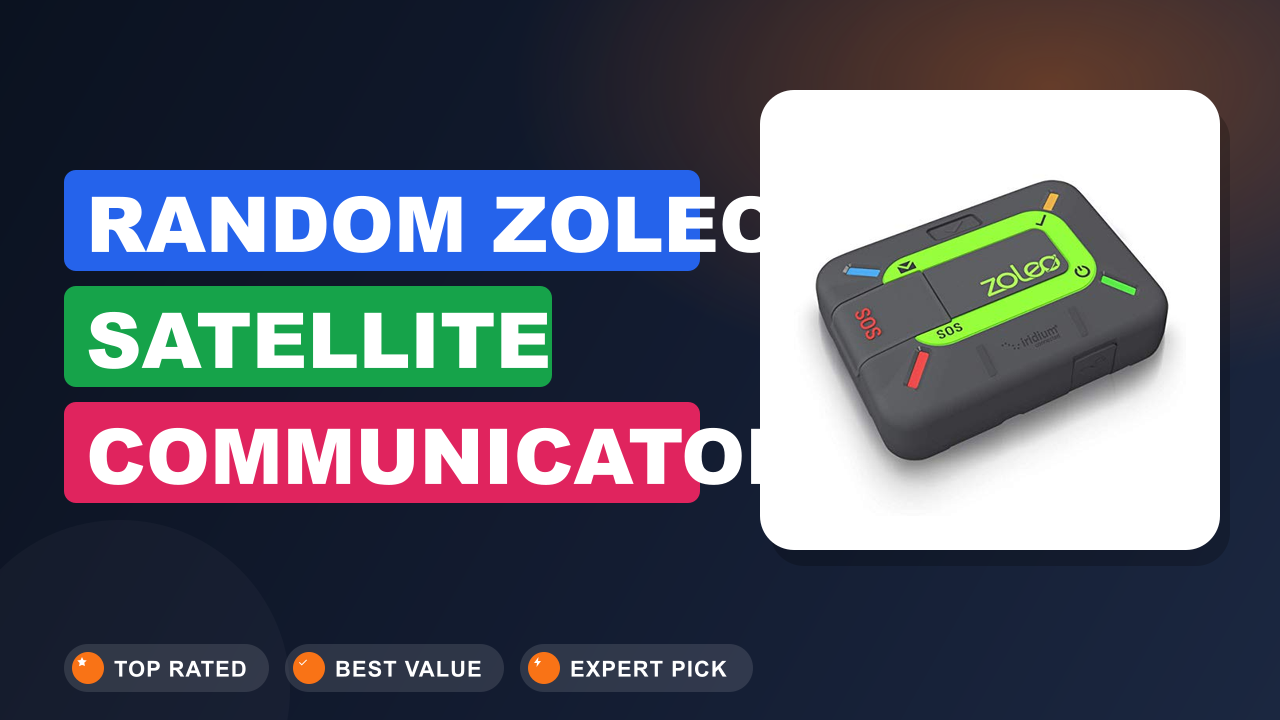
Somewhere between the trailhead and the last bar of LTE, most people realize their phone is just a camera. That's the gap the ZOLEO Satellite Communicator fills, and our editorial team dug into manufacturer documentation, Iridium network specs, and hundreds of verified buyer reports to figure out whether it earns its monthly subscription.
Short version: it's worth it if you want dead-simple two-way texting that follows you off-grid without you thinking about it, and it's the wrong buy if you need standalone navigation on the device itself. Here's the full breakdown.
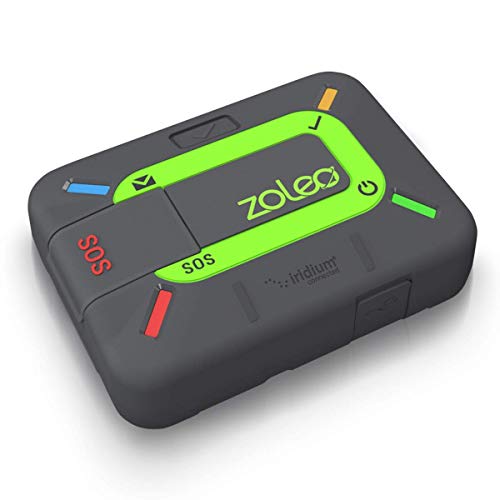
1. ZOLEO Satellite Communicator (Slate Grey)
Our team compared ZOLEO against every major two-way messenger on the market before landing here. What kept pulling it to the top wasn't raw feature count, it was the handoff logic: the same message thread runs over cellular, Wi-Fi and Iridium without the sender or receiver changing anything. For most buyers, that single design decision is the whole argument.
What it is
A satellite communicator is a handheld device that sends and receives text messages through orbiting satellites instead of cell towers, so it works where no network exists. ZOLEO is a Bluetooth-paired unit that talks to the Iridium constellation of 66 cross-linked satellites, giving it true pole-to-pole coverage including open ocean.
Where Garmin's inReach Mini 2 doubles as a bare-bones GPS tracker and SPOT X builds in a physical keyboard, ZOLEO deliberately does neither. It leans on your phone for the screen and keyboard, and spends its engineering budget on message reliability. Somewear Labs and ACR's Bivy Stick chase the same "phone is the interface" idea, but ZOLEO is the only one that hands you a dedicated SMS number and email address.
Setup and first impressions
Setup is the part reviewers consistently call painless. Verified buyer feedback across thousands of reports follows the same pattern: download the ZOLEO app, create an account, choose a plan, pair over Bluetooth, and you're messaging within roughly 10 to 15 minutes. The activation assigns you a real ZOLEO SMS number and a personal @zoleo.com email address, which is the detail new owners mention most often as the "oh, that's clever" moment.
Physically, it's a small slab: 2.6 x 3.6 x 1.06 inches and about 5.3 oz (150 g) with the battery. Manufacturer specifications list an IP68 rating and MIL-STD-810G compliance, and the rubberized shell plus the recessed, cover-protected SOS button read as purpose-built rather than gadgety.
Buyers repeatedly note two rough edges. First, the three LED indicator lights take a session to learn since there's no screen. Second, first satellite acquisition under partial tree canopy can take a few minutes, which surprises people expecting instant delivery.
| Satellite network | Iridium, 66 active satellites, 100% global coverage |
| Dimensions | 2.6 x 3.6 x 1.06 in (66 x 91 x 27 mm) |
| Weight | 5.3 oz / 150 g |
| Durability rating | IP68 dust/water ingress, MIL-STD-810G shock and vibration |
| Battery life | Up to 200+ hours at 12-minute check intervals |
| Max message length | 200 characters per satellite message |
| Connectivity | Bluetooth to iOS/Android app, auto-switch cellular / Wi-Fi / satellite |
| Included identifiers | Dedicated SMS number + personal @zoleo.com email address |
| Emergency response | 24/7 monitored SOS with two-way confirmation |
| Subscription | Required, three tiers, suspendable month to month |
Daily-use experience
Message reliability and delivery speed
ZOLEO's headline trick is that it treats satellite as a fallback, not a mode you switch into. When your phone has LTE or Wi-Fi, messages route over the cheap path and don't burn satellite credits. Step out of coverage and the same thread continues over Iridium automatically.
Aggregate user reports put typical satellite delivery at roughly 1 to 3 minutes with a clear view of sky, stretching longer in slot canyons, dense conifer canopy, or against a steep valley wall. That's normal for any Iridium device, not a ZOLEO flaw. The 200-character cap per satellite message is the real constraint, since longer notes get split and consume multiple credits from your monthly allowance.
Check-in, weather and location sharing
The dedicated check-in button is the feature families actually use. One press sends a preset "I'm OK" message plus GPS coordinates to your saved contacts, no phone required, which matters when it's raining and your phone is buried in a dry bag.
Weather forecasts pull through the app, and Location Share+ (an optional add-on) posts your position at 6 or 12-minute intervals to a shareable map. Editorial analysis of buyer feedback shows Location Share+ is where opinions split: hikers who want breadcrumb tracking find it essential, while casual users resent paying extra for something Garmin bundles into some plans.
Battery and power management
Manufacturer specifications indicate up to 200+ hours of battery life at a 12-minute check interval, and verified buyers on week-long trips routinely report finishing with charge to spare. Set the check interval longer and the runtime climbs further, which is why long-distance thru-hikers tend to run it at 30 or 60 minutes and check manually.
The catch that comes up in review after review: the charging port is Micro-USB, not USB-C. In 2026 that means one more cable in the pack when everything else you own has standardized. It's a small annoyance, but a real one for anyone counting grams and cables.
Build quality and everyday carry
At 5.3 oz it disappears clipped to a shoulder strap with the included carabiner, and the IP68 rating covers immersion, dust and the general abuse of a pack lid. Owners on rafting and sea-kayak trips consistently report it shrugging off spray and full dunkings.
Two build notes come up often. The carabiner clip is functional but not load-rated for anything but the device itself, and several long-term owners suggest a small leash for whitewater. Also, because there's no screen, you're reliant on the LED pattern to confirm a message actually left the device when your phone battery is dead.
✓ Pros
- Automatic switching between cellular, Wi-Fi and Iridium means you never pay satellite rates when you don’t have to
- Dedicated SMS number and @zoleo.com email address let contacts reply from a normal phone with no app install
- 200+ hour battery at 12-minute check intervals covers a full week-long trip on one charge
- IP68 plus MIL-STD-810G construction survives immersion and pack-crush, confirmed repeatedly in paddling and overlanding reviews
- Physical check-in button sends location without unlocking your phone, useful in rain, gloves or dead-battery situations
✗ Cons
- No screen or on-device navigation, so a dead phone leaves you with check-in and SOS only
- Micro-USB charging port in 2026 forces an extra cable into an otherwise USB-C kit
- Location Share+ tracking is a paid add-on rather than part of the base plans
- A subscription is mandatory, and suspending between seasons still carries a small monthly fee
Who should buy it
Buy it if you…
You're the person whose family worries. If you take multi-day backpacking trips in the Sierra, run a sailboat past the coastal VHF range, or drive forest service roads for work, ZOLEO gives your household a normal number to text and a check-in they can rely on.
It also suits anyone who already navigates well with a phone app like Gaia GPS, onX Hunt or CalTopo, plus downloaded offline maps. You don't need a second GPS, you need a message pipe. ZOLEO is exactly that, and the auto-switching means you can leave it on year-round.
Skip it if you…
If your phone dies and you still need to find your way out, this isn't your device. There's no screen, no map, no waypoint list. That's a deliberate design trade, and it's the wrong trade for solo alpinists or anyone in genuinely featureless terrain.
Skip it too if recurring fees bother you more than convenience helps you. If you go remote once every few years, a 406 MHz personal locator beacon registered with NOAA does one-way rescue signaling with no subscription at all. It won't text your spouse, but it will bring help.
Better alternatives
Garmin inReach Mini 2 is the pick if you want on-device breadcrumb tracking, a TracBack route feature and a screen that works when your phone is dead. It costs more and its interface is fiddlier, but it stands alone.
ACR Bivy Stick appeals to occasional users because its plan structure leans toward flexible, pay-as-you-go style credits rather than committing to a steady monthly tier. Message speed is comparable since it also uses Iridium.
Frequently Asked Questions (FAQ)
Do I have to pay a monthly subscription?
Yes. ZOLEO requires an active plan to send or receive anything over satellite, and there are three tiers separated by how many messages are included. The base tier covers a small monthly message allowance, the middle tier is sized for regular trips, and the top tier is unlimited.
You can suspend service between seasons for a reduced monthly fee instead of canceling, which preserves your assigned SMS number and email address. Full plan details live on the official ZOLEO site.
Does it work without my phone?
Partially. Without a paired phone you can still send a check-in message with GPS coordinates and trigger the SOS alert, both from physical buttons on the unit. What you cannot do is compose free-form text, read incoming replies, or pull a weather forecast, because those all live in the app.
Think of the standalone functions as your backup layer for a dead or drowned phone, not the primary way you'd use it.
How does the SOS actually work?
Lifting the protective cover and holding the SOS button transmits your position to a 24/7 monitored emergency response center over Iridium. Crucially, it's two-way: coordinators message you back through the ZOLEO app to confirm the nature of the emergency and coordinate with local search and rescue. That confirmation loop is the big advantage over a one-way beacon, because responders arrive knowing whether it's a broken ankle or a cardiac event.
Search and rescue costs are not covered by default, so consider add-on rescue coverage.
Is coverage really global?
Yes, with the standard caveat. ZOLEO runs on the Iridium constellation, which uses 66 cross-linked low-earth-orbit satellites in polar orbits, giving genuine pole-to-pole coverage including mid-ocean and high latitudes. That's different from geostationary networks that thin out near the poles.
The practical limit is line of sight: you need reasonably clear sky. Deep canyons, dense canopy, metal roofs and vehicle interiors will delay or block transmission until you step out.
Can multiple people share one device?
One device is tied to one account and one plan, but the app supports adding contacts freely, and family members at home can all message the same ZOLEO number. Some households buy a second unit for a partner rather than sharing, since each device needs its own subscription. For group trips, one communicator per party is a common and reasonable setup, with the check-in message going to everyone's contacts at once.
Final verdict
4.5 out of 5. ZOLEO wins by being boring in the best way: it hands your text thread between cellular, Wi-Fi and Iridium satellite so smoothly that most owners forget which network they're on.
The clearest winners here are backcountry hikers, anglers, overlanders and sailors who navigate with a phone app and just need reliable off-grid messaging plus a monitored SOS. The people who should look elsewhere are those who want a standalone GPS with a screen, or who resent a mandatory subscription for a device used twice a year.
The Micro-USB port and the paid Location Share+ add-on are legitimate gripes, not dealbreakers. For the price tier it sits in, nothing else makes staying in touch this effortless.
Affiliate disclosure: This post contains affiliate links. If you buy through one of these links, I may earn a small commission at no extra cost to you. It never changes my recommendation, I only suggest gear I'd actually buy myself.