Random ISOtunes Caliber Bluetooth Shooting Ear Buds
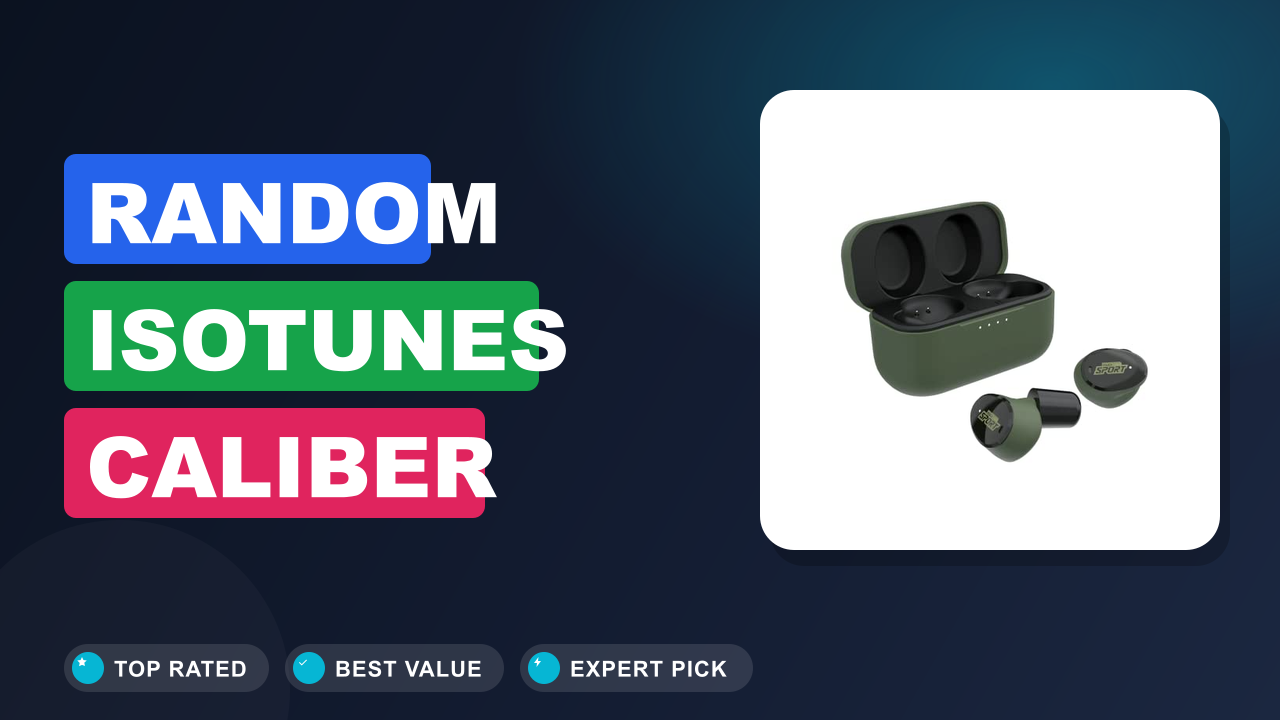
Nothing wrecks a good range day like that thin ringing in your ears on the drive home. The ISOtunes Caliber Bluetooth Shooting Ear Buds sit in an unusual spot in the hearing protection market: they're rated for live fire, but they also stream music, take phone calls, and disappear under a shotgun's cheek weld. Our editorial team spent weeks pulling manufacturer datasheets, NRR labeling rules, and hundreds of verified buyer reports on this exact model.
Here's the bottom line up front. Buy them if you want serious passive attenuation plus Bluetooth audio in one lightweight package. Skip them if you need to hear range commands or a rustling deer without pulling a bud out, because these don't amplify ambient sound at all.
The full breakdown starts below.
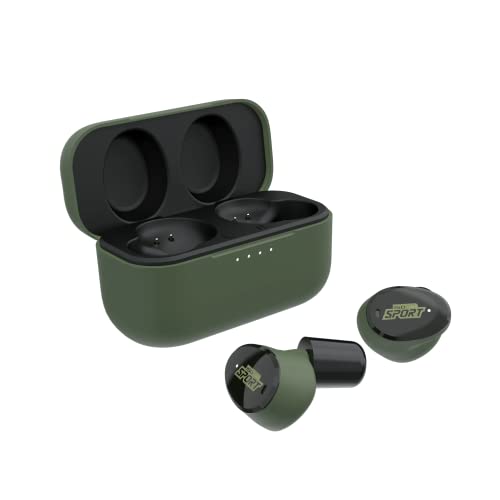
What it is
The ISOtunes Caliber is a corded Bluetooth earbud that doubles as certified hearing protection for firearms use. It's a passive isolation product, meaning it blocks sound with a physical seal rather than using microphones to compress loud noise the way electronic muffs do.
That's the fork in the road for this category. Brands like Walker's, Howard Leight, and 3M Peltor built their reputation on electronic muffs and buds that amplify quiet sounds. ISOtunes went the other direction with the Caliber: block everything, then feed you audio over Bluetooth.
It's the same design philosophy behind their industrial line, which is aimed at OSHA-regulated jobsites rather than the hunting woods.
Setup and first impressions
Verified buyer feedback is remarkably consistent on the first ten minutes: the fit takes a couple of tries, and once you get it right, the difference is dramatic. Reviewers repeatedly describe an "airplane cabin" drop in volume the moment the tips seat properly, and just as often note that their first attempt was too shallow.
ISOtunes ships multiple tip sizes in the box, including foam options, and aggregate reviews strongly favor the foam over the silicone flanges for live fire. That matters more than it sounds. The published Noise Reduction Rating only applies when the tip forms a full seal in the canal, which is the single most common complaint thread among one-star reviews.
Pairing gets far fewer complaints. Users report the Bluetooth 5.0 connection finds an iPhone or Android handset in under 10 seconds on first power-up and reconnects automatically afterward.
The cable-and-collar design also draws comment. It's light enough to forget, and because there's nothing over your ears, buyers who wear ball caps, safety glasses, and electronic muffs stacked together describe the Caliber as the first setup that didn't feel like a helmet.
| Noise Reduction Rating | NRR 27 dB (ANSI S3.19-1974 method) |
| Protection type | Passive isolation, no ambient amplification |
| Wireless | Bluetooth 5.0, roughly 30 ft line-of-sight range |
| Battery life | Up to 12 hours playtime per charge |
| Volume limiting | SafeMax technology caps output at 85 dB |
| Water resistance | IPX4 sweat and splash rated |
| Form factor | Corded neckbud with inline mic and 3-button control |
| Ear tips included | Multiple sizes, foam plus flanged silicone |
| Microphone | Noise-cancelling inline mic for calls |
| Warranty | ISOtunes limited warranty, registration required |
Daily-use experience
Noise protection at the firing line
A 27 NRR passive seal is the strongest attenuation you'll find in a Bluetooth earbud form factor. For context, a 5.56 rifle produces a peak impulse in the 160 to 165 dB range at the shooter's ear, and most electronic muffs sit at 22 to 24 NRR.
The practical difference shows up in review patterns. Indoor-range shooters running braked rifles are the most enthusiastic group in the feedback pool, because passive isolation doesn't clip, pump, or recover the way an electronic circuit does after a concussive shot.
The trade is unavoidable: there is no hear-through. You will not hear a range officer 15 feet away with music playing. Regular users solve this by pausing audio between strings rather than removing a bud.
Sound quality and calls
For a product built around blocking sound, the audio is better than the category average. Buyers consistently describe full low end and clear vocals, which makes sense: a properly sealed canal tip is essentially a passive subwoofer chamber.
The 85 dB SafeMax cap is the thing people either love or fight. ISOtunes deliberately limits output so the earbuds can't become the hearing hazard, and that ceiling aligns with the exposure guidance published by NIOSH at the CDC. At a busy outdoor range on a windy day, some users report wanting more volume than the cap allows.
Call quality earns solid but not spectacular marks. The inline microphone handles shop and truck noise well, though callers on the other end sometimes report a slightly thin voice.
Comfort and fit over long sessions
Comfort feedback splits along one line: canal tolerance. Shooters who already run foam plugs or in-ear monitors report 4 to 6 hour sessions without fatigue, and the neckband cable stays out of the way under a shotgun stock.
Shooters who dislike anything in their ear canal don't convert. That's the honest read across the review pool, and no tip size fixes it.
Two design details earn repeat praise. The buds sit flush enough that a scoped rifle's cheek weld is unaffected, which is the number one complaint about bulky muff cups. And with no headband, ball caps and wraparound safety glasses stop competing for real estate on your head.
Battery and durability
Twelve hours of rated playtime is enough for a full weekend clinic on a single charge, and verified buyers regularly confirm two or three range days between charges. That's a meaningful gap over true-wireless competitors that typically deliver 5 to 8 hours before a case top-up.
Durability is the softer spot. The IPX4 rating handles sweat and light rain but not submersion, so a duck blind in steady rain is outside spec. A recurring minority complaint in long-term reviews involves the cable or connector after a year or more of heavy use, which is the classic weak point of any corded neckbud design.
✓ Pros
- NRR 27 dB passive seal beats most electronic muffs by 3 to 5 dB, which matters under an indoor range roof
- Up to 12 hours of playtime covers a two-day match without a charger in the bag
- Zero bulk at the ear means a scoped rifle or shotgun cheek weld stays consistent shot to shot
- 85 dB SafeMax volume cap removes the risk of trading gunfire damage for headphone damage
- Corded design eliminates the “lost a bud in the gravel” problem that plagues true-wireless models
✗ Cons
- No ambient hear-through at all, so conversation and range commands require pausing audio
- 85 dB cap frustrates users on windy outdoor ranges who want more headroom
- IPX4 only, meaning steady rain in a blind or a dropped bud in a puddle is a real risk
- Long-term reviews cite occasional cable and connector wear after a year of heavy use
Who should buy it
Buy it if you…
You're the shooter who burns 200 to 400 rounds in a session, mostly at an indoor range or a private berm where you're not waiting on a range officer's call. You've tried Howard Leight Impact Sport muffs and found the cups fight your rifle stock or your safety glasses. You want a podcast during drills and a phone call when your wife checks in.
The Caliber also makes sense as dual-purpose gear. Plenty of buyers describe using them Monday through Friday in a shop or on a jobsite, then at the range Saturday, which is exactly the overlap ISOtunes designed the Sport line around.
Skip it if you…
You hunt. Full stop. Sitting in a treestand or a dove field with 27 dB of isolation and no amplification means you'll miss the sound of an approaching deer or an incoming flight, and that's the whole point of electronic hearing protection for hunters.
Skip them too if you instruct or run a bay where constant verbal communication is non-negotiable. Same if canal-style tips give you pressure headaches, since the NRR is entirely dependent on a deep, sealed fit. And if you shoot in the rain regularly, IPX4 isn't the rating you want.
Better alternatives
Two models cover the gaps honestly. The Axil GS Extreme 2.0 adds electronic sound amplification in a similar earbud footprint, so hunters and instructors keep situational awareness that the Caliber simply doesn't offer.
The 3M Peltor Sport Tactical 500 is the pick if you'd rather have muffs with Bluetooth and adaptive suppression, and you don't mind the bulk on a pistol-only day. Within the ISOtunes lineup itself, the ISOtunes Sport Advance is worth comparing if a lower NRR is acceptable in exchange for different features.
Frequently Asked Questions (FAQ)
Are the ISOtunes Caliber loud enough to hear over gunfire?
Yes, for most users, but with a ceiling. Output is capped at 85 dB by SafeMax technology, and because the 27 NRR seal blocks so much external noise, that 85 dB feels considerably louder than it does in an open-ear earbud. The exception is windy outdoor ranges, where a handful of verified buyers report wanting extra headroom that the cap won't allow.
Do they amplify sound so I can hear range commands?
No. The Caliber is a passive isolation product with no hear-through microphones. To hold a conversation you pause your audio, and even then you'll be hearing through a 27 dB attenuation seal, so people will sound distant.
If ambient amplification is a requirement, an electronic muff or an amplified bud from Walker's or Axil is the correct tool.
Can I use them for work as well as shooting?
That's arguably their best use case. ISOtunes built the Sport and industrial lines around OSHA hearing conservation requirements under 29 CFR 1910.95, and you can review the underlying standard directly at OSHA.gov. A 27 NRR earbud with Bluetooth calling works for a woodshop, a mower deck, or a jobsite just as well as a firing line.
How long does the battery actually last?
Manufacturer specifications list up to 12 hours of playtime per charge, and aggregate buyer feedback broadly supports that figure at moderate volume. Real-world reports commonly describe two to three separate range trips between charges. Expect less if you run near the volume cap continuously or use them for long phone calls, since the microphone circuit draws additional power.
Will they fit under a helmet, ball cap, or shooting glasses?
Yes, and this is where the corded earbud design wins outright. There's no headband and no ear cup, so ball caps, wraparound eye protection, and hard hats all sit normally. Buyers who wear prescription safety glasses specifically call this out, because muff cups pressing on glasses arms is a well-known cause of both discomfort and attenuation leaks.
Final verdict
4.3 out of 5 stars.
The ISOtunes Caliber is a specialist tool that knows exactly what it is. If your shooting happens at an indoor range, on a private berm, or in a competition bay where you control the timeline, the combination of a 27 NRR passive seal, 12-hour battery, and zero bulk at the cheek weld is genuinely hard to beat in this form factor.
The people who end up disappointed are almost always hunters and instructors who needed ambient amplification and bought a blocking product instead. Read the spec sheet, be honest about how you shoot, and this becomes an easy call either way.
Verified buyer sentiment sits high for a reason, and the gaps (IPX4 only, no hear-through, an 85 dB cap) are design decisions rather than defects. Just make sure they're decisions you can live with.
Affiliate disclosure: This post contains affiliate links. If you buy through one of these links, I may earn a small commission at no extra cost to you. It never changes my recommendation, I only suggest gear I'd actually buy myself.