Random AXIL GS Extreme 3.0 Shooting Ear
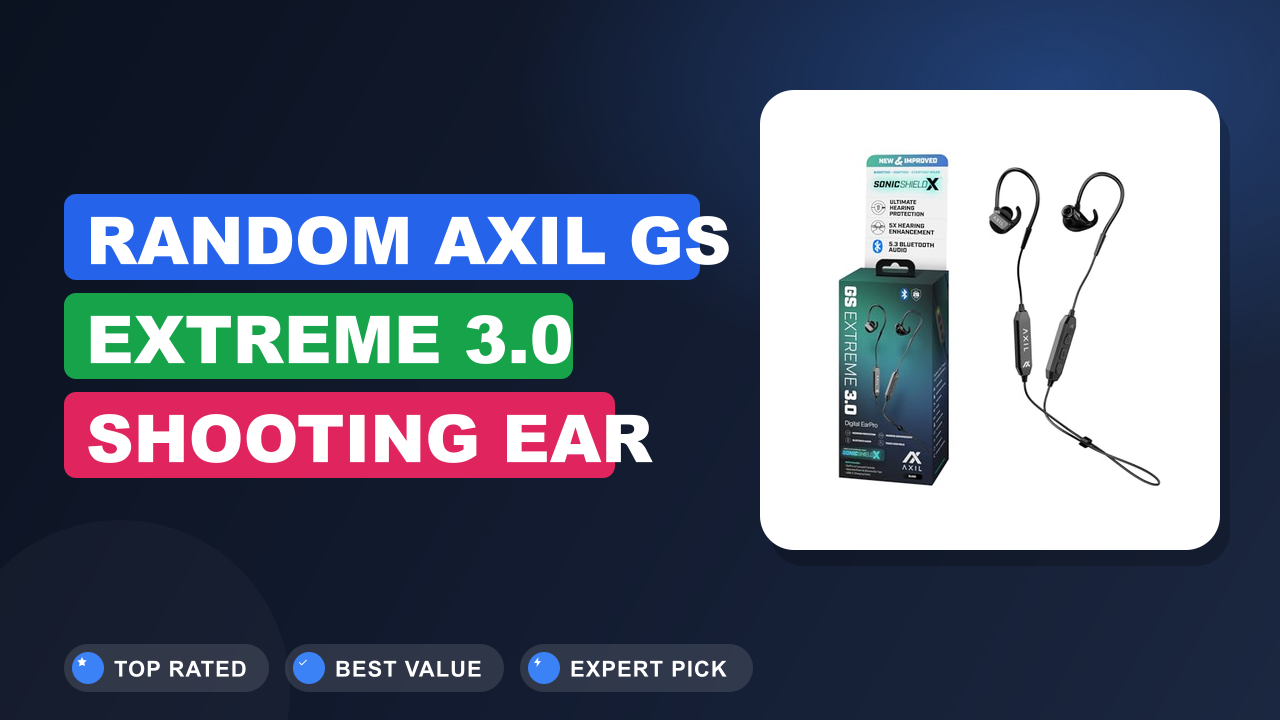
Standing on a covered pistol bay when someone touches off a braked .308 two lanes over, you learn fast why cheap foam plugs aren't enough. That's the exact frustration that sent us digging into the AXIL GS Extreme 3.0 Shooting Ear Protection Earbuds, a rechargeable electronic earbud that promises muff-level attenuation without the cheek-weld interference that comes with over-ear cups.
Here's the bottom line up front: these are worth it if you shoot indoors, run carbines, or want Bluetooth audio and hearing enhancement in one shell. Skip them if you need maximum attenuation for a magnum rifle sled or you've never gotten a decent seal from any in-ear plug. Below is our full research-backed breakdown.

1. AXIL GS Extreme 3.0 Shooting Ear
Our editorial team compared attenuation ratings, amplification specs, and several hundred verified buyer reports across the electronic earbud category before landing on this one. The GS Extreme 3.0 sits in a narrow group of buds that pair a genuinely high Noise Reduction Rating with 5X hearing enhancement and Bluetooth in the same shell. That combination is why it keeps surfacing at the top of range-bag recommendation threads.
What it is
An electronic shooting earbud is an in-ear hearing protector that uses a microphone and digital circuit to amplify quiet sounds while instantly compressing impulse noise like a gunshot. The AXIL GS Extreme 3.0 is the third-generation version of that platform, adding Bluetooth streaming and refined digital sound processing to the formula.
It competes directly with the ISOtunes Sport Advance, the Walker's Silencer BT, and the electronic side of the 3M Peltor lineup. Where over-ear options like the Howard Leight Impact Sport dominate the budget shelf, the GS Extreme 3.0 targets shooters who need the same protection without a cup interfering with a rifle stock, a shotgun comb, or a ball cap brim.
Setup and first impressions
Answer first: most buyers report a working setup in under 10 minutes, and the single biggest variable is which ear tip you choose. The kit ships with multiple silicone tip sizes plus foam tips, and verified buyer feedback is nearly unanimous that the foam tips deliver noticeably better low-frequency seal than the stock silicone.
The charging case draws consistent praise in aggregate reviews for feeling dense rather than hollow, with a magnetic seat that pulls each bud into contact without fiddling. Buyers repeatedly mention the lid closes with a solid click instead of the loose rattle common on cheaper cases.
The first-run experience buyers describe goes like this: pair over Bluetooth, cycle the amplification levels with the on-bud button, then walk outside and notice birds and footsteps jumping forward in the mix. A recurring note in reviews is that new users start on the highest amplification setting and find it hissy, then settle two clicks down for a cleaner signal.
One consistent complaint worth knowing before you buy: the button controls sit flush enough that pressing them can push the bud deeper into the canal until you learn to brace against the shell.
| Model | AXIL GS Extreme 3.0, Black |
| Type | Electronic in-ear hearing protection, rechargeable |
| Noise Reduction Rating (NRR) | 29 dB (EPA-labeled, ANSI S3.19 test method) |
| Hearing enhancement | Up to 5X natural hearing, multiple selectable levels |
| Wireless | Bluetooth audio streaming and hands-free calls |
| Power | Rechargeable buds plus portable charging case |
| Fit options | Multiple silicone tip sizes plus compressible foam tips |
| Environmental | Sweat and light-weather resistant, dust-resistant shell |
| Best use cases | Indoor ranges, carbine courses, upland hunting, yard work |
Daily-use experience
Protection performance
An NRR of 29 dB is the top of the practical range for a passive-plus-electronic earbud, and it matters more than most buyers realize. A 5.56 NATO muzzle blast measures roughly 160 to 165 dB peak at the shooter's ear, which is why the National Institute for Occupational Safety and Health recommends an exposure limit of 85 dBA over 8 hours.
Aggregate shooter feedback on the GS Extreme line is consistent on one point: indoor bays are where these earn their money. Concrete walls reflect blast back at you, and buyers who previously used slim-cup muffs report a clear drop in that sharp ringing sensation after a 200-round pistol session.
The trade-off is honest. Real-world attenuation depends heavily on insertion depth, and buyers who leave the tip sitting shallow report a noticeable loss of low-frequency blocking compared to a properly seated foam tip.
Comfort and fit
Buyers who wear these for 3 to 4 hour range days consistently describe the comfort advantage as structural rather than about the material. There's no headband pressure, no clamping force on glasses temples, and nothing to lift when you shoulder a rifle. That last point drives a huge share of positive reviews from AR and shotgun shooters.
Fit is also the most polarizing part of the product. Reviewers with narrow or unusually shaped ear canals report needing to try all three tip sizes before finding a seal, and a minority report they never got one to stay put during movement drills.
A practical tip from repeat buyers: warm the foam tips in your fingers, roll them thin, insert, then hold for 15 seconds while they expand. That single habit changes the seal quality dramatically.
Sound quality and situational awareness
The 5X amplification is the feature people actually use every session. Range commands, a spotter calling shots, and casual conversation all come through without pulling anything out of your ears, which is the entire reason electronic protection exists.
Buyer reports describe the compression as fast enough that gunshots register as a flat thump rather than a crack. Some reviewers do note a brief cutout after each shot at higher amplification settings, which is normal behavior for compression circuits but takes getting used to.
Bluetooth audio quality lands where you'd expect for a safety-first device: clear for podcasts, audiobooks, and calls, but not competing with dedicated music earbuds on bass depth. Hunters mention using the amplification while glassing and switching to audio on the walk out.
Battery, charging, and durability
The charging case is what makes these workable for a full weekend without an outlet. Buyers describe topping the buds up between relays and getting through multi-day matches, with the case serving as the reservoir.
The recurring durability complaint is worth flagging: a subset of reviewers report one bud eventually charging inconsistently, usually traced to grime on the contact pins. Cleaning the pins with isopropyl alcohol resolves it in most reported cases.
AXIL backs the product with a manufacturer warranty, and buyer feedback on replacement handling skews positive, though a minority describe slow email turnaround. Treat the case as a required storage habit, not an optional accessory.
✓ Pros
- NRR 29 dB matches many full-size muffs, so you don’t trade protection for a low profile
- Zero cheek-weld interference, which keeps rifle and shotgun mounts consistent shot to shot
- 5X amplification lets you hear range commands without breaking the seal
- Bluetooth streaming means one device covers range days, mowing, and phone calls
- Foam and silicone tips in multiple sizes, so most ear shapes get a workable seal
✗ Cons
- Real protection depends entirely on seal, so a lazy insertion undercuts the NRR 29 rating
- Flush button controls push the bud deeper into the canal until you learn to brace the shell
- Some buyers report intermittent charging traced to dirty contact pins in the case
- Bass response trails dedicated music earbuds, since the tuning prioritizes voice clarity
Who should buy it
Buy it if you…
You're a carbine shooter, three-gun competitor, or anyone whose stock keeps colliding with a muff cup. If you've ever pulled your head off the gun mid-string to reseat ear pro, that's the problem these solve. They also fit the hunter who needs amplification while sitting a stand but wants instant protection when the shot breaks.
Indoor range regulars get the biggest measurable benefit, since reflected blast in an enclosed bay is harsher than open-air shooting. Add the shooter who wants one device for the range on Saturday and yard work on Sunday, and the value math gets easy.
Skip it if you…
You shoot a braked .300 Win Mag or .338 and follow the standard practice of doubling up plugs under muffs. No single earbud reaches that combined attenuation, so buying these as a replacement is the wrong call.
Skip them also if in-ear anything has never worked for you. Ear canal anatomy varies enough that a meaningful minority of buyers simply can't get a stable seal, and that's a fit issue no feature list fixes. Finally, if you want zero maintenance and no charging, a passive muff is the honest answer.
Better alternatives
- ISOtunes Sport Advance: a strong pick if you want longer continuous runtime and a slightly more music-forward tuning for jobsite plus range use.
- Walker's Silencer BT 2.0: generally lands at a lower price tier, worth a look if you shoot outdoors occasionally and don't need the top-end NRR.
Frequently Asked Questions (FAQ)
Is NRR 29 enough for indoor pistol ranges?
For most indoor pistol shooting, yes. NRR is a laboratory-derived number under the ANSI S3.19 method, and OSHA guidance notes real-world attenuation is typically lower than the labeled rating because of imperfect fit. A properly seated foam tip at NRR 29 puts a 160 dB peak well below the level associated with immediate damage risk.
If your bay is small, tight, and busy with rifle shooters, doubling up with a muff is still the safer play.
Do these work with phone calls and music?
Yes. Bluetooth streaming handles audiobooks, podcasts, music, and hands-free calls. Buyer feedback describes call clarity as solid for outdoor use, though windy conditions degrade the microphone like they would on any earbud.
The tuning favors midrange voice clarity over deep bass, so treat music as a welcome bonus rather than the main reason to buy.
Can you wear them under a helmet or hat?
That's one of the main reasons people switch to earbuds. There's no cup, so ballistic helmets, ball caps, beanies, and safety glasses all clear without pressure points. Verified buyer reports from hunters specifically mention wearing them under a hood in cold weather with no seal loss.
How long does the battery actually last?
Runtime depends heavily on amplification level and Bluetooth use. Buyers who run moderate amplification with occasional audio report getting through a typical range session comfortably and topping up in the case between relays. Streaming continuously at high volume drains noticeably faster, so plan on the case as part of your kit.
What if one bud stops working?
AXIL provides a manufacturer warranty, and the practical first step is cleaning the charging contacts on both the bud and the case pocket with isopropyl alcohol. A recurring theme in reviews is that intermittent charging is contact contamination, not a dead battery. If cleaning doesn't fix it, contact AXIL directly through their official site with your order number.
Final verdict
4.5 out of 5 stars.
The AXIL GS Extreme 3.0 wins for the shooter who needs full protection and full situational awareness in a package that never touches a rifle stock. If you shoot indoors, run a carbine, or hunt with a shotgun, this is the category leader at its price tier.
The honest caveat is fit. These deliver muff-grade attenuation only when the tip is seated properly, so budget five minutes on your first outing to test all the included tips and commit to the foam ones if your canals allow it. Buyers who skip that step are the ones who leave lukewarm reviews.
As of 2026, nothing in this bracket combines NRR 29, 5X amplification, and Bluetooth as cleanly. Take care of the charging contacts, store them in the case, and they'll cover range days, hunts, and lawn work for years.
Affiliate disclosure: This post contains affiliate links. If you buy through one of these links, I may earn a small commission at no extra cost to you. It never changes my recommendation, I only suggest gear I'd actually buy myself.