Target Panic: Causes, Practice Drills, and Safer Shot Execution
Target Panic: Causes, Practice Drills, and Safer Shot Execution
Target panic can show up as freezing at full draw, rushing the release, punching the trigger, collapsing under pressure, or feeling like the shot happens to you instead of by you. For some archers, it comes and goes. For others, it shows up every time the bow comes up. The useful response is usually not more force, more guesswork, or more pressure. It is a calmer setup, simpler repetition, better timing, and a safer way to keep practice useful.
This article is a training guide for archery and shooting sports habits, not a diagnosis or treatment plan. It does not promise results. It does not replace a coach, instructor, range officer, or a qualified mental performance professional. If a drill makes you unsafe, stop. If a setup change is needed, make it. If your equipment or your body is fighting you, get help early.
Table of Contents
Contents
What Target Panic Is
What it feels like
Target panic is often described as a loss of smooth control at the end of the shot. An archer may come to anchor and suddenly want to move off the spot, hold too long, jump the release, or slap at the trigger the moment the pin settles. The body is present, but the shot process feels slippery. That is frustrating, and it can be hard to talk about because the problem is not always visible from the line.
Why the name matters less than the pattern
The label is less important than the pattern. Whether the issue starts as anxiety, over-control, habit, equipment mismatch, or repeated pressure, the fix usually begins with the same idea: strip away extra force and rebuild a shot that can be repeated without a fight. That means less drama, fewer surprise corrections, and more attention to what your hands, eyes, and timing are actually doing.
Not a character flaw
Target panic is not proof that you are weak, broken, or “bad at archery.” Many good shooters run into it at some point, especially when they increase distance, speed, draw weight, competitive pressure, or expectations. Treat it as a signal that the shot needs cleanup, not as a reason to get harsher with yourself.
Why It Shows Up
Pressure at the end of the shot
The last part of the shot can become a pressure point. The archer knows the release is close, so the mind starts monitoring everything at once. That can make the bow feel heavier, the pin feel busier, and the release feel urgent. Once the shot starts to feel urgent, the hand often starts making decisions too early.
Too much focus on the result
When attention locks onto the target face, the brain may start treating the bull as the main event instead of the execution. That can be useful in small doses, but it can also create a narrow tunnel that makes the shot more reactive. A more useful focus is often process-first: stance, hook, set, anchor, aim, expand, follow-through. The target is still there, but it is not in charge of your timing.
Equipment and fit
Sometimes the issue is not mainly mental; if the bow setup itself is part of the problem, start with our bow tuning for beginners guide. A bow that is too heavy, a release that is too touchy, a string that is hard to settle, or a setup that forces awkward holding can all make the end of the shot feel unstable. If the equipment asks for more control than your current strength or coordination can give, the panic can grow fast.
Training environment
Some ranges are quiet and steady. Others are busy, loud, or full of waiting eyes. New shooters can get locked up by the setting itself. In a firearm context, safe range structure matters just as much as personal habit. In archery, a clear lane, simple commands, and a coach who can reduce pressure all help the shooter stay inside the process instead of fighting the room.
Signs and Patterns
Premature movement
One common sign is moving before the shot is ready. The hand starts to slap, punch, or jerk just as the sight picture settles. In compound work, the release hand may move ahead of the decision. In recurve or barebow work, the archer may collapse or lose back tension right before release. The pattern is the same: the ending arrives before the shooter has settled into it.
Freezing and hesitation
Another pattern is freezing at anchor. The archer can get the bow up, but the final action stalls. The sight may drift while the shooter waits for a feeling that never arrives. That delay can become its own trap, because the longer the hold goes on, the more the mind starts negotiating with itself.
Flinch and recoil expectation
In firearm shooting, the same basic problem can show up as flinch or anticipation of recoil. The shooter expects the break and starts bracing for it, which pulls focus away from the sight picture and breaks the timing of the shot. The safety habit remains the same, but the practice approach should still be process-driven and closely supervised.
When it is not just nerves
If the issue is getting worse, showing up outside practice, or leading to unsafe handling, it is worth slowing down and getting another set of eyes on the problem. A coach can sometimes spot a timing flaw in one session that would take months to untangle alone. If the stress is broader than shooting and starts affecting everyday life, consider speaking with a qualified professional. That is not because the shot is broken; it is because support can help.
Shot Routine Basics
Make the routine simple
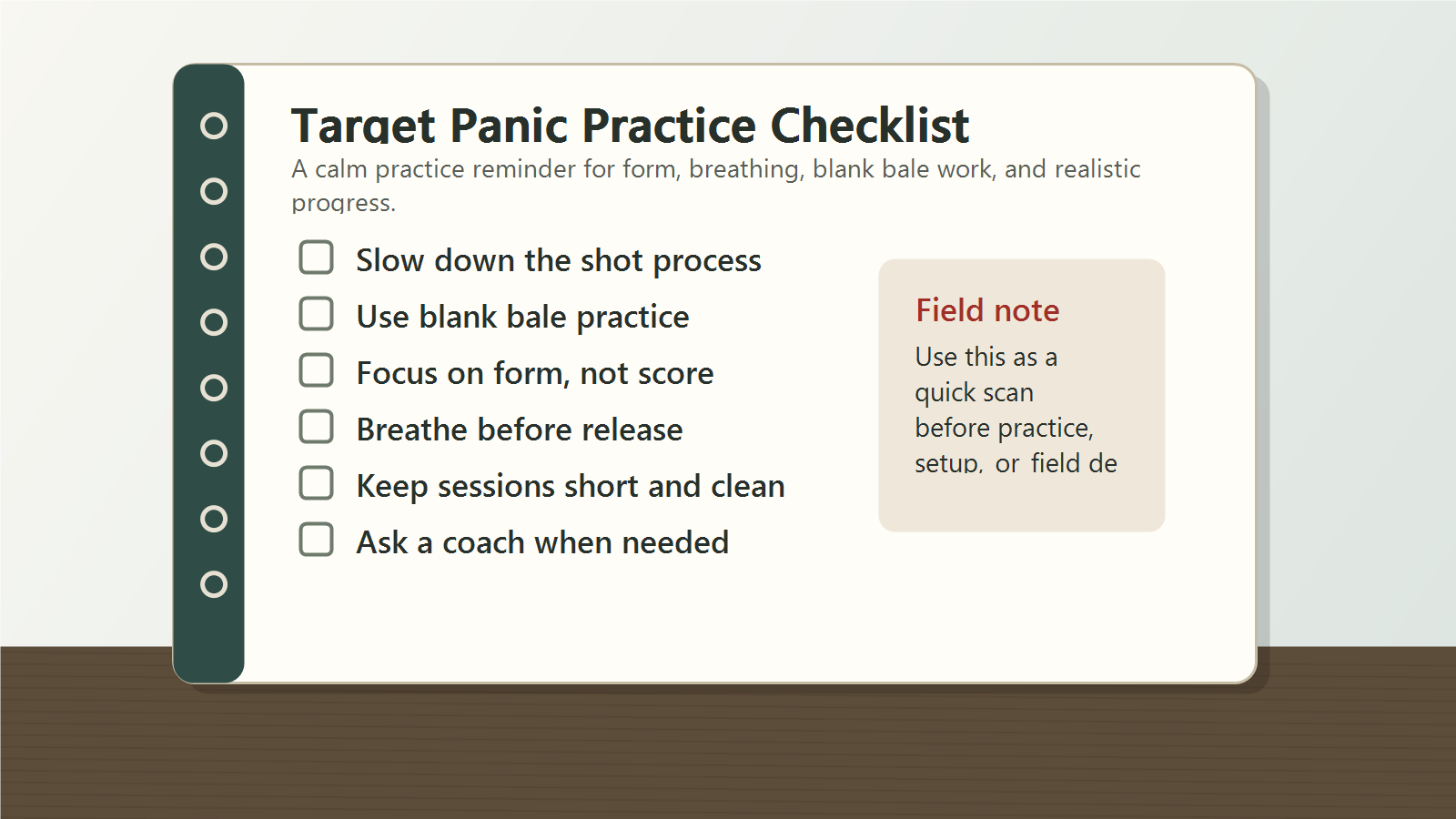
A helpful routine is short enough to remember under stress. A long checklist can turn into noise. Aim for a few stable steps that you can repeat on every arrow or every shot. For example: set feet, settle grip, breathe, raise, anchor, confirm line, expand, execute, recover. The exact words do not matter as much as the repeatability.
Use the same cue every time
Many shooters benefit from one cue that tells the body what to do next. It might be “smooth,” “through,” “back,” or “hold and move.” The cue should point attention toward action, not fear. When a cue is reused on purpose, the mind has less room to invent a new crisis on every shot.
Breathe before the load
A slow breath before drawing or before coming onto the target can soften the edge off the shot. The goal is not to force relaxation. The goal is to lower the noise enough that you can see the shot clearly. If breathing turns into a ritual that creates more pressure, simplify it again. Routine should support the shot, not become another test.
Stay process-first
In performance settings, a process-first routine is often more stable than a result-first mindset. The Association for Applied Sport Psychology describes sport and performance psychology as teaching mental skills for consistent performance, including relaxation, concentration, and imagery. That general idea fits well here: build a repeatable process, then let the target be the outcome rather than the command.
Blank Bale and Close-Range Work
Why blank bale helps
Blank bale practice removes the target face or makes the target so close that the visual demand drops away. That can help the shooter rebuild the shot without the target becoming a trigger. The archer learns to feel alignment, pressure, expansion, and release without chasing a result on the face. It is simple on purpose.
How to keep it close
Close-range work should stay close enough that success is not tied to scoring. The point is not to “win” the drill. The point is to repeat the same motion with less target pressure. If the archer starts aiming at a tiny dot and the panic returns, the drill is no longer doing its job. Move closer or remove the face again.
What to watch for
Watch the release path, shoulder tension, and any urge to hurry. If the shot becomes smoother when the target is less important, that is useful information. It means the problem may be tied to visual pressure and end-of-shot urgency. Use that information to design the next practice block, not to judge the shooter.
Do not turn it into a test
Blank bale only helps if it stays low pressure. The moment it turns into a scorecard, the target panic can reappear in a new outfit. Give yourself permission to make the drill boring. Boring is often a good sign when you are rebuilding a shot.
Drills That Keep Form Simple
One-shot reset
Take one arrow, then step back and fully reset before the next one. That pause helps prevent a sloppy rhythm from taking over. During the reset, check stance, grip, breathing, and the feel of the bow hand. The goal is not more thinking. The goal is a cleaner start.
Hold and expand
Practice coming to anchor and then keeping the movement in the back of the shot. The instruction is usually to keep expanding rather than waiting for permission to release. If the shooter keeps punching, reduce the challenge and shorten the hold. A release that happens through expansion is often easier to trust than one that happens through a sudden decision.
Sight pause work
Some archers benefit from a controlled sight pause drill: come to anchor, settle, then move through the shot without rushing the instant the sight touches the center. The purpose is to teach the nervous system that the target is not an alarm bell. Use a coach if the drill gets sloppy or starts to create more panic than calm.
Mirror or video check
Short video clips can show whether the shot is actually rushing or whether it only feels rushed. A mirror can also show shoulder lift, head movement, or collapsing at the end. The point of review is not to nitpick every frame. It is to spot one or two things that will make the next rep cleaner.
Eyes-off drill
At very short range and with a coach present, some shooters practice looking away from the exact aiming point for part of the cycle so they can feel the movement instead of locking onto the center too early. This is not for every setup. If it makes safety worse or breaks your form, skip it. Use only drills that keep the line controlled.
What Coaches Look For
Timing errors
A good coach will often look for the moment the shot starts to rush. That could be just after anchor, just before release, or right when the sight lands. Finding the exact trigger point matters because the fix should match the moment, not the general feeling.
Tension patterns
Coaches also look at shoulders, jaw, grip pressure, and how the bow hand changes during the hold. If the body is gripping too hard, the release may never feel free. Reducing tension does not mean getting loose and sloppy. It means holding only what the shot actually needs.
One change at a time
When a shooter is frustrated, it is tempting to change everything at once. That usually muddies the water. A coach is often most helpful by changing one variable, letting the shooter repeat it, and then judging whether the pattern improved. Small adjustments make it easier to know what actually helped.
When outside help is smart
If target panic is persistent, a coach can help with form and practice design, while a sport and performance psychology professional can help with routine, focus, and pressure management. AASP describes this field as one that teaches mental skills for consistent performance and says professionals help athletes reduce performance anxiety, improve concentration, build confidence, and set goals. That is a useful frame when the shot starts to feel crowded.
Equipment and Draw Weight
When draw weight is too high
If the bow is too heavy, the body may rush to escape the strain. That can look like punching the shot, leaning away from the bow, or giving up the back of the shot too early. Reducing draw weight is not a failure. It is a normal setup adjustment when the load is larger than the shooter can manage with clean form.
Simple fit check
Ask whether the bow lets you get to anchor without strain, hold with control, and finish the shot without panic. If the answer is no, the setup needs a look. Sometimes the answer is a lighter draw weight, a different release feel, or a session plan that keeps volume lower until the form settles down.
Release aid or trigger feel
For compound shooters, the release aid can either calm the shot or make it feel hair-trigger and unstable. If the shot feels like it breaks before you are ready, the equipment may be too sensitive or the technique may be too punch-focused. The right fix depends on the whole system, not just the trigger itself.
Do not force through pain
If the bow, elbow, shoulder, or wrist hurts in a way that changes your shot, stop and address it. Pain and panic can feed each other. The safest and smartest move is usually to step out, review the setup, and come back later with a cleaner plan.
When to Stop
Unsafe shooting means stop
If the shooter cannot keep control of the bow or firearm, cannot follow range commands, or starts handling equipment in a way that risks others, the session should end. There is no practice rep worth ignoring safety. A bad rep can be learned from; a bad incident is much harder to undo.
Frustration is a signal
Frustration is normal, but once it starts turning into rushed shots and poor judgment, more repetitions are not always helpful. In that moment, a break is often the most productive move. Put the bow down, breathe, ask for feedback, and decide whether the day should shift to blank bale, tuning, or simple observation.
Stop before the pattern hardens
It is easier to interrupt a bad pattern early than to repair a deeply reinforced one later. If every arrow is making the panic worse, cut the session short and preserve the good habits you already have. Quitting a bad practice block is not giving up. It is protecting the learning process.
Know when to escalate help
If the issue keeps returning despite careful practice, bring in a coach or instructor. If the issue is tied to broader performance anxiety or pressure, a sport and performance psychology professional may help. If the problem is connected to health concerns, speak with the appropriate licensed professional. No single article can solve every case, and none should pretend otherwise.
Range Safety and Rules
Follow local commands
Every range has its own commands, boundaries, and procedures. Follow them exactly. If you are on a firearm range, the NSSF safety guidance emphasizes the basics of safe gun handling, including keeping the muzzle pointed in a safe direction and unloading when not in use. Those habits are not optional decorations. They are the structure that keeps the session orderly.
Clear backstop and lane
In archery, make sure the backstop is appropriate and the lane is clear before shooting. In firearm settings, make sure the range officer’s instructions are understood and the firing area is ready before handling a firearm. If the environment is crowded or unclear, wait, and review the broader shooting range safety rules before continuing. Waiting is part of safety.
Do not practice in a hurry
Target panic can make people rush, which is why the same calm habits matter in our archery hunting ethics guide. Range safety needs the opposite. Take the time to confirm that the line is ready, the target area is safe, and the next action is allowed. A calm shot process and a calm safety process belong together.
Coach and RSO matter
USA Archery notes that coach certification and range setup are part of keeping archery safe, and that events operate safe ranges and safety areas. In a firearm setting, the range safety officer or range officer is the person who keeps the line organized. Listen to them, even when your nerves want to keep moving.
Mental Skills Without Hype
Use plain self-talk
Self-talk does not need to be dramatic. A phrase like “smooth through” or “hold the line” is usually better than a speech. The more ordinary the cue, the easier it is to use under stress. Talk to yourself the way a good coach would talk to a shooter who is trying to learn.
Keep imagery basic
If imagery helps, keep it simple. Picture a clean setup, a steady hold, and a calm release. Do not build a fantasy of perfect shots if that makes every real shot feel like a comparison. A basic image can be enough to remind the body what the motion is supposed to feel like.
Pressure practice
Some pressure is useful in small, controlled doses, but only after the base shot is stable. If you add pressure too early, you can make target panic worse. Start by teaching the body what calm feels like. Then, if the coach agrees, layer in a little noise, time, or scoring later.
Confidence comes from reps
Confidence is not a pep talk that appears out of thin air. It usually comes from repetition that feels honest. Clean arrows at a short distance, a stable routine, and a setup that fits your body do more for confidence than a big speech. That is one reason slow rebuilding often works better than trying to fight through it.
Questions People Ask
Can target panic go away?
Sometimes it fades a great deal, and sometimes it comes back in milder form under pressure. There are no guarantees. The safer expectation is not “this will never happen again,” but “I now have a better way to respond when it happens.”
Should I stop aiming?
Not necessarily. For some shooters, the answer is a temporary return to blank bale or very close-range work. For others, the answer is to keep aiming but reduce the mental load and simplify the shot. The right choice depends on what part of the shot is breaking down.
Is lighter equipment cheating?
No. It is a setup choice. If lighter draw weight or a friendlier release makes the shot safer and more repeatable, that is a sensible adjustment. The goal is not to impress the target. The goal is to execute a shot you can control.
Do I need a special program?
Not always. Some shooters improve with a coach, a simpler routine, and a few weeks of reduced target pressure. Others need more guided help. What matters is whether the plan matches the problem. If the current plan keeps failing, change the plan instead of just repeating it harder.
Source Anchors
These official pages were used as anchors for the safety and performance framing in this draft:
- USA Archery – Archery Safety
- NSSF – Firearm Safety: 10 Rules of Safe Gun Handling
- Association for Applied Sport Psychology – About Sport and Performance Psychology
As a practical reminder: use a coach when you need one, reduce draw weight if the bow is too demanding, stop the session when it is no longer safe or useful, and keep range rules ahead of ego. That is enough to keep the article grounded without promising miracles.