Glock Parts Diagram
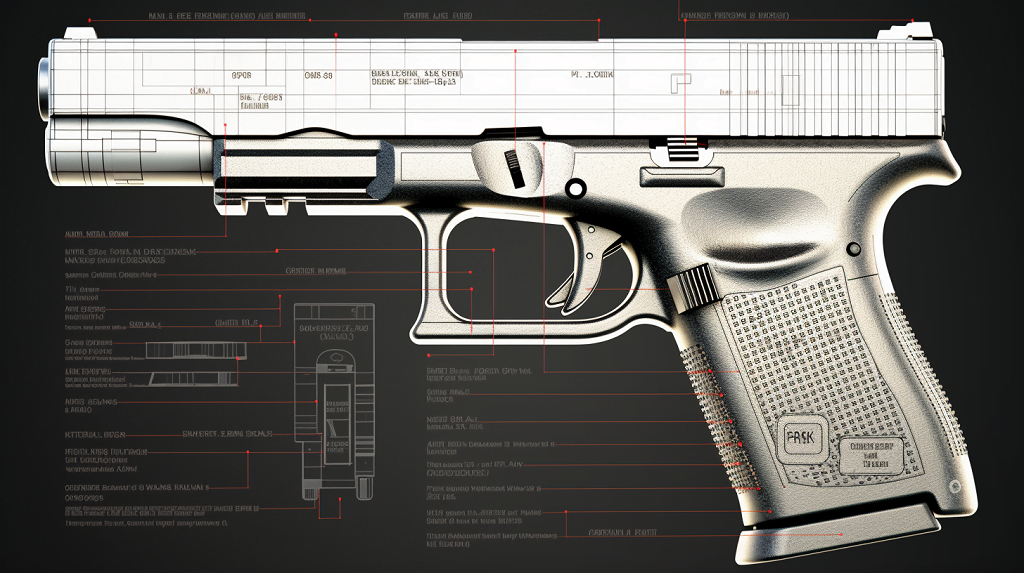
A Glock parts diagram helps owners identify the major parts of the pistol and understand what each area does at a high level. That can make manual reading, cleaning, troubleshooting conversations, and gunsmith communication easier.
This guide is for parts identification only. It is not a trigger job, polishing, connector swap, or modification tutorial. If a Glock has a safety issue, unusual trigger feel, broken part, or unknown history, stop using it and have it inspected by Glock, a qualified armorer, or a qualified gunsmith.
Table of Contents
Safety First Before Inspecting a Glock
Before looking at any pistol parts, point the firearm in a safe direction, remove the magazine, lock the slide open, visually and physically check the chamber, and move ammunition away from the workspace. Keep your finger outside the trigger guard during handling.
Use the NSSF firearm safety rules and Hunter Ed firearms safety rules as the baseline. Parts knowledge should support safer handling, not shortcuts.
Main Glock Assemblies
Most Glock pistols can be understood in four broad owner-level assemblies: slide assembly, barrel, recoil spring assembly, and frame assembly. The magazine is separate but just as important for reliable feeding.
- Slide assembly: houses the striker system, extractor, sights, and related slide parts.
- Barrel: contains the chamber and bore.
- Recoil spring assembly: helps control slide movement during cycling.
- Frame assembly: holds the grip, rails, controls, locking block, trigger system parts, and magazine well.
- Magazine: stores and feeds cartridges into the pistol.
Glock’s own overview of the Safe Action system is useful for understanding that several internal safeties work together. It is still not a substitute for the manual for your exact model.
Slide Parts
Slide
The slide is the upper moving part of the pistol. It holds the barrel and recoil spring assembly during normal operation and supports the sights, extractor, striker system, and internal channels.
Extractor and Ejector Relationship
The extractor helps pull the fired case from the chamber. The ejector, located in the frame assembly on many Glock pistols, helps kick the case out as the slide cycles. Extraction or ejection problems can come from ammunition, grip, magazine, wear, dirt, or parts issues, so avoid guessing through random parts swaps.
Striker and Firing Pin Safety
Glock pistols are striker-fired. The striker system and firing pin safety are safety-related parts. If the pistol has light strikes, odd trigger behavior, or signs of damage, use qualified inspection rather than home fitting or polishing.
Sights
Sights help align the pistol with the target. Some models use fixed sights, night sights, fiber-optic sights, or optic-ready slides. Sight changes require the correct tools and care so the slide is not damaged.
Barrel and Recoil Spring Assembly
Barrel
The barrel contains the chamber and bore. Use only ammunition that matches the firearm marking and owner’s manual. If the barrel is bulged, obstructed, cracked, badly fouled, or damaged, stop using the pistol.
Recoil Spring Assembly
The recoil spring assembly helps absorb and return slide movement. Springs are wear parts. Replacement interval, part type, and compatibility depend on the model, caliber, and manufacturer guidance.
Frame, Controls, and Fire-Control Parts
Frame
The frame is the lower structure that includes the grip, rails, trigger area, locking block area, magazine well, and controls. On many pistols, the frame is the serialized firearm. For legal ownership, transfer, or classification questions, rely on official sources such as the ATF firearms pages and current state law.
Trigger, Trigger Bar, and Connector
The trigger system includes parts that interact with the striker and internal safeties. Do not file, polish, bend, or alter these parts based on internet advice. Trigger-related work can affect safe operation and should be handled by qualified people using approved parts and procedures.
Slide Stop Lever and Magazine Catch
The slide stop lever can lock the slide open and release it in normal operation. The magazine catch retains and releases the magazine. If either control becomes sticky, loose, or unreliable, inspect for dirt, damage, or improper parts.
Locking Block and Rails
The locking block and frame rails help support barrel and slide movement. These areas should be clean, lightly lubricated according to the manual, and free from cracks or abnormal wear.
Magazine Parts
The magazine includes the body, follower, spring, floorplate, and insert. A damaged or dirty magazine can cause feeding problems that may look like pistol problems. Check for cracked bodies, weak springs, damaged followers, and dirt inside the magazine.
Magazine capacity laws vary by location. Check current law where you live, travel, or shoot before buying or carrying magazines.
Maintenance Boundaries
Owner-level maintenance usually means safe unloading, basic fieldstripping as described in the manual, cleaning, light lubrication, and visual inspection. Internal fitting, trigger work, safety-part replacement, or diagnosing repeated malfunctions is different.
- Follow the manual for your exact model and generation.
- Use only compatible parts from trusted sources.
- Do not mix parts when you are unsure about caliber, generation, or model fit.
- Stop using the pistol if a safety, trigger, slide, barrel, or magazine acts abnormally.
- Use Glock, a qualified armorer, or a qualified gunsmith for safety-sensitive work.
For cleaning product basics, see our guide to gun cleaning solvents and oils. For trigger-system vocabulary, see our gun trigger mechanism guide.
FAQ
What are the main Glock parts?
The main parts are the slide assembly, barrel, recoil spring assembly, frame assembly, fire-control parts, controls, and magazine.
Are Glock pistols hammer-fired?
No. Standard Glock pistols are striker-fired, meaning they use an internal striker system rather than an exposed hammer.
Can I replace Glock trigger parts myself?
Trigger parts affect safety and reliability. Follow the manual and use Glock, a qualified armorer, or a qualified gunsmith for safety-sensitive trigger work.
Why does the magazine matter in Glock reliability?
The magazine controls how cartridges feed into the pistol. Damage, dirt, weak springs, or incompatible magazines can cause feeding issues.
What should I do if a Glock part looks worn or cracked?
Stop using the pistol, unload it safely if you can, store it securely, and have it inspected by Glock, a qualified armorer, or a qualified gunsmith.