How to Choose a Concealed Carry Holster for Everyday Use

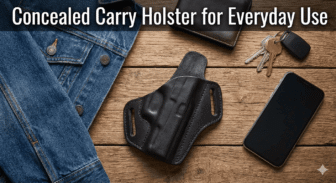
Choose a concealed carry holster by checking fit, trigger-guard coverage, retention, belt support, comfort, safe access, and current carry rules in your state or local area. A holster should match your exact handgun setup, including optic, light, rail, and safety configuration. If any part of the trigger guard is exposed, or the gun can move loosely inside the holster, do not use it.
This guide is general safety and buying guidance, not legal advice or carry training. Before carrying a firearm, check current federal, state, local, and location-specific rules, and get qualified instruction from a reputable trainer in your area.
Table of Contents
Quick Answer: What Makes a Good Concealed Carry Holster?
A good concealed carry holster fits the exact handgun, fully covers the trigger guard, holds the firearm securely, stays attached to the belt or clothing, supports safe handling, and remains comfortable enough that the owner will use it consistently. It should also work with the carrier’s body type, clothing, legal setting, and training level.
Non-negotiable checks
Fit, trigger protection, and retention come first. Style, brand, price, and concealment matter, but they do not fix a holster that exposes the trigger, collapses around the gun, slips off the belt, or fits the wrong firearm model.
What to avoid
Avoid vague universal holsters unless they clearly cover the trigger guard and hold your specific handgun securely. Avoid worn-out holsters, weak clips, loose soft pockets, and any setup that lets clothing or objects enter the trigger area.
Check Carry Rules First
Carry rules change by state, city, property type, permit status, age, training requirement, and restricted location. The ATF firearms page is a useful federal starting point, and the ATF also keeps a state laws and published ordinances resource. Always verify current rules for your own jurisdiction before carrying.
State and local rules
Do not rely on an old article, a social post, or a map screenshot. Check your state police, attorney general, licensing agency, or official public-safety page for current permit, reciprocity, prohibited-place, duty-to-inform, and transport rules.
Property and location rules
Some places restrict firearms even when a person may lawfully carry elsewhere. Schools, courthouses, federal facilities, posted private property, workplaces, alcohol-related locations, and events may have separate rules. Check before entering.
Training expectations
Legal permission is not the same as readiness. Safe storage, safe handling, conflict avoidance, emergency planning, and local training matter. Project ChildSafe is a strong starting point for safe firearm storage and responsibility at home.
Match the Exact Firearm
Holster fit is model-specific. A holster made for one pistol may not safely fit a similar-looking model, even from the same manufacturer. Small differences in slide length, frame shape, trigger guard, rail, optic cut, or controls can change how the gun seats.
Model and generation
Check the exact model, generation, barrel length, and slide profile. If the holster maker lists a compatibility chart, use it. If your firearm has changed parts, confirm fit again.
Optics and lights
A pistol-mounted optic or light usually requires a holster built for that setup. Do not force a light-bearing pistol into a non-light holster, and do not assume a light-bearing holster safely fits every light.
Manual safety and controls
Check that the holster does not bump, block, or unintentionally move controls. Safeties, slide stops, magazine releases, and takedown levers should not be stressed by the holster body.
Protect the Trigger Guard
Trigger-guard coverage is one of the most important holster checks. The holster should cover the trigger area so clothing, cords, fingers, or loose objects cannot reach the trigger while the firearm is holstered.
Full coverage
Look at both sides of the holstered firearm. If the trigger or trigger edge is visible or reachable, the holster is not acceptable for carry. This is especially important with soft materials, pocket carry, and worn holsters.
Rigid mouth
A rigid holster mouth helps the holster keep its shape when the firearm is removed. Collapsed material can create unsafe handling problems. If a holster folds into the trigger area, replace it.
No loose objects
The holster area should be clear of drawstrings, keys, coins, tools, or pocket items. Do not mix a firearm with loose objects in the same pocket or bag unless the firearm is secured in a holster that protects the trigger.
Check Retention
Retention means the holster keeps the firearm in place during normal movement. It should hold the gun securely without making handling unpredictable. The right level depends on carry method, clothing, activity, and training.
Passive retention
Passive retention comes from fit and friction. Many molded holsters use tension screws or shaped material. Check it with the unloaded firearm and follow the holster maker’s adjustment instructions.
Active retention
Active retention uses a strap, hood, lever, or release system. It may be useful for open carry, duty-style use, outdoor work, or higher-movement settings. Choose it only if you can learn the system safely with qualified instruction.
Movement check
With the firearm unloaded and pointed in a safe direction, check whether the holster holds position during normal daily movement. If the firearm shifts, tilts, or works loose, the setup needs adjustment or replacement.
Choose Material
Holster material affects fit, comfort, sweat resistance, structure, and long-term wear. No material is right for everyone, so compare the safety features first, then decide what you can carry consistently.
Kydex and molded polymer
Kydex and molded polymer are common because they hold shape well, can give clear retention feedback, and usually protect the trigger guard consistently. Check edges, clip strength, and whether the model is cut for your exact setup.
Leather
Leather can be comfortable and durable when well made, but it can soften, stretch, or collapse over time. Inspect it often. If it no longer protects the trigger area or holds the firearm securely, retire it.
Nylon and soft holsters
Soft holsters vary widely. Some are useful for specific low-risk storage or bag applications, but many do not provide enough trigger protection or structure for carry. Evaluate them carefully and avoid vague fit claims.
Pick Carry Position Carefully
Carry position affects comfort, concealment, access, and safety. The right choice depends on body type, clothing, daily movement, training, and local rules. Keep the decision practical and get instruction before relying on any setup.
Inside the waistband
Inside-the-waistband holsters are common for concealed carry because they keep the firearm close to the body. Check comfort while standing, sitting, bending, and wearing normal clothing. Pressure points can make a safe setup hard to use consistently.
Outside the waistband
Outside-the-waistband holsters can be more comfortable and easier to fit, but they may require cover garments and stronger attention to local rules. Make sure the holster stays close to the body and remains secured to the belt.
Pocket, ankle, and bag carry
Alternative carry methods need extra scrutiny. The trigger guard still must be protected, the firearm must stay oriented, and loose objects must stay out of the holster area. Bags can be separated from the owner, so think carefully before choosing that method.
Use the Right Belt and Clips
A good holster can fail if the belt, clips, or attachment hardware are weak. The holster should stay attached during normal movement and should not come out with the firearm.
Belt stiffness
A purpose-built carry belt can spread weight and reduce movement. A soft casual belt may twist, sag, or let the holster shift during the day. Comfort usually improves when the belt supports the holster properly.
Clip strength
Check clips, loops, screws, washers, and spacers. Hardware should be tight and appropriate for the belt width. If screws loosen over time, follow the manufacturer’s maintenance guidance.
Cant and ride height
Cant and ride height affect concealment and comfort. Adjust them slowly and retest. A setting that hides well but shifts constantly is not a good carry solution.
Balance Comfort and Control
Comfort matters because an uncomfortable holster often gets left behind. But comfort should not come from weak retention, poor trigger coverage, or unstable carry. Look for a setup that is safe, repeatable, and realistic for your daily clothing.
Daily clothing check
Test the unloaded setup with the clothing you actually wear. Sitting, driving, reaching, and bending can reveal pressure, printing, or movement problems that are not obvious while standing still.
Skin and sweat
Sweat guards, backing material, and edge finishing can affect comfort. Also check whether moisture could reach the firearm. Clean and inspect both firearm and holster according to maker guidance.
Medical and mobility needs
Body shape, injury history, mobility limits, and daily tasks can change what works. If a position causes pain, unsafe handling, or poor control, choose a different setup and get trained guidance.
Inspect and Maintain
Holsters wear out. A quick inspection can catch loose screws, cracked shells, stretched leather, weak clips, sweat damage, and debris before they become safety problems.
Check hardware
Inspect screws, clips, spacers, snaps, and retention devices. Replace missing or damaged hardware with parts approved by the holster maker.
Clean debris
Dirt, lint, shell fragments, or clothing fibers can collect inside a holster. Keep the holster clean enough that it does not interfere with safe seating or trigger protection.
Replace when worn
Do not keep using a holster because it used to fit. If structure, retention, or trigger coverage declines, replace it. The cost of replacement is small compared with the risk of poor carry gear.
Common Holster Mistakes
Buying by firearm size only
Compact, subcompact, and full-size labels are not enough. Buy by exact model and configuration. A close fit is not the same as a safe fit.
Ignoring the belt
Many comfort and concealment problems are belt problems. If the holster shifts, sags, or pulls away, fix the support system before blaming only the holster.
Skipping instruction
Qualified training helps users understand safe carry, storage, legal boundaries, and emergency decisions. A holster purchase should be part of a safety plan, not the whole plan.
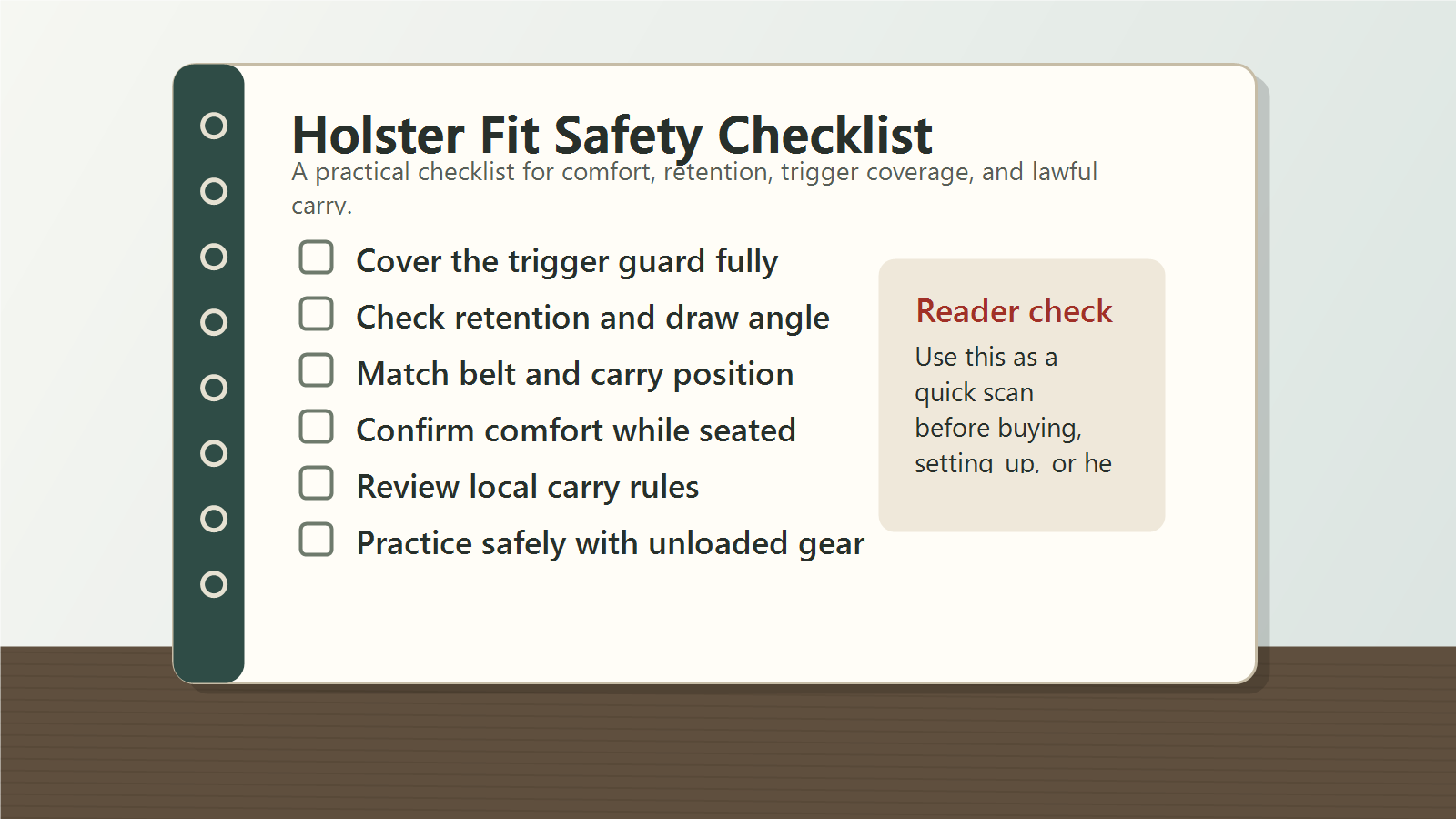
Concealed Carry Holster Checklist
- Current state, local, and location-specific rules checked
- Exact firearm model, generation, optic, light, and controls confirmed
- Trigger guard fully covered on both sides
- Holster retains firearm during normal movement
- Belt, clips, loops, and hardware support the setup
- Material keeps its shape and does not collapse into the trigger area
- Carry position works with normal clothing and daily movement
- Holster is inspected regularly for wear, loose hardware, and debris
- Safe storage plan is in place when the firearm is not carried
- Qualified training is planned or completed
FAQ
What safety checks matter most in a concealed carry holster?
The safest choice is a holster that fits your exact firearm, fully covers the trigger guard, holds the gun securely, and stays attached to your belt or carry system. The material and position are secondary to those checks.
Can I use a universal holster?
Only if it safely fits your exact firearm, protects the trigger guard, and holds the firearm securely. Many universal holsters are too vague for daily carry, so inspect carefully before trusting one.
Do I need a special belt for concealed carry?
A supportive belt often helps. The belt should carry the weight, keep the holster stable, and match the holster clips or loops. A weak belt can make a good holster feel bad.
Should a holster cover the trigger?
Yes. The trigger guard should be fully covered while the firearm is holstered. If the trigger can be reached through or around the holster, choose a different holster.
How often should I replace a holster?
Replace it when it loses structure, retention, trigger coverage, attachment strength, or safe fit. Inspect it regularly instead of waiting for a visible failure.
Final Takeaway
A concealed carry holster should be chosen for safety before style. Check current carry rules, match the exact firearm, demand full trigger-guard coverage, test retention and belt support, inspect wear, and get qualified instruction before relying on the setup in daily life.