How to Build a Deer Blind From Pallets: Safe Ground-Blind Plan
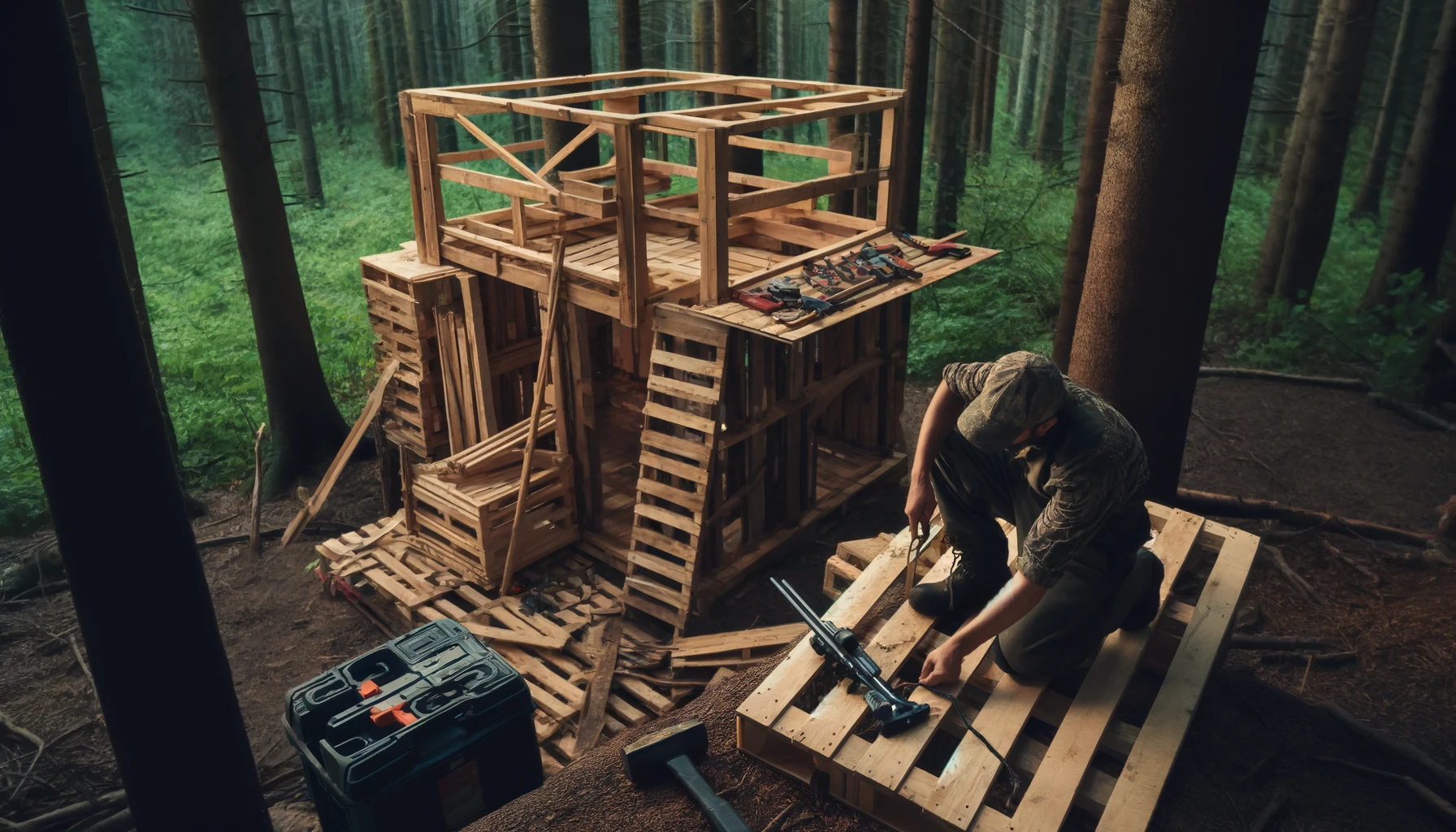
You can build a simple ground deer blind from pallets, but only if the pallets are clean, solid, and safe to use. Treat pallet wood as reclaimed material: inspect every board, avoid chemical spills or unknown contamination, keep the blind low and stable, and do not turn a pallet project into a raised stand unless a qualified builder designs the structure.
This guide focuses on a practical ground blind for deer hunting. It covers pallet selection, layout, bracing, weatherproofing, shooting windows, safety checks, and hunting setup without pretending that every pallet is safe or strong enough for structural use.
Table of contents
Quick Answer: How Do You Build a Deer Blind From Pallets?
Use clean heat-treated pallets, set them on level ground, brace the corners, fasten the walls securely, add a simple roof or cover, cut shooting windows at a comfortable seated height, and camouflage the outside with natural brush or dull paint. Keep the blind low, stable, and easy to enter quietly.
Best use for pallet blinds
Pallet blinds work best as budget ground blinds for private land, food plots, field edges, and travel corridors where you can leave the blind in place and let deer get used to it.
What not to build
Do not use random pallet wood for a high platform or tower stand. Fall risk changes the whole project. If you need a raised structure, follow building rules, use rated materials, and get qualified help.
Start With Pallet Safety
Pallets are not all the same. Some carry food-safe goods. Others may have held chemicals, oils, pesticides, or industrial cargo. Before you use any pallet for a blind, inspect the markings, smell, stains, nails, cracks, and board condition.
Look for clean heat-treated pallets
Many pallets are marked with codes. Pallet safety references such as 1001Pallets pallet safety explain common markings and why clean heat-treated pallets are usually preferred for reuse projects. Avoid pallets with unknown chemical spills, strong odor, mold, or heavy staining.
Avoid questionable treated wood
Wood preservatives and treated lumber have different uses and risks. The EPA overview of wood preservative chemicals is a useful reminder that not every treated board should be handled casually or cut without care.
Remove bad boards
Reject boards that are cracked, soft, rotten, oily, badly warped, or full of loose nails. A deer blind does not need perfect lumber, but it does need walls that will not wobble apart in wind.
Keep It as a Ground Blind
A pallet ground blind is much safer and simpler than a tower blind. Set it on level ground, brace it well, and avoid climbing risks. OSHA fall-protection guidance is written for workplaces, but the basic lesson still matters: height adds serious risk. See OSHA’s fall protection page for the larger safety context.
Level ground matters
A blind on uneven ground twists, shifts, and makes noise. Clear rocks, sticks, and loose soil before setting the pallets. Use pavers, treated skids, or blocking under the base if needed to keep wood off damp soil.
Anchor for wind
A light pallet blind can catch wind. Use stakes, ground anchors, or posts where appropriate. Check local land rules before driving posts or leaving a permanent structure.
Materials and Tools
Keep the build simple. A small blind does not need fancy finish work; it needs stable walls, quiet entry, weather cover, and safe shooting angles.
Common materials
- Clean heat-treated pallets
- Exterior screws or structural screws suited to the build
- Corner braces or extra lumber for bracing
- Roof material such as plywood, metal roofing, tarp, or polycarbonate sheet
- Camouflage fabric, dull exterior paint, brush, or natural cover
- Ground stakes, posts, or anchors where allowed
Common tools
- Drill or driver
- Hand saw or circular saw
- Hammer or pry bar
- Tape measure and level
- Gloves and eye protection
- Staple gun or fasteners for cover material
Plan the Layout
Before fastening anything, sit where the hunter will sit and check sight lines. A blind that looks good in the yard can be awkward when the seat, bow, firearm, tripod, or shooting rest is inside.
Size the blind for the hunter
One hunter needs less room than two hunters or a youth-and-adult setup. Leave enough space to sit, turn slowly, lift gear, and enter without banging the wall.
Plan the door before the windows
Choose an entry side that faces away from the main deer approach. A quiet door or curtain is often better than a heavy hinged panel that creaks.
Build the Blind
Build slowly and check stability often. A blind that wobbles when you lean on it needs more bracing before it goes into the field.
Set the base
Set the base pallets or skids on level support. Keep the wood off wet ground where possible. If you use a floor, make sure it does not rock or flex under normal movement.
Stand and brace the walls
Stand wall pallets upright and fasten them at the corners. Add diagonal bracing or short cross braces. Screws are easier to inspect and tighten later than loose nails.
Add a simple roof
A sloped roof sheds water and helps keep the inside dry. Keep it light enough for the wall structure, and fasten it so wind cannot lift it.
Cut Safe Shooting Windows
Windows should match the hunter’s seated height and the expected shooting direction. Do not make every side wide open; too many openings reduce concealment and can make movement easier for deer to spot.
Check seated height
Sit in the actual chair or stool before cutting. Mark where your firearm, bow, or crossbow points naturally. Keep the muzzle or limbs clear of the wall and window edge.
Keep the backstop in mind
Only cut shooting lanes where a safe backstop and legal shot direction exist. If a window points toward a road, house, trail, livestock, or property line, close that window.
Weatherproof and Camouflage It
A pallet blind will last longer if it sheds water and blends into the area. Keep the finish dull, quiet, and simple.
Use dull exterior paint or cover
Flat brown, gray, and green tones usually blend better than glossy paint. Let paint and sealers dry fully before hunting from the blind.
Brush it in naturally
Use local brush, grass, limbs, or crop residue where legal. Do not cut live trees or disturb habitat on public land unless the land manager allows it.
Place It for Deer Movement
The blind should help you hunt the wind, watch deer movement, and enter quietly. If you are still learning deer habits, our guide on forest hunting can help with cover and movement basics.
Watch wind and access
Place the blind so you can reach it without walking through the main deer trail. A good blind is less useful if your entry route alerts deer before daylight.
Check legal placement
Private land still needs landowner approval. Public land may limit permanent blinds, natural materials, bait, trimming, and removal dates. Review license and land rules before building; our hunting license guide is a good starting point.
Deer Blind Safety Checklist
- Pallets are clean, dry, and free of chemical stains or strong odor.
- Bad boards, loose nails, and rotten sections are removed.
- Blind is set on level ground and kept low.
- Walls are braced and do not wobble.
- Roof is light, sloped, and fastened against wind.
- Windows match seated height and safe shot directions.
- Entry is quiet and does not face the main deer approach.
- Public-land or private-land permission rules are checked.
- Blind is inspected before every season and after storms.
If this is part of your first hunting setup, pair the blind with safe field planning. Start with our first-time hunting guide before choosing a stand site or leaving gear in the field.
FAQ
Are pallets safe for building a deer blind?
Some pallets are usable, but not all. Use clean, solid pallets with no chemical odor, heavy staining, rot, or unknown spills. When in doubt, reject the pallet.
Can I build a raised deer blind from pallets?
A pallet project is better kept as a ground blind. Raised structures add fall and structural risk. Use rated materials and qualified design help if you need height.
How many pallets do I need for a deer blind?
A small one-person ground blind may use four to six pallets depending on size, floor choice, and roof design. Extra pallets are useful for bracing and replacing bad boards.
Should I paint a pallet deer blind?
Flat exterior paint can reduce shine and help the blind blend in. Let paint dry fully before hunting, and avoid strong odors close to opening day.
Can I leave a pallet blind on public land?
Only if the land rules allow it. Many public areas restrict permanent blinds, cutting vegetation, staking structures, or leaving gear after a certain date.
Bottom Line
A pallet deer blind can be a useful budget ground blind when you use clean pallets, brace the walls, avoid height, and place it with wind and safe shots in mind. Keep the build simple, check land rules, and inspect the blind before every season.