5 Best Hunting Boots for Men
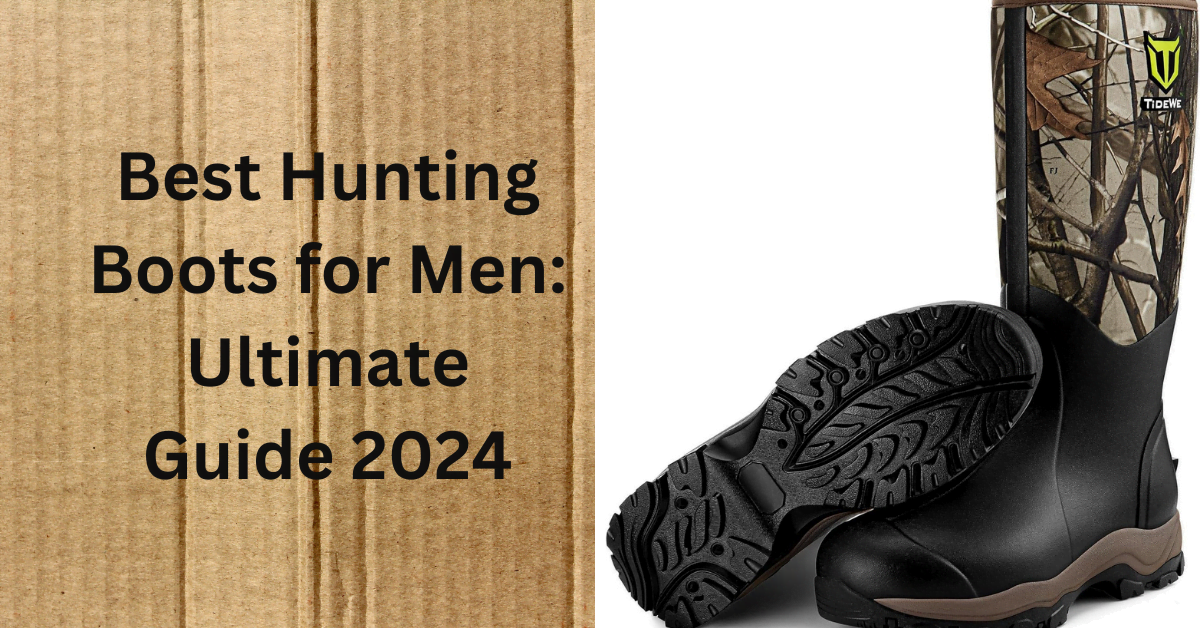
The best hunting boots for men keep your feet dry, warm enough for the sit, and stable enough for the walk in, without wearing you out before legal light. The right pair depends on the terrain you cover, how long you sit still, and how cold the mornings get where you hunt.
This guide compares five current Amazon listings across leather and rubber construction, insulation weight, and boot height, so you can match a boot to your actual hunt instead of guessing from marketing copy. Check the current size chart and calf or shaft circumference before you buy, since insulated boots and thick hunting socks both change how a boot fits compared to an everyday shoe.
Table of Contents
- Quick Picks Table
- How We Chose
- Reviews of the Best Hunting Boots for Men
- 1. Irish Setter Wingshooter 7″ Waterproof Hunting Boot
- 2. Danner Pronghorn 8″ 400G Gore-Tex Hunting Boot
- 3. LaCrosse Alphaburly Pro 18″ 1600G Hunting Boot
- 4. MUCK Woody Max Boot
- 5. Kenetrek Mountain Extreme 400
- Men’s Hunting Boot Buying Guide
- FAQ
- Final Recommendation
Quick Picks Table
| Product | Best for | Insulation | Check price |
|---|---|---|---|
| Irish Setter Wingshooter 7″ | Early season, upland, and all-day walking | Uninsulated | Amazon |
| Danner Pronghorn 8″ 400G | Versatile stand-and-walk hunts | 400g Thinsulate | Amazon |
| LaCrosse Alphaburly Pro 18″ 1600G | Cold, wet, muddy late-season sits | 1600g Thinsulate Ultra | Amazon |
| MUCK Woody Max | Wet ground and cold mornings in a rubber boot | Fleece lined | Amazon |
| Kenetrek Mountain Extreme 400 | Steep backcountry terrain with a heavy pack | 400g Thinsulate | Amazon |
How We Chose
We did not field test these boots ourselves. We built this list from current, in-stock Amazon listings, checking each product page for insulation weight, waterproofing method, shaft or boot height, and outsole and midsole construction, then confirmed those details against the manufacturer’s stated specs on the listing rather than reusing older marketing copy. We picked one boot per role instead of five similar leather boots, so a walking hunter, a stand hunter, a wet-ground hunter, and a backcountry hunter each get a boot built for that job.
Reviews of the Best Hunting Boots for Men
The picks below are ordered from lightest and least insulated to heaviest and warmest, so you can scan down to the insulation level and boot height that match your hunt.
1. Irish Setter Wingshooter 7″ Waterproof Hunting Boot

The Wingshooter is the boot to reach for when the hunt is more walking than sitting. It is built from full grain leather with a UltraDry waterproof lining, a removable polyurethane footbed, and a Goodyear welt sole that can be resoled instead of replaced. The uninsulated build keeps it light on your feet across a full day of upland walking or early season stand access.
Because it carries no added insulation, it is not the boot for a long cold sit. Use it when staying cool and mobile matters more than warmth, and add a heavier sock if the morning is cold but the day will warm up.
Best for: upland hunters and early season walkers who want a light, all-day leather boot.
Key specs (from the Amazon listing): 7 inch shaft, full grain leather upper, UltraDry waterproof construction, Goodyear welt sole, removable PU footbed, steel shank, Prairie outsole, uninsulated.
Pros
- Lightweight for a full day of walking compared with insulated or rubber boots.
- Goodyear welt construction allows resoling instead of replacing the whole boot.
- Removable footbed makes it easy to swap in an aftermarket insole.
Cons
- No insulation, so it is a poor match for a long cold-weather stand sit.
- Leather needs a break-in period and periodic conditioning to keep the waterproofing performing.
Skip this if: you sit still for hours in cold weather and need built-in insulation.
2. Danner Pronghorn 8″ 400G Gore-Tex Hunting Boot

The Pronghorn is the middle-ground pick for hunters who both walk in and sit still on the same trip. Full grain leather and nylon combine with a GORE-TEX waterproof lining and 400 grams of insulation, enough to take the edge off a cool morning without overheating on the walk to the stand.
The TERRA FORCE platform and cushioned footbed keep it comfortable over mixed terrain, from gravel roads to soft field edges. It is not the warmest boot here and it is not the tallest, so treat it as the versatile choice rather than the specialist.
Best for: hunters who need one boot for both walking and sitting through a normal fall hunt.
Key specs (from the Amazon listing): 8 inch shaft height, 13.5 inch shaft circumference, full grain leather and nylon upper, GORE-TEX waterproof lining, 400 gram insulation, three-density OrthoLite footbed, TERRA FORCE platform.
Pros
- GORE-TEX lining and full grain leather give reliable waterproofing in wet grass and light rain.
- 400 gram insulation adds warmth without the bulk of a heavier rubber boot.
- Cushioned footbed and TERRA FORCE platform suit long days of mixed walking and standing.
Cons
- Not warm enough for extended sits in deep cold compared with a 1600 gram rubber boot.
- Leather upper still needs a break-in period before a long hunt.
Skip this if: your hunts are mostly long, motionless sits in freezing temperatures.
3. LaCrosse Alphaburly Pro 18″ 1600G Hunting Boot

The Alphaburly Pro is built for the hunter who spends hours motionless in a cold, wet stand. Natural rubber construction, 1600 grams of Thinsulate Ultra insulation, and an 18 inch shaft cover deep mud and standing water in a way no leather boot can match.
An adjustable gusset lets the top of the boot fit snugly around a wider or narrower calf, which matters when thick winter pants are tucked in. This is a cold-sit boot first, so it can feel warm and heavy if you plan to cover ground.
Best for: late-season deer stands, wet field edges, and hunters who sit still in the cold.
Key specs (from the Amazon listing): 18 inch shaft, natural rubber construction, 1600 gram Thinsulate Ultra insulation, adjustable calf gusset, scent-free rubber exterior.
Pros
- 1600 gram insulation is enough for long, motionless sits in cold weather.
- Tall 18 inch rubber shaft handles mud and standing water that a leather boot cannot.
- Adjustable gusset improves the fit around bulky winter pants.
Cons
- Heavy and warm for an active walking hunt in mild weather.
- Rubber construction does not breathe the way a leather and membrane boot does.
Skip this if: you need a lighter boot for a long walk rather than a cold sit.
4. MUCK Woody Max Boot

The Woody Max is a rubber and neoprene boot built for wet ground and cold mornings without the added weight of a heavily insulated leather boot. A stretch-fit comfort topline seals around the calf to keep warmth in and debris out, and a warm fleece lining adds comfort once the neoprene has warmed against your leg.
It shares the tall 18 inch coverage of a rubber field boot, so it handles creek crossings, muddy blinds, and dewy fields well. It runs warm on a hard walk, so treat it as a stand or blind boot rather than a hiking boot.
Best for: wet ground, mud, and cold mornings where you want a rubber boot with fleece warmth.
Key specs (from the Amazon listing): 18 inch shaft height, rubber, neoprene, and Spandura construction, 5mm neoprene bootie, warm fleece lining, EVA contoured molded midsole, stretch-fit comfort topline.
Pros
- Stretch-fit topline seals around the calf better than a rigid rubber shaft.
- Fleece lining adds comfort in a rubber boot without leather’s break-in period.
- Tall 18 inch coverage handles mud and shallow water well.
Cons
- Runs warm during an active walk compared with an uninsulated leather boot.
- Rubber and neoprene do not breathe as well as a membrane-lined leather boot.
Skip this if: you need a lightweight boot for long hikes rather than stand or blind use.
5. Kenetrek Mountain Extreme 400

The Mountain Extreme 400 is the pick for steep, rugged terrain and heavy pack loads, the kind of ground where ankle support matters as much as waterproofing. A 2.8mm full grain leather upper, rigid 7mm nylon midsole, and Kenetrek’s K-Talon outsole are built for backcountry mountain hunts rather than a flat field walk.
A Windtex waterproof breathable membrane and 400 grams of Thinsulate keep the boot from overheating on a hard climb while still holding warmth at altitude. The stiff, supportive build is a tradeoff, it protects your feet on rock and scree but takes longer to break in than a soft-flex boot.
Best for: backcountry and mountain hunters who carry heavy packs over steep, uneven ground.
Key specs (from the Amazon listing): 10 inch shaft, 2.8mm full grain leather upper, Windtex waterproof breathable membrane, 400 gram Thinsulate insulation, 7mm nylon midsole, K-Talon outsole, reinforced rubber sole guard.
Pros
- Rigid midsole and reinforced sole guard protect your feet on rock and scree.
- Windtex membrane manages moisture well during hard climbs.
- Built for carrying heavy pack loads over uneven backcountry terrain.
Cons
- Stiffer and heavier than the other boots here, with a longer break-in period.
- More boot than most hunters need for flat-field or stand hunting.
Skip this if: your hunting ground is mostly flat fields or a short walk to a stand.
Men’s Hunting Boot Buying Guide
Boot choice comes down to four factors that matter more than brand name: how much insulation you need, how the boot manages water and sweat, what height and terrain it is built for, and whether the fit works with your socks and break-in routine.
Insulation grams: matching warmth to how much you move
Insulation weight is listed in grams, and more grams means more warmth but also more bulk and heat retention. An uninsulated boot like the Wingshooter suits active walking hunts where you generate your own body heat. A 400 gram boot such as the Pronghorn or Mountain Extreme 400 works for hunts that mix walking and sitting. A 1600 gram boot such as the Alphaburly Pro is built for long, mostly motionless sits in real cold. Choosing more insulation than your activity level needs is a common way hunters end up with sweaty, then cold, feet.
Waterproofing and breathability
Leather boots with a membrane, such as GORE-TEX or Windtex, block water while letting sweat vapor escape, which matters on a hard walk in. Rubber boots create a fully sealed barrier that handles standing water and mud better than any membrane, but they trap more heat and moisture against your skin during activity. Neither approach is wrong, match it to whether your hunt involves more walking or more standing in wet ground.
Boot height and terrain match
A 7 or 8 inch boot gives ankle support and mobility for upland walking and mixed terrain. A 10 inch boot like the Mountain Extreme 400 adds support for steep, uneven backcountry ground. An 18 inch rubber boot like the Alphaburly Pro or Woody Max is built for mud, standing water, and creek crossings that would soak a shorter boot. Pick height based on the wettest or roughest ground you will actually cross, not the deepest case you might imagine.
Sizing and break-in
Leather boots typically need a break-in period of several short wears before a long hunt, and many runs slightly narrow until the leather relaxes. Rubber boots such as the Alphaburly Pro and Woody Max tend to fit true to size but should be tried on with the same socks you plan to hunt in, since insulation and sock thickness both take up room inside the shaft. Always check the current size chart on the listing, since fit can shift between models even within the same brand.
FAQ
Q: How much insulation do I need in a hunting boot?
A: It depends on how much you move. Uninsulated or lightly insulated boots suit active walking hunts, while 400 to 800 gram boots cover most stand hunting, and 1000 gram or higher insulation is for long, cold, mostly motionless sits.
Q: Are rubber or leather hunting boots better?
A: Rubber boots seal out mud and standing water better than leather, while leather boots with a waterproof membrane breathe better on an active walk. Choose rubber for wet, muddy ground and leather for drier, mixed terrain.
Q: What boot height should I choose for hunting?
A: Match height to the wettest or roughest ground you cross. Shorter 7 to 10 inch boots suit upland and backcountry walking, while taller 17 to 18 inch rubber boots handle mud and standing water that would soak a shorter boot.
Q: Do hunting boots need to be broken in before opening day?
A: Leather boots generally need a break-in period of several short wears to soften and mold to your foot. Rubber boots fit closer to true to size out of the box, but should still be tested with your hunting socks before a long day afield.
Q: Can one pair of boots work for both early and late season hunting?
A: A single midweight boot like a 400 gram insulated leather boot can cover a wider temperature range than a specialist boot, but very cold late-season sits and very warm early season walks are usually better served by two different boots matched to each condition.
Final Recommendation
Choose the Irish Setter Wingshooter for light, uninsulated walking hunts, the Danner Pronghorn 400G for a versatile boot that covers both walking and sitting, the LaCrosse Alphaburly Pro 1600G for cold, wet, motionless late-season sits, the MUCK Woody Max for muddy and wet ground where you want fleece warmth in a rubber shell, and the Kenetrek Mountain Extreme 400 for steep backcountry terrain under a heavy pack. Match insulation and boot height to your actual terrain and activity level, and confirm the current size chart before you order.