Best Hunting Boots for Cold Weather
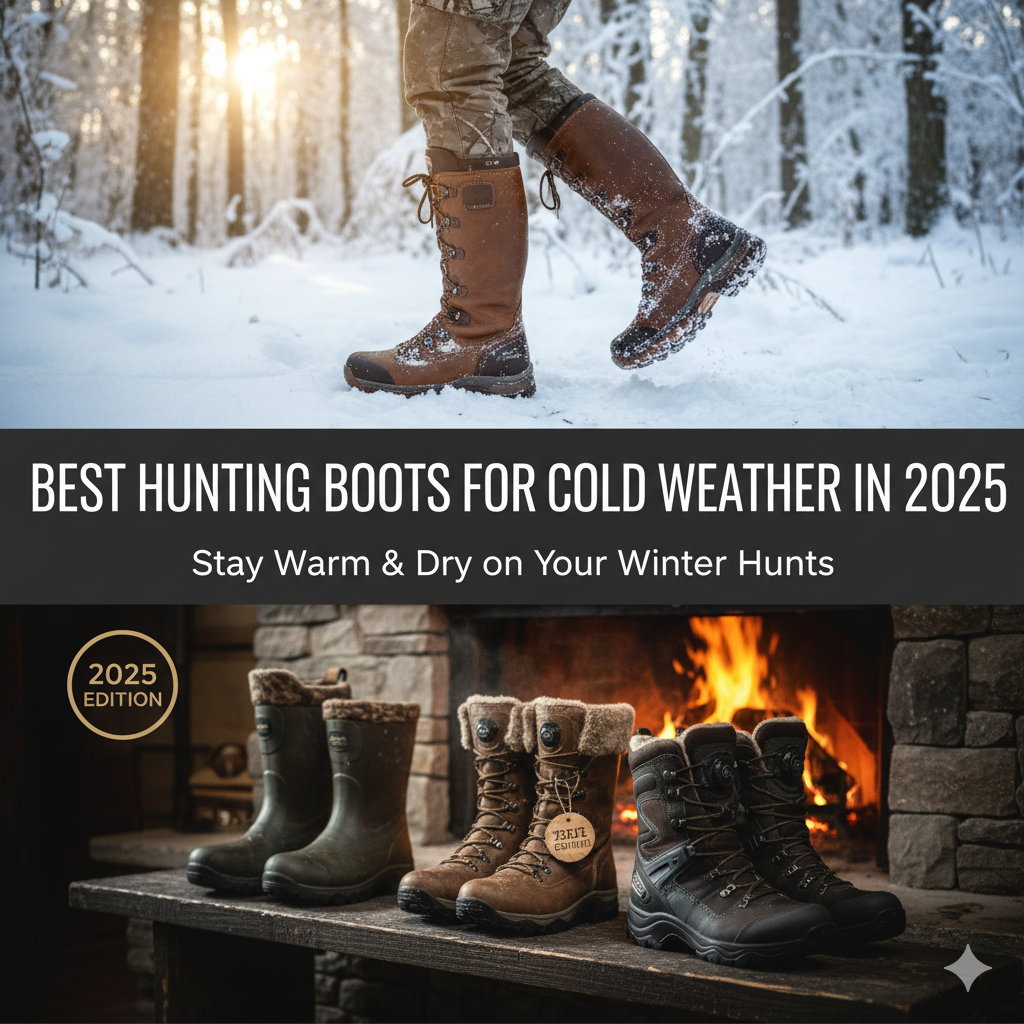
The best hunting boots for cold weather are not the same boots you would pick for a mild fall hunt. When temperatures drop into the single digits or below, insulation gram counts, boot height, and material make the difference between a comfortable sit and a hunt cut short by cold feet. This guide focuses only on boots built for real cold: an extreme-cold pac boot, insulated leather lace-ups with genuine Thinsulate or PrimaLoft ratings, tall rubber boots for wet snow and mud, and dedicated cold-weather picks for women hunters.
Treat this list as the cold-weather step beyond a general hunting boot guide: every boot here earned its spot because it performs at or below freezing, not because it is a popular all-season boot. Insulation grams are a comparison tool between boots, not a guaranteed temperature rating, since your socks, activity level, wind, and how long you sit still all change how warm a boot feels.
Affiliate disclosure: As an Amazon Associate, TheShootingGears.com earns from qualifying purchases.
Table of Contents
- Quick Picks Table
- How We Chose
- Reviews of the Best Cold-Weather Hunting Boots
- 1. Baffin Impact
- 2. Irish Setter Elk Tracker XD
- 3. Rocky BlizzardStalker Pro
- 4. Kenetrek Mountain Extreme 1000
- 5. Muck Arctic Sport Mid
- 6. Irish Setter VaprTrek Women’s
- 7. LaCrosse Women’s Alpha Agility 1200G
- Buying Guide
- Cold-Weather Foot Safety
- Frequently Asked Questions
- Final Recommendation
Quick Picks Table
| Product | Best for | Insulation | Check price |
|---|---|---|---|
| Baffin Impact | The harshest extreme-cold stationary sits | Multi-layer B-TEK system, rated to about -76F | Amazon |
| Irish Setter Elk Tracker XD | Traditional leather lace-up support | 400g PrimaLoft, 10 in | Amazon |
| Rocky BlizzardStalker Pro | Value-priced 1200g lace-up for cold stands | 1200g Thinsulate Ultra, 8 in | Amazon |
| Kenetrek Mountain Extreme 1000 | Colder active mountain hunts | 1000g Thinsulate, 10 in | Amazon |
| Muck Arctic Sport Mid | Wet, cold utility and lowland hunts | Fleece, 5mm neoprene, 12 in | Amazon |
| Irish Setter VaprTrek Women’s | Women’s active lace-up hunts | 400g PrimaLoft, 8 in | Amazon |
| LaCrosse Women’s Alpha Agility 15-inch 1200G | Women’s cold, wet rubber-boot use | 1200g Thinsulate Ultra, 15 in | Amazon |
How We Chose
We built this list from manufacturer spec pages and a live Amazon listing check for every boot, instead of assuming an older draft’s picks were still sourceable. Every product on this page had to state its insulation weight and boot height, hold up as a genuinely cold-weather option rather than a mild three-season boot, and cover a distinct hunting role: an extreme-cold pac boot, insulated leather lace-ups, a value-priced insulated boot, a crossover utility boot, and women’s-specific sizing.
We separated active lace-up boots from stationary pac boots on purpose, because the biggest mistake cold-weather hunters make is buying one boot type for two very different jobs. A boot built for hiking steep ground rarely carries enough insulation to match a boot built for a motionless four-hour sit.
Reviews of the Best Cold-Weather Hunting Boots
Each boot below is grouped by the cold-weather role it fits best. Match your hunting style, not just the insulation number, since an active lace-up boot can feel warmer in practice than a heavier boot that fits poorly or traps sweat.
1. Baffin Impact
Best for: hunters who face genuinely extreme sub-zero cold on a stand or in a blind, where warmth matters more than covering ground.
Key specs (from Baffin): a removable multi-layer B-TEK liner system, a temperature rating of about -49F to -76F per the manufacturer’s comparison chart, waterproof leather and nylon upper with a locking snow collar, Polar Rubber outsole, snowshoe-compatible sole, mid-calf height, and about 3 pounds per boot.
Pros
- The warmest boot in this guide by manufacturer temperature rating, with reviewers reporting comfortable use well below zero.
- Removable liner can be pulled out and dried between hunts instead of trapping moisture inside the shell.
- Double-buckle closure is easy to fasten even with heavy gloves on.
Cons
- Bulky and heavy compared with every other boot in this guide, which limits it to slower, low-output use.
- Several buyers report sizing runs small, so plan to size up and try it with your actual hunting socks.
Skip this if: your hunt involves more walking than sitting, or you rarely see true sub-zero temperatures.
2. Irish Setter Elk Tracker XD
Best for: hunters who want a traditional 10-inch leather lace-up with insulation and rough-terrain support.
Key specs (from Irish Setter): Style 3983, 400 grams of PrimaLoft insulation, UltraDry waterproofing, nubuck leather upper, Vibram Bulls-Eye Air Bob Aggressive outsole, Goodyear welt construction, 10-inch height, and men’s sizes with Regular D and Wide EE options.
Pros
- Traditional leather lace-up support with a resoleable Goodyear welt platform.
- Wide EE sizing option for hunters who need more room.
- Aggressive Vibram outsole built for mixed terrain, not just packed trails.
Cons
- Several buyers report water getting through during heavy wet snow or slush, so plan on a boot treatment before hard use.
- Not a tall rubber boot, so it is a poor match for standing water or deep flooded fields.
Skip this if: you mostly hunt flooded fields, deep snow, or long stationary sits.
3. Rocky BlizzardStalker Pro
Best for: hunters who want serious cold-weather insulation in a laced boot instead of a slip-on rubber pac boot.
Key specs (from Rocky): 1200 grams of Thinsulate Ultra insulation, Rocky waterproof construction, split suede with 900 denier high-abrasion textile upper, multi-directional Blizzard outsole, removable mesh PU footbed with a TPU heel stabilizer, 8-inch height, and about 5.4 pounds per pair.
Pros
- 1200g insulation at a noticeably lower price than most premium mountain or pac boots.
- Laced fit gives more ankle control than a slip-on rubber boot.
- Widely reported by buyers to hold up in single-digit and sub-zero hunts and chores.
Cons
- Runs large according to many buyers, so check sizing carefully before you order.
- The extra bulk can feel awkward in a tight tree-stand harness or a climbing stand.
Skip this if: you need a slim boot profile for a climbing stand or want insulation above 1200 grams.
4. Kenetrek Mountain Extreme 1000
Best for: colder active mountain hunts where you still need lace-up support and terrain control.
Key specs (from Kenetrek): 1000 grams of Thinsulate insulation, 2.8mm full-grain leather upper, Windtex waterproof and breathable membrane, K-Talon outsole, 7mm nylon midsole, 10-inch height, and about 4.5 pounds per pair in Medium width.
Pros
- Meaningfully warmer than a 400-gram mountain boot while keeping a supportive, stiff-platform build.
- Waterproof, breathable membrane suited to snow and freezing rain.
- Durable full-grain leather construction with a long track record among western hunters.
Cons
- Medium width is the only width verified in current listings, so wide-footed hunters should check fit carefully.
- Heavier and warmer than a 400-gram model, which can be too much on higher-output days.
Skip this if: you need multiple width options or you overheat easily while hiking.
5. Muck Arctic Sport Mid
Best for: mud, snow, chores, lowland hunts, and wet, cold utility use when you want easy on and off convenience.
Key specs (from Muck): rated by the manufacturer to about minus 40 degrees, fleece and warm lining, 5mm neoprene bootie, 2mm thermal foam under the footbed, fully sealed waterproof rubber shell, MS-1 lug outsole, 12-inch height, and about 4.5 pounds per pair.
Pros
- One of the warmest-rated boots in this guide by manufacturer temperature guidance, and widely reviewed for holding up in deep winter.
- Slip-on convenience makes it easy to switch boots quickly for chores or a short lowland sit.
- Sealed rubber shell with neoprene handles slush and standing water well.
Cons
- Less height than the taller rubber options here, so it is not the best pick for deep flooded ground.
- No lace-up ankle support, so it trades precision for convenience on uneven terrain.
Skip this if: you need either maximum stand-sit height or mountain-boot ankle support.
6. Irish Setter VaprTrek Women’s
Best for: women hunters who want a lighter lace-up boot for active cold-weather hunts.
Key specs (from Irish Setter): 400 grams of PrimaLoft insulation, UltraDry waterproofing, full-grain waterproof leather upper, RPM lightweight outsole, memory-foam footbed, and 8-inch height in women’s true-to-size fit.
Pros
- Women’s-specific last and sizing instead of a scaled-down men’s boot.
- Lightweight build makes it easier to stay active on longer walks to a stand.
- 400g PrimaLoft insulation is a reasonable middle ground for moving hunts in cold weather.
Cons
- Runs narrow according to several buyer reviews, so size up if you plan to wear thick winter socks.
- Only 8-inch height, so it is not built for deep snow or standing water.
Skip this if: you need tall rubber coverage for deep mud, wet snow, or cold still sits.
7. LaCrosse Women’s Alpha Agility 15-inch 1200G
Best for: women hunters who need a tall insulated rubber boot for cold, wet ground.
Key specs (from LaCrosse): 1200 grams of Thinsulate Ultra insulation, hand-laid rubber over a 5mm neoprene core, women’s-specific fit, 15-inch height, and made in the USA construction.
Pros
- Tall 15-inch coverage suited to cold, wet grass, mud, and shallow snow.
- 1200g insulation performs well in below-freezing stand sits according to buyer reviews.
- Waterproof rubber and neoprene construction needs no separate treatment.
Cons
- Slip-on rubber fit is less precise than a lace-up boot on steep or uneven ground.
- Can feel too warm on higher-output days or early-season hunts.
Skip this if: you need lace-up ankle support or a lighter, more active boot.
Buying Guide: How to Choose Cold-Weather Hunting Boots
Start with how you hunt, not with the highest insulation number on the shelf. A boot built for a motionless tree-stand sit can feel miserable on a mountain hike, and a supportive lace-up that feels great while moving may not hold enough warmth once you stop.
Insulation gram ratings explained
Insulation is measured in grams per square meter of Thinsulate or PrimaLoft fill, and higher numbers mean more trapped air and more warmth, not a guaranteed temperature. Around 400 grams suits active hunters who generate their own heat while moving. 1000 to 1200 grams suits hunters who sit still for hours in real cold, and an extreme-cold pac boot like the Baffin Impact goes further with a removable multi-layer liner system instead of a single insulation number. Treat any gram number as a comparison tool between boots, not a promise of comfort at a specific temperature.
Pac boots vs insulated leather
Tall pac-style rubber boots, like the Baffin Impact and the Women’s Alpha Agility here, trap warmth well and shrug off mud, slush, and standing water, which makes them the better choice for stationary cold sits. Insulated leather lace-ups, like the Kenetrek Mountain Extreme 1000, the Elk Tracker XD, and the Rocky BlizzardStalker Pro, give you a fitted, supportive platform for hiking, sidehills, and uneven ground, but they generally are not built for deep standing water. Many serious cold-weather hunters own one of each rather than trying to make a single boot do both jobs.
Sizing with thick socks
Cold-weather boots need room for a real winter sock system without crushing your toes, since tight boots restrict blood flow and can make feet feel colder, not warmer. If a listing does not offer a Wide option, consider sizing up a half size when you plan to wear heavyweight wool or a liner-and-outer sock combination. Try on or size boots with the actual socks you plan to hunt in whenever possible.
Moisture and vapor barriers
Waterproof construction keeps outside water from soaking through the boot material, but it does not stop water from entering over the top of a low boot, and it does not stop sweat from building up inside during hard hiking. A vapor-barrier sock or a simple liner between two sock layers can help on extreme cold, stationary hunts by trapping body heat instead of letting it escape into damp socks. Carrying a spare dry pair of socks is a simple backup for any all-day cold-weather hunt.
Cold-Weather Foot Safety
Cold, numb, or painful feet are a safety issue, not just a comfort one. Keep feet dry, avoid socks that bunch or crowd your toes, and warm up and reassess if your feet go numb instead of pushing through a hunt. The CDC/NIOSH cold stress guidance is a useful baseline for recognizing early cold-weather injury, and the National Shooting Sports Foundation is a good broader resource for cold-weather hunting preparation.
Frequently Asked Questions
Q: How many grams of insulation do I need for cold-weather hunting?
A: Active hunters who hike and move often do better with 400 grams of insulation, while hunters who sit still for hours in real cold usually need 1000 to 1200 grams or an extreme-cold pac boot with a multi-layer liner. Use the gram rating to compare boots against each other, not as a guaranteed temperature rating.
Q: Are rubber pac boots or insulated leather boots warmer for cold weather?
A: Neither material is automatically warmer on its own. Insulation weight, fit, sock system, and activity level matter more than the shell material. Tall rubber pac boots tend to win for wet, stationary cold sits, while insulated leather lace-ups win when you need support and control while moving.
Q: Do waterproof cold-weather boots keep feet completely dry?
A: Not always. Waterproof construction stops most water from soaking through the boot material, but water can still enter over the top of a low boot, and sweat can build up inside during hard hiking. Carrying dry spare socks helps on long, cold hunts.
Q: Can one pair of boots work for both active mountain hunts and long cold stand sits?
A: A crossover boot like the Muck Arctic Sport Mid can work for mixed, lower-output use, but no single boot is ideal for both steep active hunts and long, motionless deep-cold sits. Hunters who do both regularly are usually better served by an active lace-up and a separate tall insulated pac boot.
Q: Should women choose a women’s-specific cold-weather hunting boot instead of a men’s boot sized down?
A: If the fit is better, yes. Women’s-specific lasts and width options, like those on the VaprTrek Women’s and Alpha Agility Women’s here, are built around a different foot shape rather than just a smaller men’s boot. The same buying rules still apply: match insulation, height, and waterproofing to how you actually hunt.
Final Recommendation
For the harshest sub-zero sits, start with the Baffin Impact, and for a lighter, laced alternative with serious insulation, the Rocky BlizzardStalker Pro is the value pick. For a traditional leather option, the Irish Setter Elk Tracker XD is the most familiar lace-up build here, and the Kenetrek Mountain Extreme 1000 is the choice for colder active mountain hunts.
For wet, lower-movement hunts, the Muck Arctic Sport Mid is the easiest crossover utility boot for chores and lowland ground. Women hunters should compare the Irish Setter VaprTrek Women’s for active lace-up hunts against the LaCrosse Women’s Alpha Agility 15-inch 1200G for cold, wet rubber-boot use. Whichever you choose, match the insulation weight and boot height to how you actually hunt, not just to the coldest number on the shelf.