Why Earth Day Matters to Hunters: Habitat, Access, Funding, and Ethics
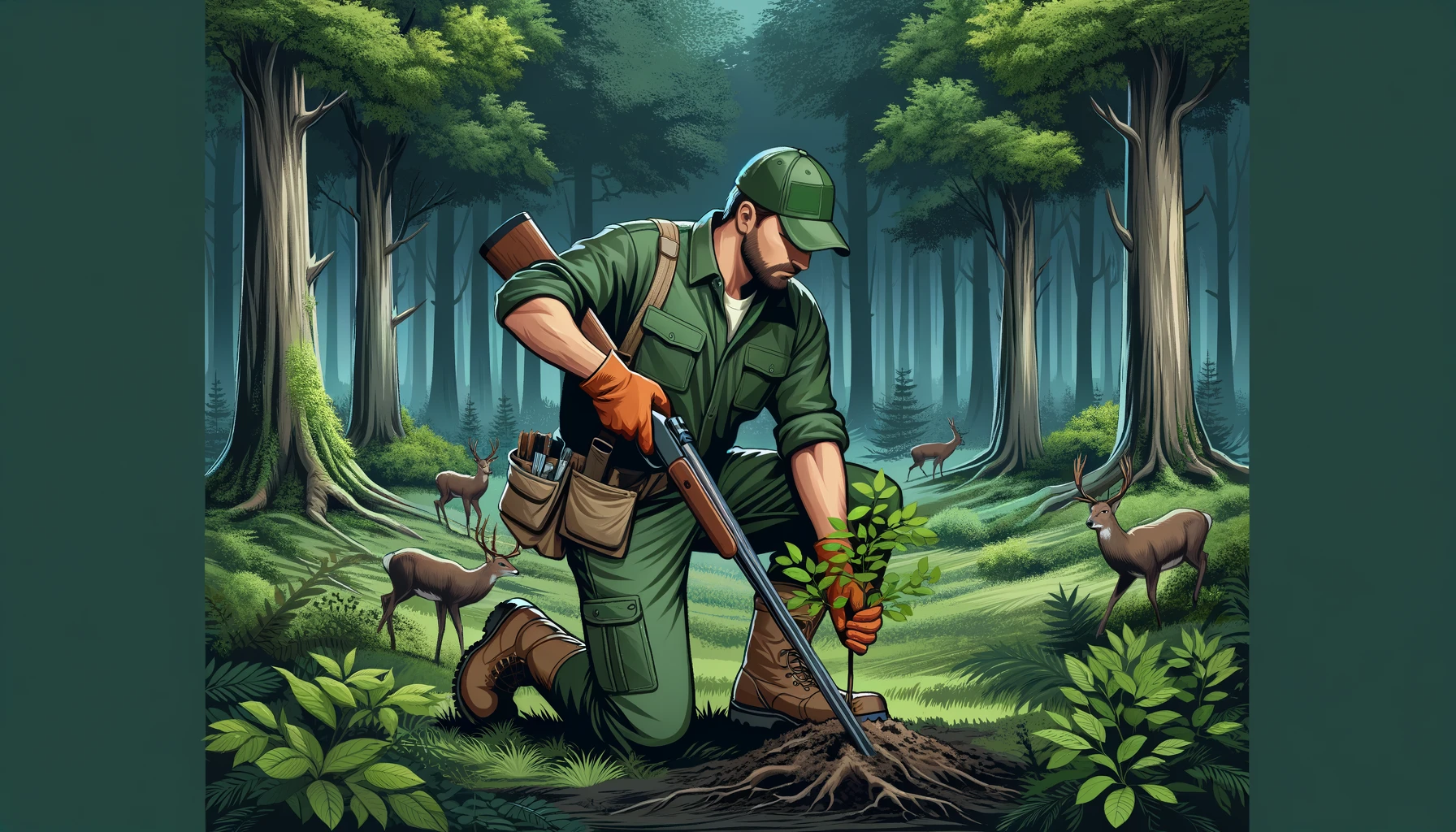
Earth Day can sound like it belongs to people who spend their weekends planting seedlings, picking up litter, or talking about climate charts. Hunters belong in that picture too. Healthy habitat makes better habitat for deer, turkeys, waterfowl, upland birds, pollinators, songbirds, and the small animals that hold the whole system together. When cover is thick, water is clean, travel corridors stay open, and the land is not beaten down by abuse, hunting gets better and wildlife does too.
That is why Earth Day matters to hunters without slogans or politics. It is a reminder that conservation is practical. It is the food plot that stays productive because the soil is cared for. It is the marsh that still holds water because drainage was slowed and the shoreline was respected. It is the public tract that keeps its access because people left it cleaner than they found it. It is also the trust that lets hunters stay welcome on public land, private land, and inside the broader outdoor community.
Table of Contents
Habitat Is the Real Harvest
Game numbers follow habitat
Hunters talk a lot about game numbers, but game numbers follow habitat. A deer herd can only be as steady as the browse, bedding cover, water, and winter range beneath it. Turkeys need nesting cover, brood habitat, insects, and quiet places that are not constantly trampled. Waterfowl need wetlands that still function. Upland birds need grasslands, shelter belts, field edges, and the kind of patchwork cover that comes from active, thoughtful management.
Good habitat work is often small and steady
The conservation piece becomes plain when you have watched a property change. A bird hunter who sees native grass cut to dirt understands what is lost. A deer hunter who has watched a thicket get cleaned out by pressure, erosion, or careless off-road traffic knows that one rough season can change a place for years. The useful question is simple: what can I do this year so the place is better next year?
The answer is rarely dramatic. Plant cover that fits the site rather than the prettiest seed mix. Leave a patch of browse where it matters. Respect nesting windows. Keep pressure off sensitive edges. Support prescribed fire, invasive control, and water work when biologists and landowners say those tools fit the ground. Those are not side notes to hunting. They are the base that hunting rests on.
License Fees and Excise Taxes Fund Conservation
Hunters help pay for the work
One reason hunters should care about Earth Day is that the conservation system in the United States is built in part around hunters themselves. The U.S. Fish and Wildlife Service explains that the Wildlife Restoration Program, created under the Pittman-Robertson Act, sends grant money to state and insular area fish and wildlife agencies for habitat restoration, wildlife management, access, research, hunter education, and shooting ranges. That is not symbolic money. It is one of the engines that keeps real field work moving.
Funding has to turn into local habitat
The funding structure matters because it ties use to care. Hunters pay license fees. Manufacturers pay excise taxes on firearms, ammunition, and archery equipment. The money circles back into the places and programs that keep wildlife populations healthy and accessible. When a state buys land access, improves habitat, restores a wetland, or supports hunter education through those dollars, the benefit reaches beyond one season.
This is also why hunters should know their state wildlife agency and pay attention to what it is doing with habitat funds. A state agency is where the abstract becomes local: wetland projects, timber thinning, access easements, public ranges, and habitat work on the tracts where people actually hunt. If the hunting community wants healthy wildlife, it has to keep supporting the institutions that do the dull, expensive work.
Public Land Care Is Part of the Hunt
Public land is shared land
Many hunters learn this the hard way on crowded parcels. A public tract can hold good birds or deer one season and feel worn out the next if people treat it like a dumping ground or a race course. Rutted roads, broken gates, shot-up signs, leftover hulls, torn bags, and busted fence wire do not just look bad. They create friction with other users and make agencies spend time and money fixing avoidable damage.
Access depends on behavior
Public land care starts before opening day. Know the regulations. Stay on legal routes. Park where you will not block access or tear up the shoulder. Close gates as instructed. Do not cut new roads, widen trails, or leave a campfire ring smoldering. If the area is muddy, respect the ground instead of making the mud someone else’s problem.
It also means understanding that public land is shared by birders, hikers, anglers, mushroom hunters, families, and working crews. When hunters pick up brass, haul out trash, and keep noise and vehicle use in check, they make it easier for everyone to keep using those places. Leave No Trace’s core ideas, such as planning ahead, using durable surfaces, disposing of waste properly, respecting wildlife, and being considerate of others, fit hunting well when they are applied with common sense.
Lead, Trash, and Field Ethics
Small choices shape public trust
Earth Day is a good time to tighten standards on the things that quietly add up. Lead is one of them. So is trash. So is the habit of leaving a field edge, a parking pull-off, or a carcass area in a condition that makes other people cringe. The details matter because the details are what people remember when they decide whether hunters are decent neighbors.
Leave the site cleaner than you found it
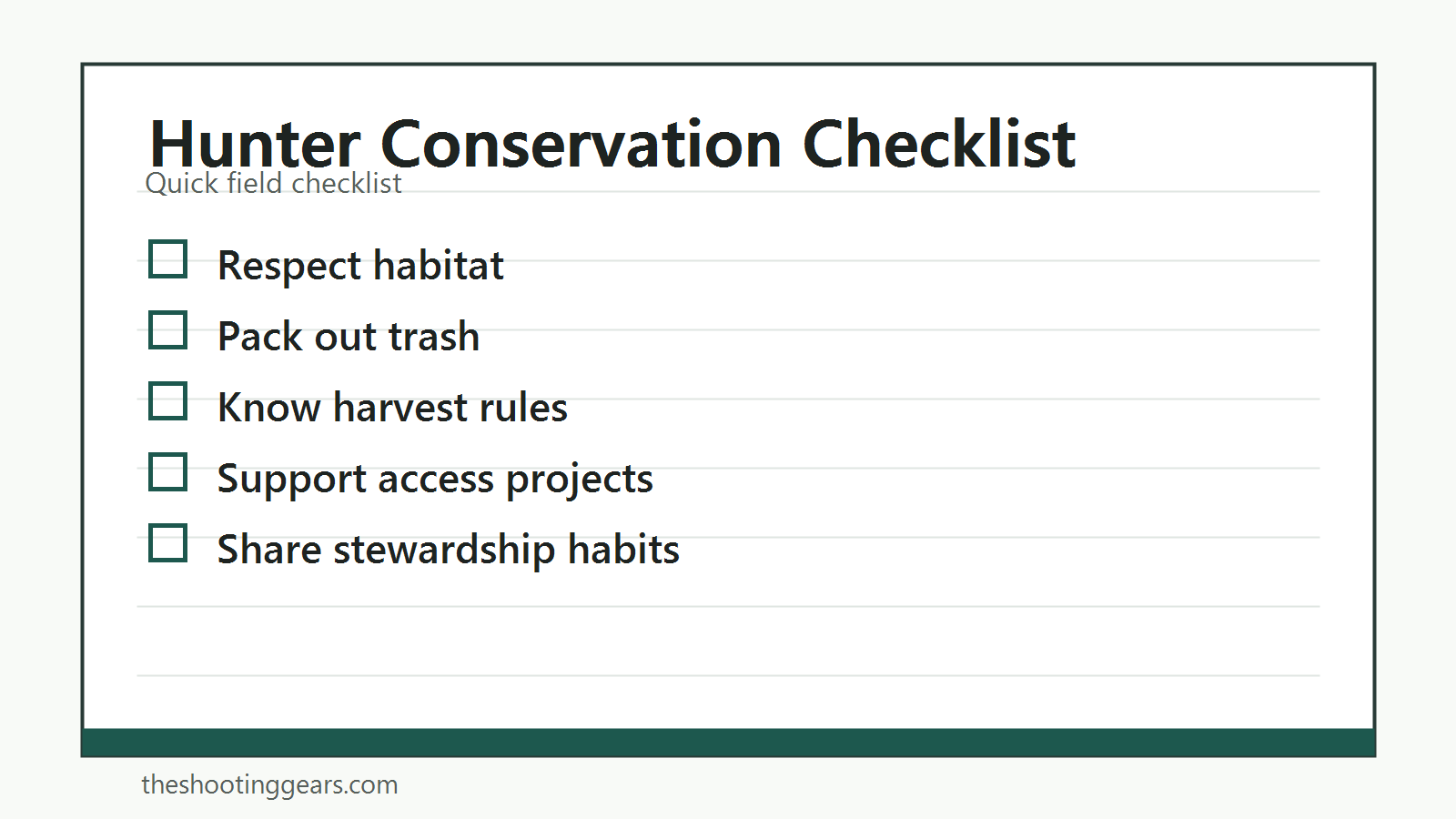
That does not mean every hunt has to look sterile. It means hunters should be deliberate. Pack out what you bring in. Carry extra bags for litter that was not yours. Pick up spent shells and hulls. Do not leave flagging everywhere. Keep bait, cord, and gear from becoming long-term debris. If you use nonlead ammunition where it makes sense or where regulations require it, treat it as part of using the right tool in the right place.
Field ethics also includes the way a hunter leaves a carcass area, trailhead, and campsite. Respect for wildlife includes quick, humane kills, but it also includes the quiet work after the shot. Handle meat well. Keep your area clean. Avoid dragging blood and waste into water. Do not pile a mess where scavengers, pets, or people will get into it. The point is not perfection. The point is discipline.
Volunteering Keeps Access Alive
Show up when there is no tag involved
Conservation gets real when hunters show up without expecting a tag in return. Habitat work days, trash cleanups, hunter education support, access restoration, invasive species pulls, and seasonal maintenance all matter. A few hours with a crew can clear brush around a blind, pull debris from a wetland edge, repair a trail, or help an agency stretch a tight budget. That work does not just improve one site. It builds the public reputation that keeps agencies, landowners, and other outdoor users willing to work with hunters.
Teach the habit to the next hunter
It also builds a better culture inside hunting itself. Young hunters learn fast when they see adults pick up litter before they glass a field, or when they hear a mentor explain why a wetland buffer matters more than a shortcut. Those habits stick. They become part of the next generation’s idea of what a hunter looks like in the field.
Earth Day is useful because it creates a calendar nudge to do something concrete: volunteer with a local wildlife group, help your state agency on a habitat day, or join a cleanup near a place you hunt. The work is usually simple. The effect lasts longer than the afternoon.
Responsible Access Is a Year-Round Habit
Access and conservation are connected
Hunters sometimes talk about access as if it were separate from conservation. It is not. Access depends on trust, and trust depends on how hunters behave when no one is watching. A property owner who sees people park cleanly, respect fences, and leave no trash is more likely to keep the gate open. A public land manager who sees responsible users is more likely to defend that tract when budgets get tight.
Respect boundaries and shared use
Responsible access starts with small things. Use the entry route you are supposed to use. Keep ATVs and trucks where they belong. Do not crowd trailheads. Give other users room. Keep dogs under control. Avoid trespass by using maps, land records, and current regulations instead of guessing. Ask before crossing private ground. Report problems through the proper channel instead of creating a side issue by trying to fix them yourself.
It also means thinking beyond the season. Check whether your favorite area needs help after heavy use. If a parcel gets pounded, consider leaving it alone for a while so the cover can recover. If the agency asks for feedback on access or habitat, send it. If there is a season survey, fill it out honestly. If there is a local coalition working on easements, habitat corridors, or public access, support it.
A Simple Earth Day Standard
Protect the places that make hunting possible
The best Earth Day message for hunters is not complicated: protect the places that make hunting possible. That means caring about habitat before the season opens. It means understanding where license dollars and excise taxes go. It means treating public land like a shared asset, not a disposable backdrop. It means tightening ethics around lead, trash, and field behavior. It means volunteering when there is work to do and showing the next hunter what responsible use looks like in practice.
Keep the ground better for the next season
Hunters do not need to borrow conservation from anyone else. They have helped build it, funded it, and depended on it for generations. Earth Day simply gives that fact a date on the calendar. The rest is the same work hunters should be doing anyway: leave the ground better, keep the habitat alive, and make sure the next season has a chance to happen.