Signs the Rut Is On: 7 Deer Behaviors Hunters Should Watch
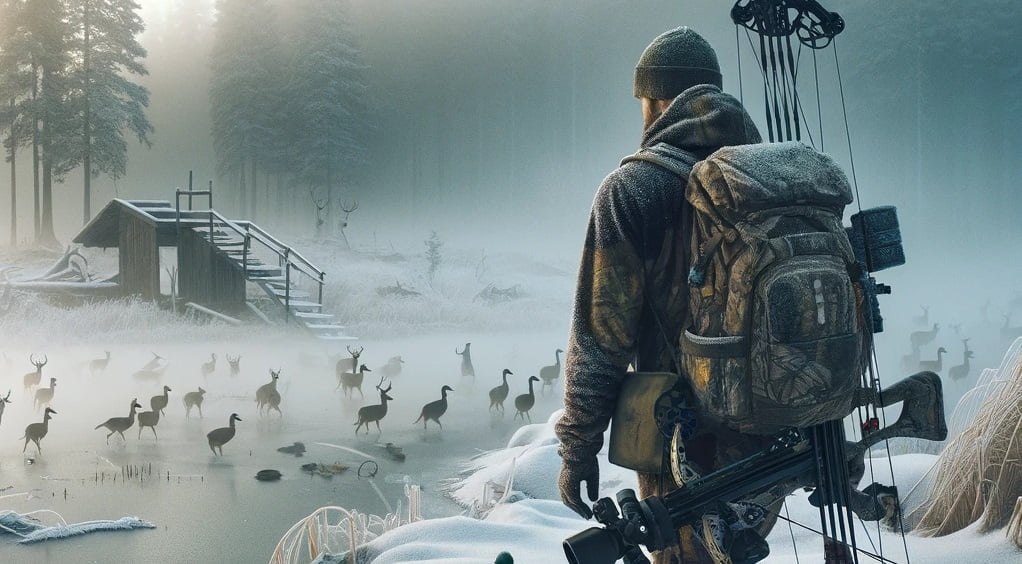
Signs the rut is on usually show up as a mix of fresh deer sign, changing buck behavior, and more daylight movement. A single rub or scrape does not prove peak breeding is happening, but several signs together can tell you that deer activity is shifting and that your plan should shift with it.
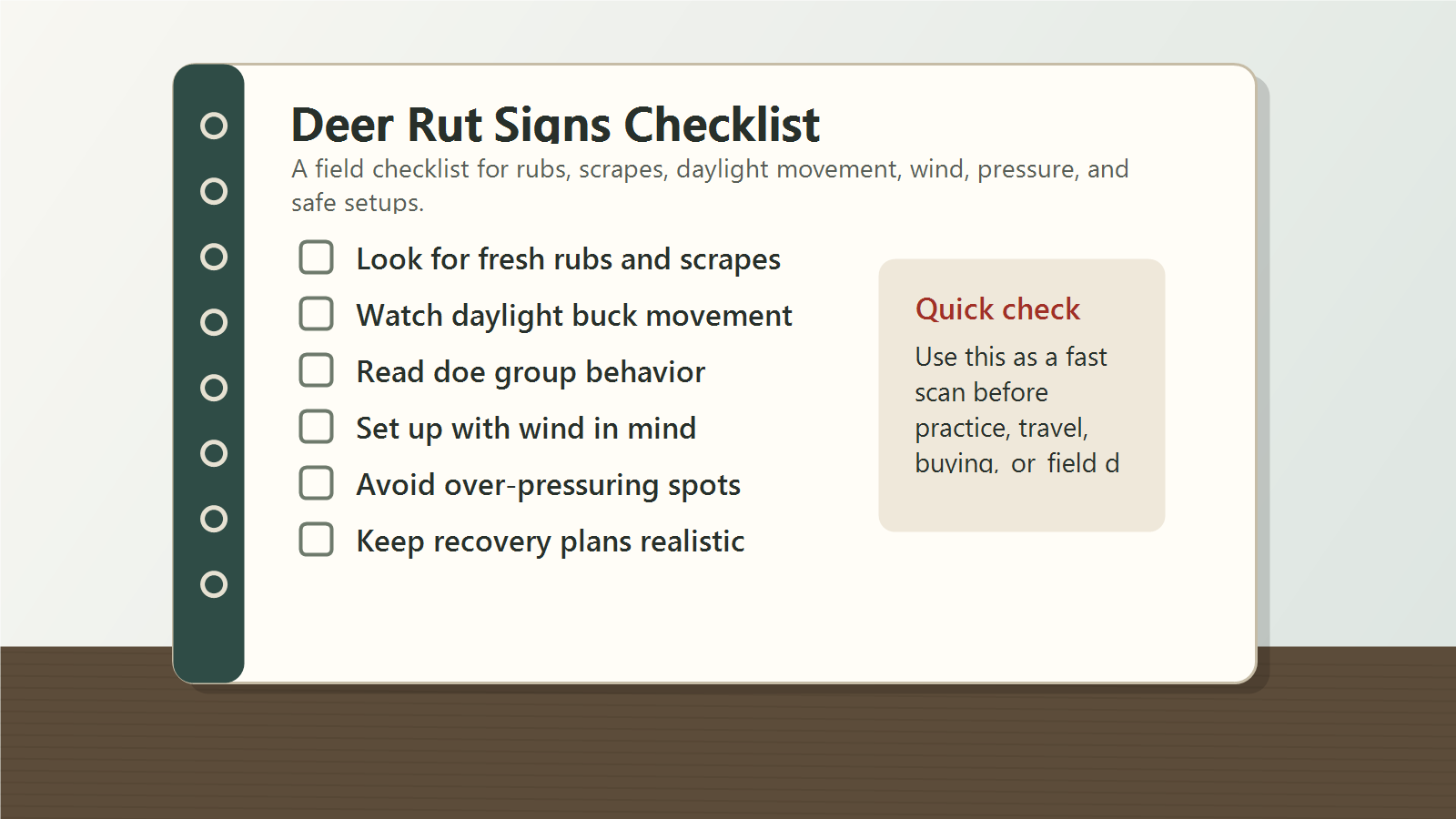
Use this guide as a field checklist. It explains what each sign can mean, how to judge whether it is fresh, and how to hunt around rut activity without ignoring safety, access rules, or your local wildlife regulations.
Table of contents
- Quick answer
- Before you read rut sign
- 1. Fresh scrapes are being opened and checked
- 2. Rub lines are getting fresh bark damage
- 3. Bucks are moving more in daylight
- 4. Does are acting nervous or bunched up
- 5. Tracks and trails show sudden pressure
- 6. Calling and scent sign start to connect
- 7. The woods may go quiet during lockdown
- Not every sign means peak rut
- Safe and ethical rut hunting plan
- FAQ
Quick Answer
The rut is likely starting or building when you see fresh scrapes under licking branches, new rubs, bucks traveling during legal daylight hours, does acting pressured, and tracks crossing normal travel routes in several directions. The best evidence is not one sign by itself. It is fresh sign plus repeated deer movement in the same area.
If you need a simple rule, look for fresh disturbance and repeat activity. Damp exposed dirt in a scrape, bright bark shavings at a rub, new tracks in soft ground, fresh droppings, and repeated trail-camera visits all matter more than an old scrape that looked good two weeks ago.
Before You Read Rut Sign
Rut timing is local. Latitude, herd health, buck-to-doe balance, hunting pressure, weather, and local breeding windows all affect what you see from a stand or blind. State wildlife agencies are the best place to check seasons, legal weapons, tags, hunter-orange rules, bait or scent rules, and chronic wasting disease guidance before you hunt.
The Missouri Department of Conservation describes deer scrapes, rubs, licking branches, and scent communication as normal parts of whitetail behavior. That is the right way to read rut sign: as communication and movement clues, not as a promise that a buck will walk past your stand.
Use a sign cluster, not one clue
One rub can be old. One scrape can be opened and ignored. One buck photo can be a passing deer. A stronger rut picture comes from several fresh clues near bedding cover, doe feeding areas, funnels, pinch points, or trail intersections.
Check freshness first
Fresh sign usually has sharper edges. Scrapes may show damp dirt, loose leaves pushed aside, and recent tracks. Rubs may show bright inner bark, small bark curls, and fresh chips at the base of the tree. Tracks look sharper in mud, sand, or snow before wind, rain, or leaves soften them.
1. Fresh Scrapes Are Being Opened and Checked
A scrape is a cleared patch of ground, often under an overhanging licking branch. Bucks and does may use licking branches and scent glands to leave information. During the pre-rut and rut, scrapes can help you learn where deer are communicating and traveling.
What a fresh scrape looks like
A fresh scrape often has leaves pawed away, exposed soil, tracks in or near the dirt, and a licking branch that shows recent use. The freshest scrapes may smell stronger, but do not rely only on odor. Wind, rain, soil type, and temperature can change that quickly.
Where scrapes matter most
Look for scrapes on field edges, logging roads, creek crossings, inside corners, ridge saddles, and travel routes between bedding cover and feeding areas. A scrape near a natural funnel can matter more than a larger scrape in a random open area.
How to hunt scrape sign safely
Do not walk through the scrape or touch the licking branch. Approach from the downwind side when you can, set up with a clear shooting lane, and keep your shot distance realistic. If you cannot identify the target and what is beyond it, pass the shot.
2. Rub Lines Are Getting Fresh Bark Damage
Rubs happen when bucks work their antlers and forehead area against trees or brush. Rubs can show travel direction, repeated use of an edge, or a buck using cover between bedding and feeding areas. They do not automatically prove that a large buck is living there.
How to read rub freshness
Fresh rubs show brighter wood, clean shavings, and torn bark that has not dried dark yet. Older rubs fade, dry, and collect weathered bark dust. If a rub line has several fresh rubs over a short distance, it may be tied to regular travel.
Do not overread rub size
Large trees can suggest a mature deer used the area, but rub size is not a scoreboard. Small bucks can hit larger saplings, and larger bucks can rub smaller trees. Use rubs with tracks, trail-camera history, terrain, and wind access before choosing a stand.
Best stand locations around rubs
The rub itself is usually less important than the route it points to. Set up where the rub line connects cover, terrain pinch points, bedding edges, or doe travel routes. Good access matters because bumping deer from bedding cover can ruin the spot for several sits.
3. Bucks Are Moving More in Daylight
When bucks start checking doe groups, scrape lines, and travel funnels during legal shooting hours, rut activity is often building. This is one of the clearest signs hunters notice because the deer behavior changes from cautious feeding patterns to wider travel.
Trail-camera clues
More daytime buck photos, new bucks appearing on camera, and bucks crossing several cameras in a short time can all point to rut movement. Watch time stamps and direction of travel instead of counting only antler size.
Field clues without cameras
You may see bucks crossing open areas later in the morning, cruising downwind of doe bedding cover, or moving through funnels that were quiet earlier in the season. Fresh tracks over your own boot tracks can also show new movement after you left.
How weather fits in
Cold fronts and calmer weather can make daytime movement easier to see, but weather does not create the breeding cycle by itself. Use weather to choose sits, then use fresh sign and local history to choose the exact location.
4. Does Are Acting Nervous or Bunched Up
During the rut, doe behavior can be just as important as buck sign. Bucks often spend more time checking doe groups, so a reliable doe feeding route or bedding edge can become better than a random scrape in big timber.
Watch doe body language
Does may look back often, move faster than normal, avoid open areas, or bunch up in cover. A single doe slipping through cover with a buck behind her can also show that breeding activity is close.
Find the doe groups
Food sources, oak flats, cover edges, and bedding areas used by does can become key rut locations. If you know where does feel safe during daylight, you have a better chance of seeing a cruising buck check that area.
Do not pressure the bedding area
It is tempting to push close when rut activity rises, but heavy pressure can move deer out of daylight range. Hunt the downwind edge or the travel routes first, especially if your access is noisy or the wind is wrong.
5. Tracks and Trails Show Sudden Pressure
Fresh tracks can show that deer are changing routes. During rut activity, bucks may cut across normal feeding trails, swing downwind of bedding cover, and travel through saddles or creek crossings they rarely used earlier.
Track direction matters
Look for where tracks enter and exit the trail, not just how many tracks are present. A line of tracks crossing several normal trails may show a buck cruising. Tracks that circle a bedding area may show a deer checking wind and scent.
Use soft ground, snow, or leaves
Mud, sand, wet leaves, and light snow can help you judge freshness. Sharp tracks, kicked leaves, and new mud on vegetation can all point to recent use. After rain or wind, sign may reset, which gives you a cleaner read.
Match tracks to terrain
Tracks near saddles, creek crossings, fence gaps, bench trails, and inside field corners often deserve more attention than tracks in wide-open areas. Terrain squeezes movement, and rutting deer still tend to use easier travel routes when they can.
6. Calling and Scent Sign Start to Connect
Grunts, bleats, rattling, and scent sign can all be part of rut hunting, but they work best when they match what deer are already doing. Calling blindly all day in a dead area is weaker than calling near fresh sign where deer are moving naturally.
When soft calling makes sense
Soft grunts or bleats may fit when you see a buck cruising out of range, when deer are already active, or when you are near fresh scrapes and rubs. Start quietly. Loud calling in tight cover can spook deer that are already close.
When rattling can fit
Rattling can make sense during the pre-rut or active chasing periods in areas with buck competition. It is less useful when deer are heavily pressured, locked down with does, or close enough that sudden noise feels unnatural.
Follow your local rules
Some states, public lands, or managed properties restrict bait, scents, electronic calls, decoys, or access methods. Check current agency rules before using any attractant or calling method. Rules can change from one season to the next.
7. The Woods May Go Quiet During Lockdown
Rut activity is not always noisy and obvious. During lockdown, a buck may stay close to a receptive doe for a period of time. That can make scrape lines and open travel routes feel suddenly dead, even though breeding is happening nearby.
Why sign can slow down
When bucks are tending does, they may move less across the landscape. You might see fewer fresh scrapes being checked and fewer cruising bucks in open routes. This does not mean the rut is over.
Where to hunt during slower movement
Focus on doe bedding cover, thick transition zones, and travel routes between doe groups. All-day sits can make sense if you can enter quietly, stay comfortable, and keep your attention sharp.
Stay patient but not careless
Long sits can lead to rushed decisions. Keep checking wind, target angle, and background. If you are tired, cold, or losing focus, climb down or unload safely rather than forcing a risky sit.
Not Every Sign Means Peak Rut
Rut sign appears in phases. Early rubs and scrapes may show pre-rut communication. Chasing can bring sudden daylight movement. Lockdown can make movement look slow. Post-rut activity can bring a second wave of scraping or cruising as some does come into estrus later.
Pre-rut sign
Pre-rut often brings fresh rubs, scrapes, and more checking behavior, but bucks may still be cautious. Stand locations near travel routes and scrape lines can work if you avoid overpressuring them.
Peak-rut sign
Peak rut is often less neat than hunters expect. You may see chasing, daylight travel, and new bucks, or you may see a sudden drop in obvious sign if bucks are tending does in cover.
Post-rut sign
Post-rut can still produce movement, especially around remaining doe groups and food sources. Do not abandon a good area just because the loudest chasing period has passed.
Safe and Ethical Rut Hunting Plan
Rut hunting can tempt hunters to move fast, sit longer, and take harder shots. The better plan is slower and cleaner: obey local rules, choose stands with safe access, wait for a clear shot, and recover game responsibly.
Check regulations before every hunt
Confirm season dates, tags, weapon rules, bait or scent restrictions, legal shooting hours, hunter-orange requirements, access rules, and CWD guidance. If you travel across state lines, do not assume your home-state habits apply.
Respect fair chase
The Boone and Crockett fair chase statement is a useful reminder that legal hunting should still be ethical hunting. Give the animal a fair chance, avoid shortcuts that violate the spirit of the rules, and do not take a shot you cannot make cleanly.
Use safe shot discipline
Know your target, what is beyond it, and whether the animal is standing at an angle you can handle. Wait for a stopped or slow deer, keep range realistic, and do not let rut excitement push you into a poor shot.
Mind CWD and field care
The CDC guidance on chronic wasting disease recommends following state testing and handling guidance and not eating meat from an animal that tests positive. Wear gloves during field dressing and follow local carcass-transport rules.
Use tree stands carefully
If you hunt from a stand, inspect straps, steps, platforms, and lifelines before use. Wear a full-body harness, use a haul line for gear, and stay connected from the ground up and back down.
FAQ
What is the first sign the rut is starting?
Fresh scrapes, new rubs, and a rise in daylight buck movement are common early clues. The best first sign is a cluster of fresh activity, not one old scrape or one random camera photo.
Do rubs mean a big buck is nearby?
Not always. Rubs show deer use and possible travel routes, but rub size alone does not prove a mature buck is nearby. Read rubs with tracks, terrain, wind, and repeated sightings.
Are scrapes better than rubs during the rut?
Neither is always better. Scrapes can help before and during early rut activity, while rub lines may show travel habits. During lockdown, doe bedding cover and travel routes may matter more than either sign.
Does cold weather start the rut?
Cold weather can make deer movement easier to see, but it does not start the breeding cycle by itself. Local breeding windows and daylight length are more important than one cold morning.
Should I hunt all day during the rut?
All-day sits can work when deer are moving at odd hours, but they are not always necessary. Choose all-day sits only when you can enter quietly, stay alert, and remain safe in the stand or blind.
What should I do if I find fresh rut sign?
Mark the location, check the wind, find the likely travel route, and plan an entry path that does not blow scent into bedding cover. Do not trample the sign while trying to inspect it.
Do I need to check hunting rules during the rut?
Yes. Rut timing does not override season dates, tag rules, weapon limits, public-land rules, bait or scent restrictions, hunter-orange laws, or CWD requirements. Check your state wildlife agency before hunting.
Bottom Line
The best signs the rut is on are fresh scrapes, active rub lines, daylight buck movement, pressured doe behavior, new tracks, and changing travel patterns. Read those signs together, then hunt with a safe approach, legal access, and realistic shot standards.