What Magnification Do Snipers Use?
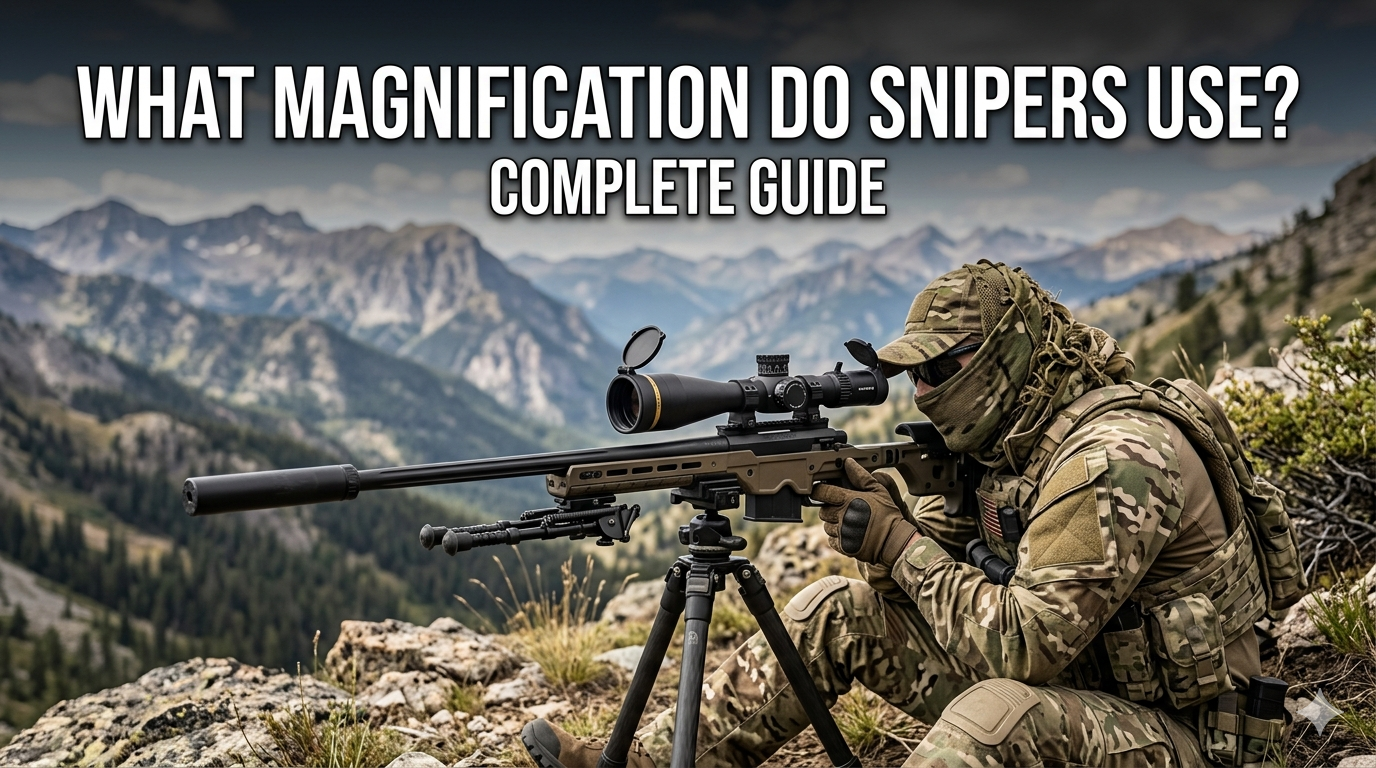
Most modern sniper or precision-rifle optics use variable magnification rather than one fixed power. A common practical range is roughly 3-15x, 4-16x, 5-25x, or similar, depending on distance, target size, light, terrain, and the shooter’s role. Higher magnification is not automatically better; too much power can narrow field of view, exaggerate movement, and make it harder to spot wind or follow the shot.
For civilian shooters, the better question is not “what do snipers use?†but “what magnification fits my range, target, and skill level?†This guide explains magnification in practical terms for readers comparing hunting, range, and precision optics without pretending that gear alone creates professional-level performance.
Table of Contents
Short Answer
Snipers and precision marksmen may use low, mid, or high magnification depending on the mission and environment. In broad terms, 10x fixed scopes were historically common, while modern setups often use variable scopes in ranges such as 3-15x, 4-16x, 5-20x, 5-25x, or higher. The chosen setting in the field may be much lower than the scope’s maximum power.
At shorter distances or when field of view matters, lower magnification can be more useful. At longer distances or for small targets, higher magnification can help with target identification and aiming precision, but only when mirage, light, stability, and shooter skill allow it.
Why Sniper Magnification Varies
Distance and Target Size
Magnification needs change with distance and target size. A large target at moderate distance does not require the same power as a small target far away. Precision shooters often balance enough magnification to aim carefully with enough field of view to observe what is happening around the target.
Field of View
As magnification increases, field of view usually gets narrower. A narrow field of view can make it harder to find the target, track movement, observe impacts, or maintain awareness. This is one reason variable scopes are useful: the shooter can reduce power when a wider view is more important.
Light and Mirage
High magnification does not remove atmospheric problems. Heat shimmer, mirage, low light, rain, dust, and poor glass quality can make a high-power image less useful. A clearer image at moderate magnification is often better than a larger but distorted image.
Stability and Position
Higher magnification makes wobble and pulse movement easier to see. That does not mean the rifle is less accurate, but it can distract the shooter or encourage overcorrection. A stable position, good support, and consistent fundamentals matter more than simply turning the scope up.
Common Magnification Ranges
Fixed 10x Scopes
Fixed 10x scopes are a well-known historical reference in military and law-enforcement precision optics. A fixed-power scope can be rugged and simple, but it lacks the flexibility of modern variable optics.
3-15x and 4-16x Scopes
These ranges are useful because they cover moderate magnification without becoming overly specialized. They can suit many hunting, training, and general precision-rifle uses where the shooter may need both a usable low end and enough power for distance.
5-25x Scopes
Scopes in the 5-25x class are common in long-range and precision-rifle conversations. They provide more top-end detail, but they are also larger, heavier, more expensive, and more dependent on good glass and stable support.
Low-Power Variable Optics
Low-power variable optics are not traditional sniper scopes, but they show why magnification must match the job. A 1-6x or 1-8x optic prioritizes speed and field of view more than tiny-target precision at long distance.
Why More Magnification Is Not Always Better
More magnification can make a target look larger, but it can also reduce field of view, dim the image, increase perceived wobble, and make mirage more distracting. The telescopic sight concept is simple enough, but real-world use depends on optical quality, adjustment tracking, reticle design, eye relief, and shooter fundamentals.
For many shooters, a scope with reliable adjustments, clear glass, a useful reticle, and appropriate magnification is better than a scope with extreme power but poor image quality or inconsistent tracking.
Civilian Rifle Scope Takeaways
A regular shooter should choose magnification by the job, not by the most dramatic label on the box. A woods hunter, a western hunter, a benchrest shooter, and a precision-rifle competitor may all need different features even if they are using similar rifles. The optic should match the distance, target size, carrying weight, expected light, and how quickly the target must be found.
- For close to moderate hunting: a lower range such as 2-10x, 3-9x, or 3-12x may be more practical than a very high-power optic.
- For range and precision practice: 4-16x or 5-25x can make sense if the rifle, target distance, and support justify it.
- For mixed use: prioritize low-end usability, eye relief, weight, durability, and reticle clarity.
- For beginners: do not buy maximum magnification first. Learn stable position, trigger control, zeroing, and wind reading.
- For hunting ethics: magnification does not replace knowing your target, backstop, legal distance, and personal skill limit.
If you mostly shoot from field positions, a forgiving eye box and clear low-to-mid power range may matter more than a huge top end. If you shoot from a bench or prone position at known distances, more magnification may be easier to use because the rifle is supported and the target is predictable.
Safety and Training Boundaries
Magnification is only an aiming and observation aid. It does not make an unsafe shot safe, and it does not replace firearm fundamentals. Review basic firearm safety rules from sources like the NSSF, follow your range rules, and keep every shot inside a safe backstop and legal setting.
If you are setting up a rifle scope, use the firearm and optic manuals for torque, mounting, zeroing, and adjustment procedures. If you are unsure about mount fit, eye relief, bore alignment, or zeroing, get help from a qualified instructor, gunsmith, or experienced range officer.
FAQ
Do snipers always use maximum magnification?
No. A shooter may dial down for wider field of view, faster target acquisition, better mirage management, or more stable sight picture.
Is 10x enough for long-range shooting?
It can be enough in some contexts, especially with good fundamentals and a suitable target size. Many modern shooters still prefer variable scopes because they offer more flexibility.
What magnification is best for deer hunting?
Many deer hunters are well served by moderate scopes such as 2-10x, 3-9x, 3-12x, or similar. Terrain, legal hunting method, expected distance, and light matter more than copying a sniper optic.
Does higher magnification make a rifle more accurate?
No. Magnification can help you see and aim more precisely, but rifle accuracy comes from the rifle, ammunition, optic setup, shooter fundamentals, and conditions.
Should beginners buy a 5-25x scope?
Only if their rifle, range distance, and goals justify it. Many beginners progress faster with a simpler optic that has clear glass, reliable adjustments, and a useful magnification range.
Final Takeaway
Sniper magnification is not a single number. Modern precision optics often use variable ranges, and the best setting depends on distance, target size, light, mirage, field of view, and stability. For regular shooters, choose magnification around your actual use case, then invest time in safety, fundamentals, and proper scope setup.