Weather, Moon Phase, and Rut: 10 Deer Movement Checks
Weather, moon phase, and the rut can all affect deer and wildlife behavior, but they do not work like a simple calendar button. For whitetail deer, rut timing is strongly tied to seasonal daylight patterns, while weather can change when deer feel comfortable moving. Moon phase may affect visibility and some animal activity, but it should be treated as a secondary clue, not a guaranteed hunting forecast.
This guide is a support article for hunters and wildlife watchers who want a practical way to read field conditions. It avoids hard predictions because deer movement depends on region, pressure, habitat, food, breeding stage, temperature, wind, and individual animal behavior.
Table of contents
Weather, Moon Phase, and Rut: Quick Answer
Use weather first, rut stage second, and moon phase last. Cold fronts, safe wind, food changes, breeding pressure, and hunting pressure usually matter more than a moon calendar by itself. If a moon prediction conflicts with fresh sign, safe wind, and local deer movement, trust the field evidence.
Best practical order
Start with legal season dates, local deer sign, wind direction, access route, temperature change, and stand safety. Then consider moonlight or moon position as an extra note in your journal.
Avoid single-factor predictions
Deer do not move only because of the moon, one weather app, or one rut chart. Movement is a mix of biology, pressure, food, cover, weather, and local terrain.
Keep notes for your area
A simple log of temperature, wind, pressure trend, moon phase, sighting time, and deer behavior can teach you more than a generic national rule.
Weather Signals
Weather can change comfort, scent movement, visibility, and hunter access. It can also affect food availability, bedding choices, and when deer feel secure moving in daylight.
Watch current conditions
Use reliable weather sources before heading out. The National Weather Service provides local forecasts, alerts, radar, and safety information through weather.gov.
Respect hazardous weather
No deer movement theory is worth lightning, flash flooding, dangerous wind, ice, or unsafe travel. Postpone the hunt when weather makes access, shooting, or recovery unsafe.
Separate animal behavior from hunter comfort
Cold, rain, or wind may make a hunt feel more dramatic, but the useful question is whether conditions improve deer movement and allow safe, quiet access.
Temperature and Fronts
Temperature changes can affect deer movement, especially when a cool-down follows warm conditions during hunting season. The effect depends on region, season, food, and hunting pressure.
Cold fronts can help
A noticeable drop in temperature may encourage daylight movement in some areas, especially when deer have been moving mostly at night during warmer periods.
Heat can reduce midday movement
Warm weather can push deer toward shade, water, and lower-energy movement. That does not mean deer disappear; it means timing and location may shift.
Rain and snow need context
Light rain or snow may quiet your entry and make tracks easier to read. Heavy weather can limit visibility, increase safety risk, and make recovery harder.
Wind and Pressure
Wind is one of the most practical hunting factors because it affects scent, noise, shooting stability, and deer travel choices.
Use the wind for access
A good wind is not only about the stand. It is also about your walk in, parking area, creek crossing, and exit route after dark.
Strong wind changes movement
High winds can make deer more cautious in open areas and can make shooting or hearing movement harder. Some deer may use thicker cover or leeward terrain.
Pressure trends are not magic
Barometric pressure is often discussed by hunters, but it should not override fresh sign, legal access, safe wind, and stand placement. Track it as one field note, not a rule.
Moon Phase
Moon phase is popular in hunting talk because it is easy to track. The harder truth is that moon effects vary by species, location, hunting pressure, cloud cover, and food patterns.
Moonlight can affect visibility
A brighter night can change how some animals feed, travel, or avoid predators. Cloud cover, canopy, snow, and terrain can change how much moonlight actually reaches the ground.
Do not overrate moon charts
A full moon does not promise poor morning hunting, and a new moon does not promise daytime movement. Use moon phase as a note, not a decision-maker by itself.
Use official moon data
If you track moon phase, use a reliable source such as NOAA’s moon phase explanation and record what you actually observe locally.
Rut Timing
The rut is the deer breeding period. For whitetails, broad rut timing is strongly linked to seasonal daylight patterns, but local peak activity can still vary by region, age structure, pressure, weather, and doe movement.
Photoperiod matters
Seasonal daylight change is a major biological cue for deer breeding cycles. Weather can influence visible movement during the rut, but it does not rewrite the whole breeding calendar in most areas.
Rut stage matters
Pre-rut, peak breeding, and post-rut can look different in the field. Fresh rubs, scrapes, chasing, doe groups, and buck sightings should be weighed with local timing.
Hunting pressure changes daylight behavior
Even during the rut, deer may shift travel times or routes when pressure increases. Quiet access and low-impact exits still matter.
Field Plan
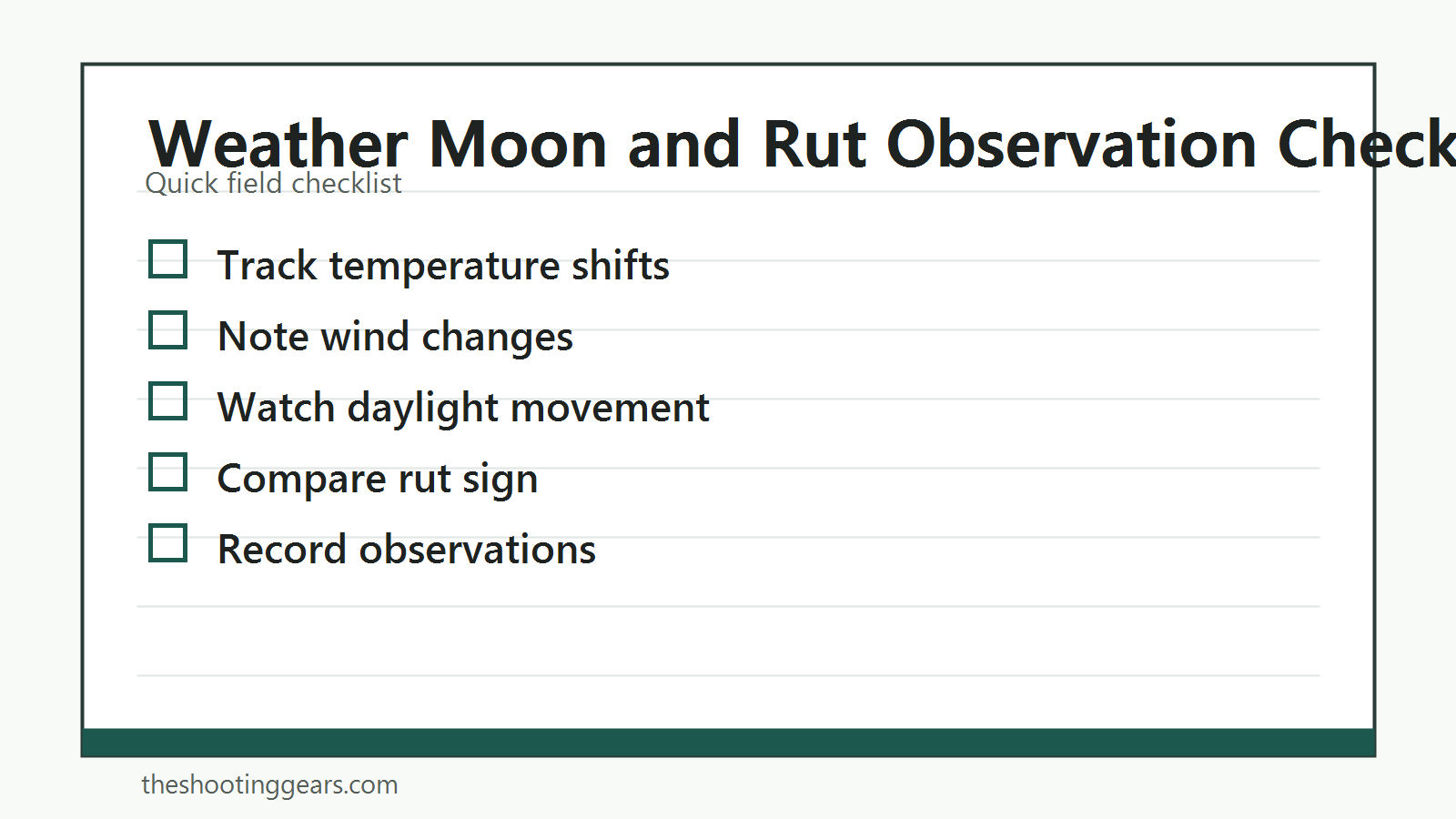
A good field plan uses conditions without becoming trapped by them. Build a simple checklist before each sit.
Before the hunt
- Check legal season, tags, and shooting hours.
- Confirm safe weather and travel conditions.
- Choose a stand or blind based on wind and access.
- Review recent sign and food sources.
- Note moon phase only as a secondary factor.
During the hunt
Watch how animals actually move. If deer avoid a field edge, use the wind and sign to decide whether pressure, food, cover, or weather is causing the change.
After the hunt
Log what happened. Include weather, wind, moon, rut sign, deer sightings, hunter pressure, and access route. Over time, your local notes become more useful than broad claims.
Compare similar sits
The best notes compare similar locations and seasons. A warm October food-source sit should not be compared directly with a cold November rut funnel sit. Compare the same stand, same wind range, similar date window, and similar pressure before blaming moon phase or barometric pressure.
Track human pressure
Human pressure can explain a slow hunt better than weather or moon phase. Record nearby vehicles, fresh boot tracks, neighbor activity, crop harvest, dog pressure, and your own entry route so the journal reflects what deer experienced. This also helps you avoid repeating the same access mistake.
Common Mistakes
Weather and moon content is easy to overstate. Keep the analysis practical and local.
Blaming the moon for everything
If you did not account for wind, pressure, food, bedding, access, and hunting pressure, the moon may not be the real reason the sit was slow.
Ignoring safety weather
Lightning, flooding, ice, high wind, and extreme cold can make a hunt unsafe. The National Weather Service’s weather safety guidance is worth checking when conditions are questionable.
Using national rut dates too literally
Regional timing matters. Use state wildlife agency information, local observation, and past notes instead of assuming one national rut date fits every deer herd.
Related Guides
For a deeper look at moon claims, read our guide on how the moon influences deer behavior. For field safety, review hunting safety tips. For deer-specific planning, see crossbow deer hunting safety checks.
FAQ
Does moon phase control deer movement?
No. Moon phase may affect visibility and some movement patterns, but it does not control deer movement by itself. Weather, pressure, food, cover, rut stage, and local habitat all matter.
What weather is best for deer hunting?
Many hunters watch for cool-downs, steady wind, and safe conditions after unsettled weather. The best weather still depends on your area, season, and access route.
Does cold weather start the rut?
Cold weather can make rut activity more visible, but broad rut timing is tied strongly to seasonal daylight patterns. Local weather can change when you see movement.
Should I hunt during a full moon?
You can. A full moon is not an automatic reason to stay home. Check local sign, wind, food, pressure, and legal shooting hours before deciding.
What should hunters track in a deer movement journal?
Track date, temperature, wind, pressure trend, moon phase, cloud cover, precipitation, rut sign, sightings, hunter pressure, and your access route.